How Sanctions Work: Iran and the Impact of Economic Warfare

The ongoing war between the United States, Israel, and Iran has brought several critical questions to the fore: What lies at the root of the grievances that triggered a protest movement in Iran earlier this year, exploited by the US and Israel? How widespread are the sentiments of resentment towards the regime among the Iranian population? How did Iranian society not collapse, and what prevented the sanctions from incapacitating the Iranian economy, thereby preserving Tehran’s ability to resist today?
How Sanctions Work: Iran and the Impact of Economic Warfare effectively answers these questions from different angles. It is written by Narges Bajoghli – an anthropologist with expertise in media, power, and military dynamics, Vali Nasr – a political scientist
Read More »

Governance in the Age of Artificial Intelligence: Exploring the Impact on Transparency, Accountability and Rule of Law

Artificial Intelligence (AI) has diverse potentials. The increasing use of AI makes it imperative to examine its impact on an important societal aspect — Governance. The paper uses three UN-proposed indicators of good governance: i. transparency, ii. accountability and iii. rule of law to assess the potential impact of AI in future governance. The research uses qualitative research design based on open-ended semi-structured interviews with AI experts to study the expert opinion on the subject.

Read More »

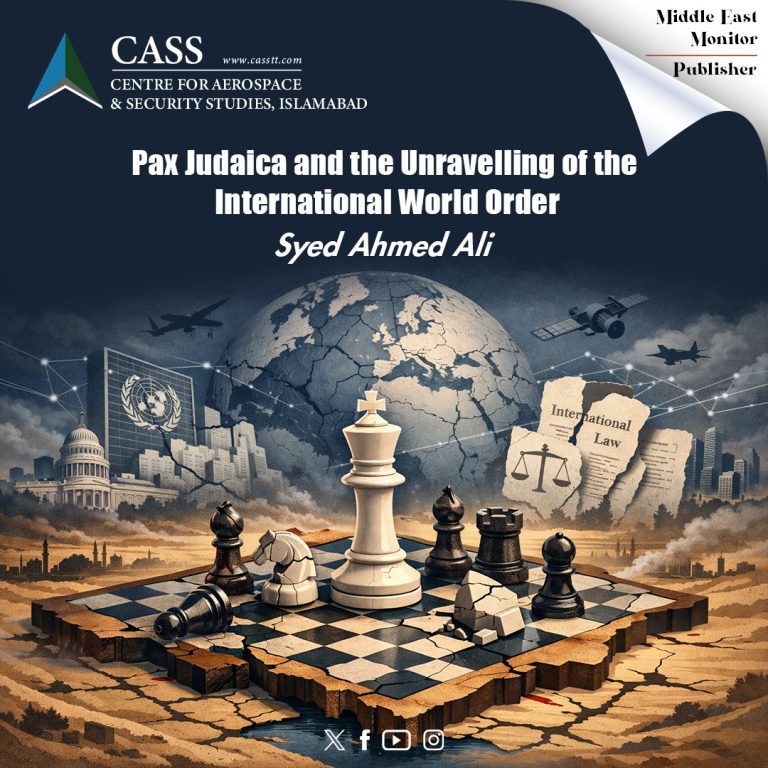
Pax Judaica and the Unravelling of the International World Order

Israel’s aggressive settlement expansion and blatant disregard for international law have contributed towards the fragmentation of the international rules-based order. In the midst of this upheaval, Tel Aviv has cemented itself as the dominant power in the Middle East, creating what commentators term “Pax Judaica”. This regional order is dominated by Israeli perceptions of security threats which it must eliminate for the preservation of the Jewish state.

Read More »

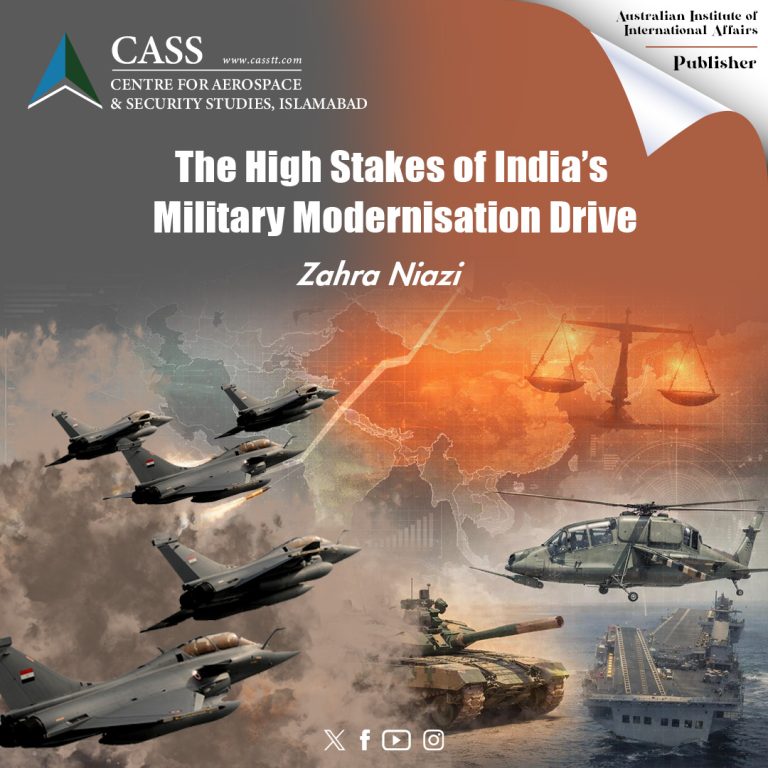
The High Stakes of India’s Military Modernisation Drive

New Delhi’s recent defence budget announcement for fiscal year (FY) 2026-27 represents more than just a budgetary jump; it carries important implications for South Asian stability, warranting closer reflection. The allocation of USD 85 billion to defence, with capital expenditure rising by 22 per cent compared with a 17 per cent increase in revenue expenditure, clearly reflects the government’s prioritisation of accelerated military modernisation over routine operational sustainment.

Read More »

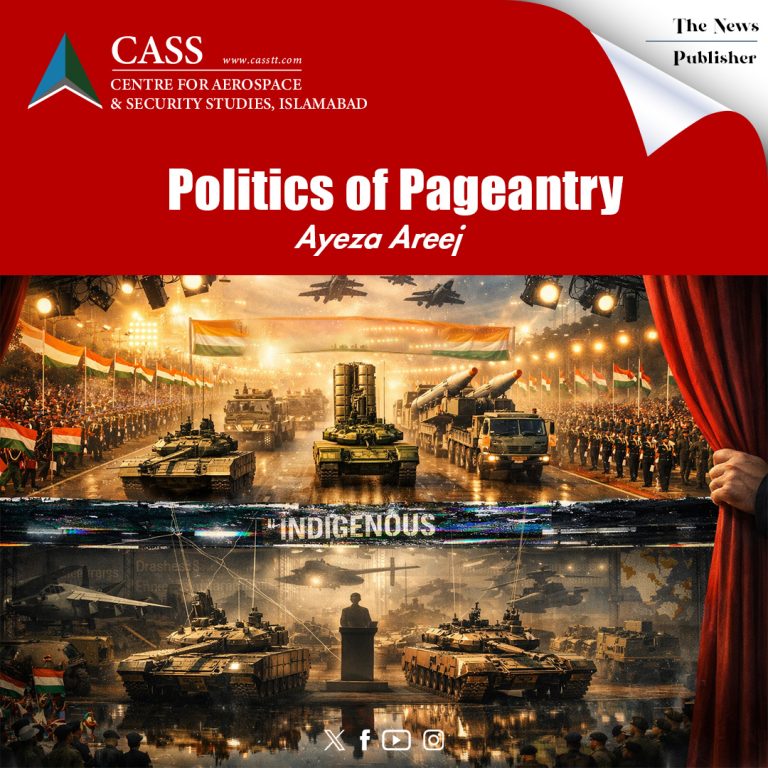
Politics of Pageantry

On 26 January 2026, India commemorated its 77th Republic Day, the day when New Delhi officially became a republic through adoption of the constitution. The Republic Day parade was projected as the celebration of India’s progress and national pride. Yet, beyond the spectacle, the parade intended to convey a calibrated strategic and political signal by manufacturing an image of self-reliant and confident India amid regional uncertainty.

Read More »

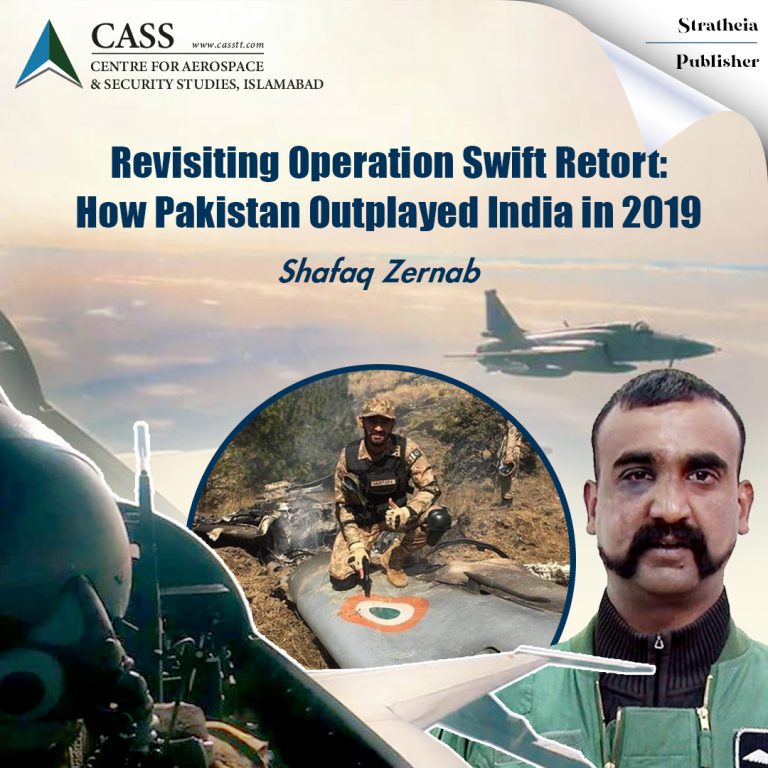
Revisiting Operation Swift Retort: How Pakistan Outplayed India in 2019

The crisis of February 2019 was far more than a transient border skirmish; it was a fundamental clash of two divergent conceptions of strategic thought under a nuclear overhang. Indian objectives were clear: to win the election and try to create space for punitive actions for bigger aims under the nuclear threshold with the pretext of labelling Pakistan as a terrorist-harbouring state. 

Read More »

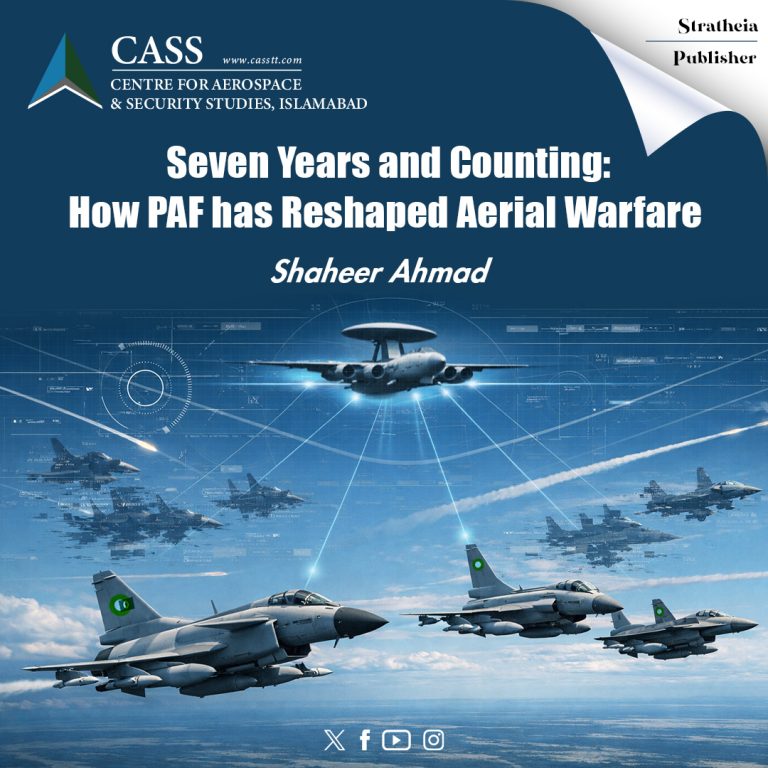
Seven Years and Counting: How PAF has Reshaped Aerial Warfare

‘What all could have happened if we had Rafale?’ This statement by Indian Prime Minister Narendra Modi surfaced after the 2019 India-Pakistan aerial showdown. The Indian Air Force’s (IAF) failed airstrikes near Balakot met a swift broad daylight response by the Pakistan Air Force (PAF) under Operation Swift Retort.

Read More »

Choosing Remittances Over Development?

In 2025, according to governmental data, around 32,000 highly-skilled and highly-qualified Pakistanis registered for employment abroad, equivalent to roughly six per cent of the country’s half a million annual graduates. This number, too, represents only a part of the exodus of Pakistan’s advanced human capital nurtured in the country and now being absorbed into foreign economies.

Read More »
Security

The Trilateral Shift

On 15 January 2026, the Pakistani defence production minister confirmed that an agreement for a new trilateral defence deal between Pakistan, Saudi Arabia, and Türkiye is in the pipeline, other than the Pakistan-Saudi bilateral deal announced last year.

Read More »