RESEARCH / PUBLICATIONS

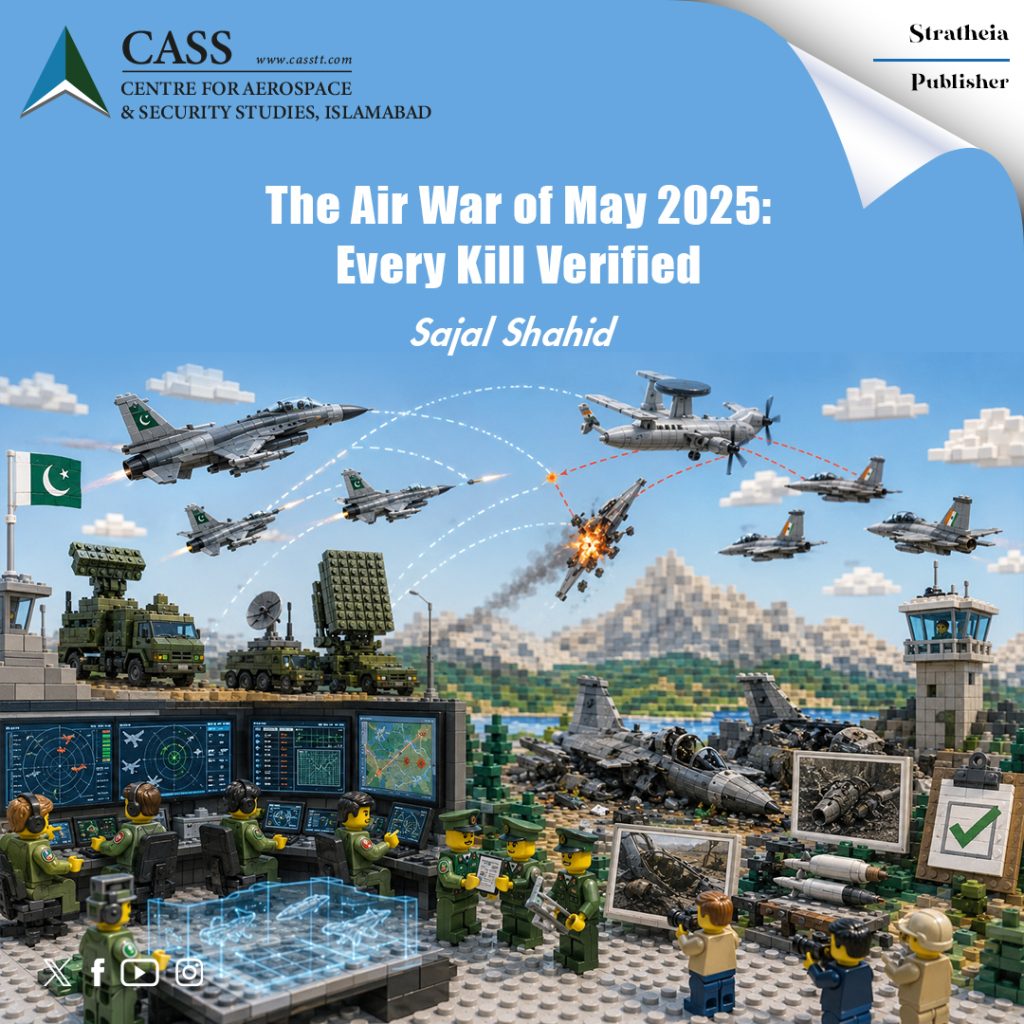
The Air War of May 2025: Every Kill Verified

On 7 May 2025, 114 combat aircraft clashed in what has been described as one of the largest beyond visual range (BVR) air engagements since WWII During the 52-minute aerial battle triggered by India’s Operation Sindoor, traditional visual confirmation of kills became difficult. Missile impacts occurred at unprecedented ranges from 160 km to 190 km, often beyond the horizon, while claims and counter-claims continued to spread rapidly across social media platforms, amplified by unverified facts and AI-produced imageries. Amid this torrent of conflicting claims, determining what actually happened was as disputed as the battle itself.
Amidst this fog of confusion, Pakistan’s clear and unambiguous claims backed by published evidence as well as openness to independent verification provided a welcome breath of clarity. As the prevalence of BVR battles increases and the spread of disinformation continues to outpace verified data in shaping both domestic opinion and international perceptions
Read More »

Marka-e-Haq and the Air Defense Grammar of Aerial Warfare

Marka-e-Haq transformed the May 2025 battlefield into a testing ground, where integrated doctrine and advanced technology redefined the future of aerial warfare. The war provided a paradigmatic example, where a well-integrated air-defence architecture and offensive-defence strategy could successfully counter even the most advanced threats. The unified air-defence architecture of Pakistan transformed numerical disadvantage into strategic superiority, providing crucial lessons on the need to integrate systems and employ multi-domain synergy in the twenty-first century. The May war was more than a fight in the air; it demonstrated that comprehensive planning, innovative technology, and a multi-layered defence can turn the tide in modern war.

Read More »

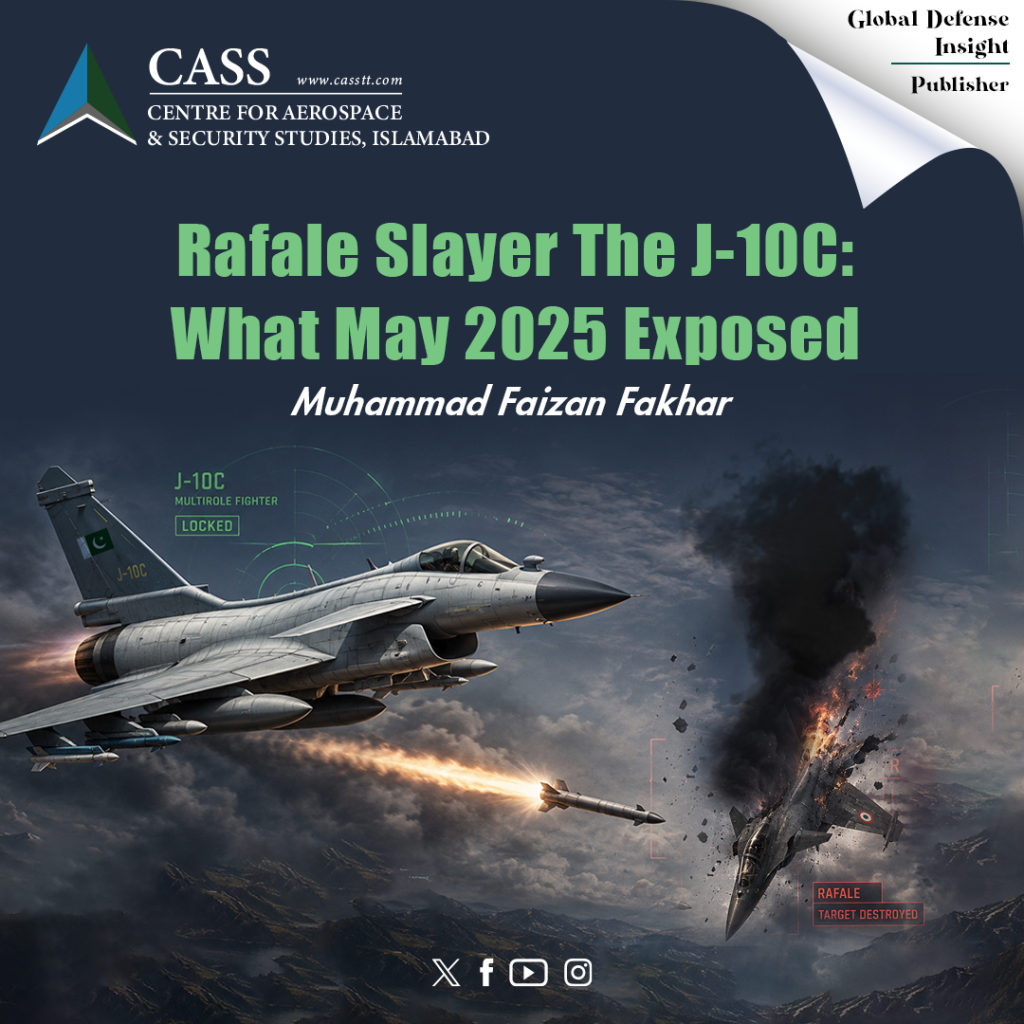
Rafale Slayer The J-10C: What May 2025 Exposed

The May 2025 conflict between India and Pakistan fundamentally altered the course of modern aerial warfare. From the very onset of the conflict, the superiority of PAF over its adversary became abundantly clear as it in quick succession it shot down seven Indian aircraft without suffering even a single loss. PAF employed J-10Cs fighter aircraft, and the score of 7-Nil became even more striking since four of the downed Indian aircraft were Rafales. These were the same Rafale fighters that were being presented as a hallmark of armed forces modernisation by Indian politicians, military leaders, and analysts. However, the combat loss of Rafale jets to J-10Cs not only shattered the assumptions about technological superiority in the battlefield but also solidified the critical role played by the, strategy, tactics and training in air combat. Yet this cannot be viewed as an isolated incident as it was a direct outcome of the contrasting training, procurement strategy and platform integration by both sides

Read More »

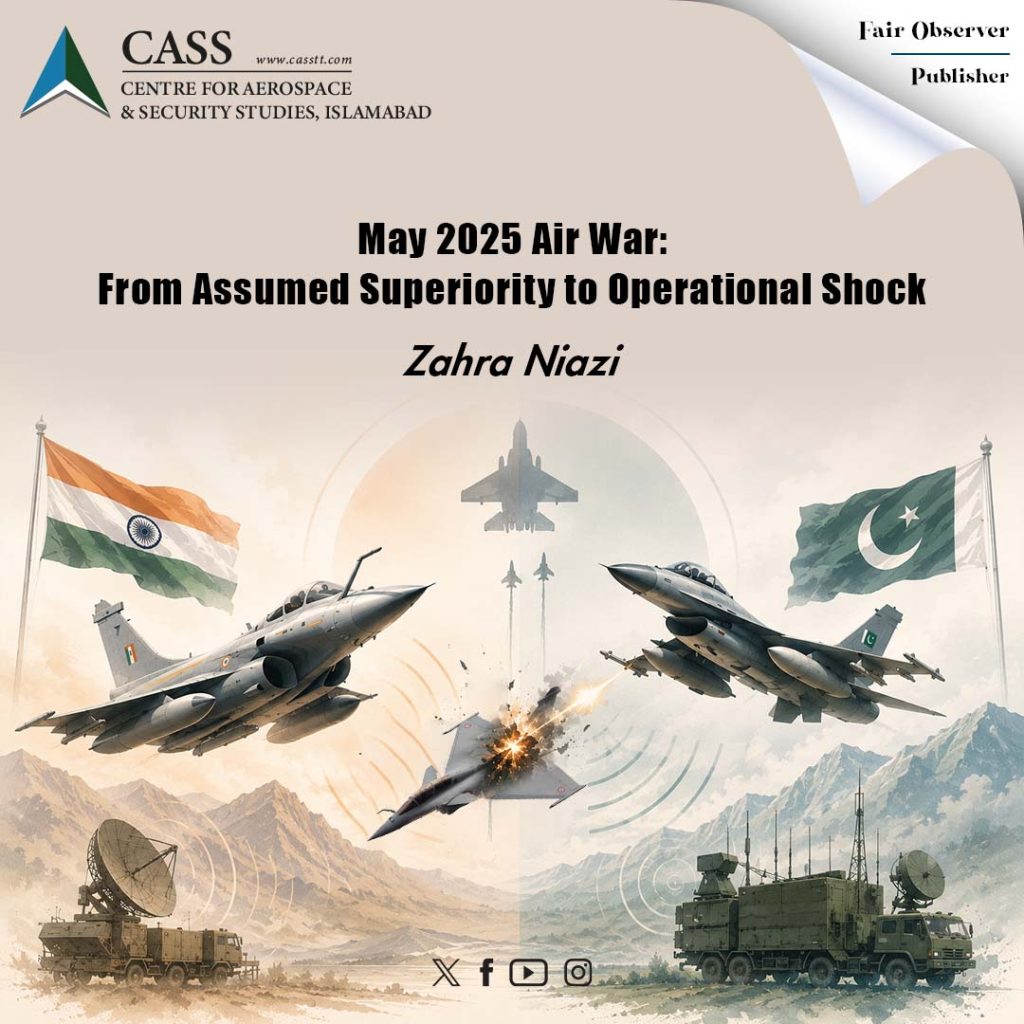
May 2025 Air War: From Assumed Superiority to Operational Shock

n the night of 6-7 May 2025, the Indian Air Force (IAF) faced an unprecedented setback. Pakistan Air Force (PAF)’s downing of seven Indian aircraft during a high-intensity aerial engagement that night, including four state-of-the-art Rafale fighters, regarded as the linchpin of India’s air power modernisation, was a game-changing event.

The outcome represented the breakdown of an assumption that had shaped Indian strategic thought in the period following the 2019 India-Pakistan crisis, that is, the belief that advanced fighter aircraft platforms could decisively shape future battlefield outcomes in India’s favour.

In 2019, PAF downed IAF’s Sukhoi-30MKI and a MiG-21 Bison in a retaliatory air operation following the Indian Balakot strike, with the MiG-21 crashing in Azad Jammu and Kashmir (AJK), resulting in the capture of its pilot, Wing Commander Abhinandan Varthaman. While Abhinandan was released 60 hours after his capture as a ‘peace gesture,’ the episode marked the first major shock for the IAF, which had been outmanoeuvred by a rival force despite possessing advantages in terms of fleet size, budgetary resources, and force depth.  

The lesson was thus unmistakable: conventional military superiority alone cannot guarantee battlefield success.

Rather than internalising this implication, the IAF, aligning with the government’s position, underplayed the losses while perpetuating the narrative that the acquisition of more advanced platforms can shape future battlefield outcomes in India’s favour. The then Chief of Air Staff, Air Chief Marshal BS Dhanoa,

Read More »

The Durand Line Reimagined

The ongoing conflict between Afghanistan and Pakistan is also rooted in colonial divides and the incomplete American project in Afghanistan. The 2640 km long Durand line, between the two states, has a long history ingrained in political contention and geographical challenges. However, the solution to this contention lies beyond historical shadows and conventional tactics of border management.
The legal foundation of the Durand Line is based on the agreement reached between the representative of the Imperial British colony in the subcontinent, Sir Mortimer Durand, and the Emir of Afghanistan, Abdur Rahman Khan, on 12 November 1893. However, the legal foundation faced contention from the Afghan side in 1947, as soon as the Radcliffe award announced the contours of the decolonised state of Pakistan. The

Read More »

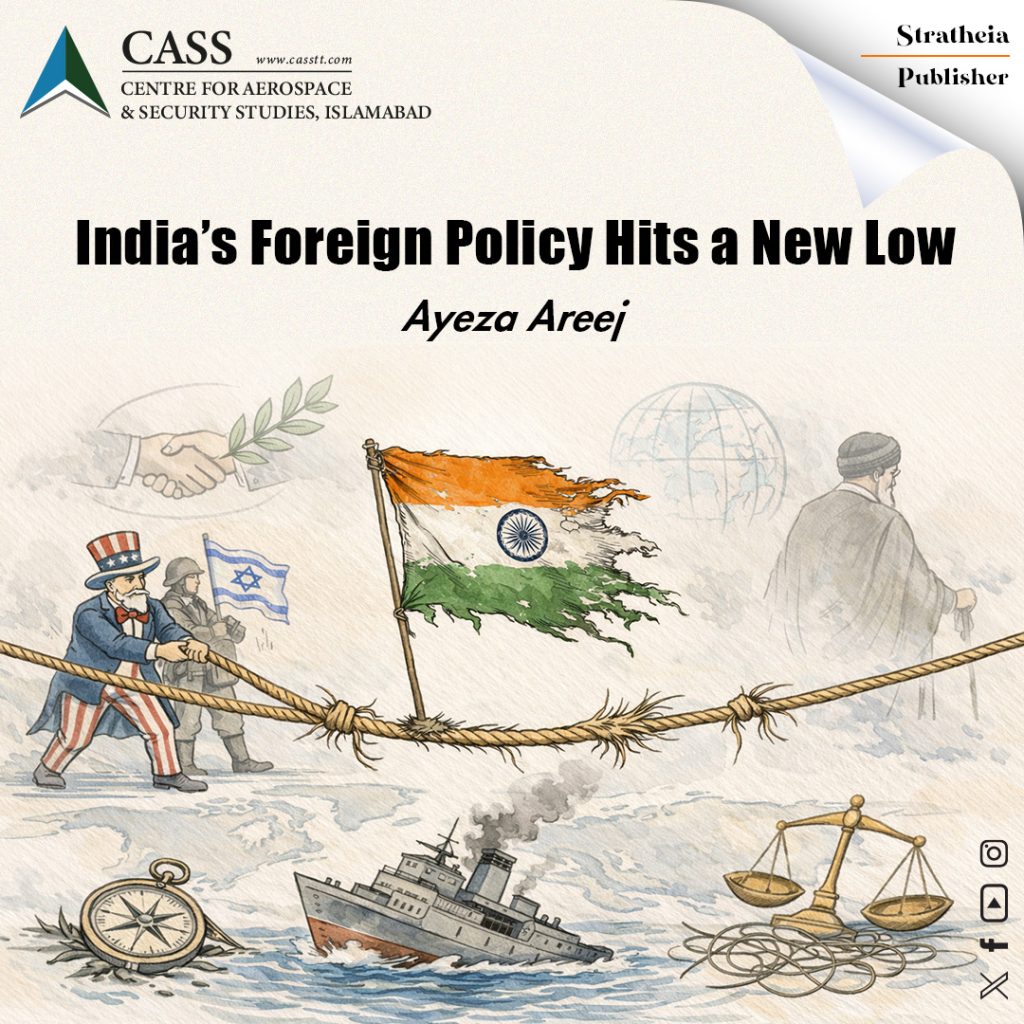
India’s Foreign Policy Hits a New Low

India’s recent diplomatic engagement with Israel marks a striking departure from decades of its carefully balanced foreign policy. Prime Minister Narendra Modi’s visit to Israel on February 25 came against the backdrop of intense global scrutiny on Israeli Prime Minister Benjamin Netanyahu regarding his government’s actions in Gaza and rising regional tensions. The visit signals a shift away from India’s long-standing neutrality and non-alignment, raising serious questions about the country’s foreign policy independence, strategic autonomy, and moral stance on major global issues.
Historically, New Delhi has played a calibrated and neutral role in West Asia. It not only supported Palestinian sovereignty

Read More »

EVENTS