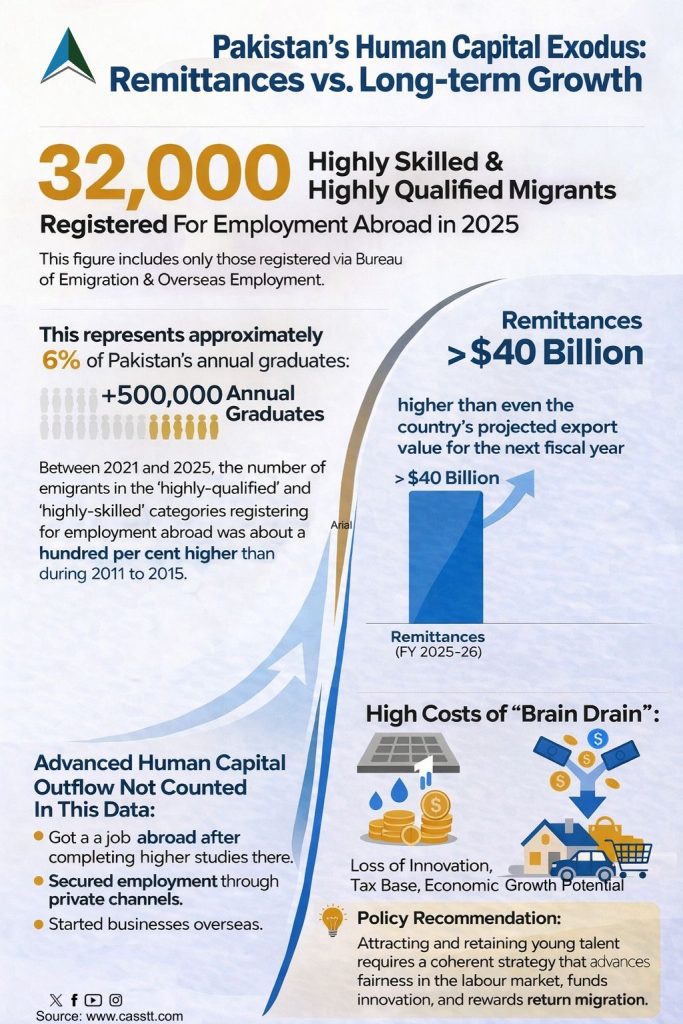
Pakistan’s Human Capital Exodus: Remittances vs. Long-term Growth
Download PDF KEYWORDS: Remittances, Brain Drain, Middle East

Download PDF KEYWORDS: Remittances, Brain Drain, Middle East
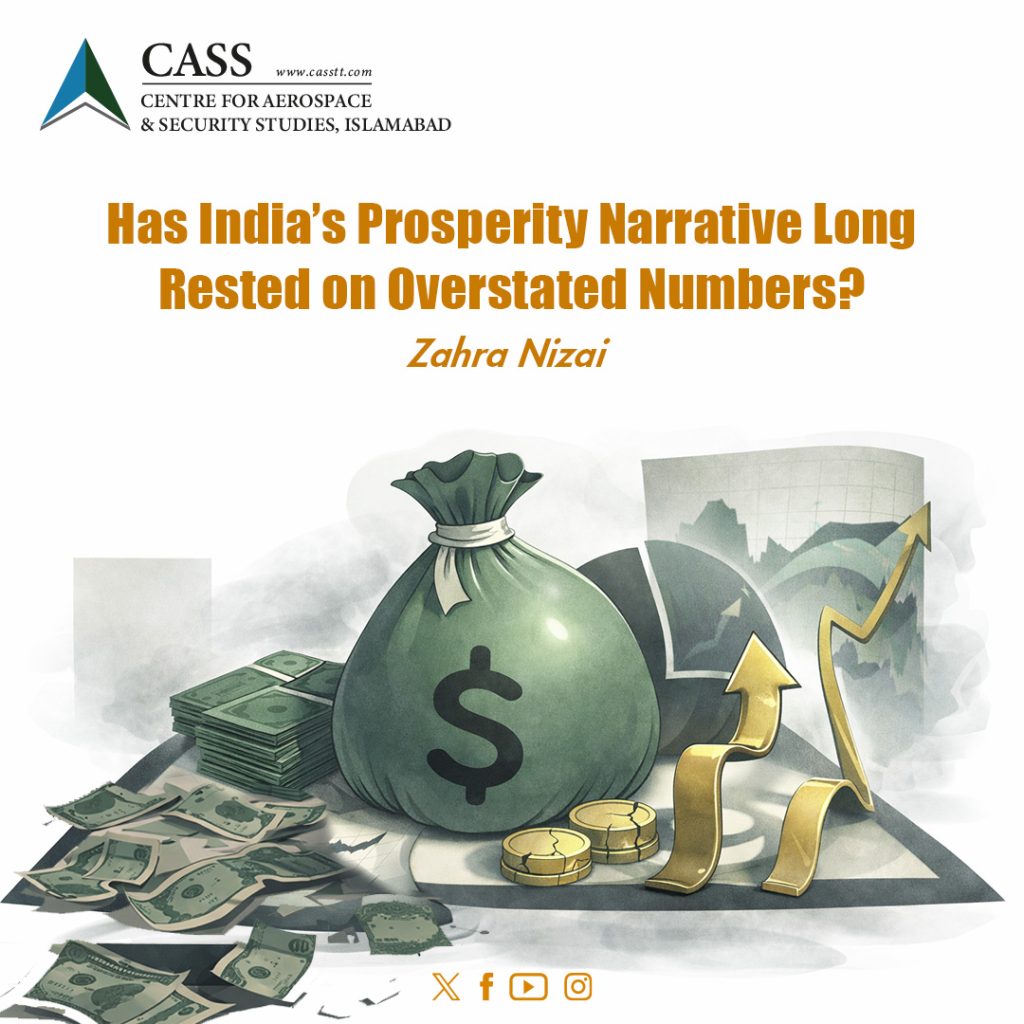
From the congested slums of Mumbai to the neglected neighbourhoods of Delhi, where the poor struggle to survive each day, the widely-documented ground realities in India have long reflected the country’s weak social and human development conditions. Its ranking of 130ᵗʰ on the Human Development Index (HDI) further speaks of these realities. Against this backdrop, the government has relied heavily on headline GDP figures to project a narrative of prosperity, but growing evidence suggests that this part of the narrative, too, may have been based on overstated numbers
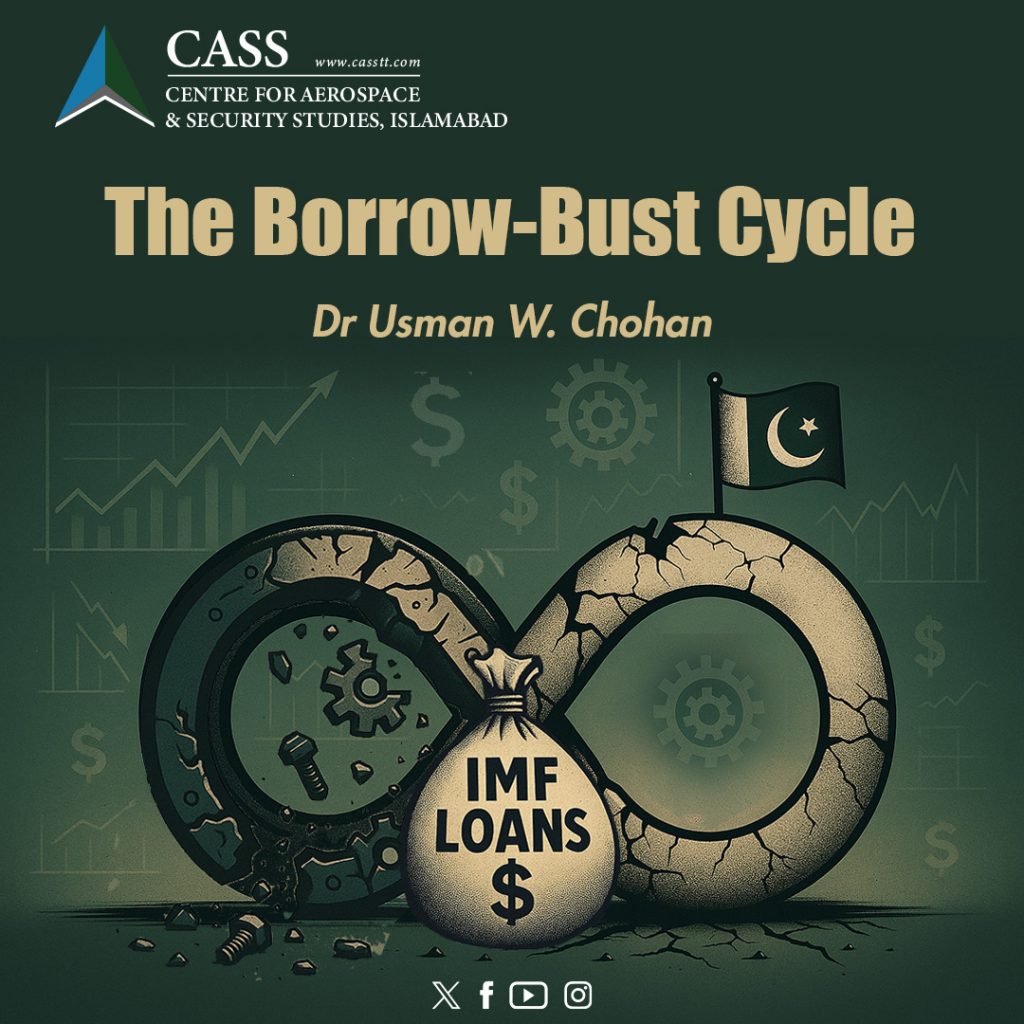
Pakistan has successfully stabilized its economy after mustering considerable effort during a grueling three-year period, which followed the multilayered crisis of 2022-23 that had causal factors ranging from domestic political friction to the global fallout of the Russo-Ukrainian War.
Financial inclusion, the access and use of affordable financial services by all citizens, is an essential pillar of economic security and national stability.
The tragedies of the 2025 floods in Pakistan continue to unfold. While over a thousand people have lost their lives, no number can ever truly capture the depth of the human tragedy.
India has long aimed to establish itself as a key player in the global arms market, supported by the ‘Made in India’ drive for defence self-sufficiency officially launched in 2014.