

Home





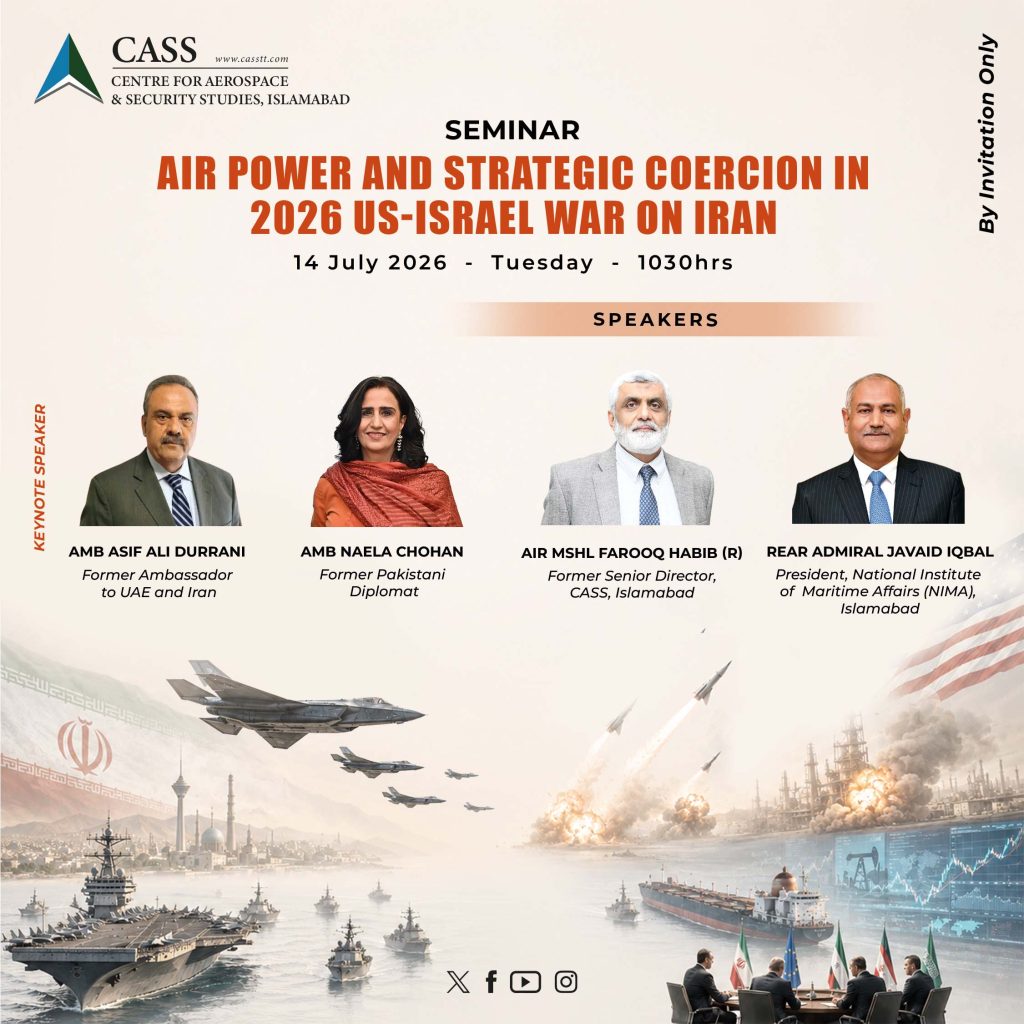
Air Power and Strategic Coercion in the 2026 US-Israel War on Iran
The 2026 U.S.-Israel war on Iran emerged as a defining security event in the Middle East, carrying significant military, political, economic, and geopolitical implications. The conflict did not occur in isolation but evolved from the unresolved tensions, competing strategic objectives, and fragile deterrence environment that persisted after the June 2025 Twelve-Day War. As regional rivalries intensified and diplomatic efforts failed to address core security concerns, the region witnessed a renewed cycle of escalation that culminated in large-scale hostilities. The conflict highlighted the growing role of air and missile power as instruments of strategic coercion.
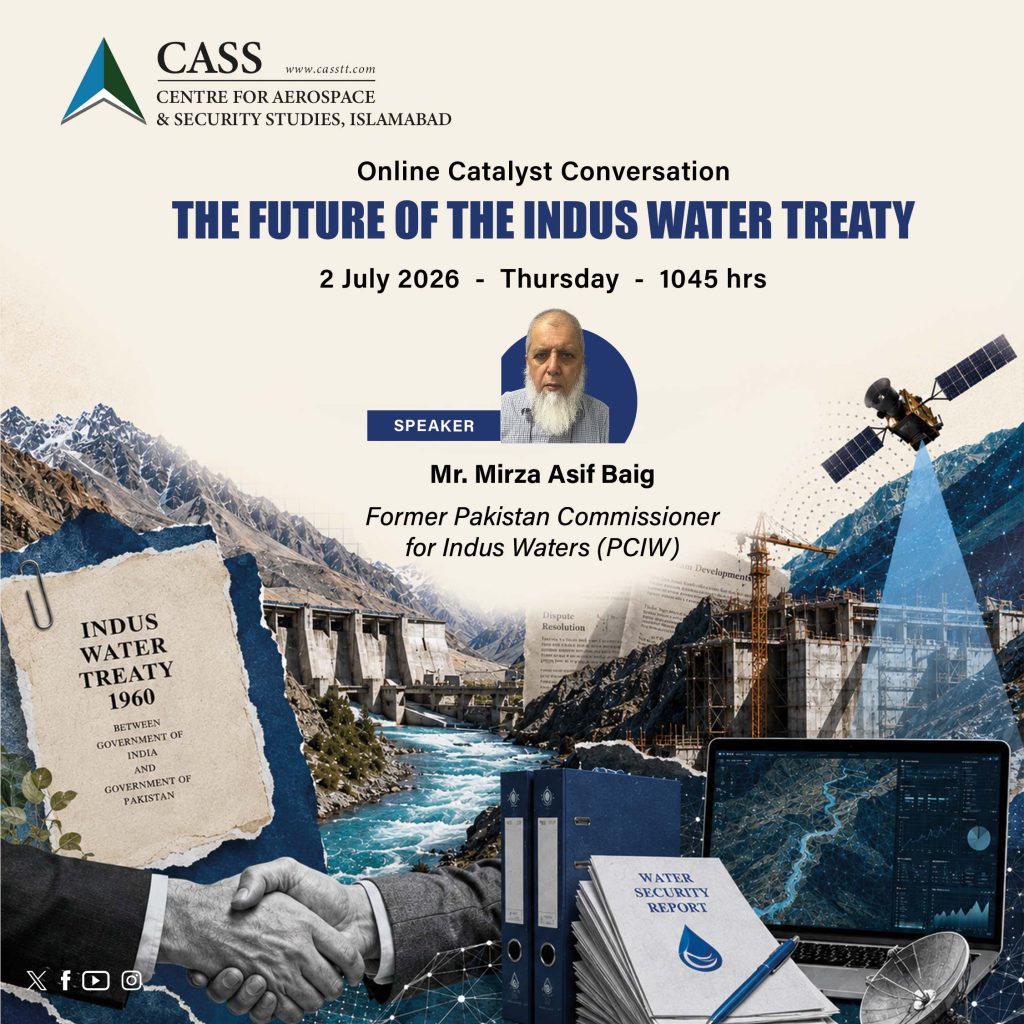
ONLINE CATALYST CONVERSATION THE FUTURE OF THE INDUS WATER TREATY
For more than six decades, the Indus Water Treaty (IWT), signed in 1960 between Pakistan and India, remained as one of the most enduring transboundary water-sharing agreements in the world. Despite multiple wars, political crises, and prolonged periods of bilateral hostility, the treaty largely continued to govern the allocation and management of the waters of the Indus BasinFor more than six decades, the Indus Water Treaty (IWT), signed in 1960 between Pakistan and India, remained as one of the most enduring transboundary water-sharing agreements in the world. Despite multiple wars, political crises, and prolonged periods of bilateral hostility, the treaty largely continued to govern the allocation and management of the waters of the Indus Basin
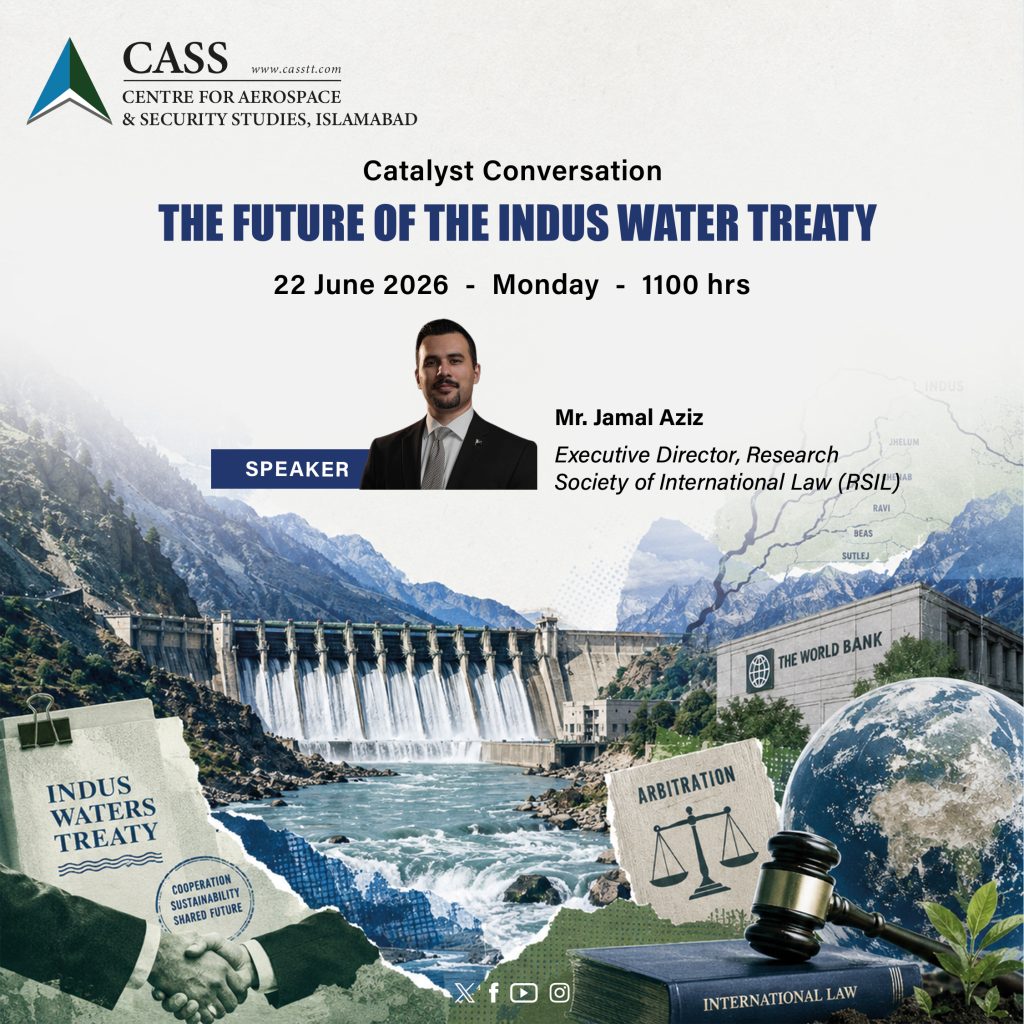
THE FUTURE OF THE INDUS WATER TREATY
For more than six decades, the Indus Water Treaty (IWT), signed in 1960 between Pakistan and India, remained as one of the most enduring transboundary water-sharing agreements in the world. Despite multiple wars, political crises, and prolonged periods of bilateral hostility, the treaty largely continued to govern the allocation and management of the waters of the Indus Basin
