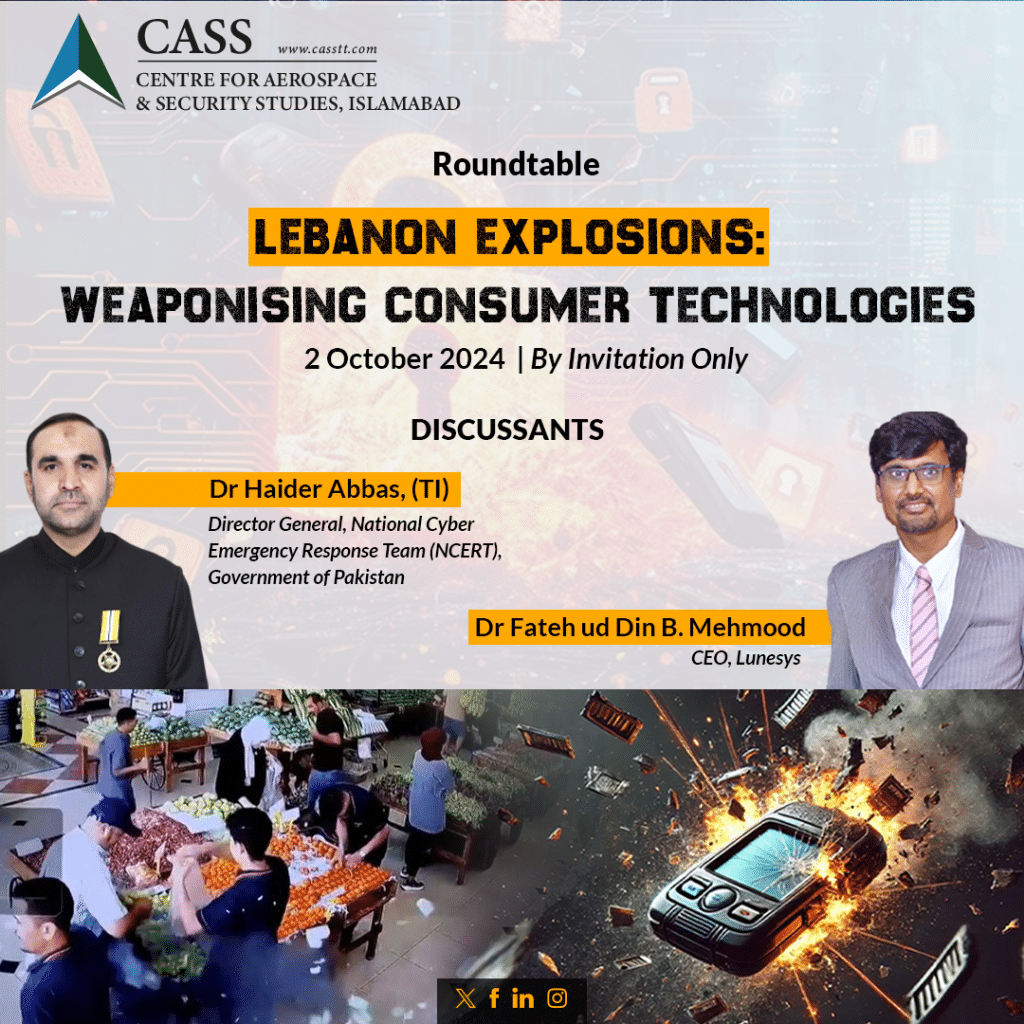
The tragic events in Lebanon, unprecedented in history, where exploding pagers and walkie-talkies claimed 37 lives and injured thousands, have far-reaching implications for the global technological landscape. The events have set a dangerous precedent for weaponising consumer technologies and are likely to alter the prism through which users view upcoming communication gadgets/technologies, in the era of Fifth Generation Warfare (5GW). While various narratives on how the terrorist attacks were executed -ranging from physical tampering and placement of explosives to overheated batteries -will continue to circulate in strategic circles, the full truth behind the incident may remain elusive. In this regard, an exhaustive analysis of the events is necessary due to its strategic and security implications.
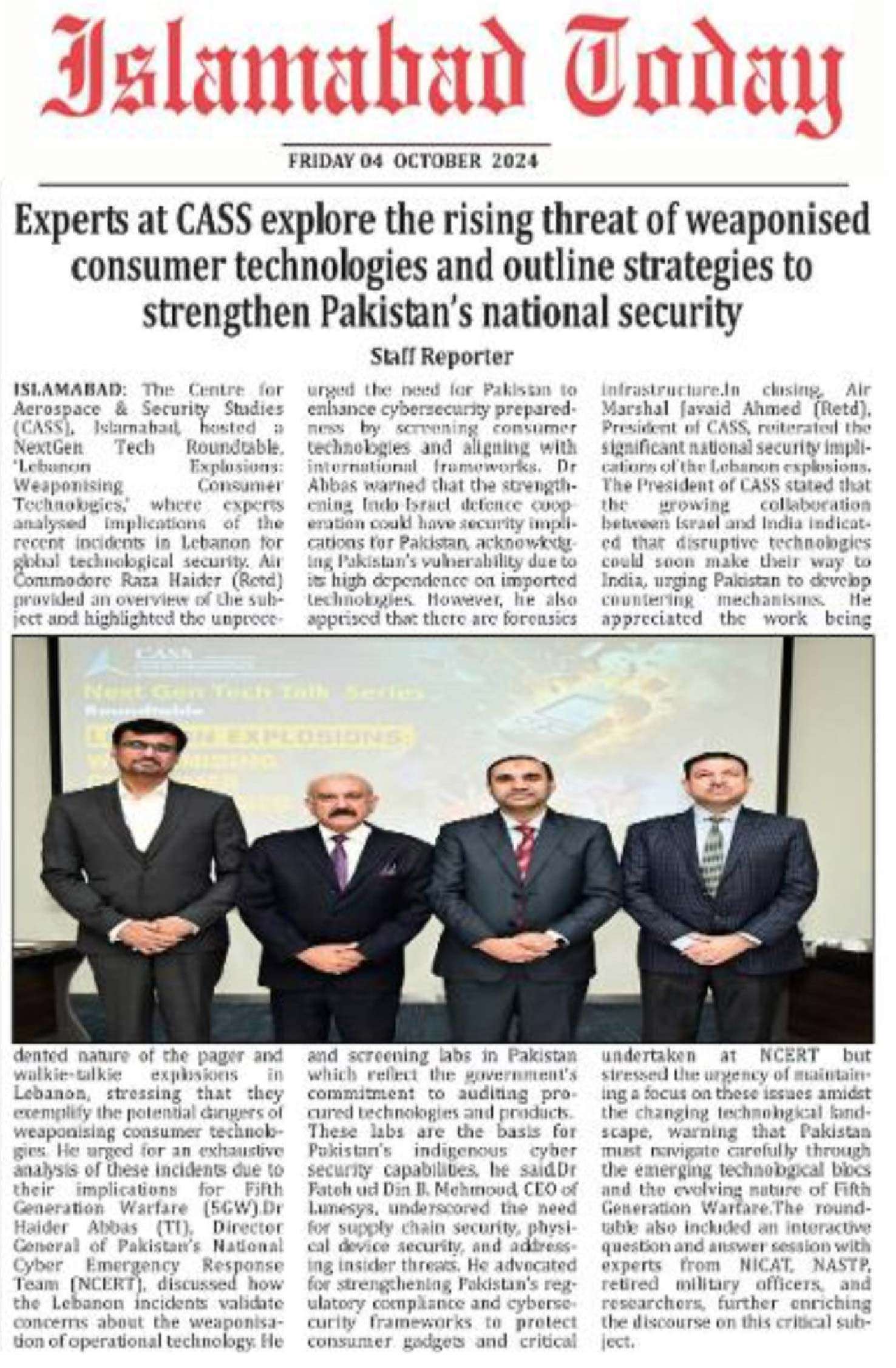
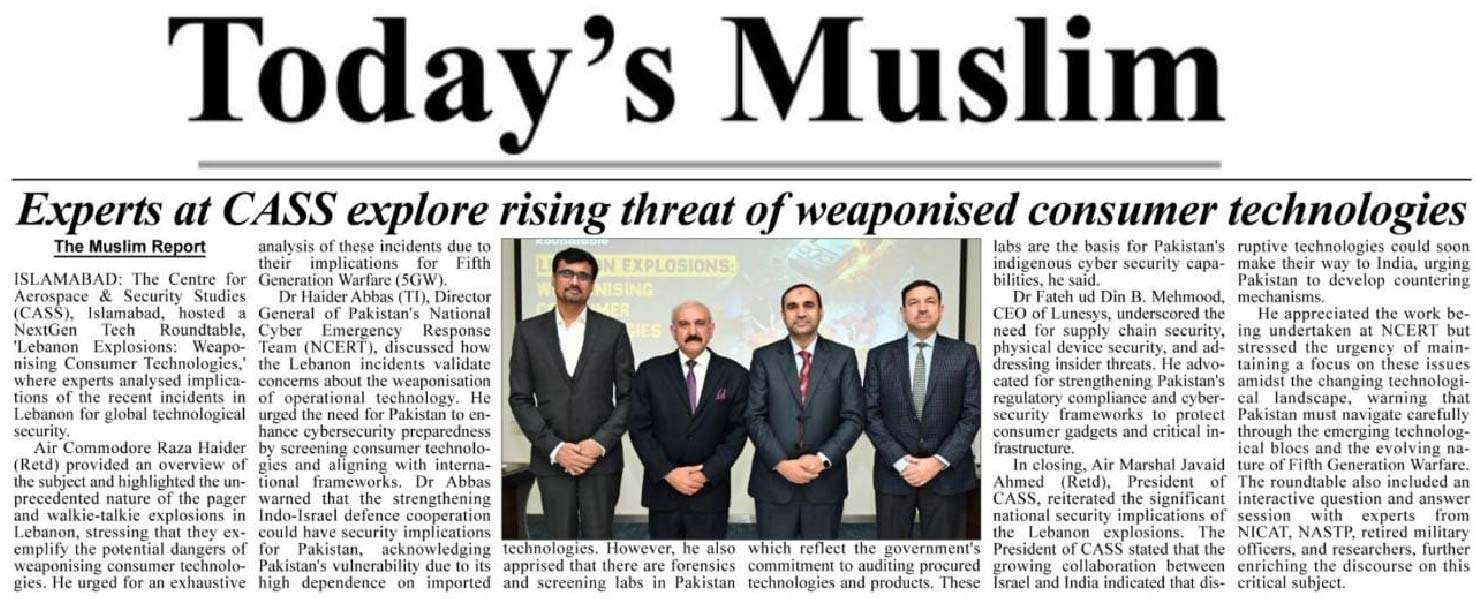
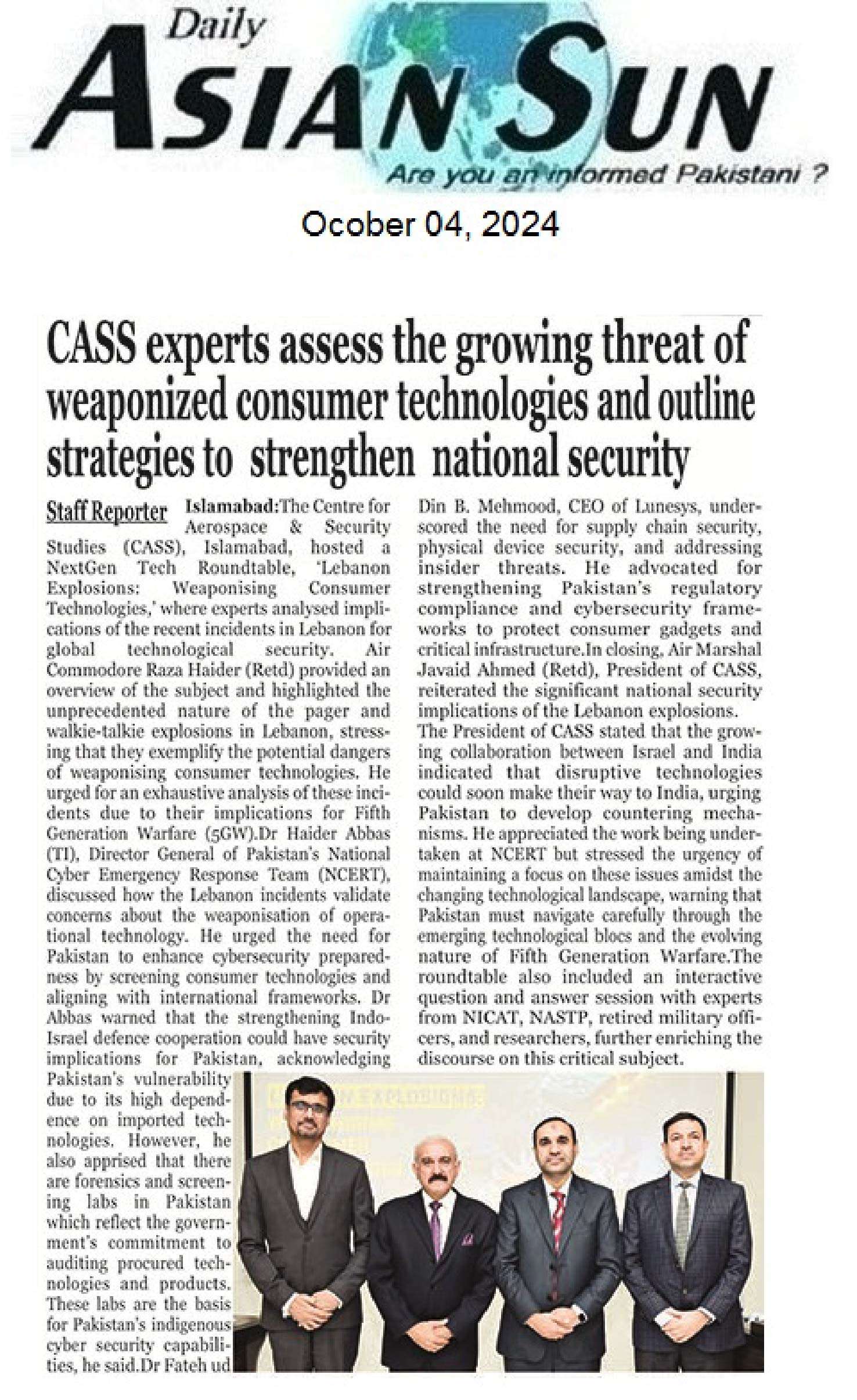
This CASS Roundtable aims to explore the concept of tech warfare in the backdrop of pager/walkie talkie explosions in Lebanon. It seeks to foster a deeper understanding of the threats posed by daily-use gadgets and their weaponisation by powerful countries and facilitate discussions on the development of global and national measures to address these threats. Subject experts will discuss the following relevant issues:
- Historical use of consumer technology as a weapon of hard kill
- Analysis of the cause and methodology behind the gadget explosions in Lebanon
- Impact on consumer confidence in products and software originating from Israel and its allied nations
- Potential for similar attacks by Israeli defence partners, such as India
- Effects of technological dependencies in developing countries on Western nations
- Expected changes in international regulations, including procurement protocols, supply chain oversight, and air travel security
- Feasibility of non-state actors employing similar techniques
- Recommendations for Pakistan
By examining such tech warfare, the roundtable aims to encourage dialogue on the emerging techno-security challenges and elicit practical and innovative measures on promoting a secure and safe techno-security landscape globally.
Press Release
News Coverage
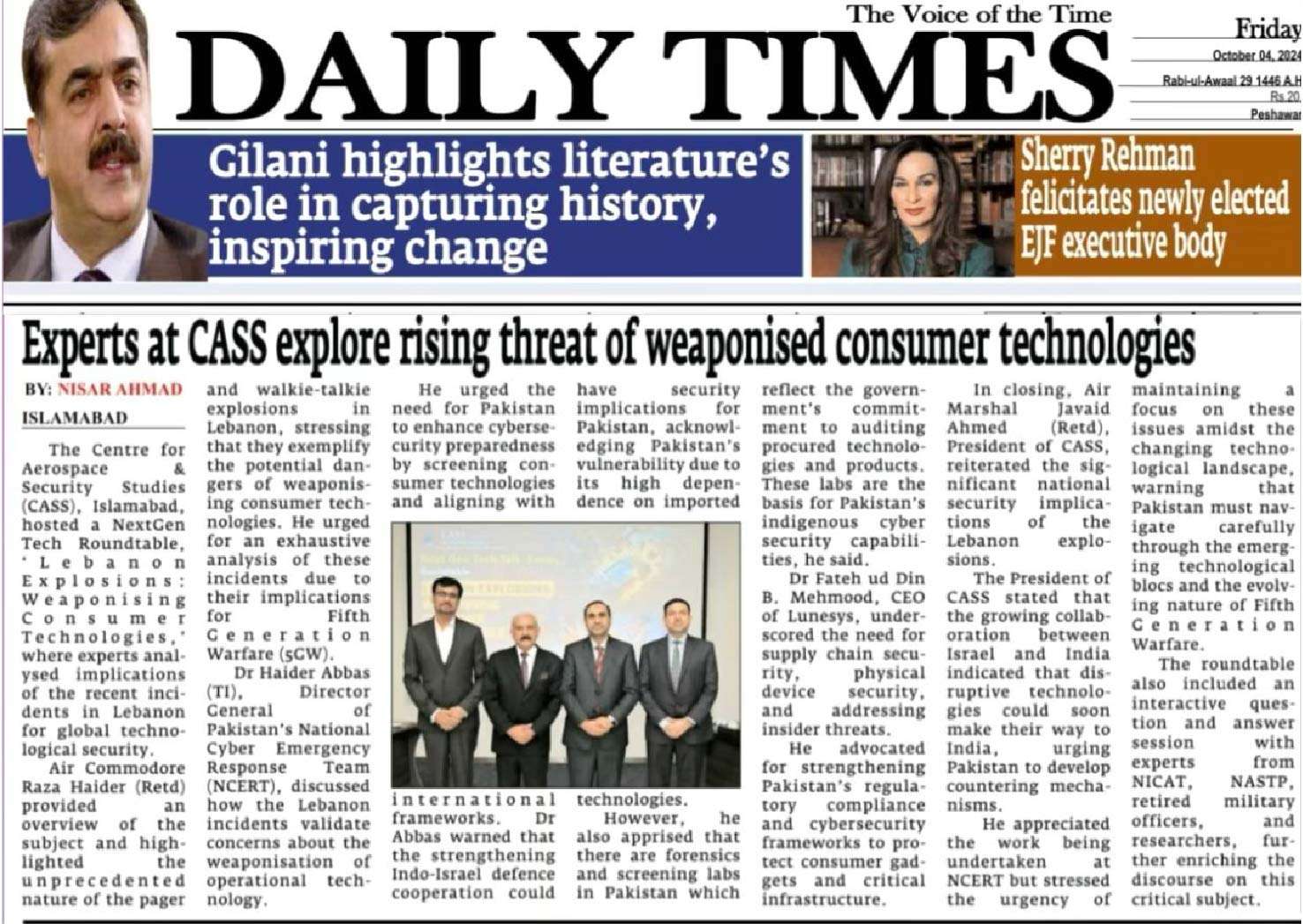
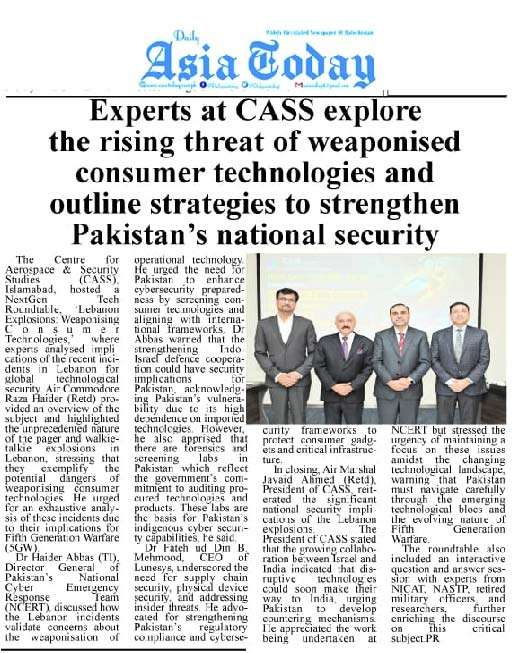
Newspaper Links