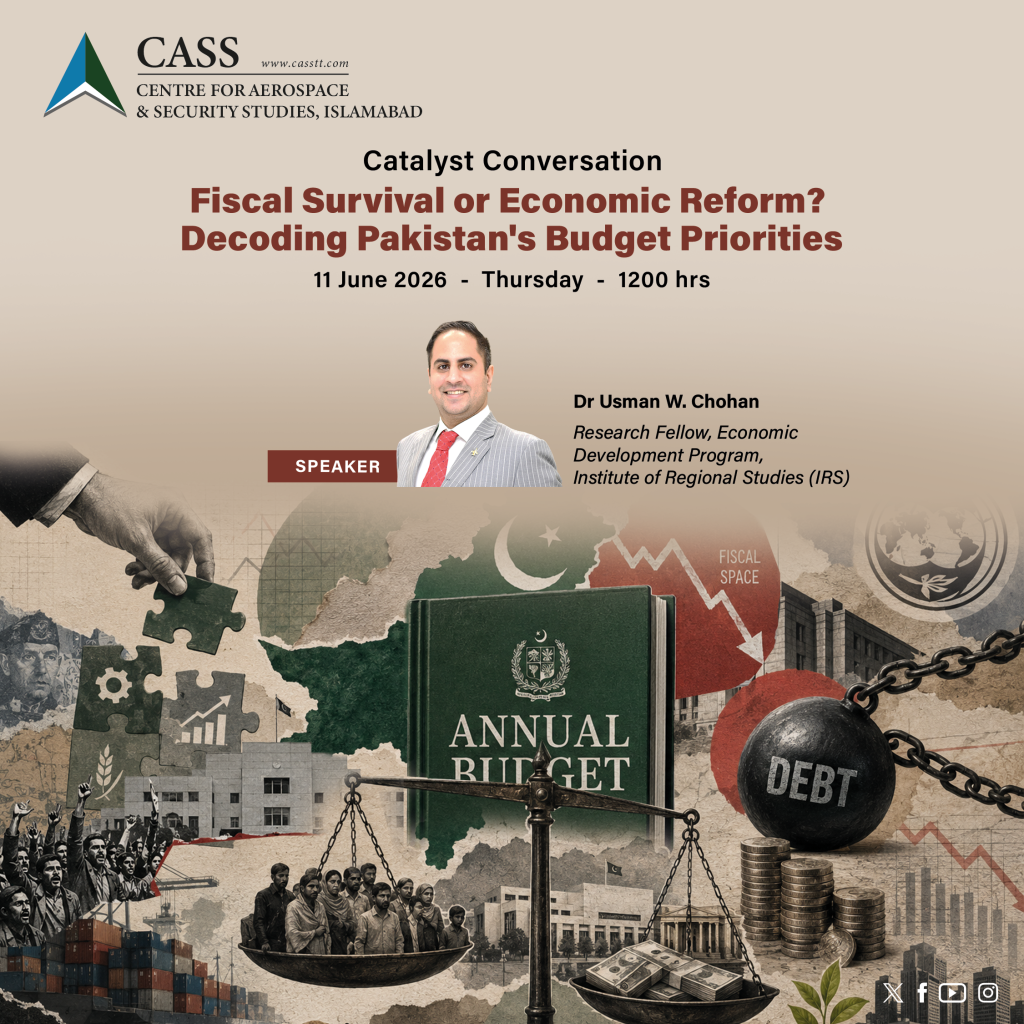
Pakistan’s annual budget is more than a fiscal document; it is a reflection of the country’s structural economic constraints, political choices, and shifting development priorities. The tension between fiscal survival and meaningful economic reform has become increasingly pronounced amid rising debt servicing obligations, limited fiscal space, and recurring dependence on external financing. In this context, budget-making often appears reactive—focused on stabilisation and compliance with short-term macroeconomic targets—rather than transformative, aimed at broad-based productivity, institutional reform, and sustainable growth.
This Catalyst Conversation seeks to unpack the underlying priorities embedded in Pakistan’s fiscal architecture. It will examine whether the upcoming budget would signal a genuine shift toward structural reform or whether it would remain anchored in a cycle of crisis management. The discussion will also explore the political economy of budgeting, including the influence of international financial institutions, defence and debt commitments, and provincial-federal fiscal dynamics.
The session aims to critically assess the following questions.
- To what extent does Pakistan’s budget reflect structural economic reform versus short-term fiscal stabilisation requirements?
- What are the key political economy constraints that shape Pakistan’s budget priorities, particularly in taxation, subsidies, and expenditure allocation?
- How can Pakistan realistically expand fiscal space while reducing dependence on external borrowing and IMF-driven conditions?