
Publications
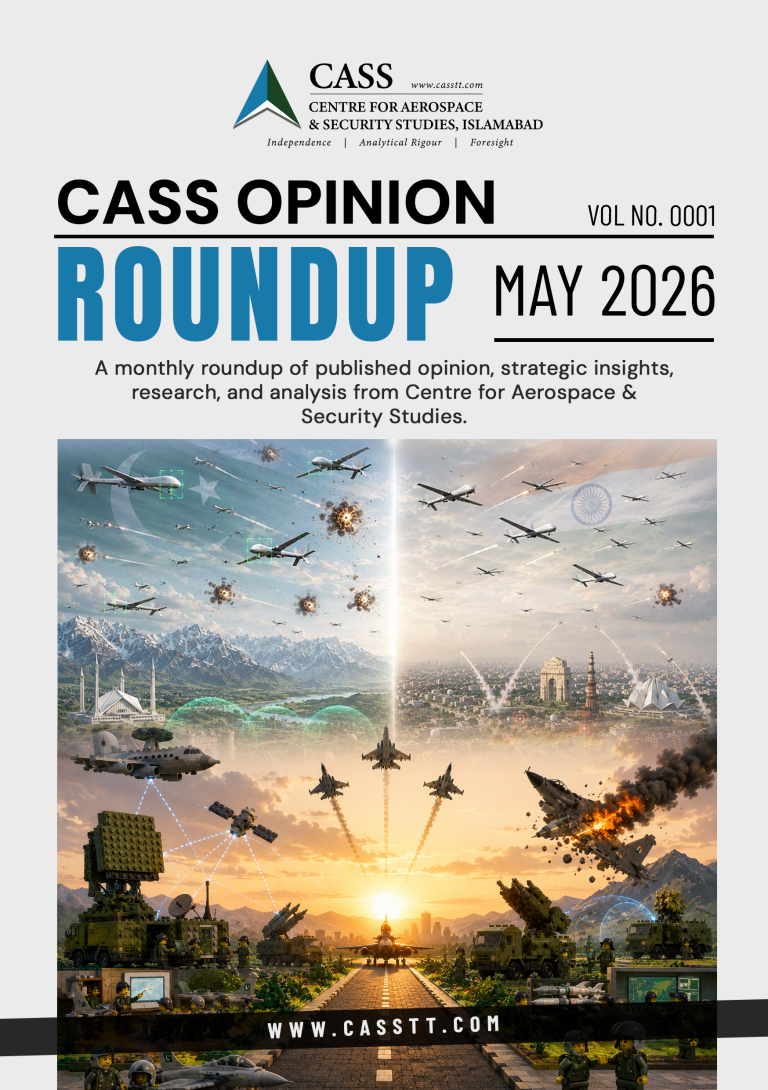

The West: The History of an Idea
The world is witnessing the collapse of the Western order, if not the emergence of an alternative one. The idea of ‘West’ as against the rest is still at the root of contemporary understanding of world politics. Georgios Varouxakis, a remarkable voice on Modernity and Nationalism, has provided the historical origins and modern connotations attached with the idea of ‘West’. In his book ‘The West: The History of an Idea’, Varouxakis has argued that the West is not an eternal entity, rather it is a modern socio-political construct that emerged in the political philosophy of the early 19th century and evolved with the passage of time. The book provides an in-depth historical analysis of the idea to determine the roots of its modern interpretation.
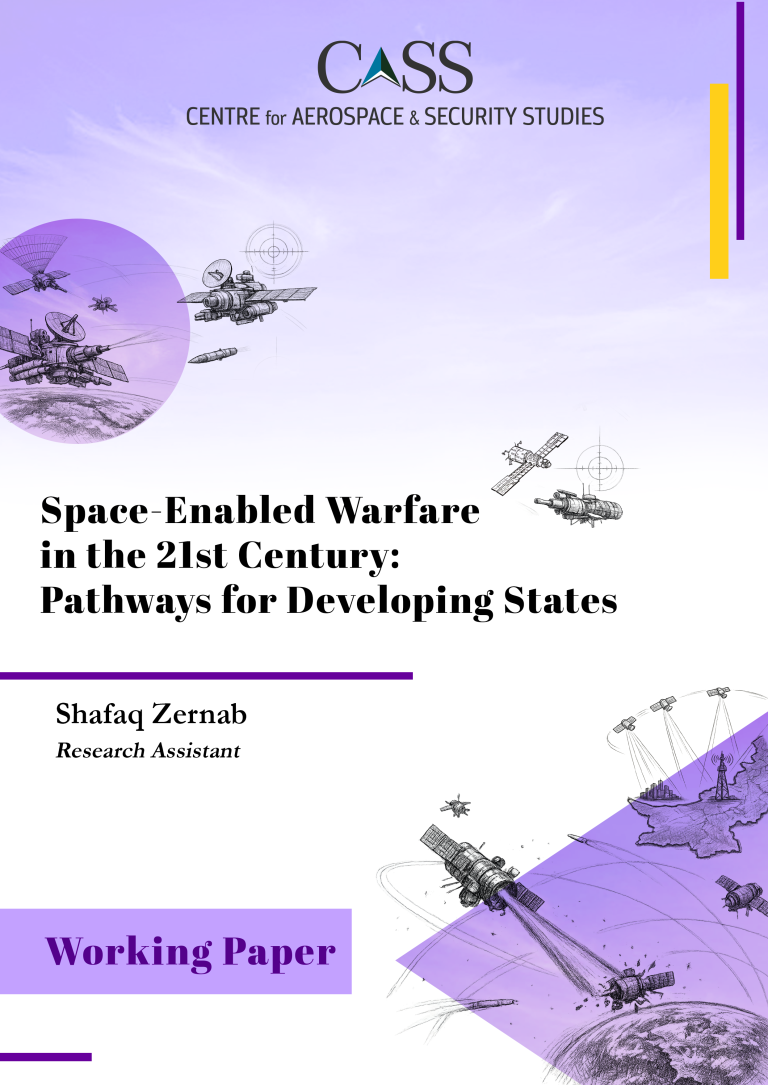
Space-Enabled Warfare in the 21st Century: Pathways for Developing States
Space has emerged as a distinct domain of warfare alongside land, sea, air, and cyber. Developed countries like the United States, Russia, and China possess offensive and support capabilities in space. In the shadowed expanse of Low Earth Orbit (LEO), where satellites operate like silent custodians, the 2022 Russian invasion of Ukraine transformed the nature of modern conflict. As Russian troops marched forward, the commercial satellites like Maxar and Planet, which are operated by Western firms, captured high-resolution imagery of Russian troops, providing real-time intelligence to Ukrainian commanders, unlike ever before.
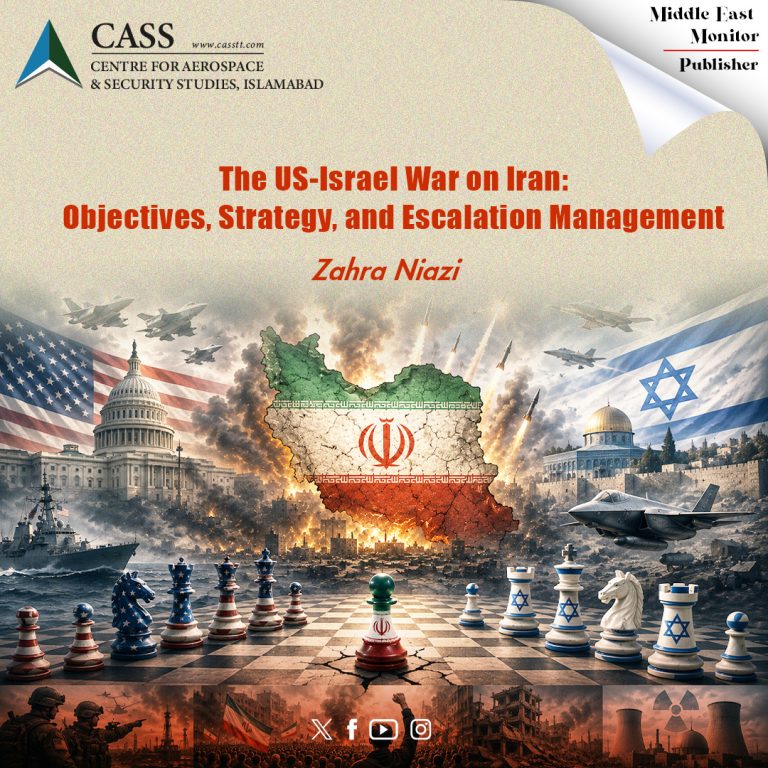
The US-Israel War on Iran: Objectives, Strategy, and Escalation Management
Zahra Niazi
‘States tend to overestimate themselves or the benefits and swiftness of war, and to underestimate their opponents’ capabilities, intentions, or the costs and duration of war.’ If anything, the 2026 war initiated by the United States and Israel against Iran shall be remembered in the annals of warfare among the most visible manifestations of this dynamic.
The war, immediately preceded by the January mass protests in Iran, did not represent a sudden rupture but rather the continuation of a 47-year-long confrontation and a more intense phase of the June 2025 war.
The US Secretary of War, Pete Hegseth, defined the war’s objectives as being laser-focused: to destroy Iran’s missile capabilities and its security infrastructure, while ensuring that it could never develop nuclear weapons. Beyond these stated objectives, among the priorities on the continuum also lay the objective of regime change, with both President Trump and Prime Minister Netanyahu explicitly calling on the Iranian population to take over the government at the outset of the war.
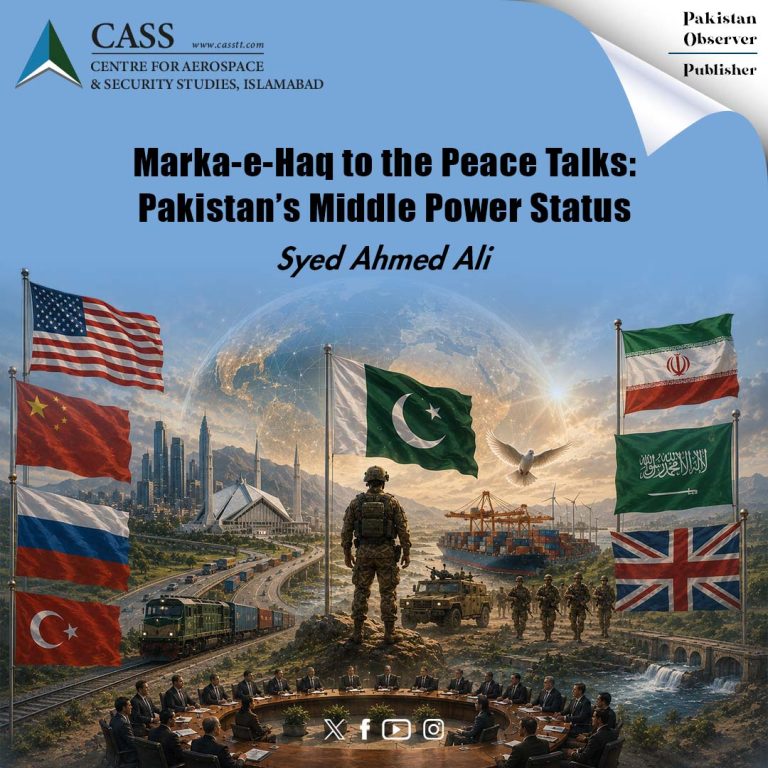
Marka-e-Haq to the Peace Talks: Pakistan’s Middle Power Status
On 7th May 2025, Pakistan’s military forces took the international security community by surprise when it demonstrated operational superiority against its larger belligerent adversary India with its rapid and coordinated response. The Four-Day conflict proved to be a watershed moment for Pakistan, marking its rapid emergence as an important player in the region. In recent years, amidst the ongoing global competition between the United States and China, Islamabad has adopted a position of ’Strategic Balancing,’ where it maintains ties of cooperation with both Beijing and Washington. Deft diplomacy, emphasis on geo-economics, and credible conventional and strategic deterrence have remained the foundational pillars for Pakistan’s ambition as a rising middle power
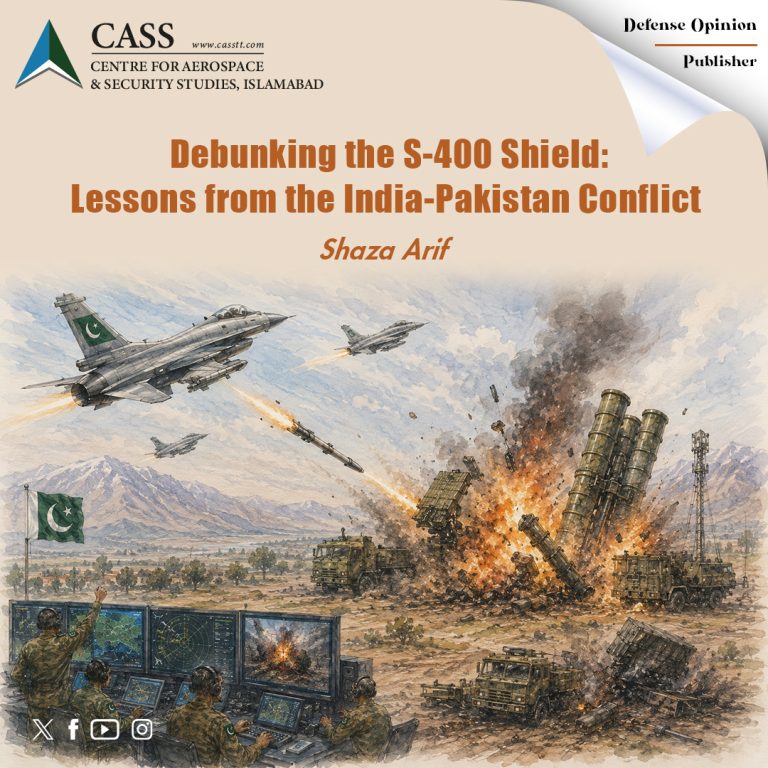
Debunking the S-400 Shield: Lessons from the India-Pakistan Conflict
Air defense has always been a central aspect of warfare. In South Asia, the phenomenon carries immense significance due to compressed reaction times. In this context, one of the most-hyped systems is the Russian-made S-400, touted by New Delhi as a one-stop solution to counter aerial threats from both Pakistan and China.
The 2025 conflict between India and Pakistan marked an important chapter in testing the S-400 technology. The conflict began on May 7, when India attacked what it alleged were terrorist targets in both Pakistani-held Kashmir and Pakistan proper, using drone and missile strikes. The conflict lasted for four days, culminating in a U.S-facilitated ceasefire. However, the brief conflict debunked a lot of the myths regarding the S-400 technology.
First, India claimed that the mobile S-400 would be able to control Pakistan’s airspace. In contrast, Pakistani aircraft continued to operate freely, according to official briefings by the Pakistani military. Although the Pakistan Air Force (PAF) aircraft were in their own airspace, they were still within the air defense range.
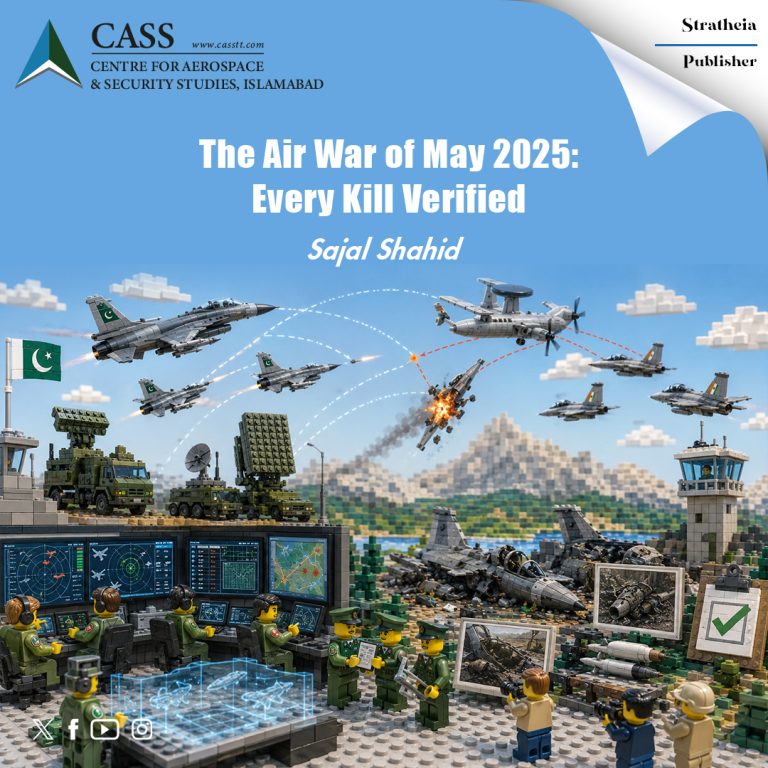
The Air War of May 2025: Every Kill Verified
On 7 May 2025, 114 combat aircraft clashed in what has been described as one of the largest beyond visual range (BVR) air engagements since WWII During the 52-minute aerial battle triggered by India’s Operation Sindoor, traditional visual confirmation of kills became difficult. Missile impacts occurred at unprecedented ranges from 160 km to 190 km, often beyond the horizon, while claims and counter-claims continued to spread rapidly across social media platforms, amplified by unverified facts and AI-produced imageries. Amid this torrent of conflicting claims, determining what actually happened was as disputed as the battle itself.
Amidst this fog of confusion, Pakistan’s clear and unambiguous claims backed by published evidence as well as openness to independent verification provided a welcome breath of clarity. As the prevalence of BVR battles increases and the spread of disinformation continues to outpace verified data in shaping both domestic opinion and international perceptions
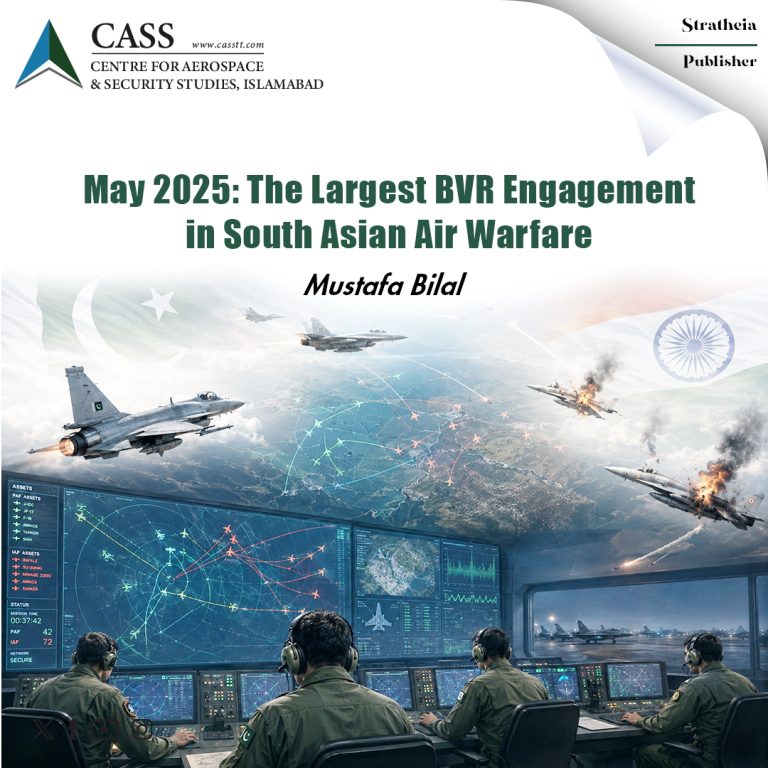
May 2025: The Largest BVR Engagement in South Asian Air Warfare
The tale of how the Pakistan Air Force (PAF) and the Indian Air Force (IAF) entered the era of Beyond Visual Range (BVR) air combat spanned decades before it came to its culmination on the night of 7 May 2025. For almost 50 years after partition, the PAF and IAF engaged each other in close-distance dogfights. Pilots would often recognize the tail markings on the fighter aircraft they were attempting to shoot down with their short-range guns and heat-seeking missiles. As such, all aerial engagements during the wars of 1965 and 1971 were conducted within visual range. The technological enablers for BVR engagements and corresponding doctrines did not develop in South Asia until the 2000s.
In BVR air combat, the first one to see, lock on, and fire their missiles wins the engagement. Initially, the IAF had the ‘First Look, First Shot’ advantage. PAF’s fighter aircraft were capable but carried missiles with limited range, hindering effective long-range engagements
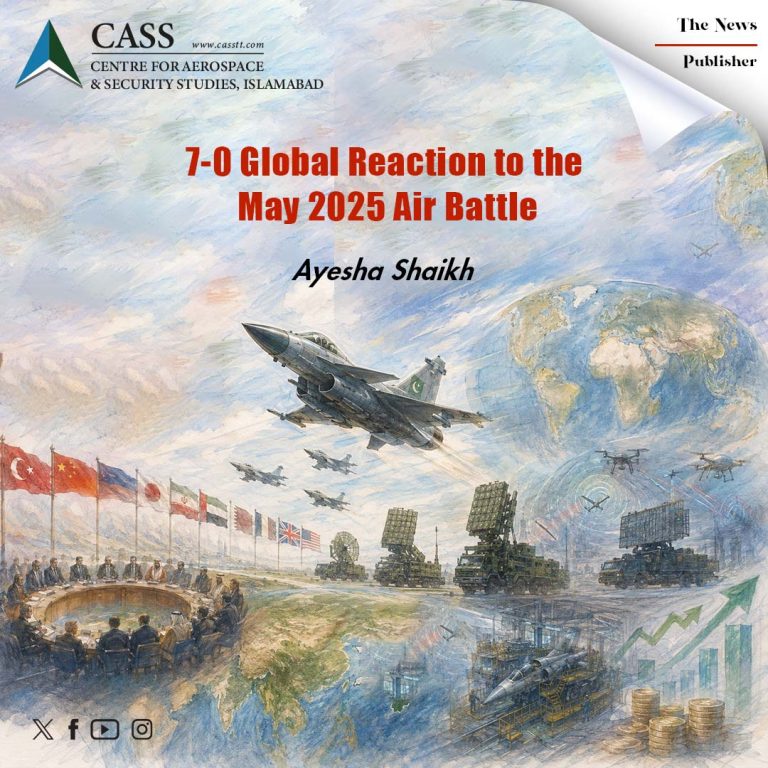
7-0 Global Reaction to the May 2025 Air Battle
The May 2025 Air war between India and Pakistan was a unique development in the history of warfare, where Pakistan Air Force (PAF) downed 7 jets of the Indian Air Force (IAF), within a matter of minutes. It astonished observers all across the globe, considering the comparable difference in the size of both forces and their respective performance. One year ahead of the May 2025 Air War between India and Pakistan, failure of the Indian narrative in the face of the globally acclaimed Air dominance of PAF has shifted the global posture in favour of Pakistan. The military, strategic, and economic response from the international actors has certified the victory of Pakistan against the Indian misadventure.
Militarily, the peculiar dynamics of the conflict attracted significant global attention. Military strategists focused on the tactics and technologies used by PAF and extracted Air doctrine lessons from the conflict. The IAF had a two-fold
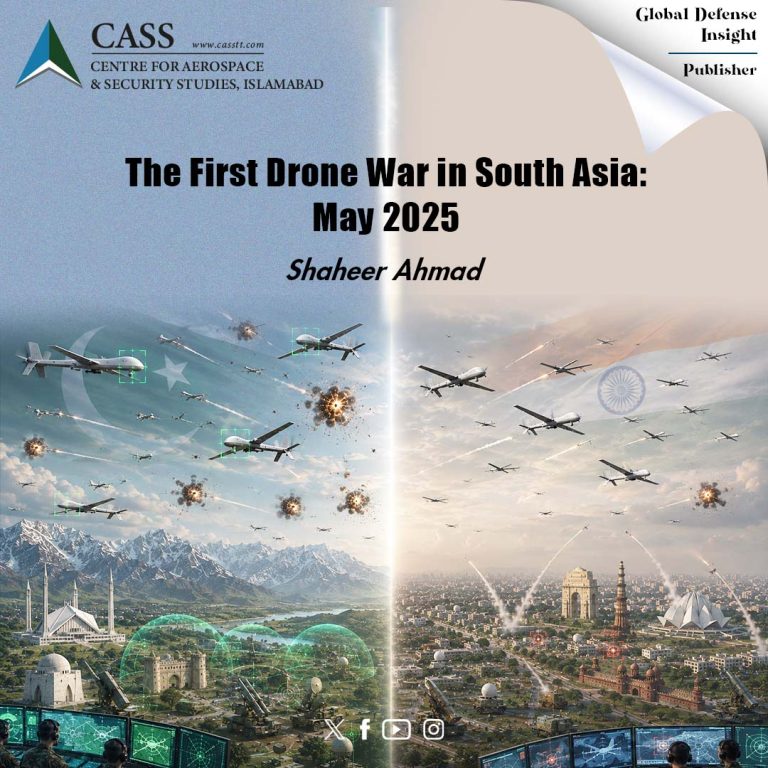
The First Drone War in South Asia: May 2025
The four-day India-Pakistan conflict saw the emergence of drone warfare as a new strategic reality in the South Asian theatre. Drawing inferences from the Russia-Ukraine war, both sides deployed drones for precision targeting, probing air defences, and performing intelligence, surveillance, and reconnaissance (ISR) tasks. The conflict marked a qualitative escalation where unmanned systems were used for coercive targeting besides their utility for tactical surveillance and reconnaissance.
The loss of 7 top-of-the-line fighter aircraft in the initial phase of battle swiftly ended the Indian Air Force (IAF) bid for air dominance, forcing it to retreat to the rear bases. The loss of control of air created a decision dilemma and operational pause for the Indian leadership, compounded by the absence of a coherent strategic direction
