Concept Note
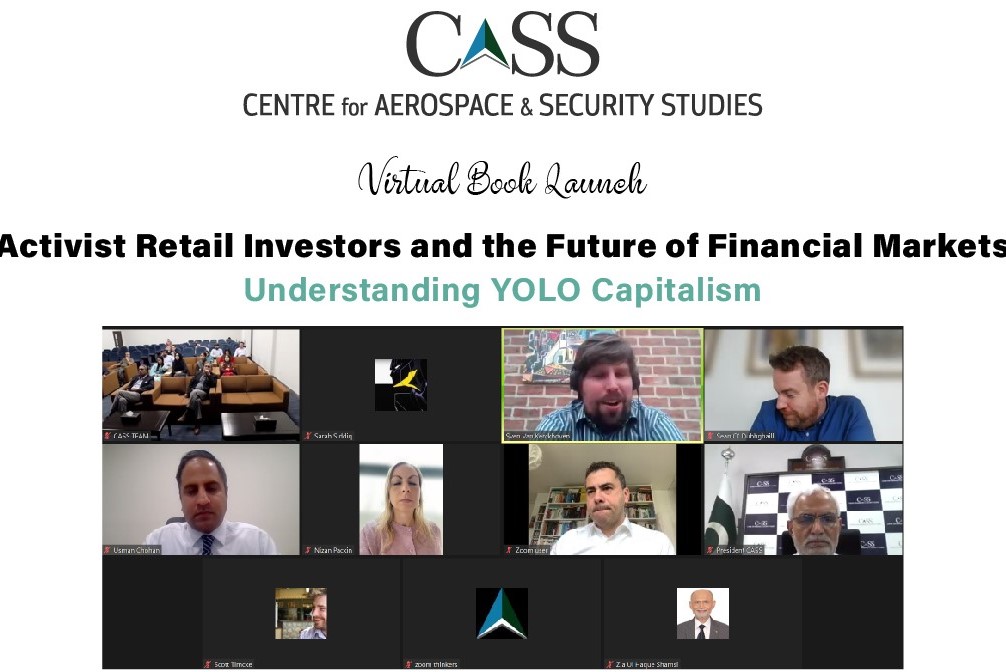
Contemporary financial markets have been characterised by sociocultural phenomena such as ‘meme stocks,’ the GameStop short squeeze, and ‘You Only Live Once (YOLO)’ trading. These are movements led by small-scale retail investors banding together to participate forcefully in financial markets through decentralised but coordinated actions. This book deploys many different subdisciplines to explore the recent ‘power grabbing’ of retail investors and the online environment that enables them to join the ranks of major financial players and participate in contemporary capitalism. It offers multiple perspectives on the genesis, role, motivations, power, and future prospects of retail investors as a force in contemporary financial markets. Drawing upon the insights of authors hailing from many different countries, the book frames YOLO capitalism through numerous angles that help to explain the context and the importance of activist retail investors in modern financial markets, and thereby explore the possibilities of a transformed financial future with much wider small-scale participation.
The book assesses the potential of online – and other – communities in enabling global coordination in impacting or even driving financial and crypto markets, and the challenges that come with it and weighs the competing narratives both positive and negative regarding YOLO capitalism. It strikes a balanced assessment of their legal, cultural, behavioral, economic, and political roles in modern finance.
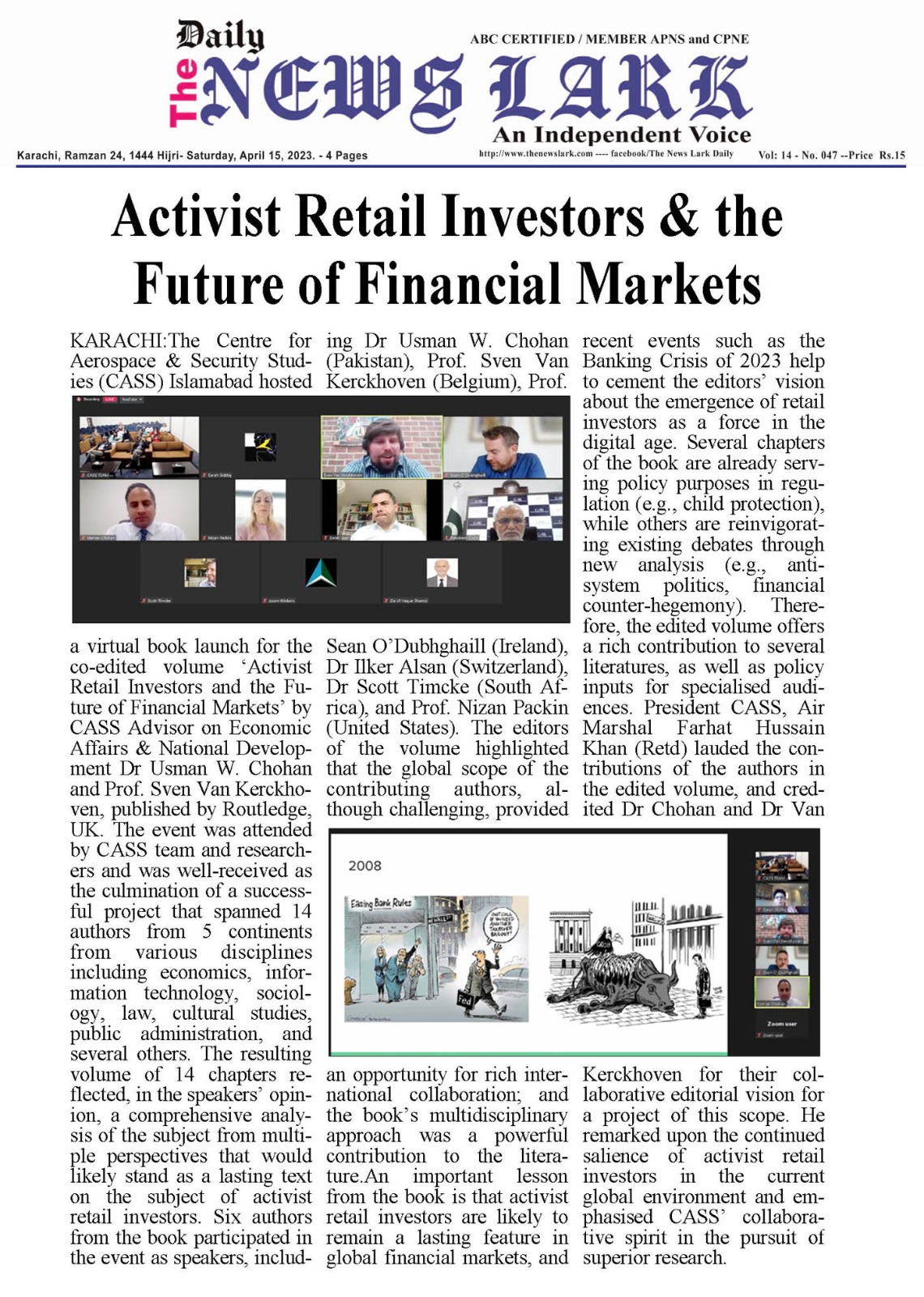
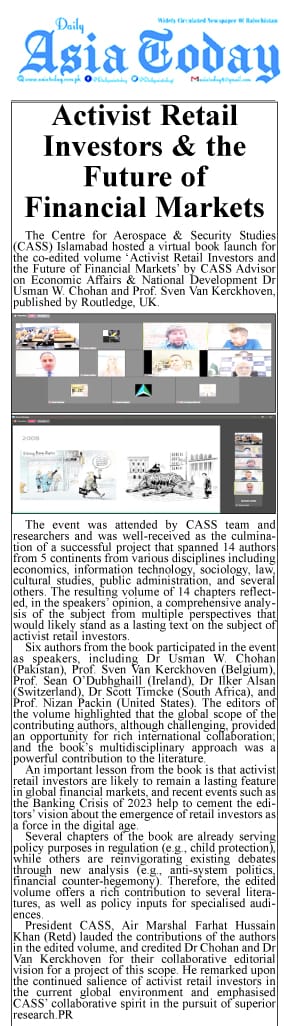
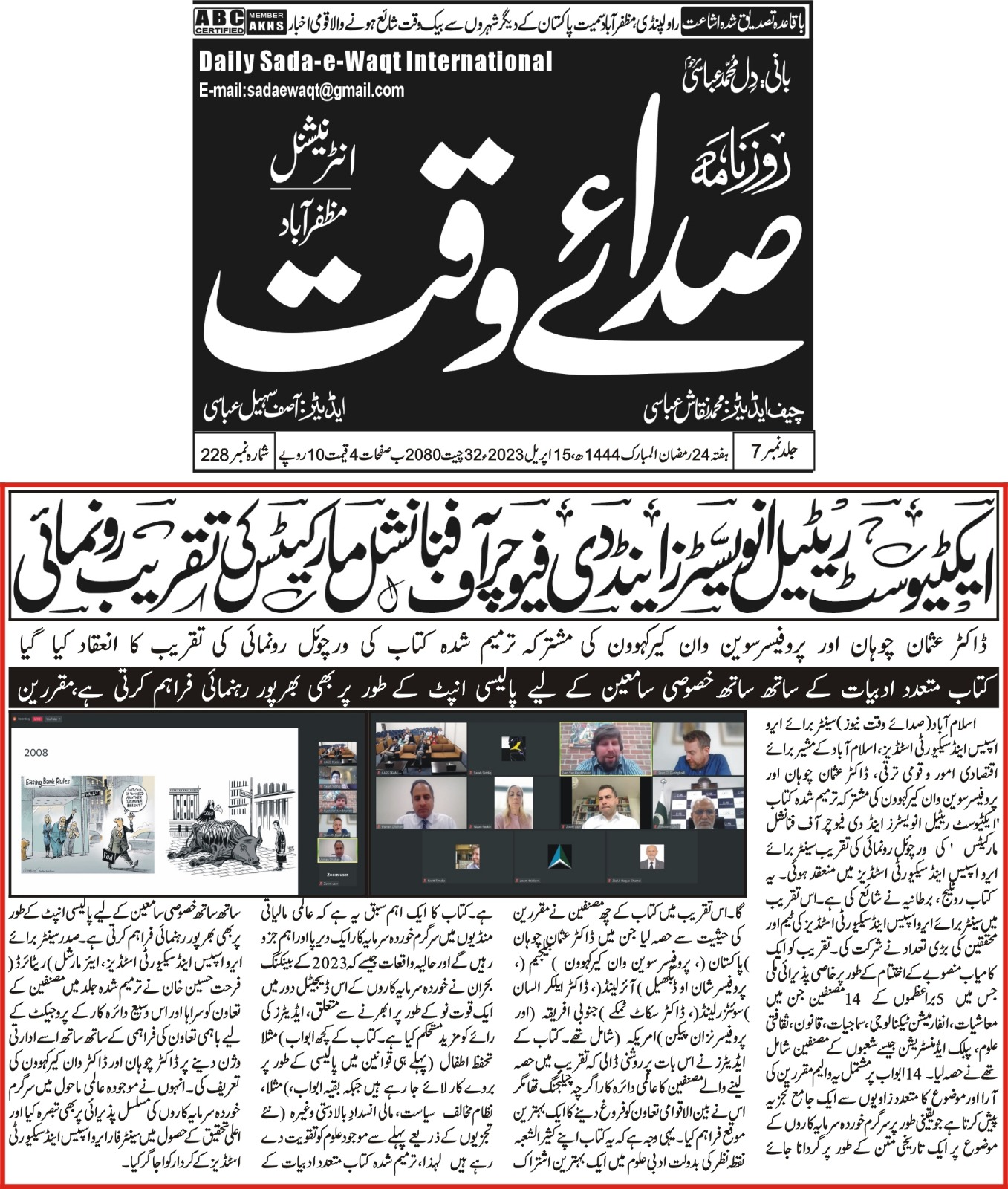
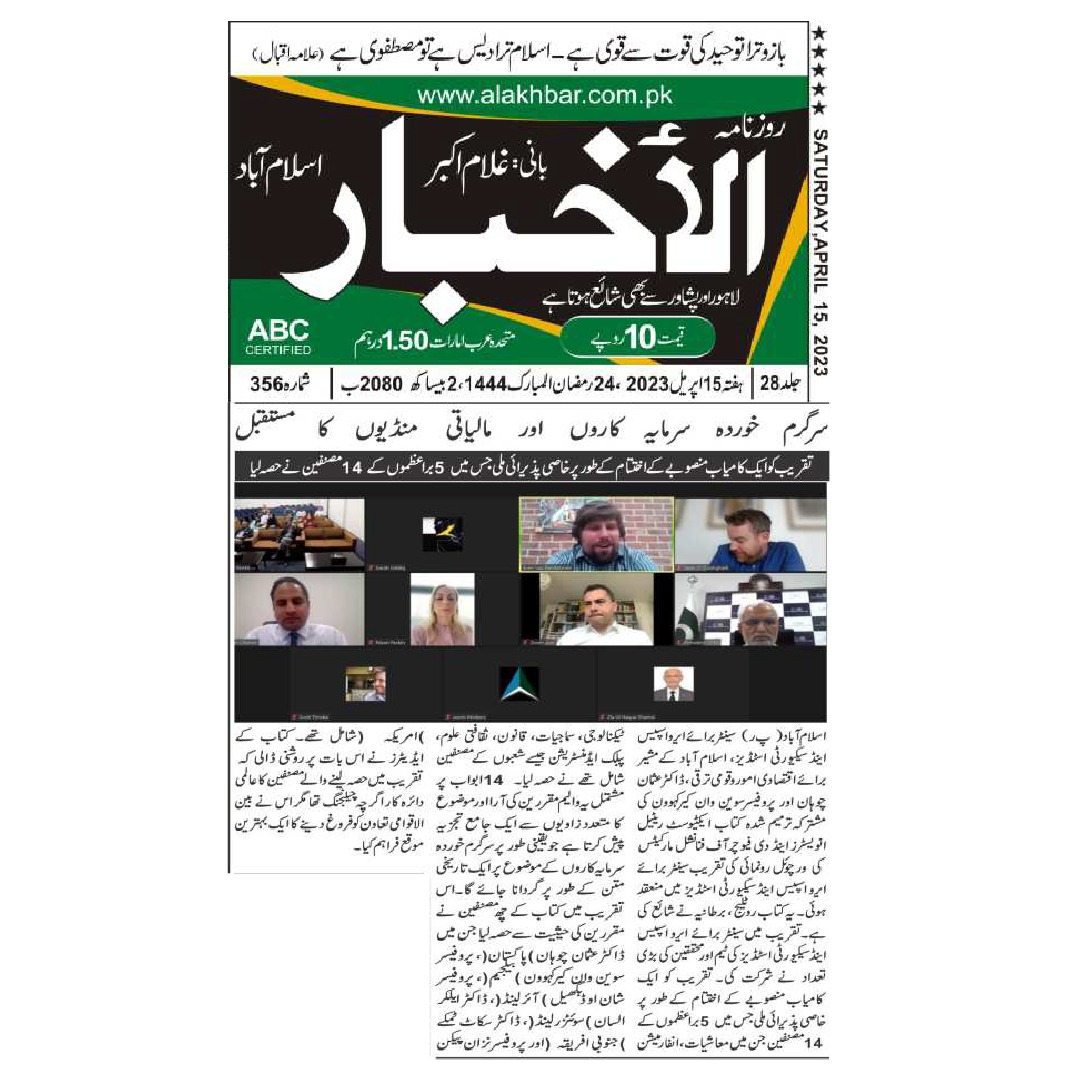
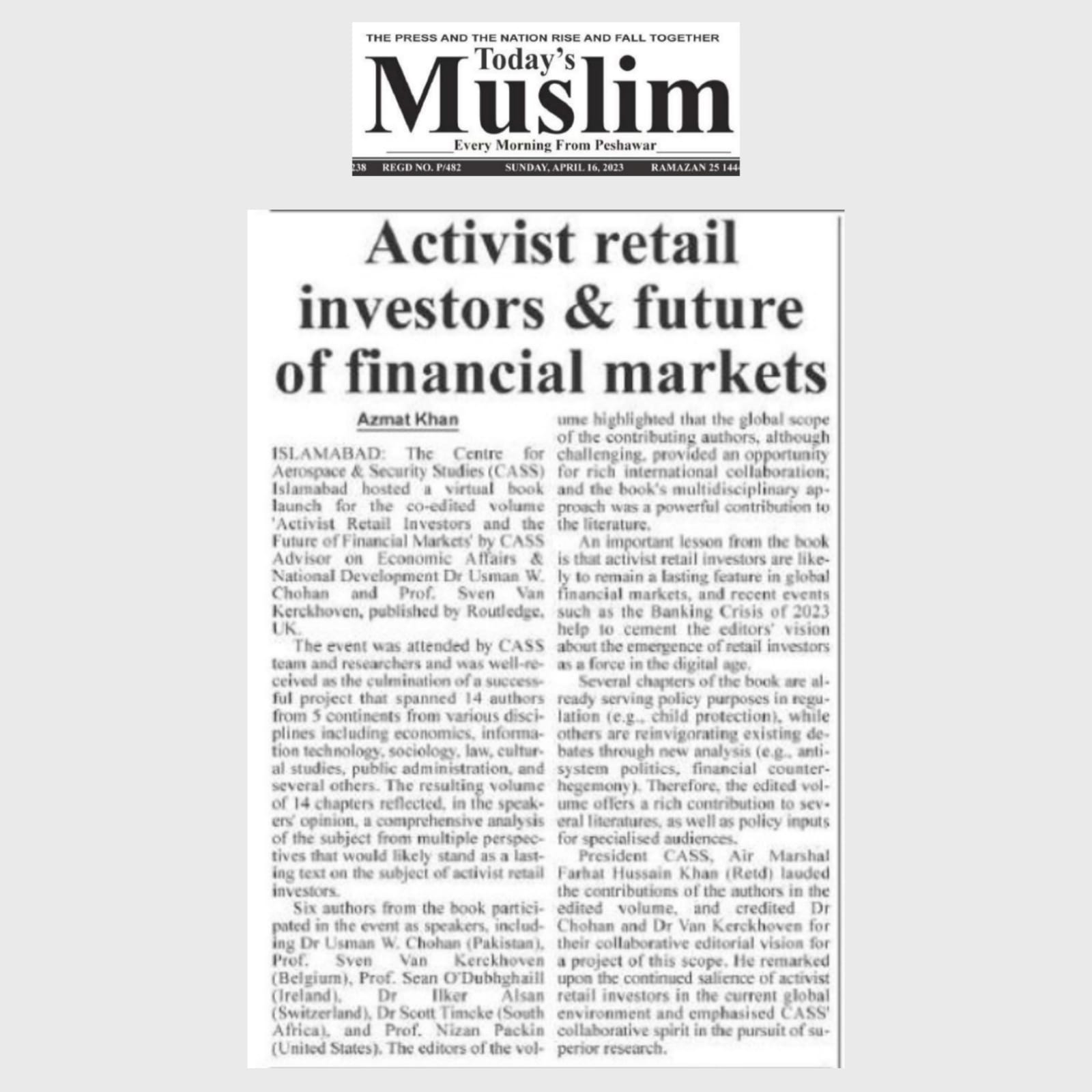
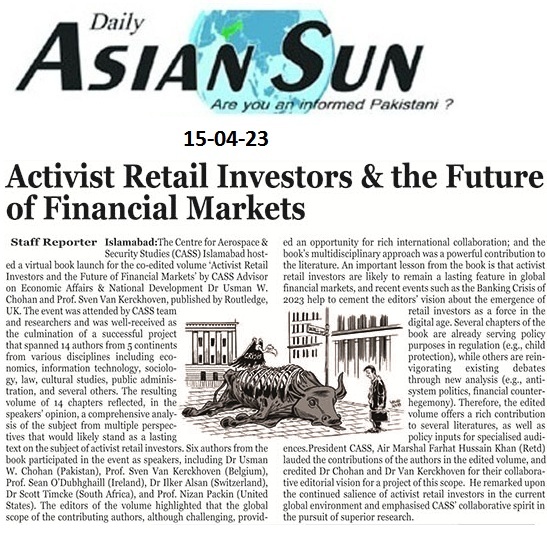
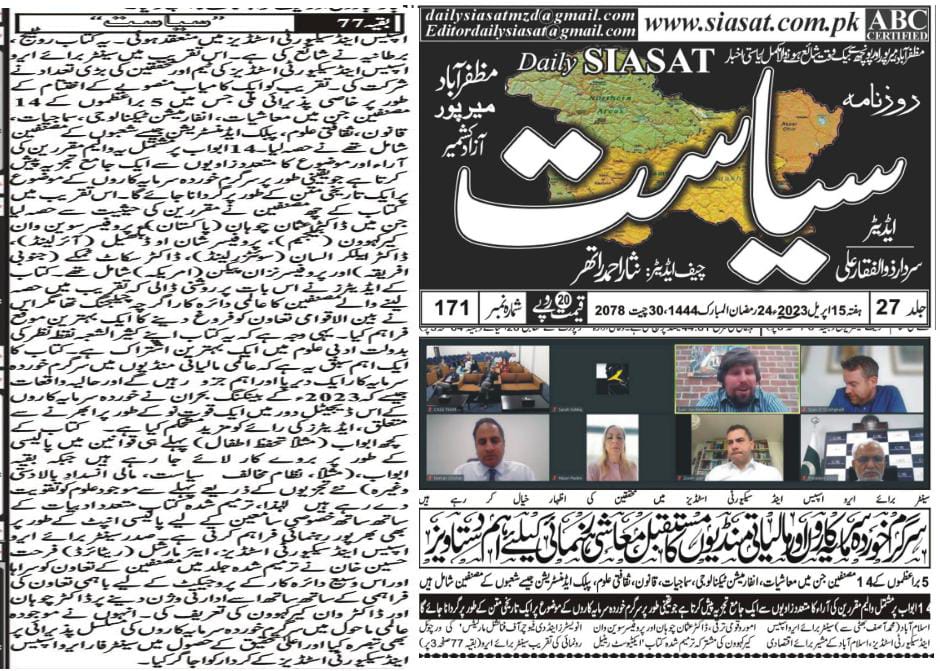
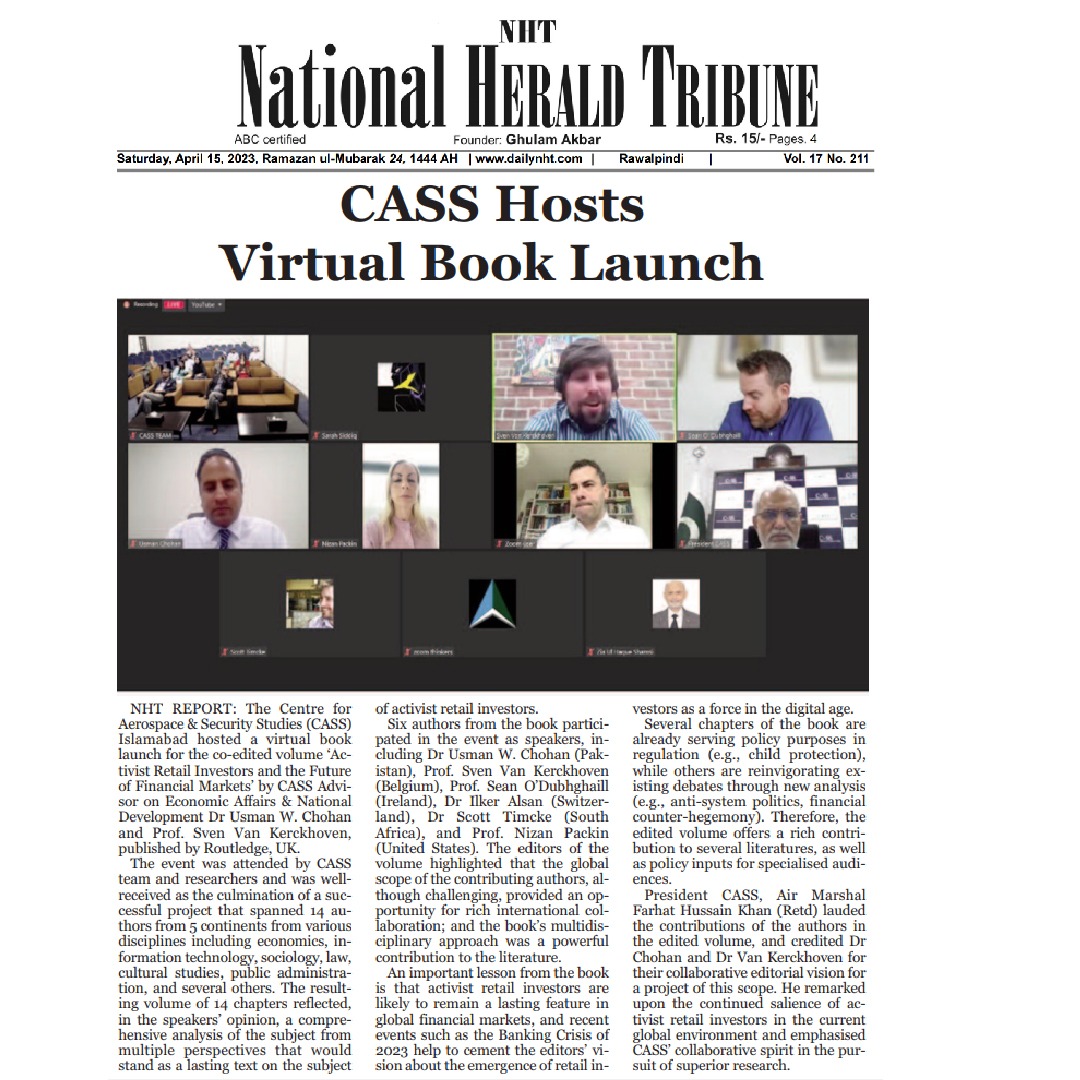
To discuss the main theme behind the book, its conceptualisation, overview and findings of the various chapters, the book was launched by CASS on 12 April 2023, with its co-editors and several of the authors:
Co-editors:
- Dr Usman W. Chohan, Advisor (Economics and National Development), Centre for Aerospace & Security Studies (CASS), Islamabad, Pakistan
- Dr Sven Van Kerckhoven, Vice-Dean for Education and Assistant Professor, Business and Economics, Brussels School of Governance, Belgium
Authors:
- Prof. Sven Van Kerckhoven (Belgium)
- Prof. Sean O’Dubhghaill (Ireland)
- Dr Ilker Alsan (Switzerland)
- Dr Scott Timcke (South Africa)
- Prof. Nizan Packin (United States)
Youtube Link: https://www.youtube.com/watch?v=6LGSF4uGEiA&t=90s
Press Release
Media Coverage
News Coverage
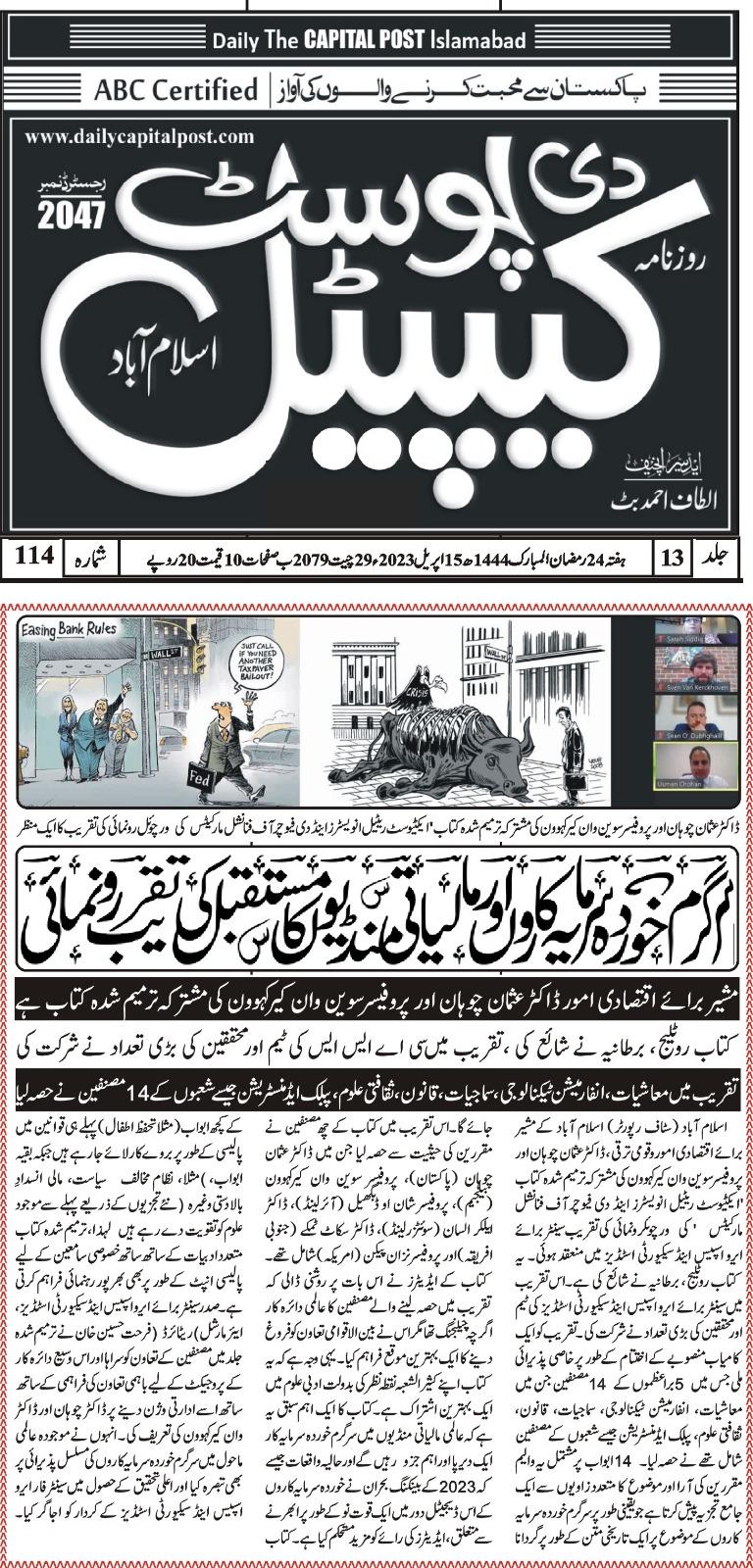
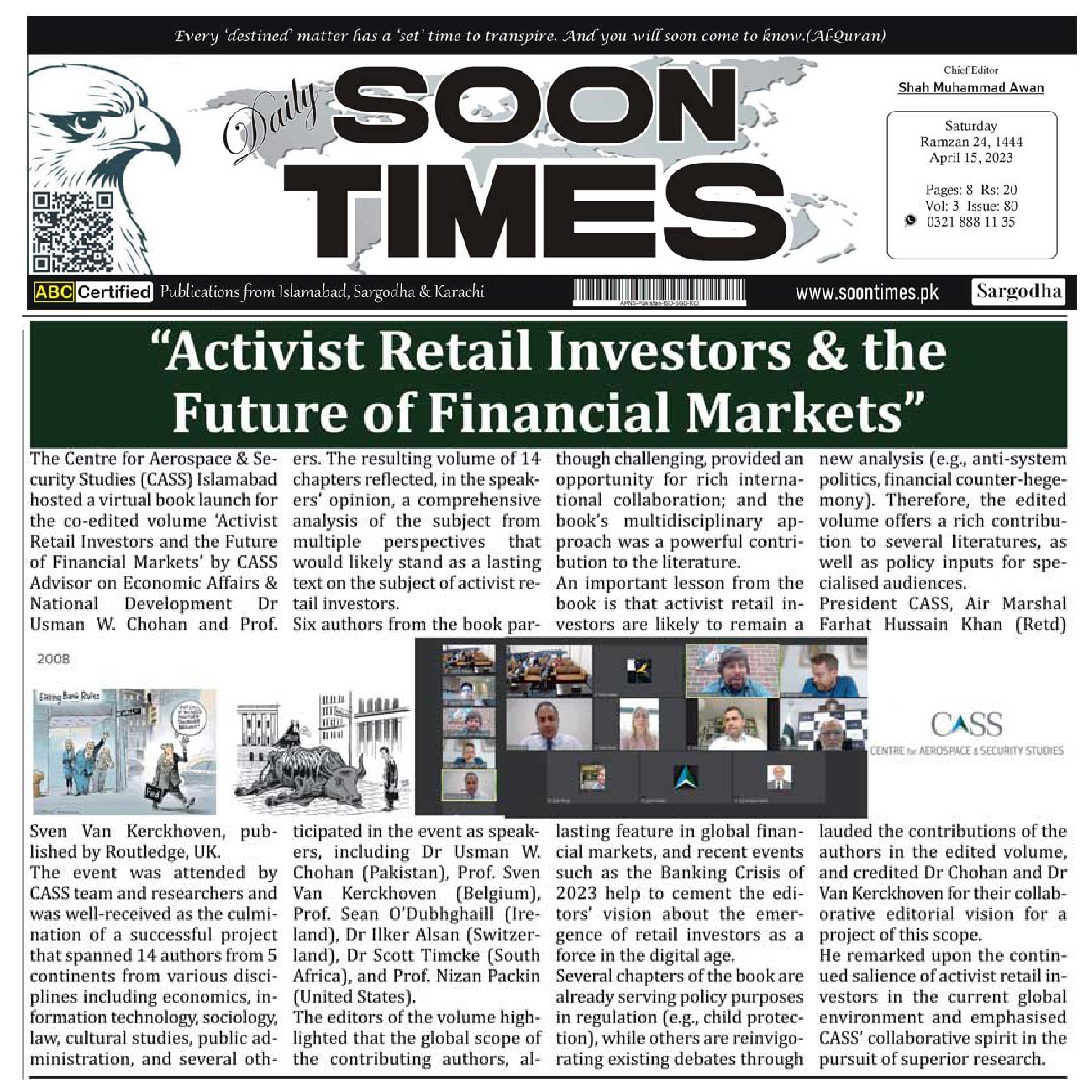
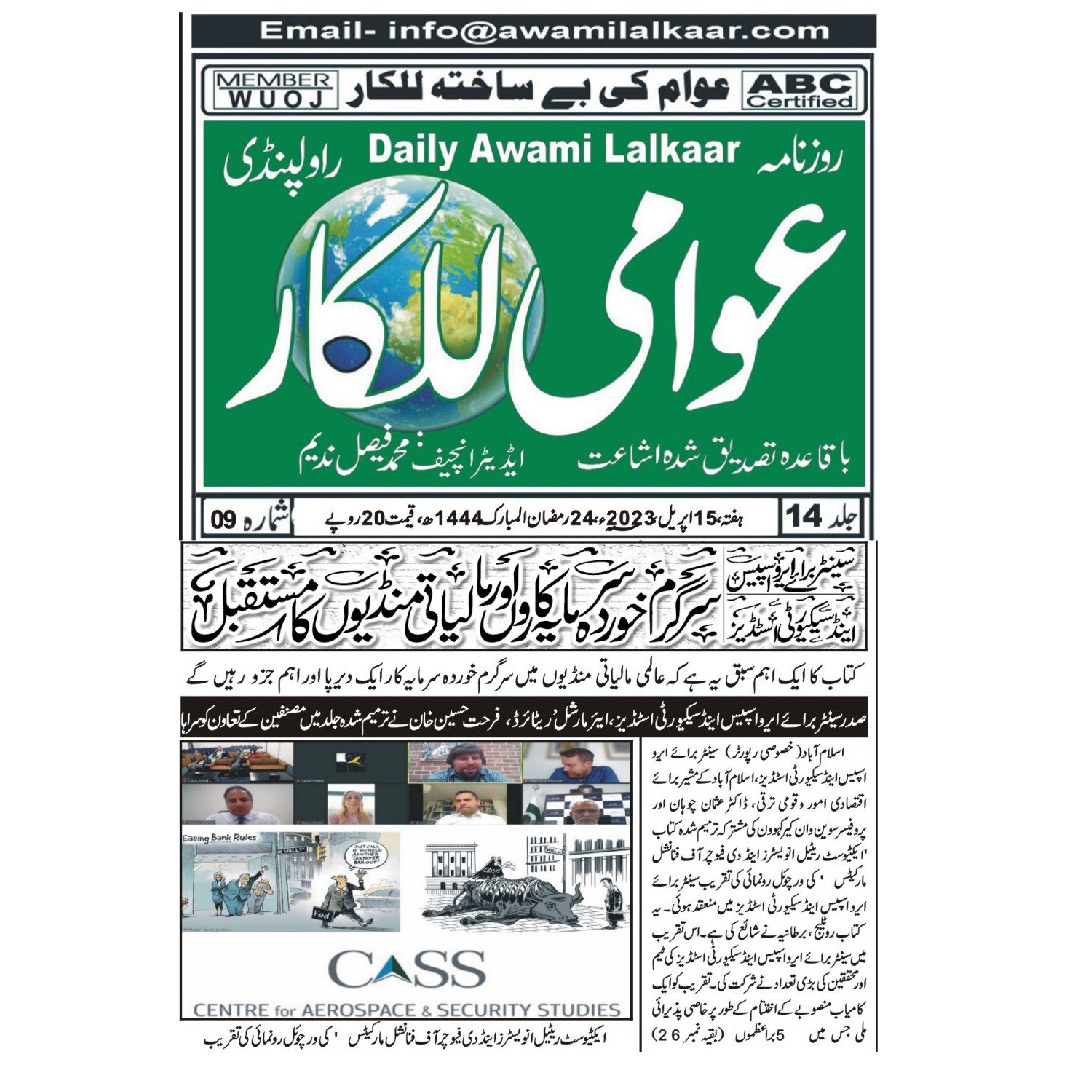
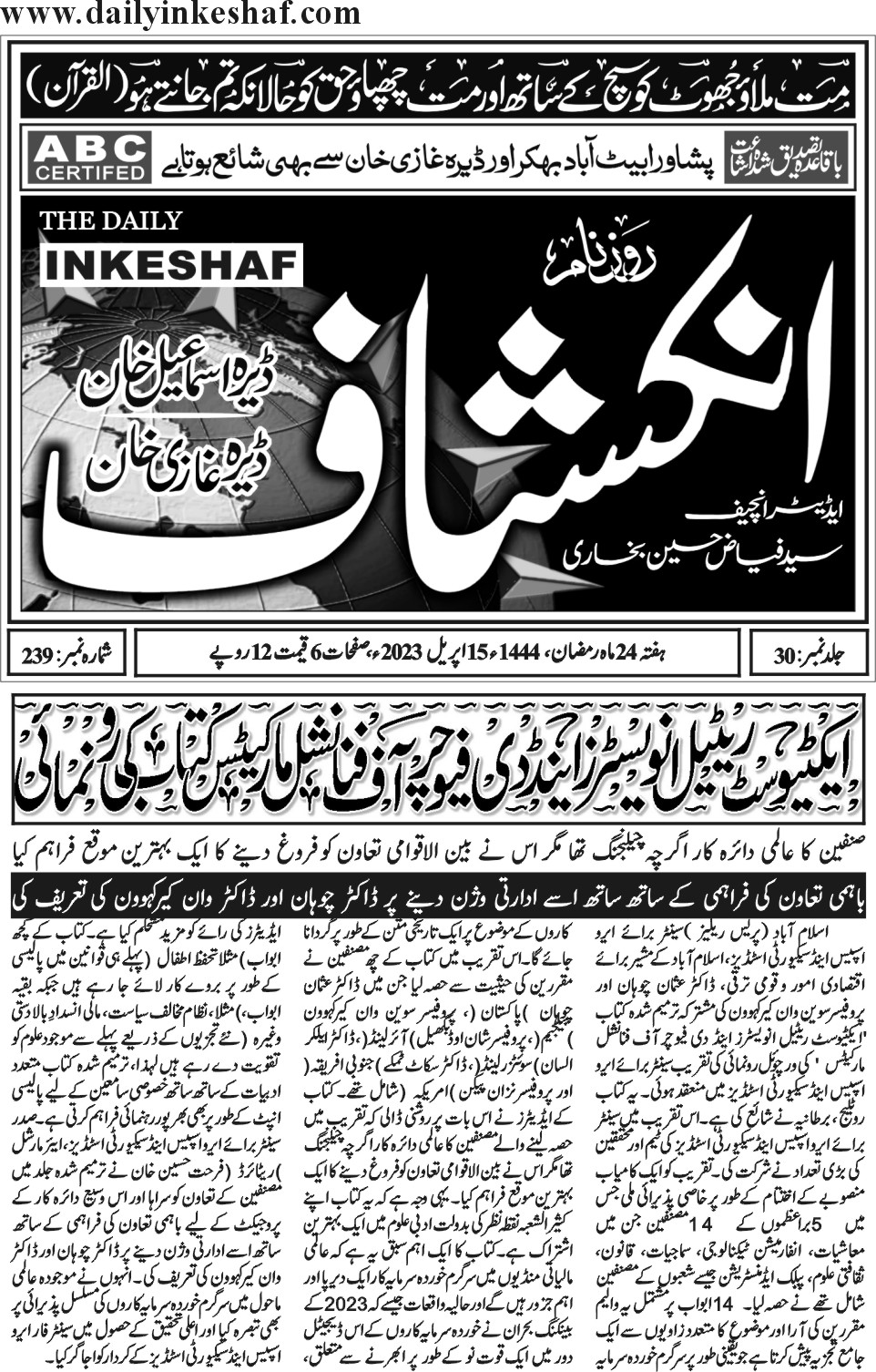
Newpaper Links