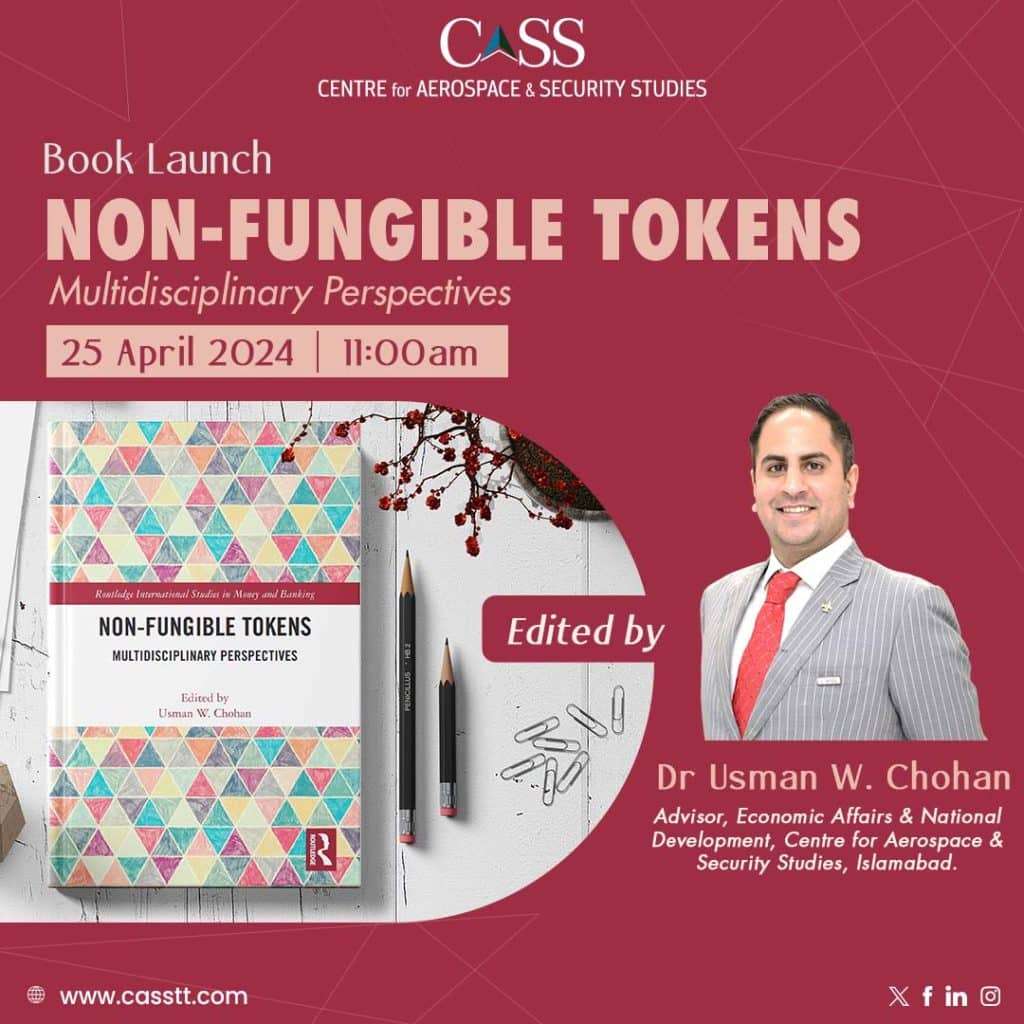
Book Launch
25 April 2024
Concept Note
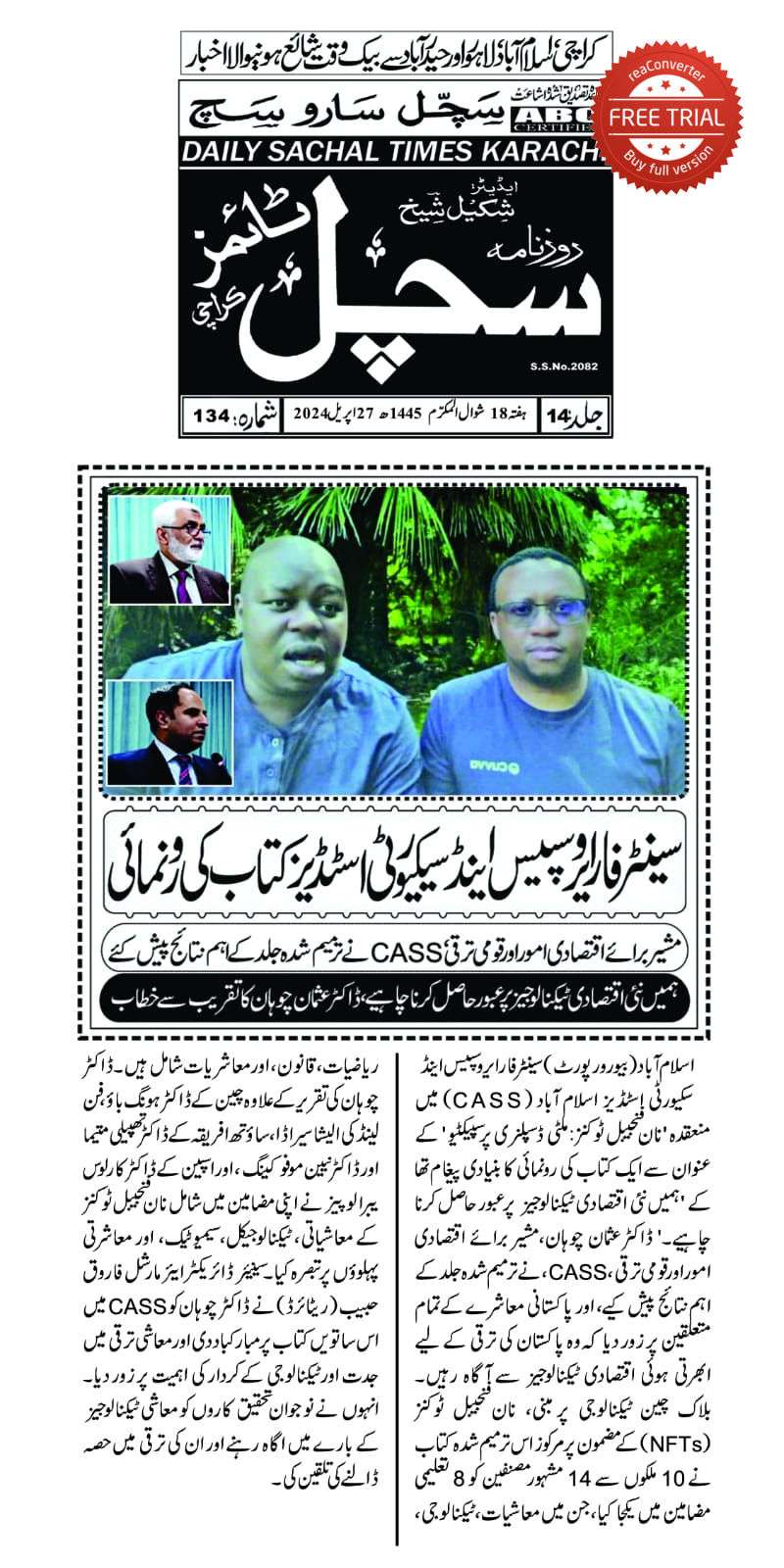
The Centre for Aerospace & Security Studies (CASS), Islamabad, will be hosting a book launch for the edited volume ‘Non-fungible Tokens: Multidisciplinary Perspectives’ (Routledge, 2024) on. The editor of the volume, Dr Usman W. Chohan, serves as Advisor to President CASS on Economic Affairs and National Development, and this is his 7th successfully completed book project in the past six years. The book serves as an additional milestone in the larger programme of Dr Chohan’s examination of the potential of the digital economy.
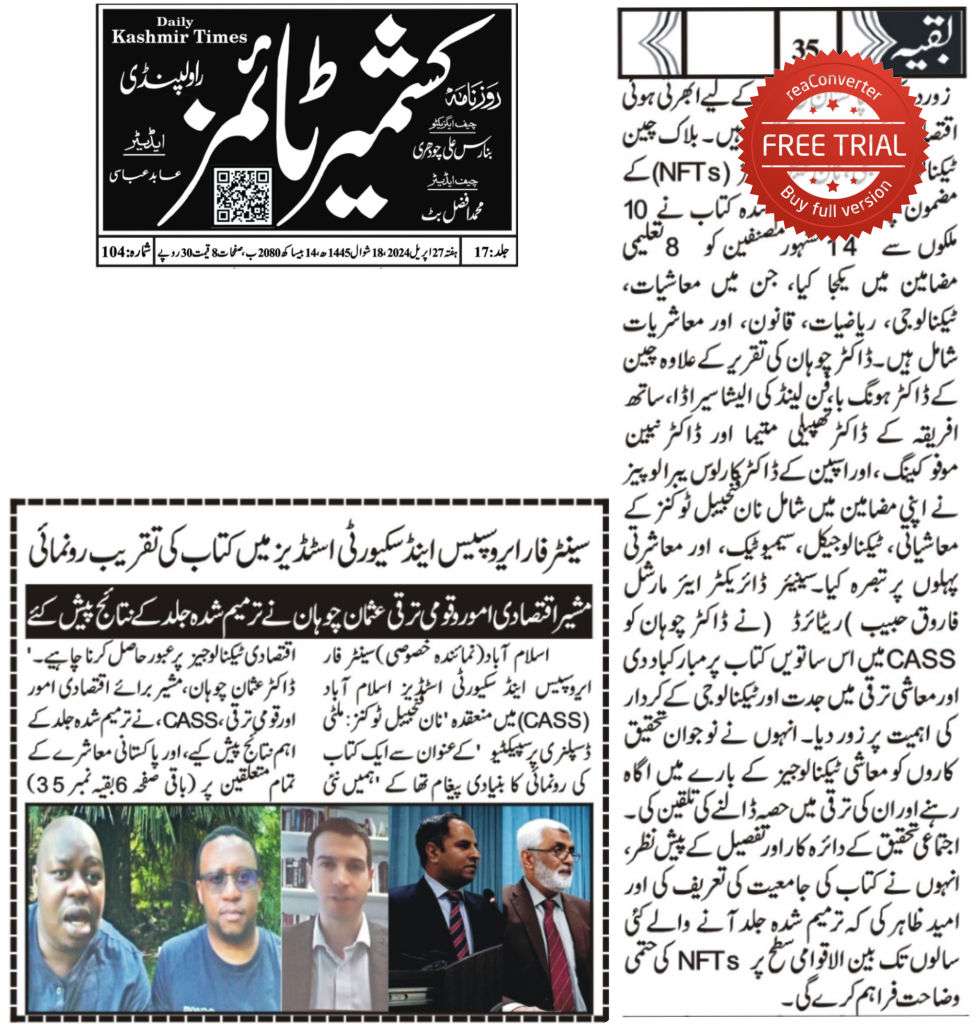
Spanning the work of 14 authors from 10 countries (Figure 1) from 8 academic disciplines (Table 1), the edited volume serves as the definitive multidisciplinary account of Non-fungible Tokens (NFTs) and shall have a lasting impact on the study of blockchain technology, an important and oft-overlooked element of the digital economy. Despite their comparatively short history, a substantial research interest had emerged over the past four years on NFTs, with Dr Chohan’s work being among the most cited on the subject in the world.
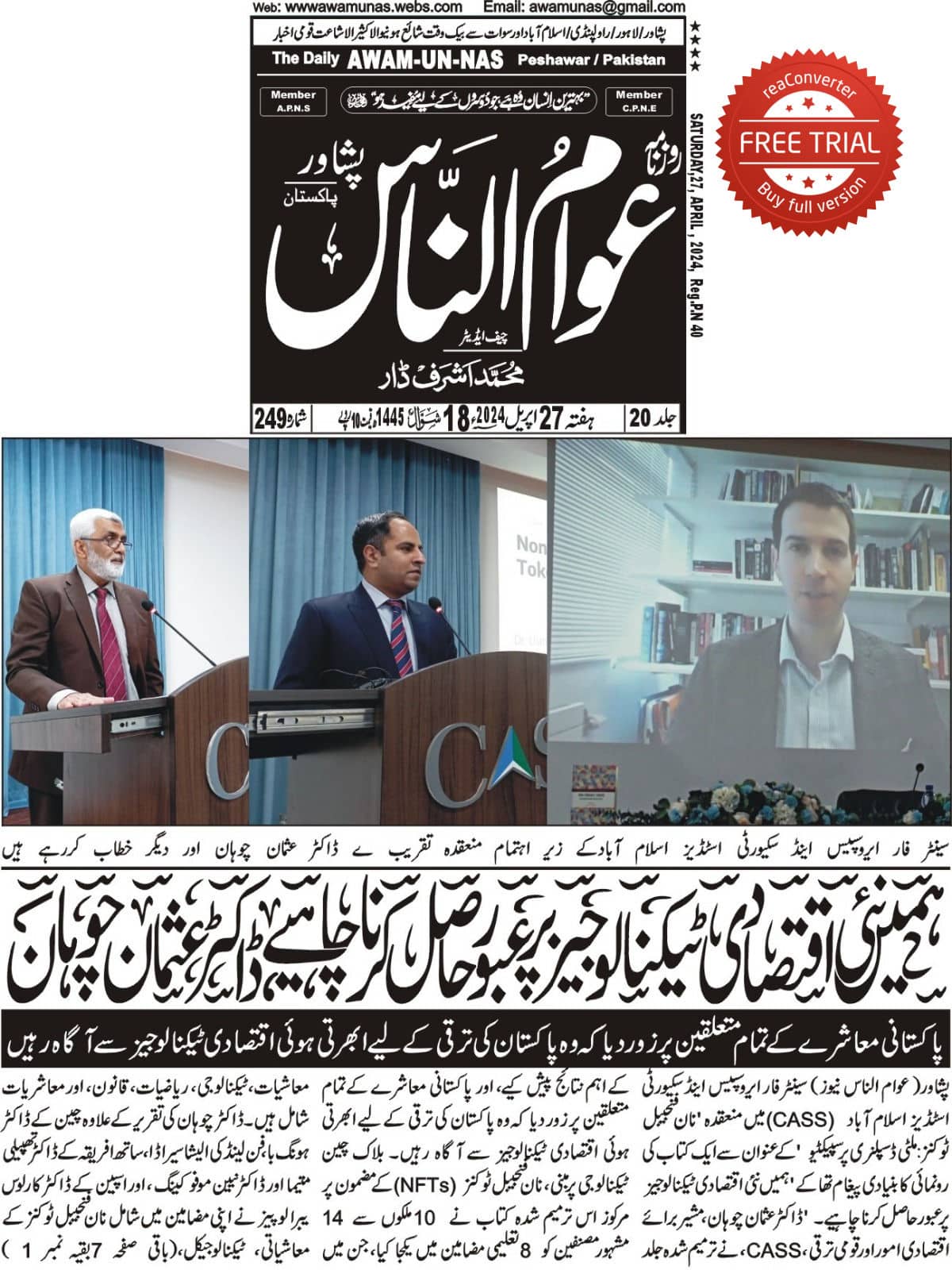
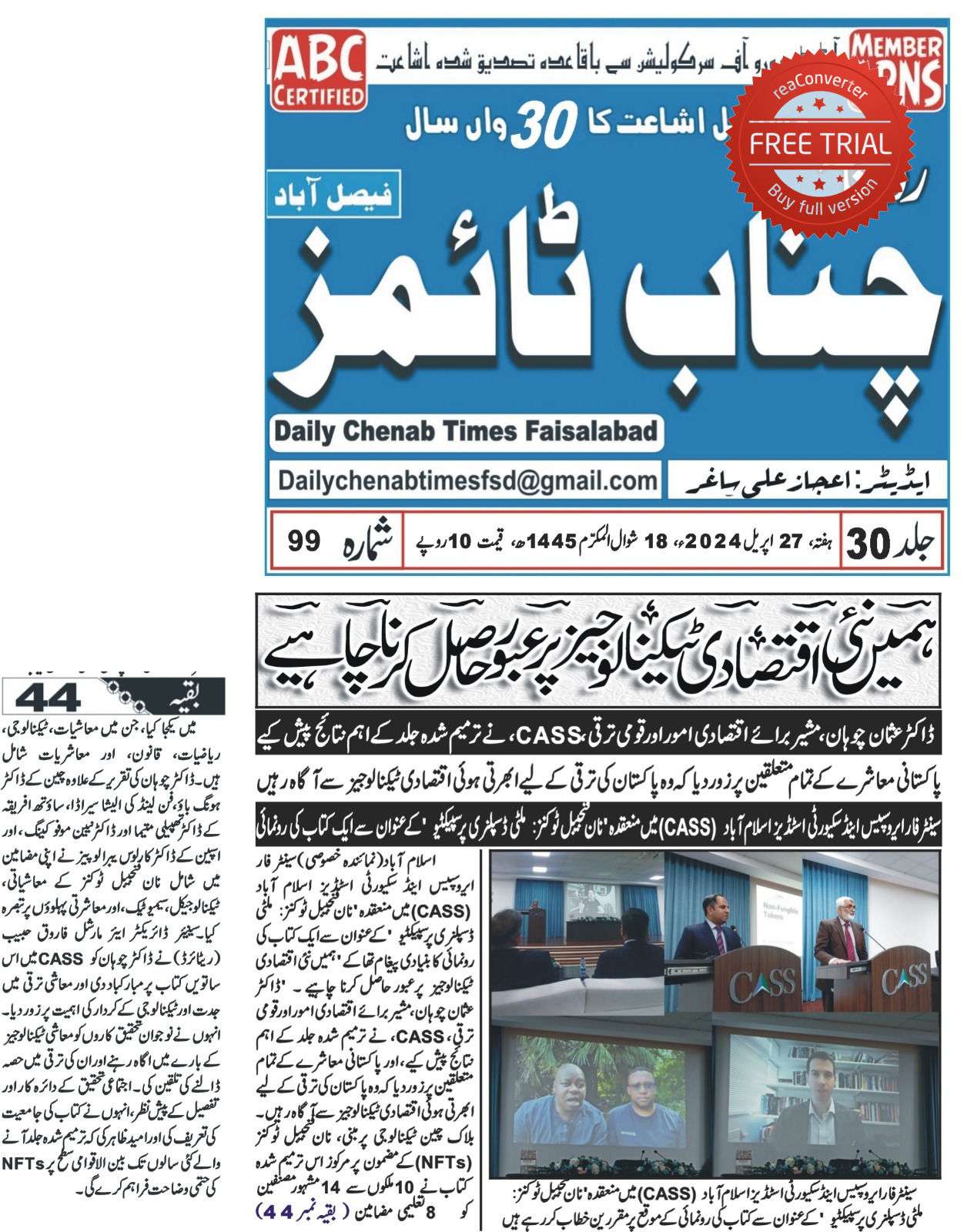
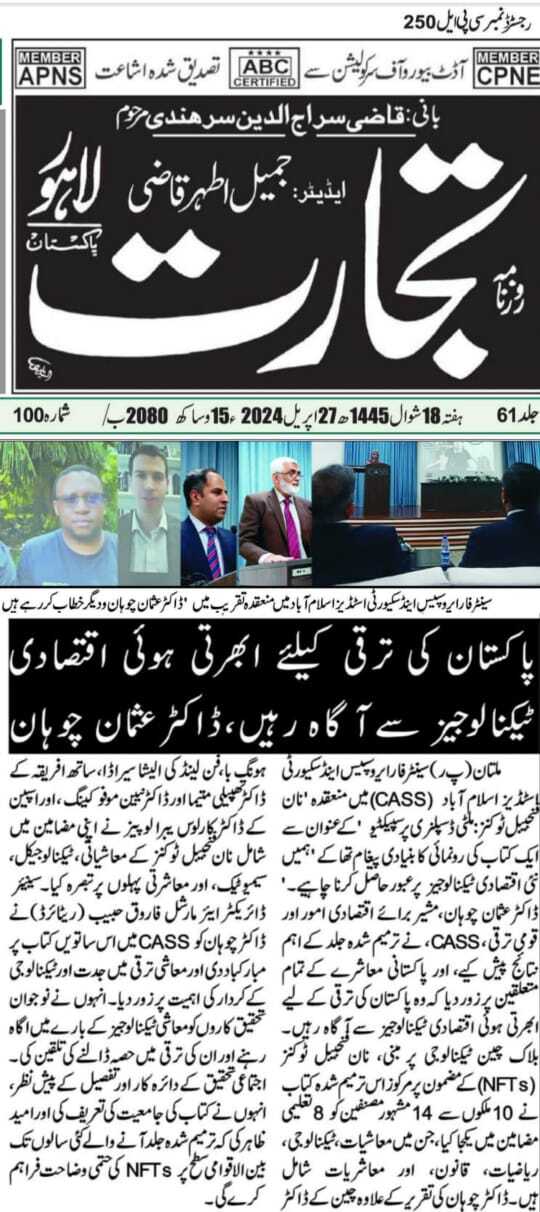
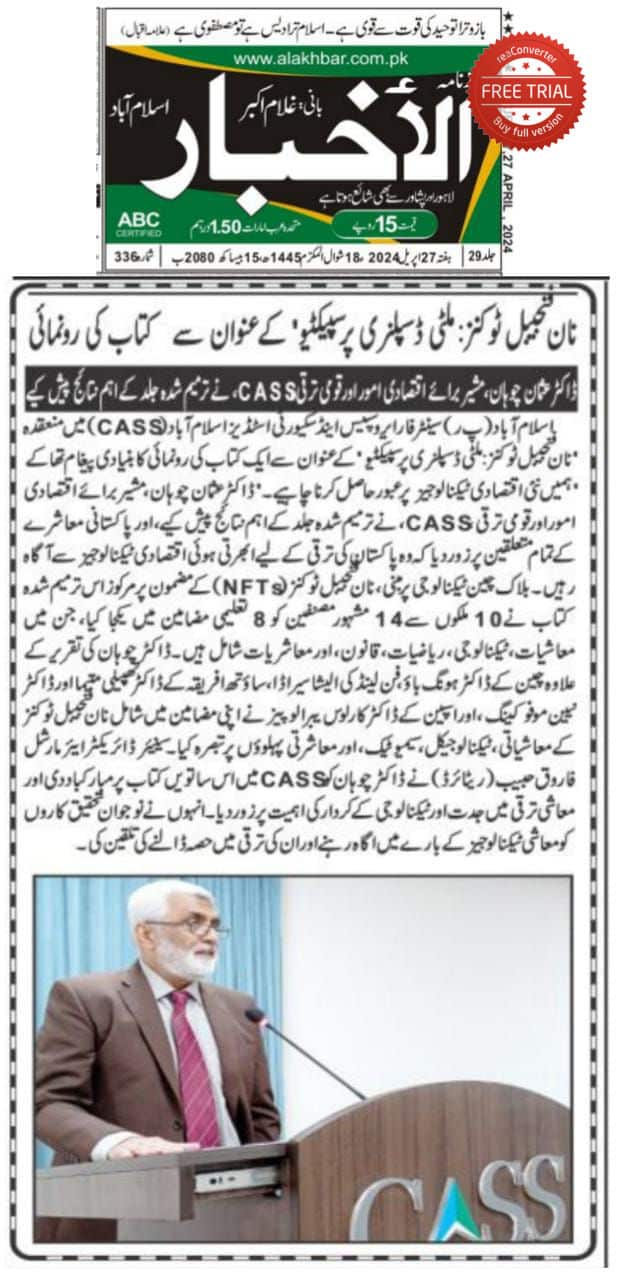
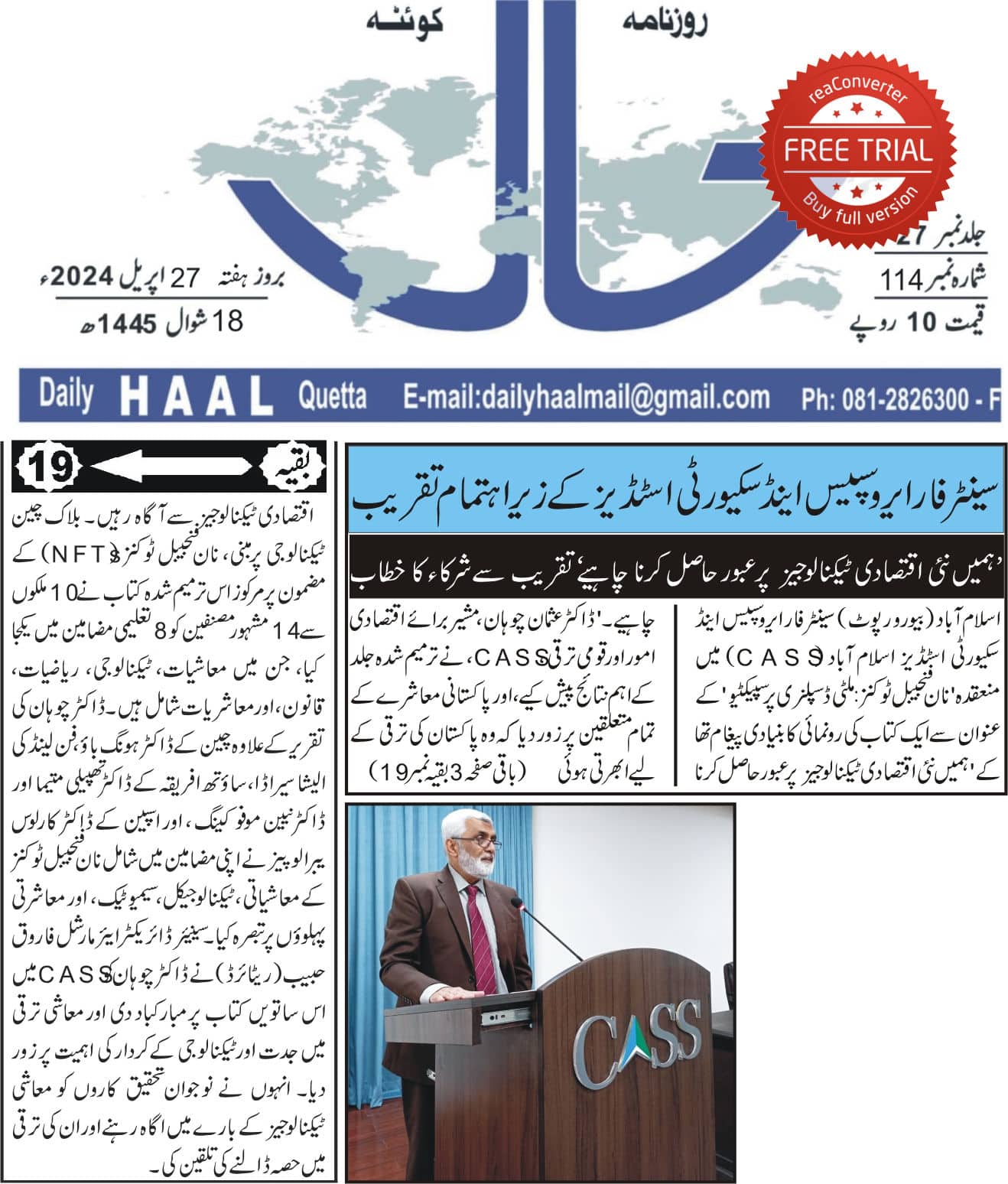
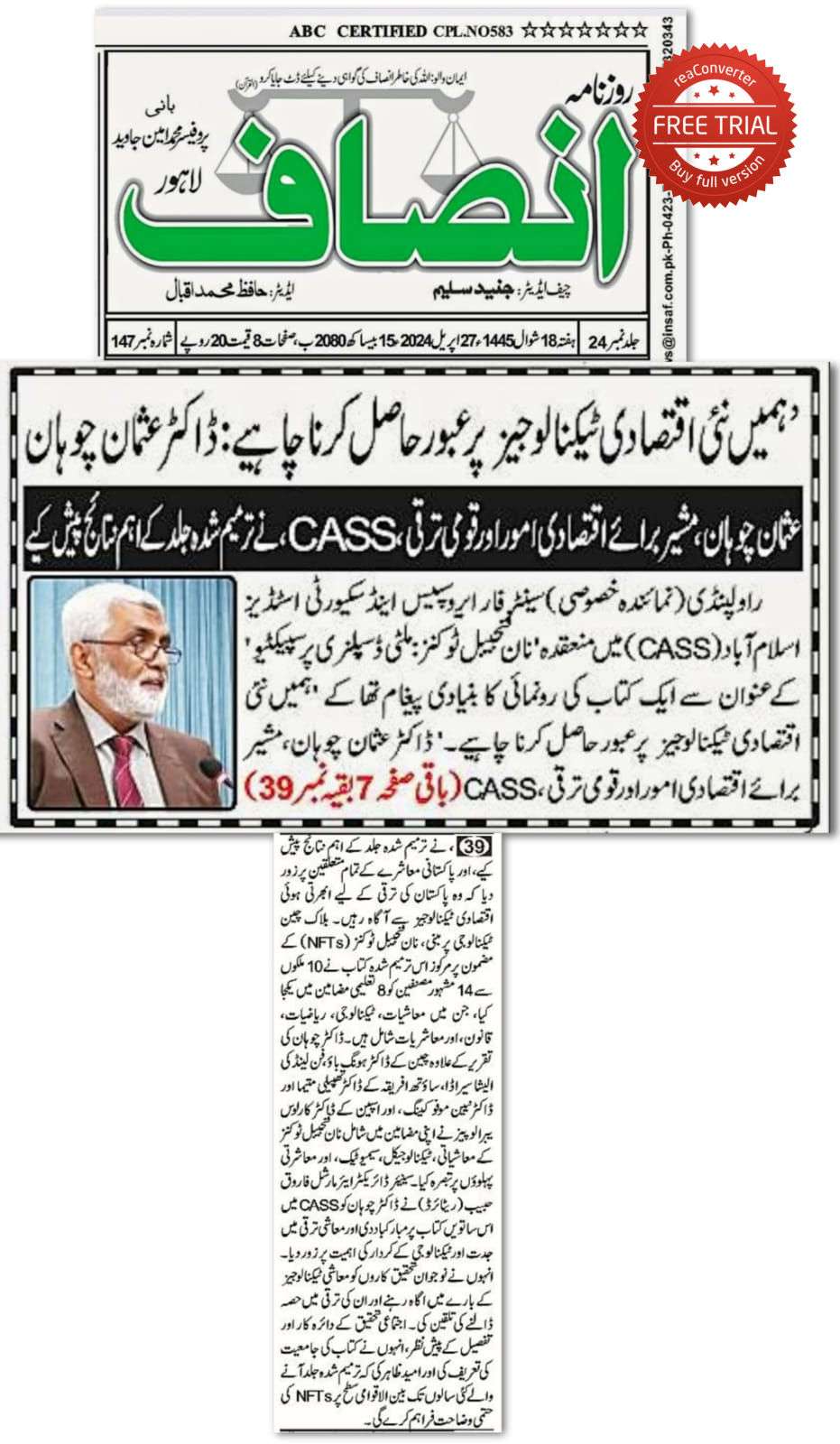
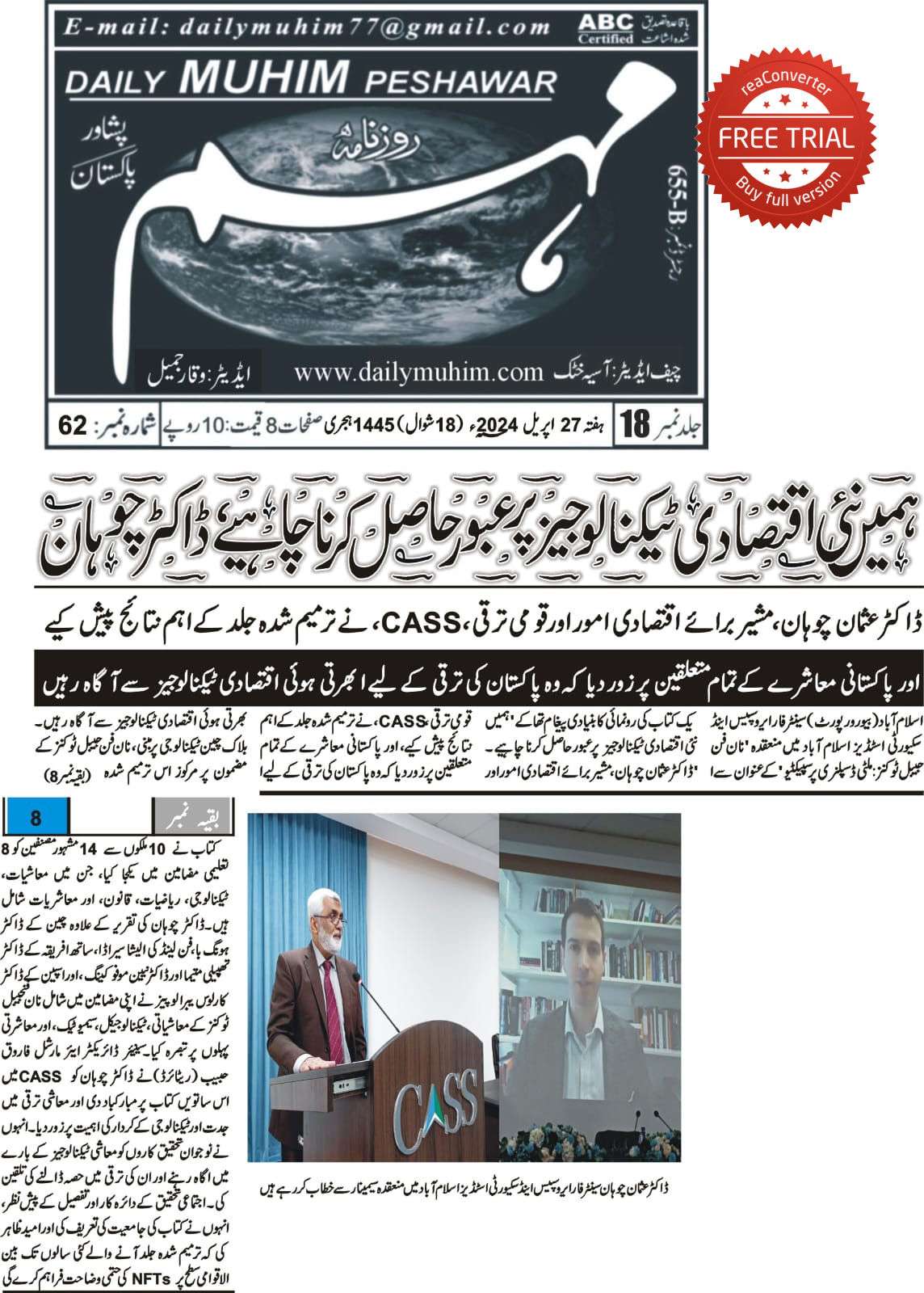
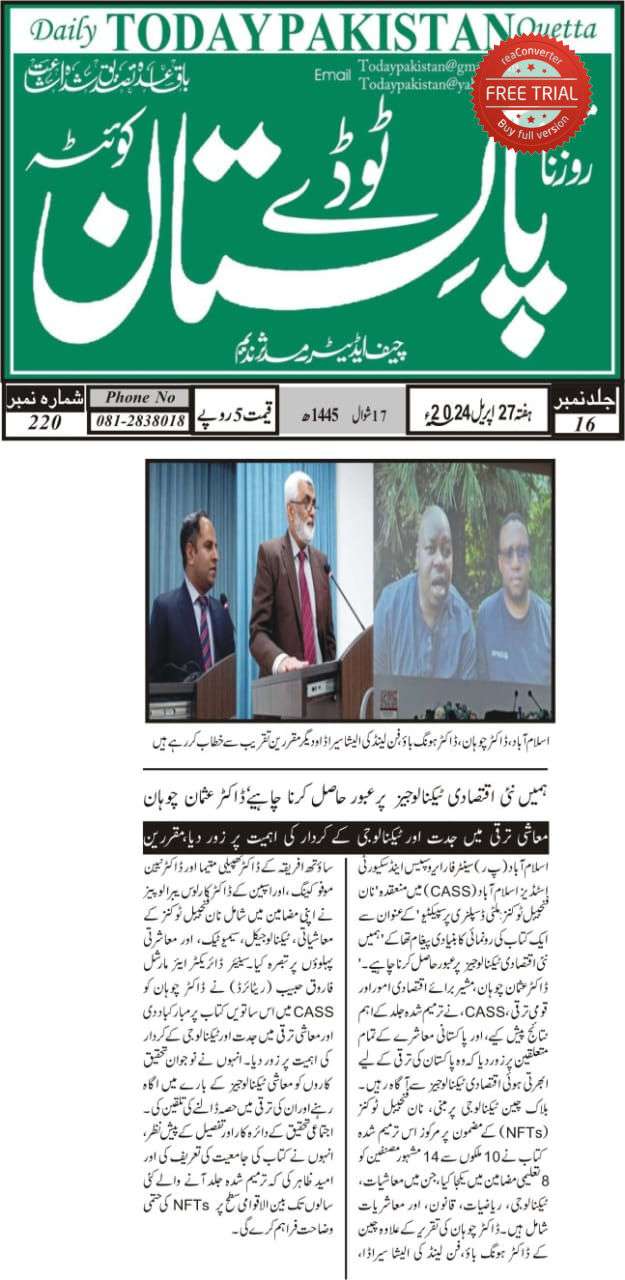
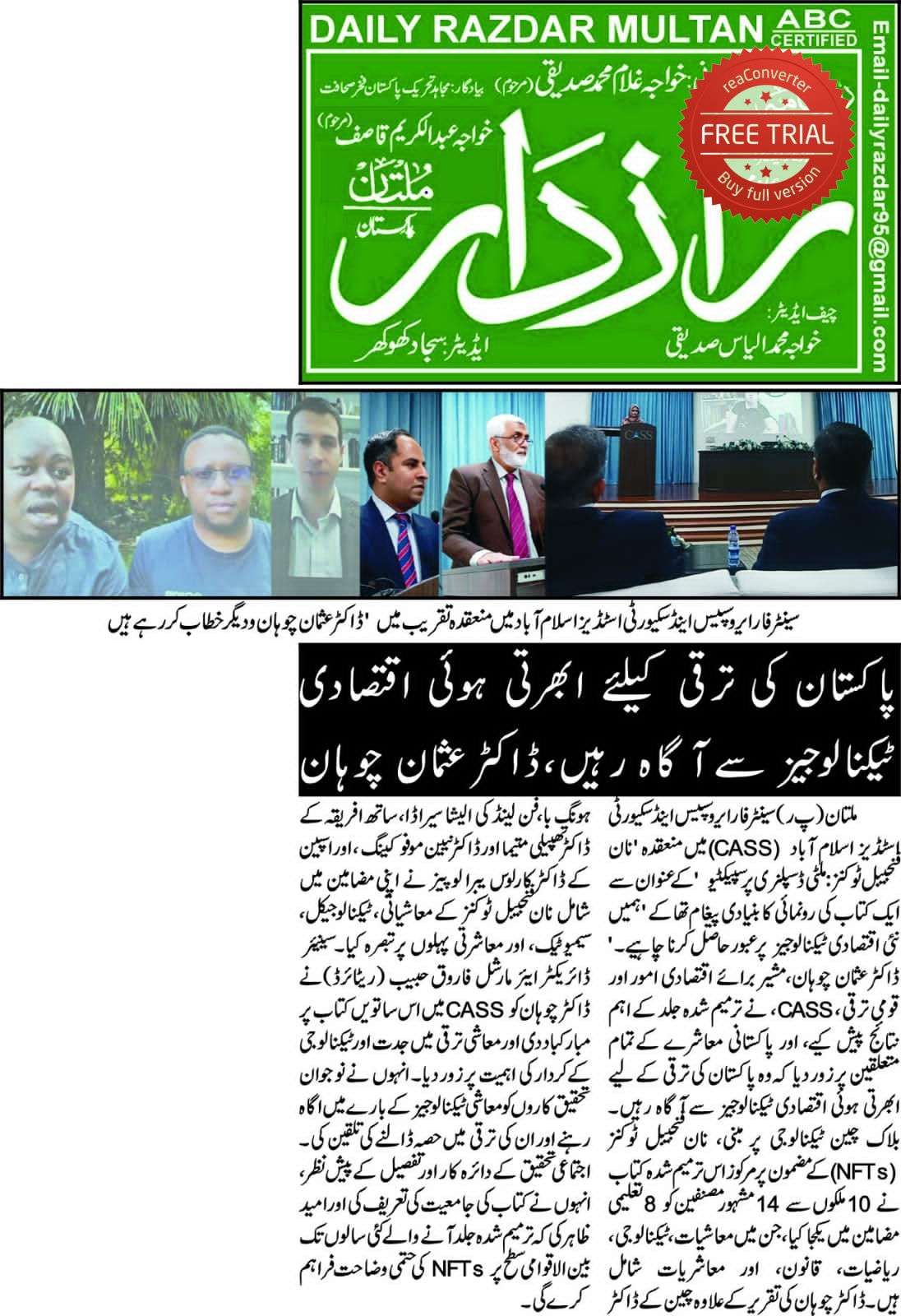
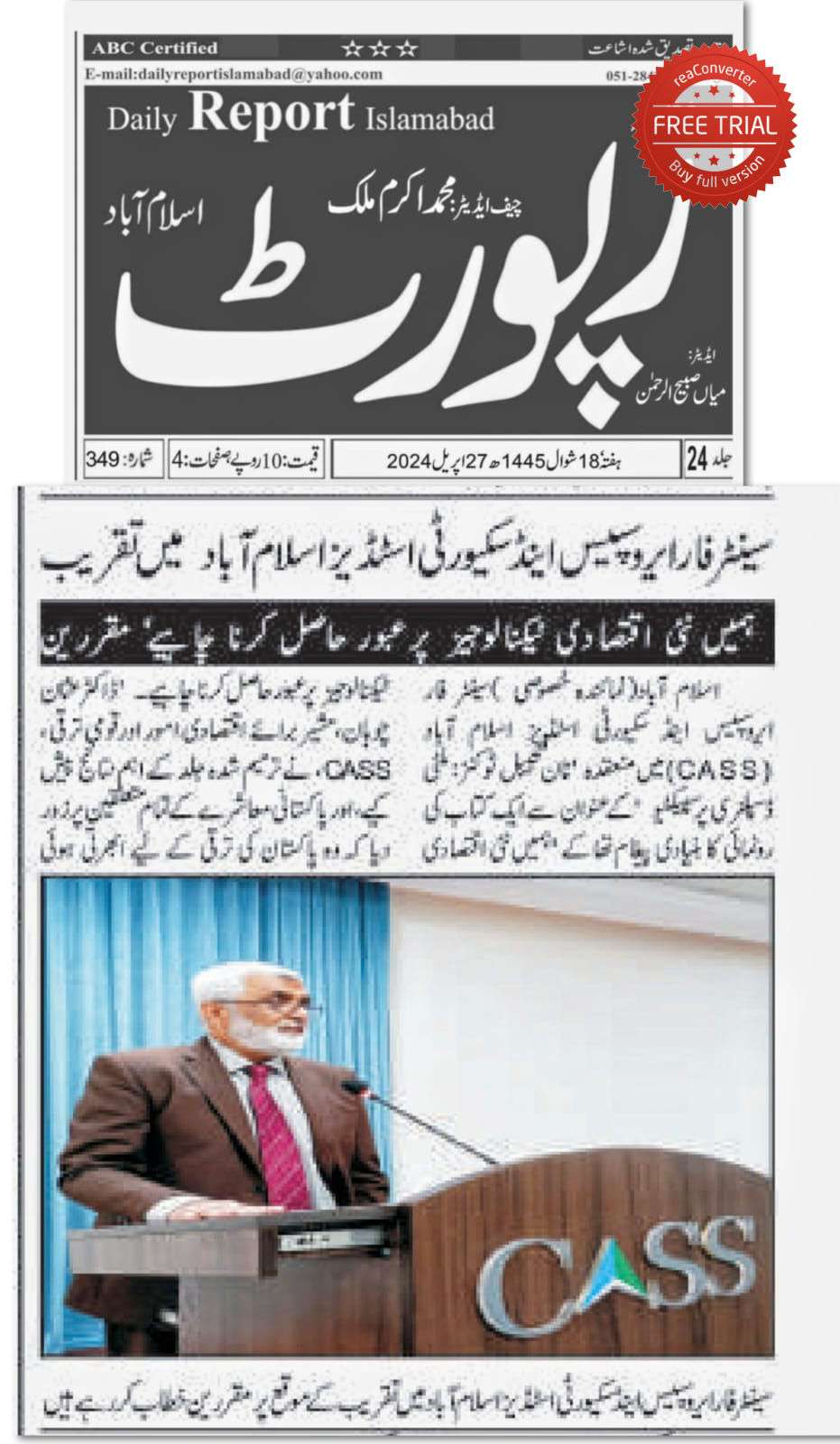
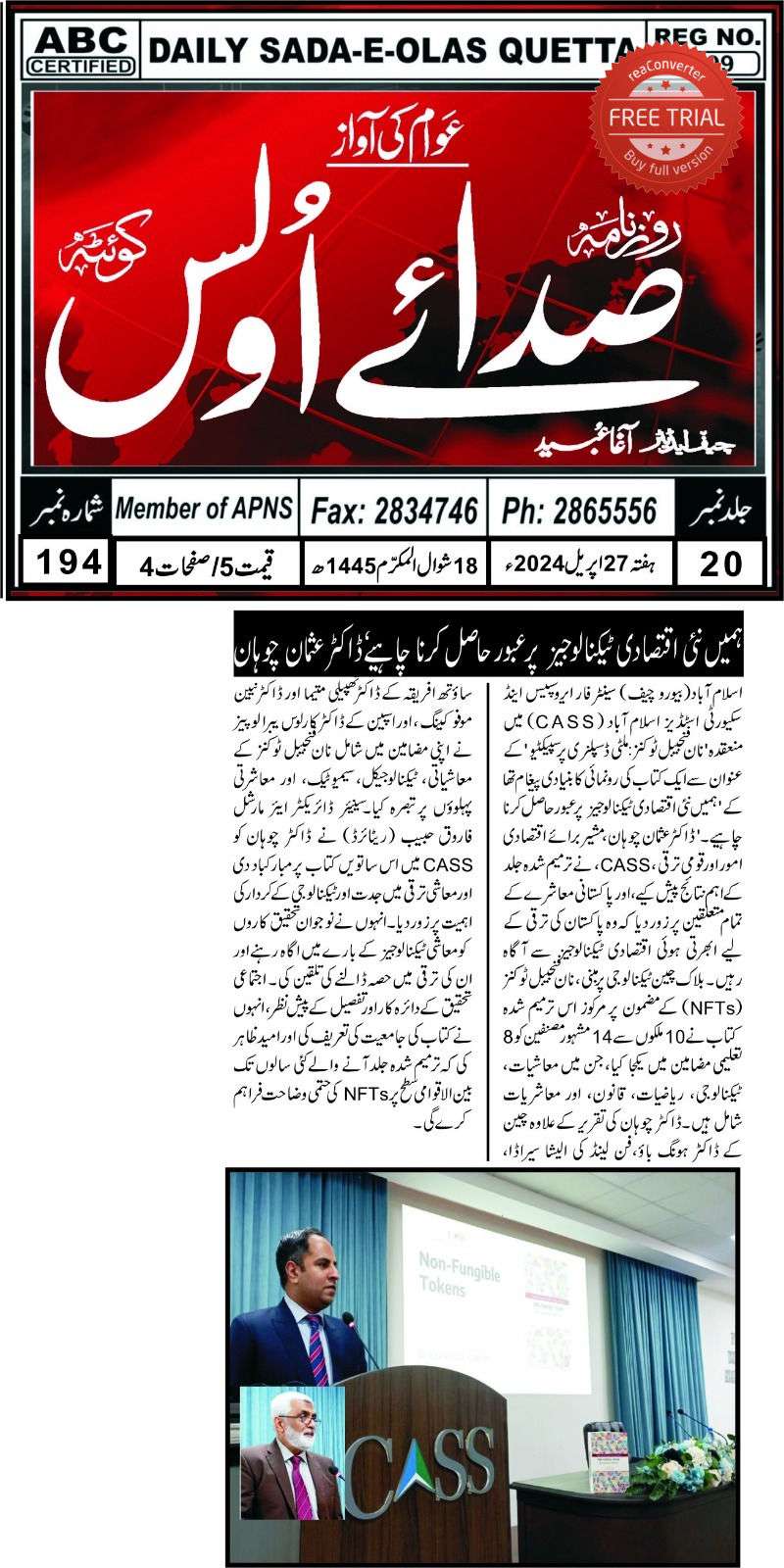
CASS is proud to celebrate the successful completion of this book project and to share key findings from the book. As the book’s editor, Dr Chohan will be discussing the main theme behind the book, its conceptualisation, overview and findings, while other contributors to the volume will be sharing their commentaries to enrich the launch event as well.
Table 1: Outline of the Book
| Chapter Title | Author | Discipline (Subtopic) | |
| Introduction | |||
| 1 | Non-fungible tokens: blockchains, scarcity, and value | Usman W. Chohan | Introductory Chapter |
| Part 1: Essentials of NFTs | |||
| 2 | NFTs and their core technologies | Narmeen Bawany | Computer Science |
| 3 | A Thematic History of NFTs | Usman W. Chohan | History |
| 4 | Discoveries from the NFT Market | Hong Bao & David Roubaud | Economics |
| Part 2: The Value of NFTs | |||
| 5 | NFT Communities as Societies of Producers | Alesha Serada | Sociology |
| 6 | Are NFTs sustainable? An ESG Perspective | Roberto Morovisconti | Accounting |
| 7 | A Look Beyond Static NFTs | Nyane Mofokeng & Thapeli Matima | Computer Science |
| 8 | Do Smart Contracts Dream of Bored Apes?: On The Uniqueness of the NFT Subculture | Paul Dylan-Ennis | Sociology |
| Part 3: The Disvalue of NFTs | |||
| 9 | The Leisures of Blockchains: Exploratory Analysis | Usman W. Chohan | Criminology |
| 10 | The Fetishizing Language Behind the NFT Craze: A Semiotic-cum-semantic Critique | Carlos Yebra Lopez | Linguistics |
| 11 | Racial Capitalism, Platform Capitalism, and NFTs | Trevor Zaucha | Media Studies |
| 12 | NFTs and the Spectacle of Accumulation | Scott Timcke & Andrew Rens | Political Economy |
| Conclusion | |||
| 13 | Some Precepts of the Digital Economy | Usman W. Chohan | Concluding Chapter |
Figure 1: National Diversity of Contributing Authors

Press Release
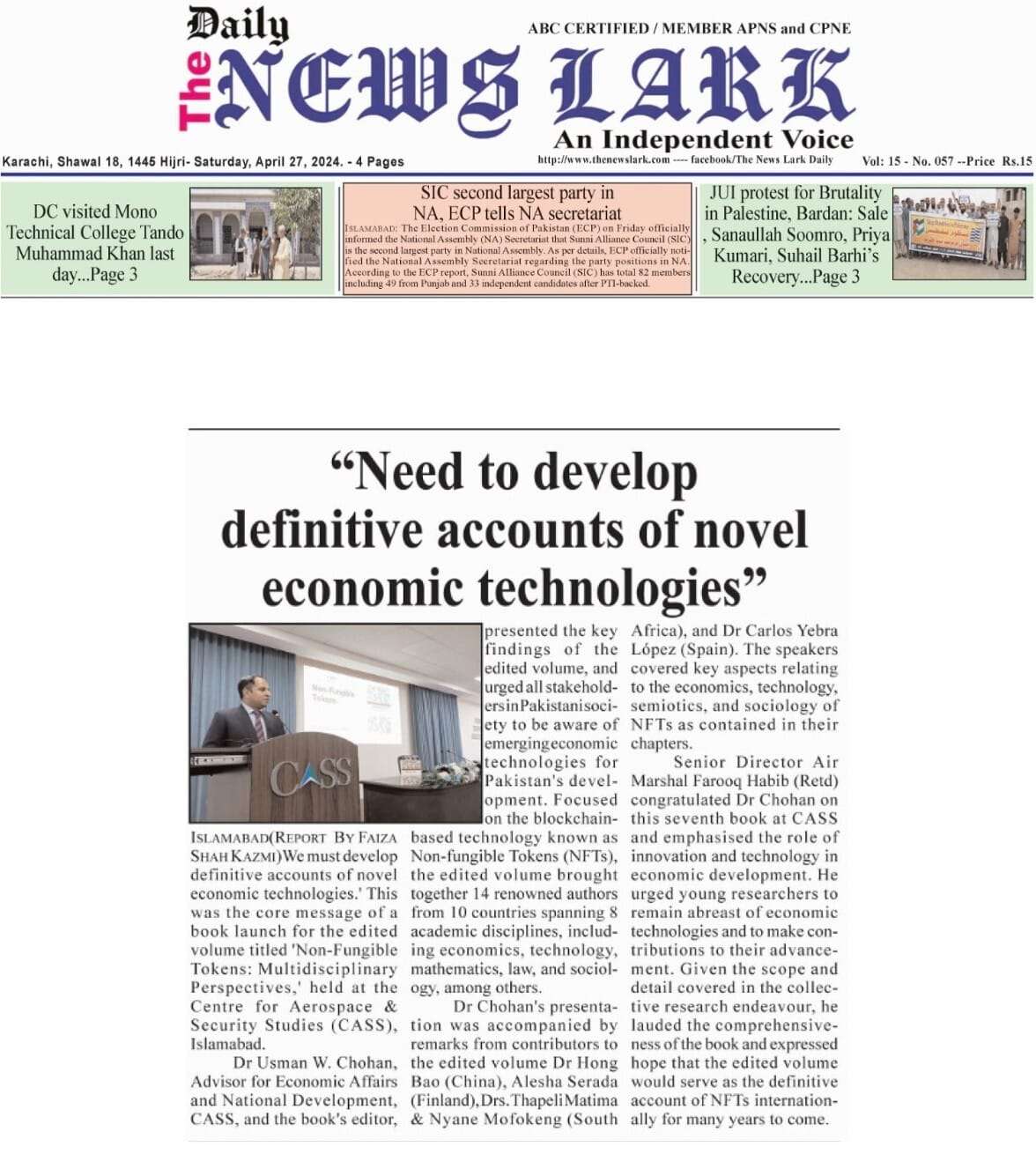
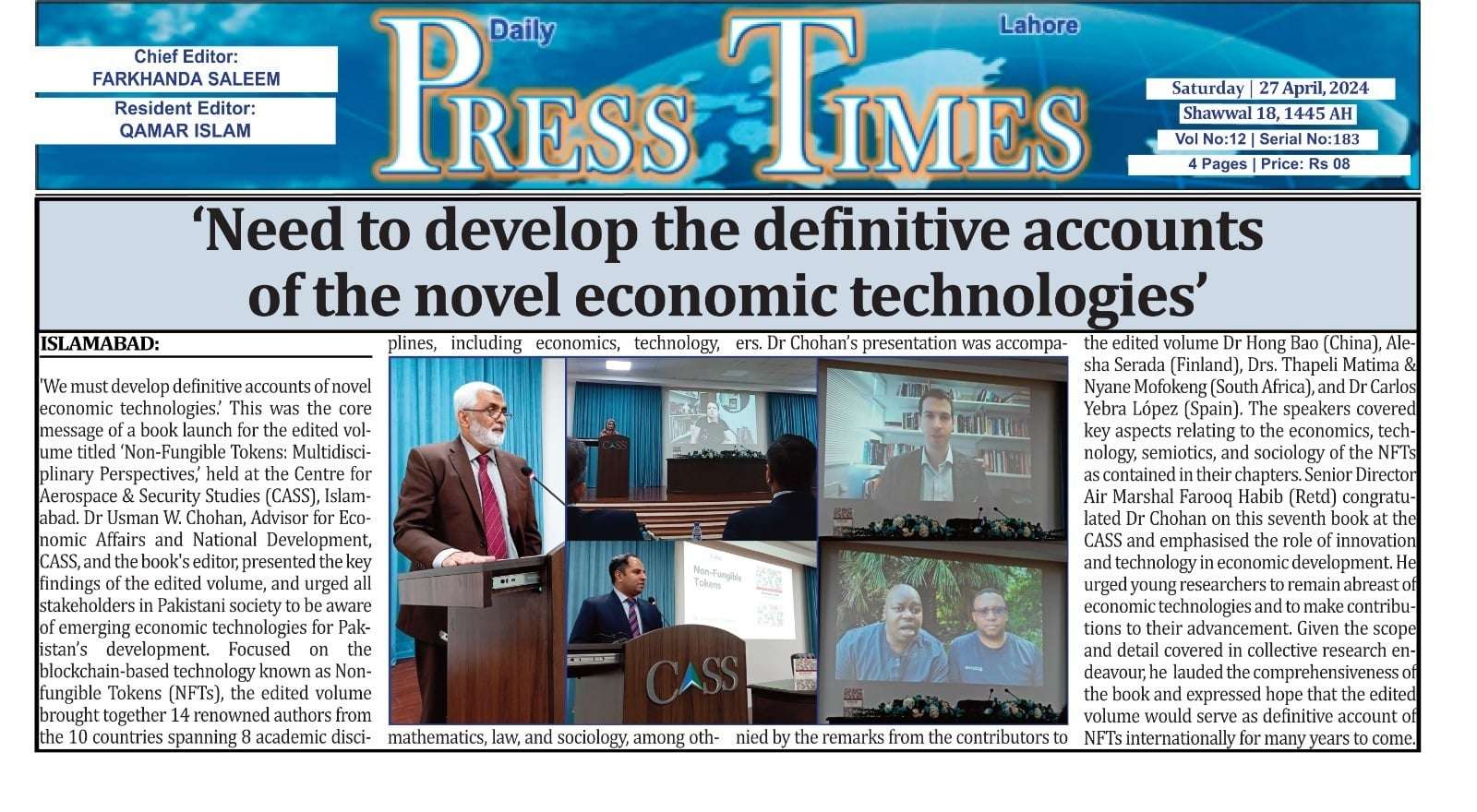
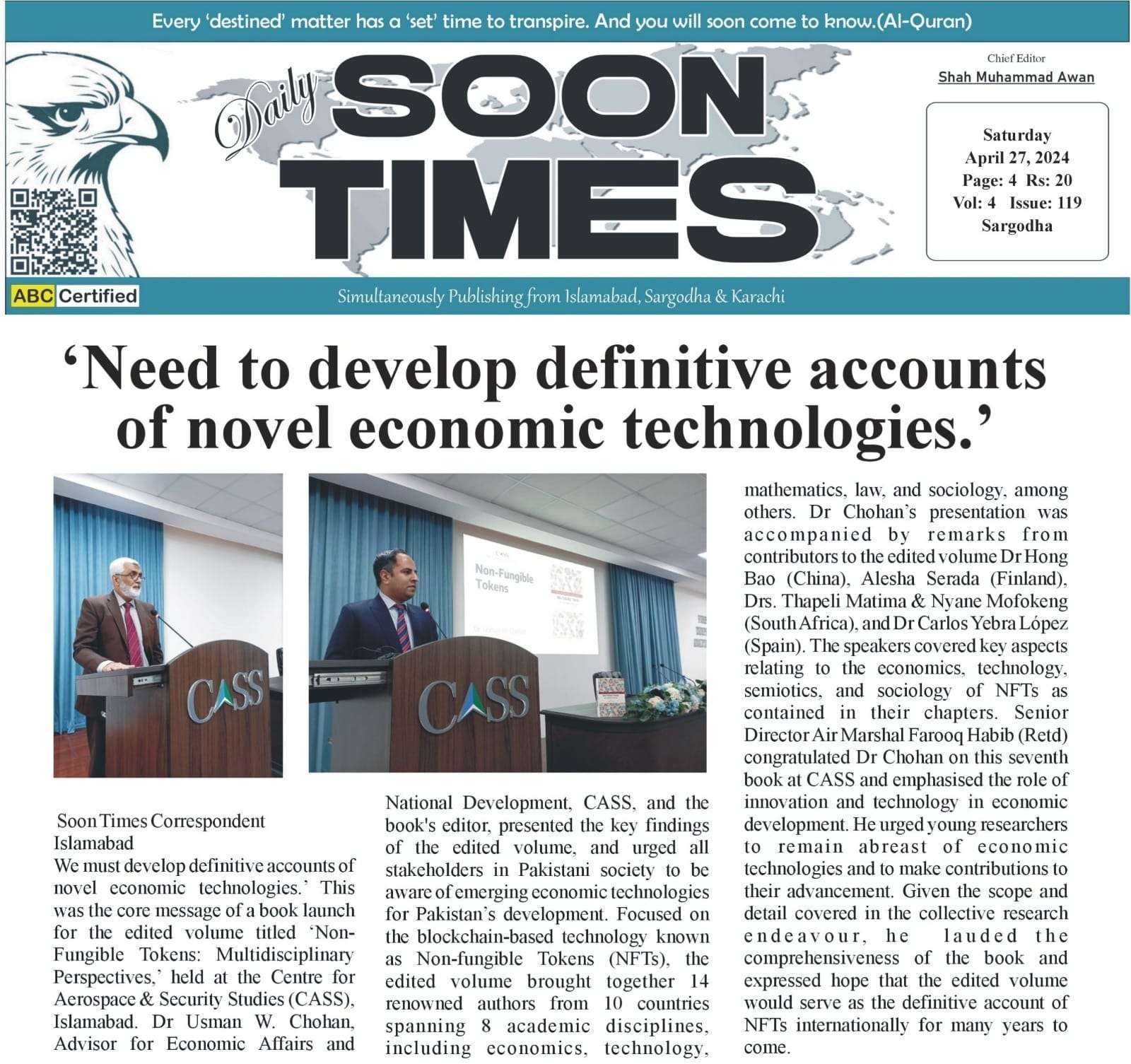
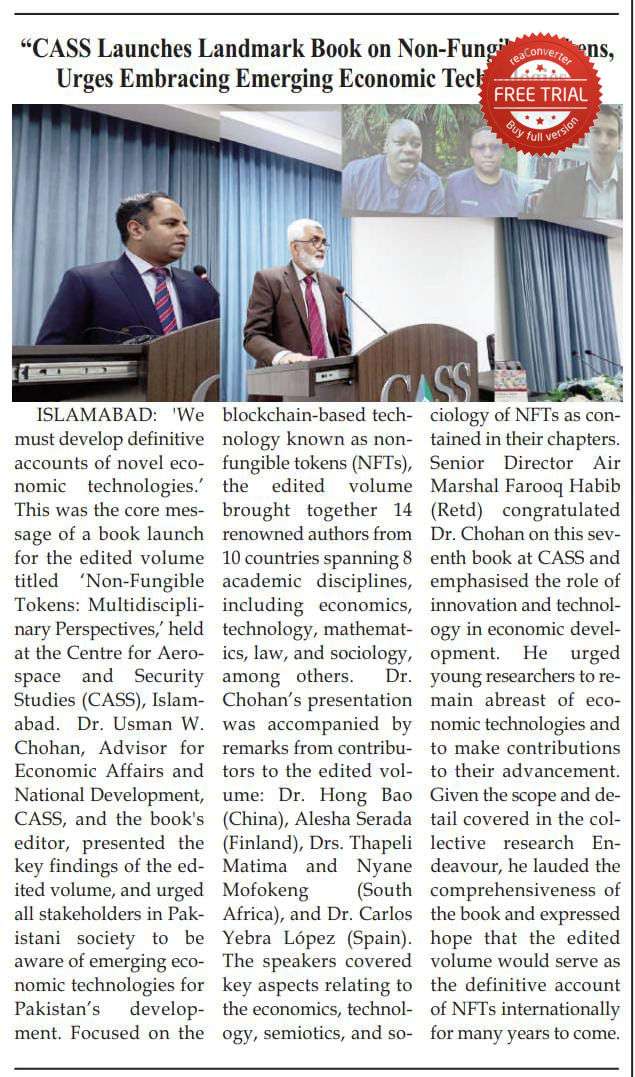
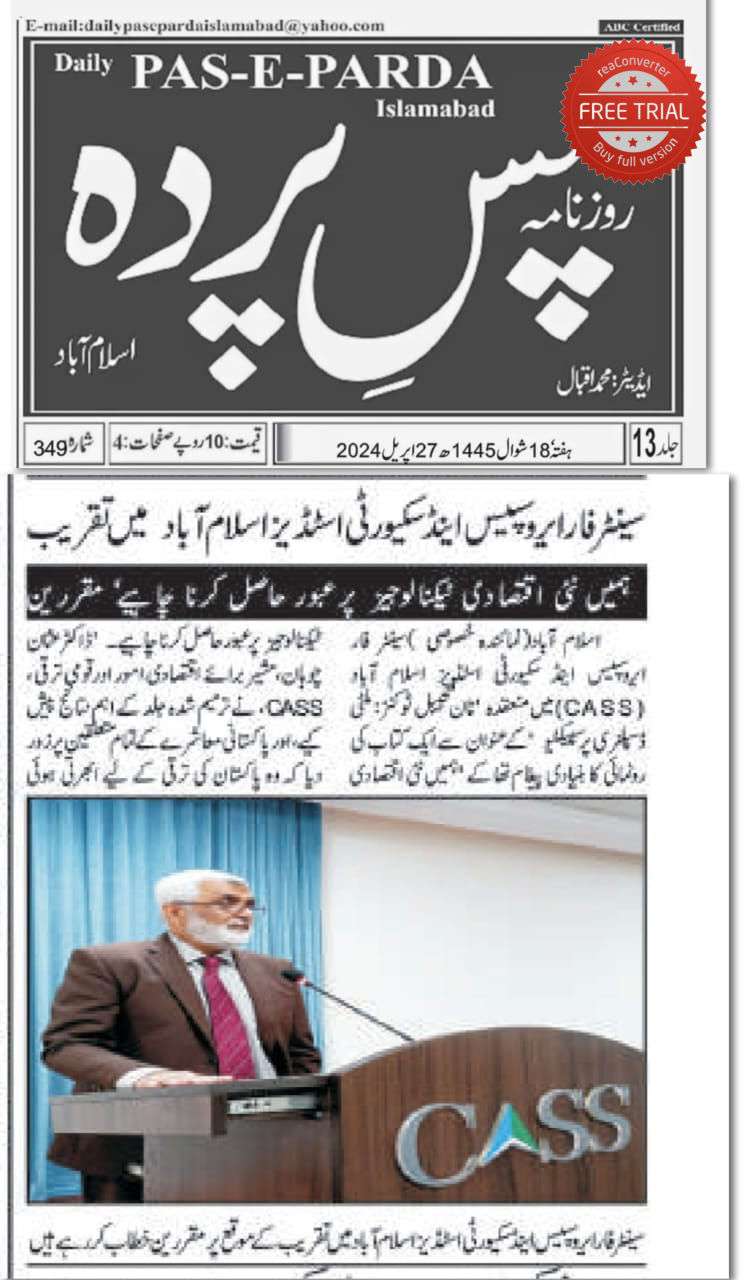
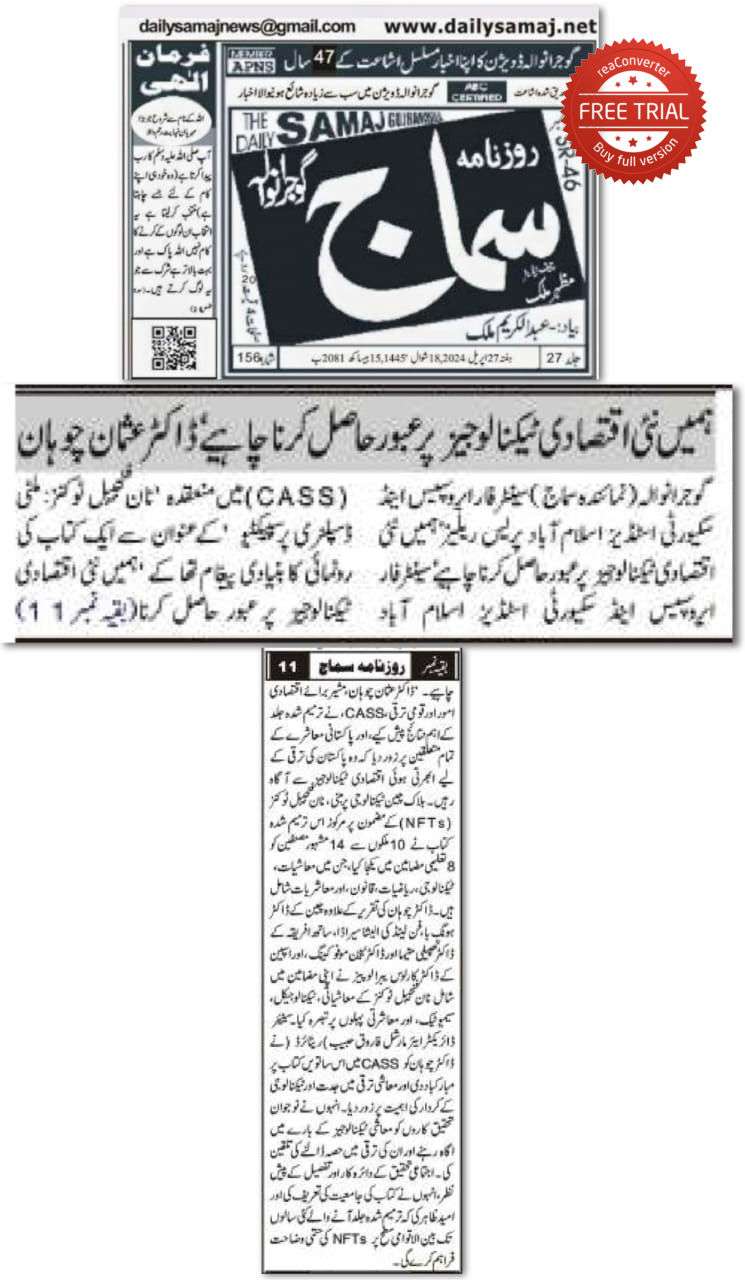
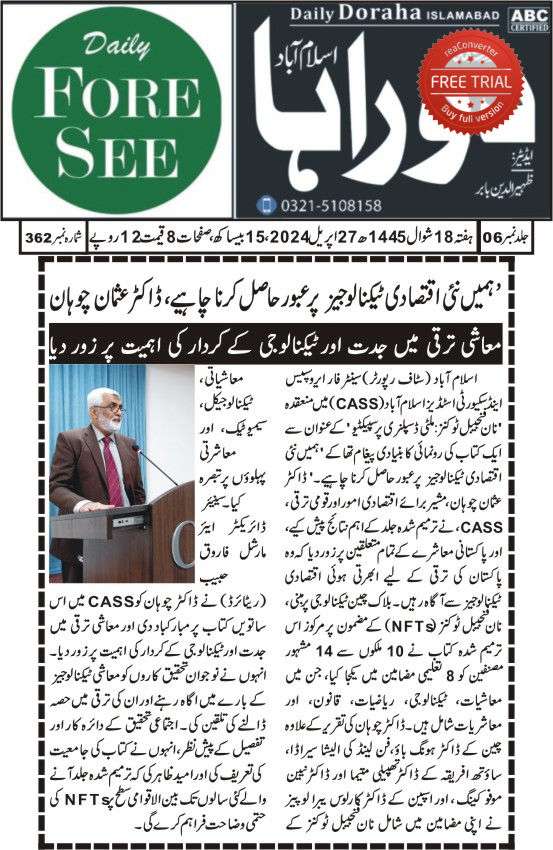
News Coverage








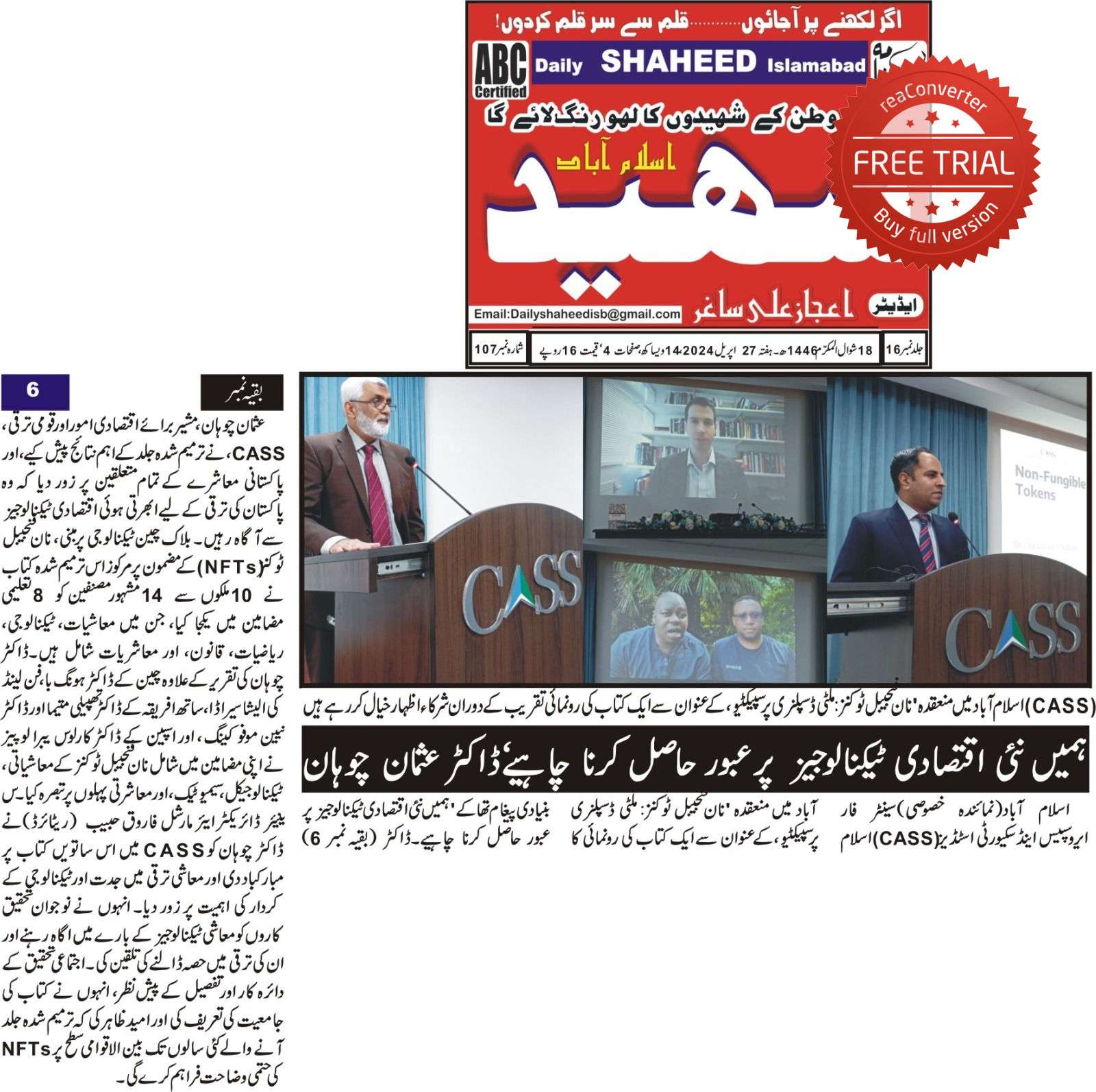
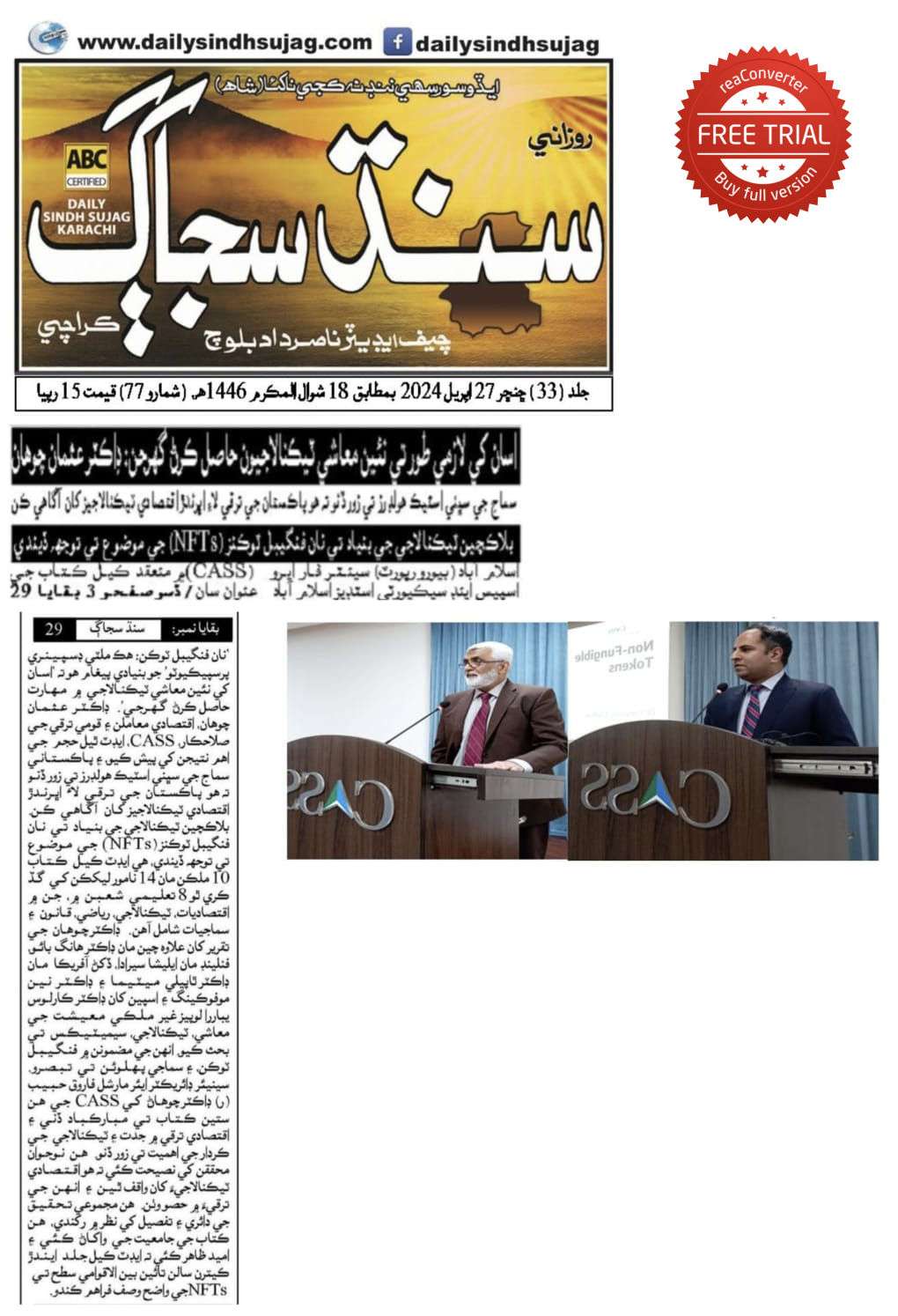

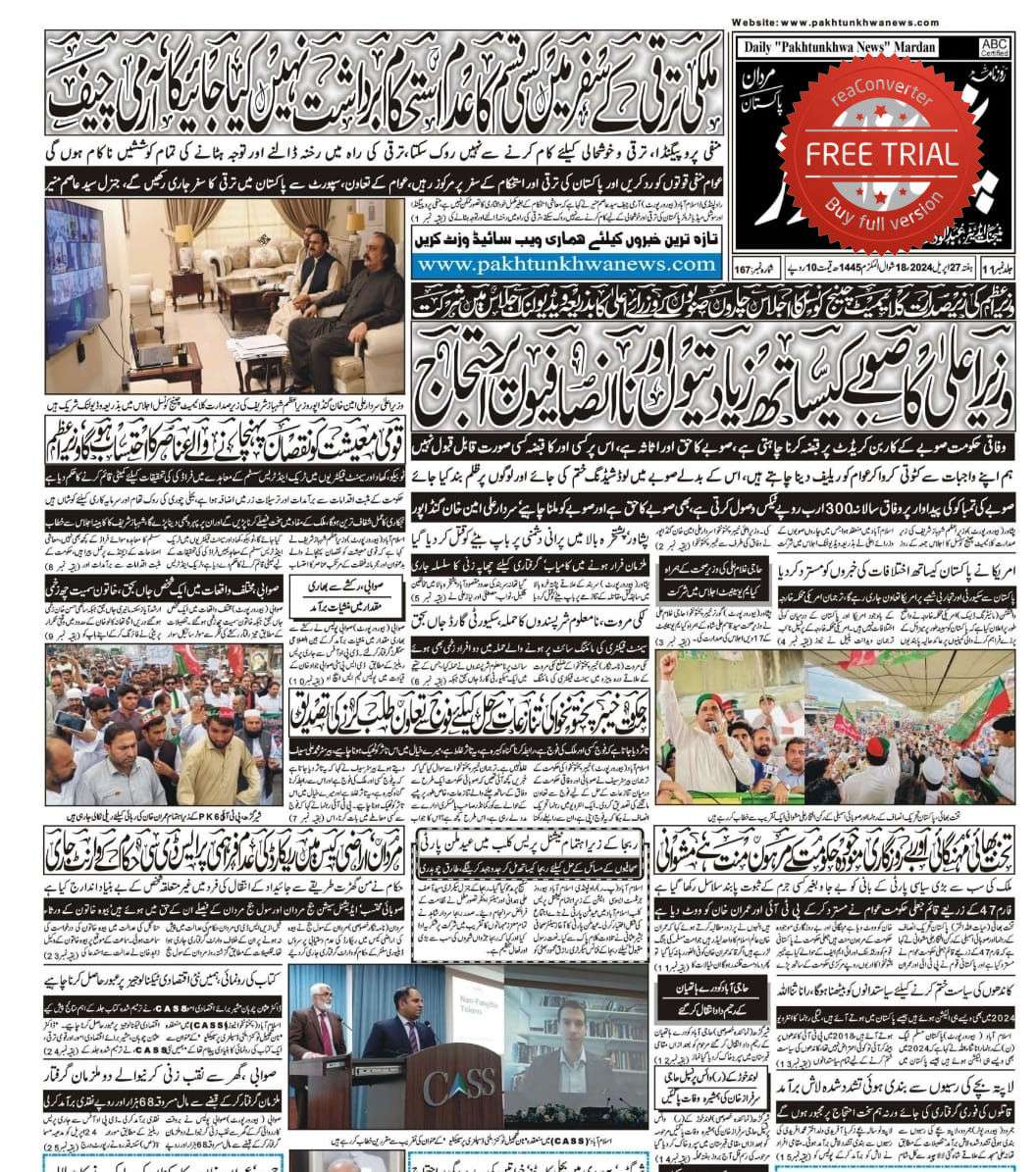


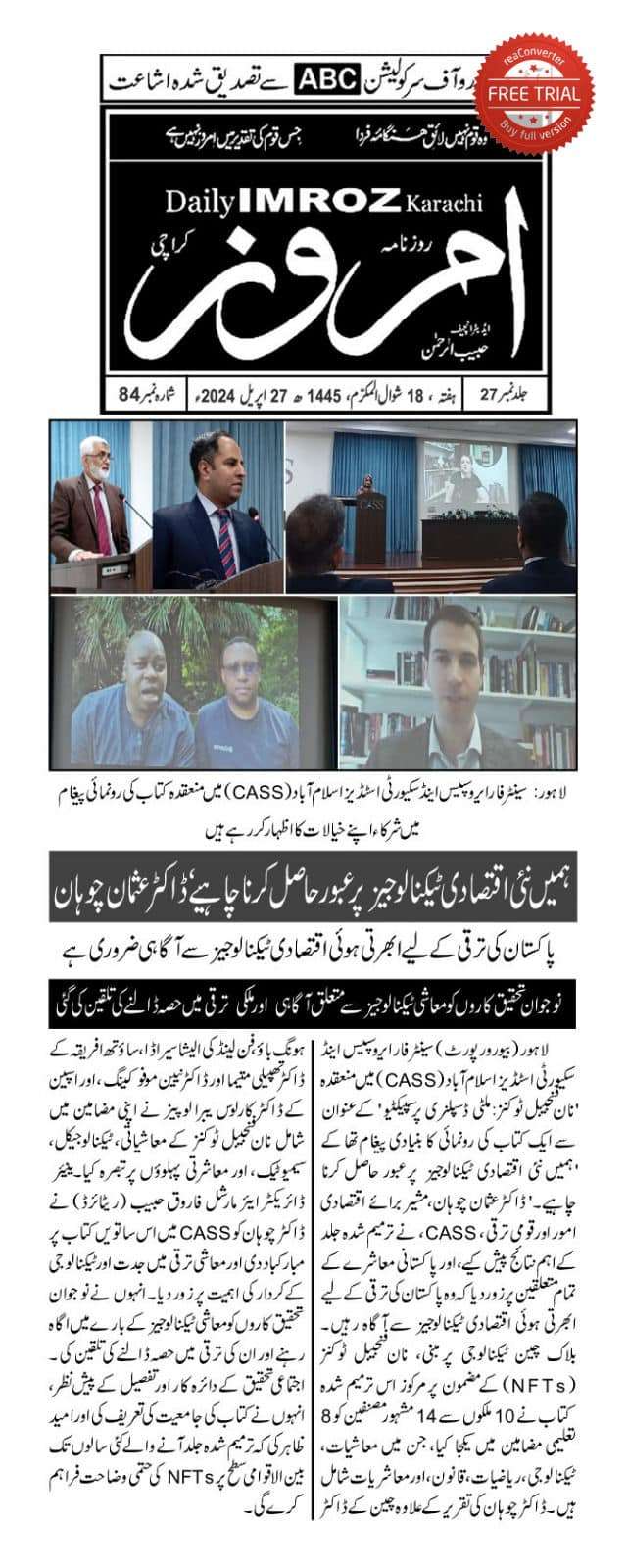





Newpaper Links