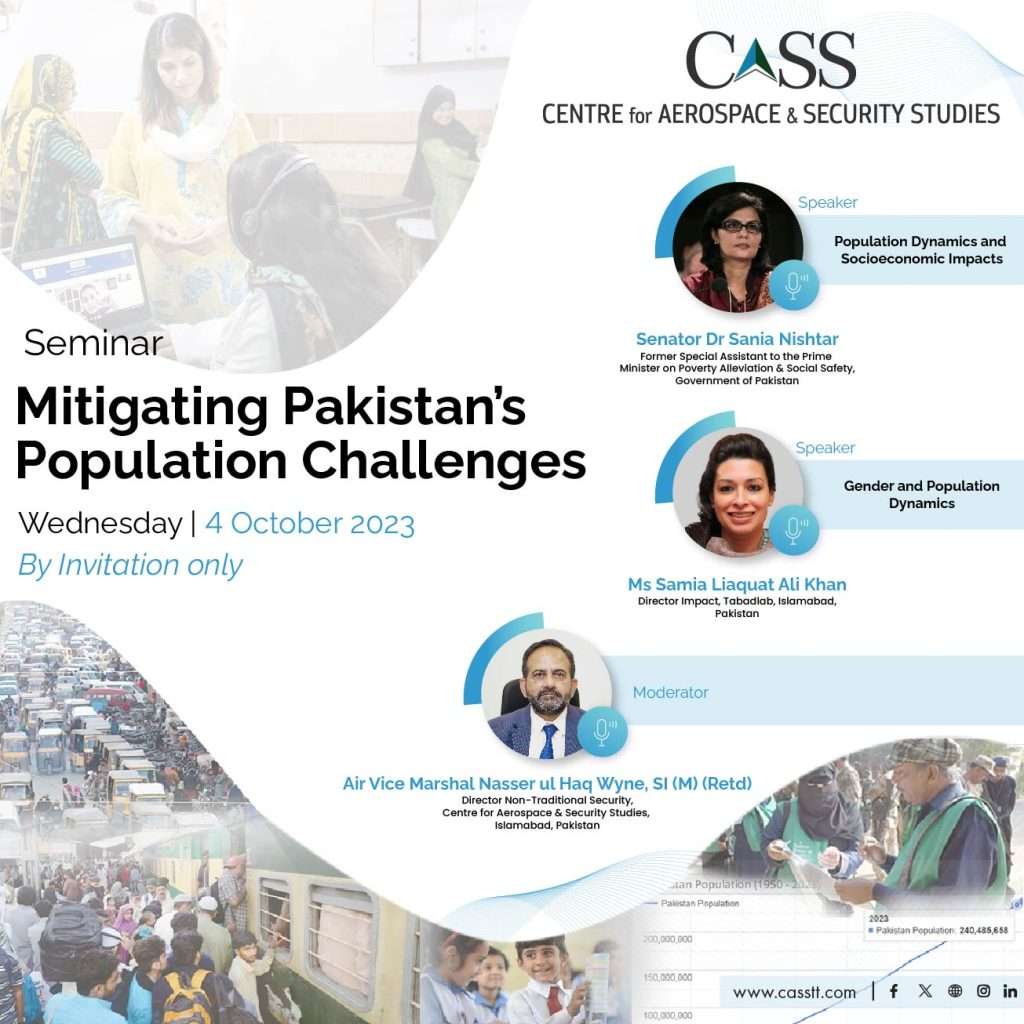
Concept Note
Water, Education, Economy and Population (WEEP) are fundamental pillars that exert profound and interconnected impacts on the well-being and security of a nation. These critical elements permeate every facet of society, ultimately shaping the overall security landscape. In order to ensure the robustness of a state’s security, it is imperative to continuously monitor and address the various dimensions of these domains.
Context
Inadequacies or challenges within any of these domains can significantly compromise a nation’s security. Regrettably, Pakistan faces acute challenges across these critical sectors, warranting a comprehensive and focused approach to address them effectively. While the National Security Policy of 2022 has underscored the importance of human security within a ‘citizen-centric’ framework, the translation of policy into actionable initiatives in the areas of water management, education reform, economic development, and population management continues to face substantial implementation gaps, mirroring challenges observed in other government responsibilities.
Series Objective
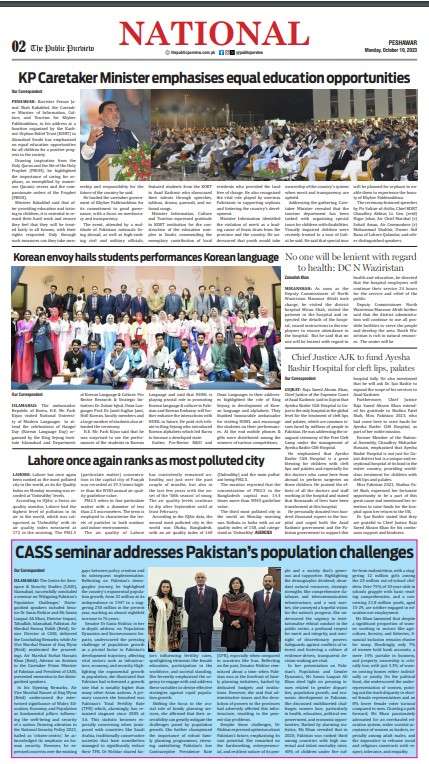
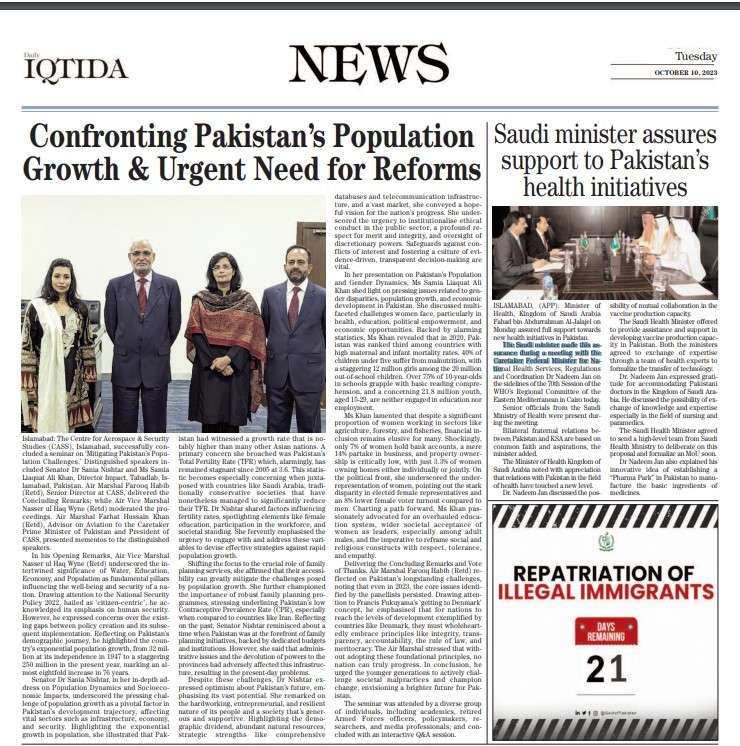
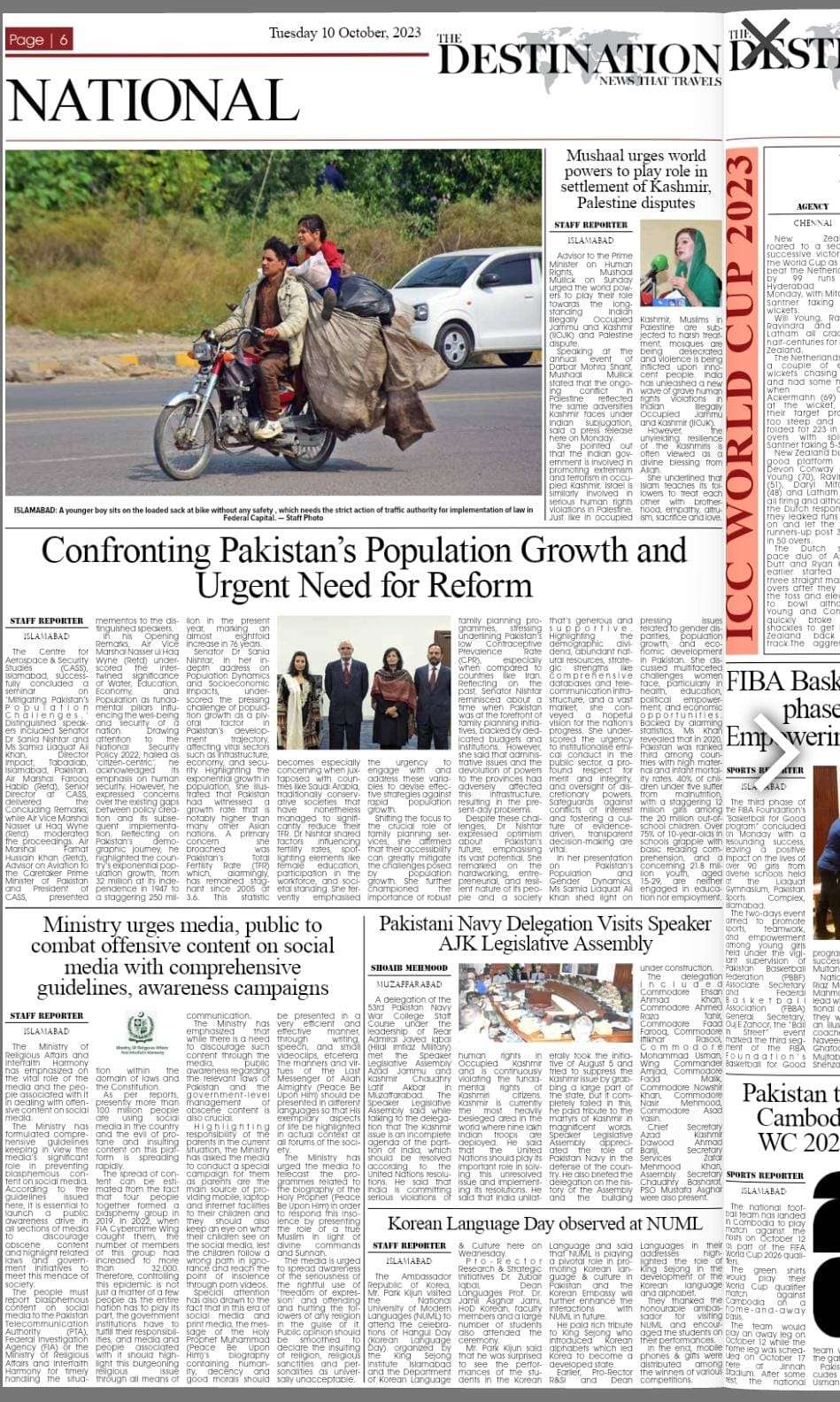
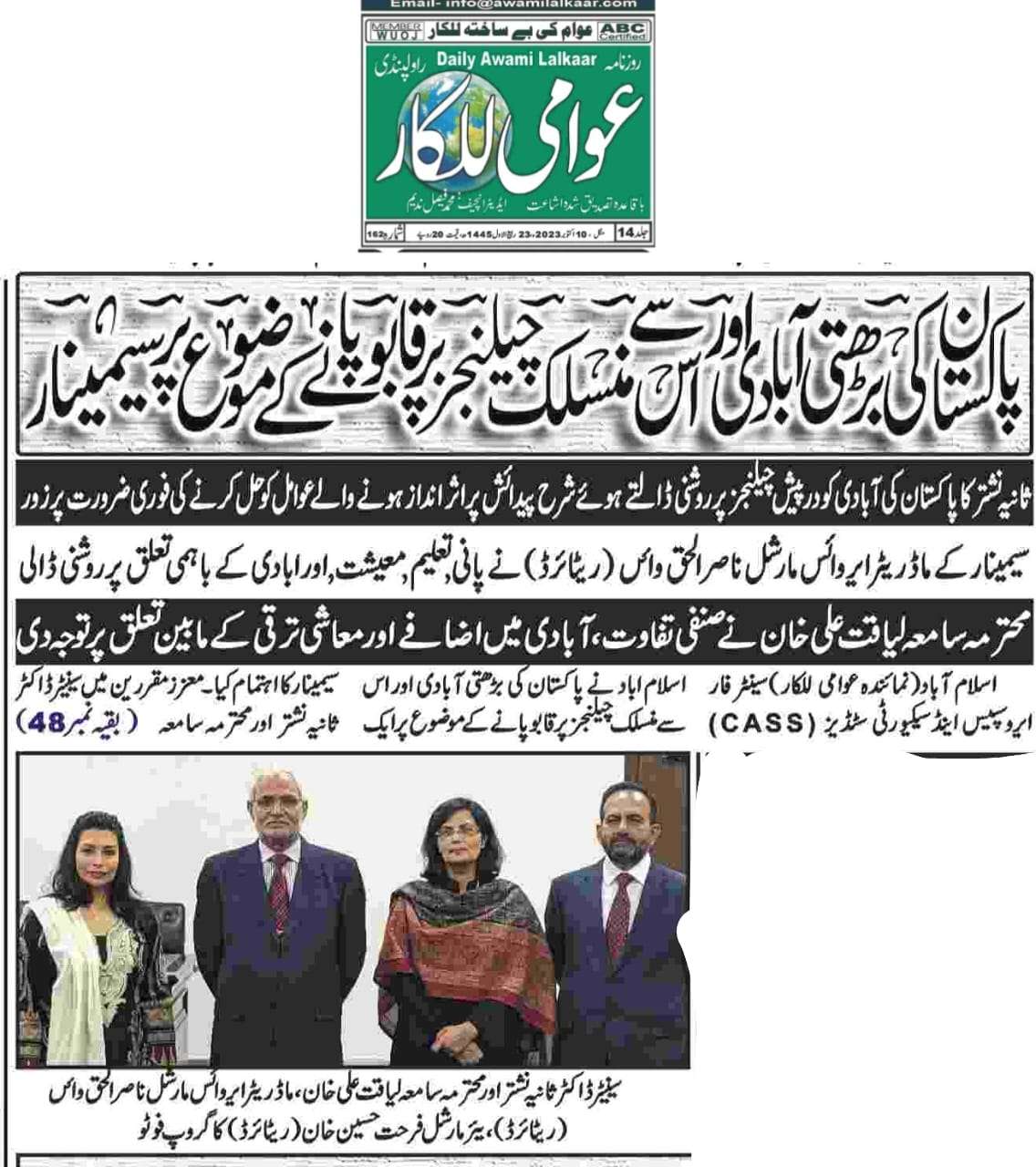
The Centre for Aerospace & Security Studies (CASS), Islamabad, recognises the urgency of addressing these pressing issues and their interconnectedness. To foster a more informed and constructive discourse, CASS is planning to organise a series of seminars, each dedicated to exploring one of these critical domains in depth. These seminars aim to facilitate a nuanced understanding of the challenges, opportunities, and policy imperatives in each area, fostering dialogue and knowledge exchange among key stakeholders, policymakers, and academic experts.
Inaugural Seminar
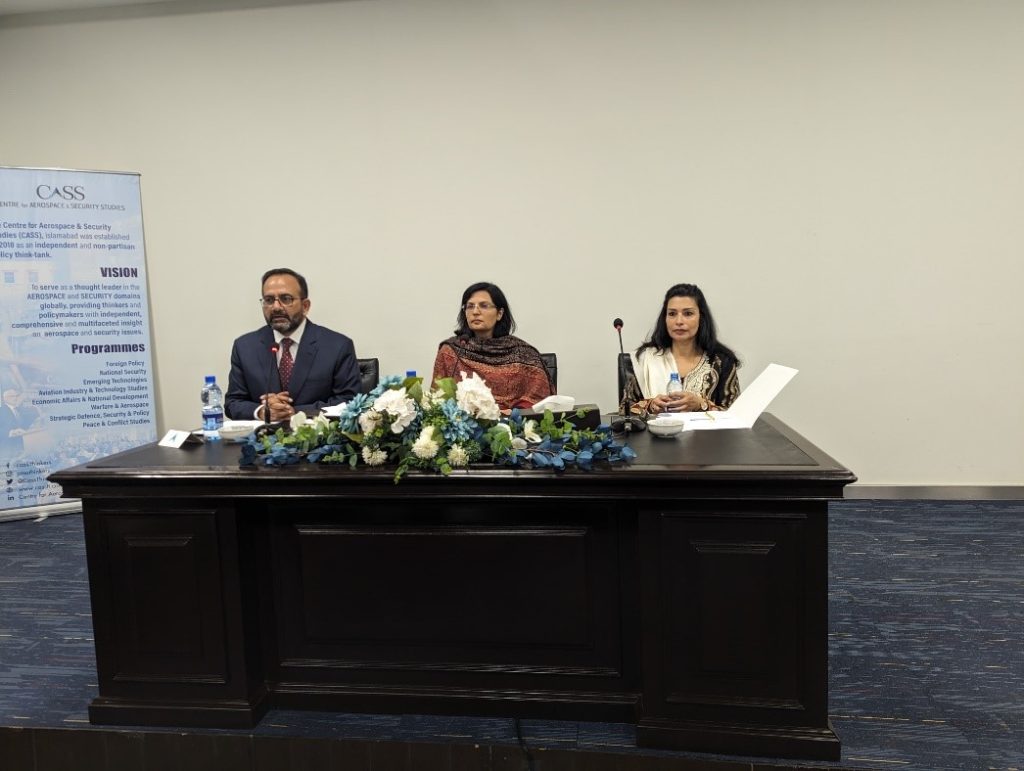
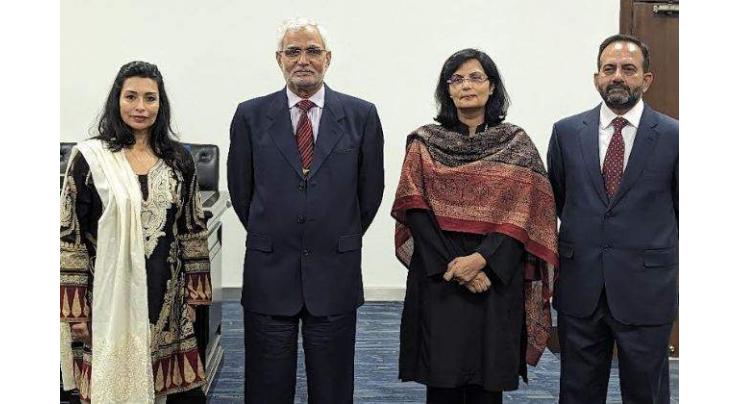
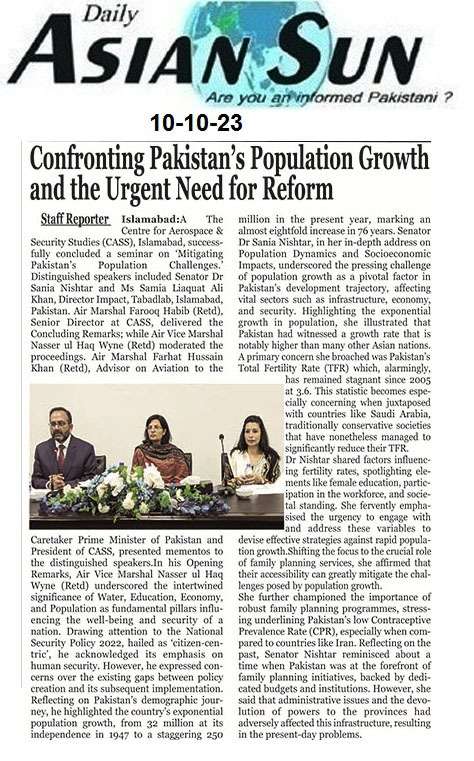
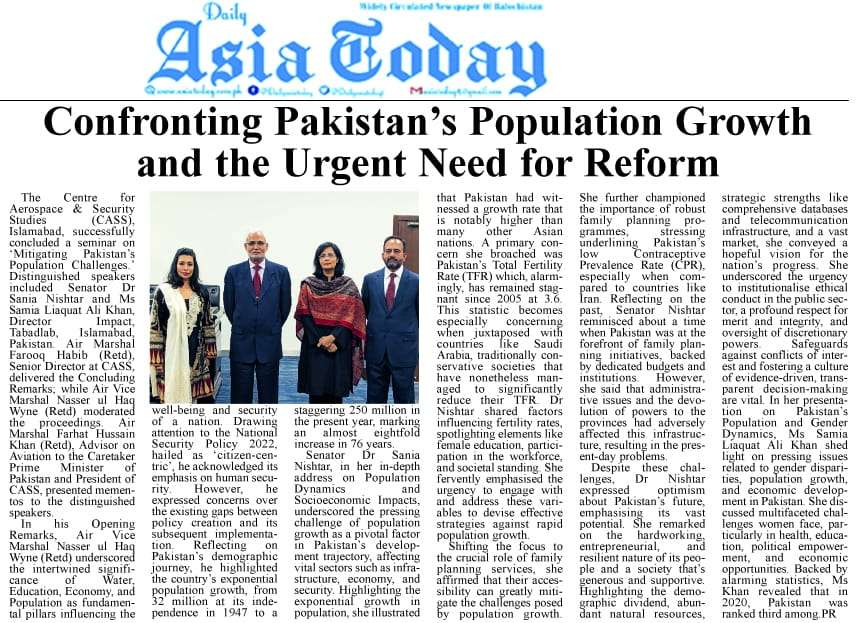
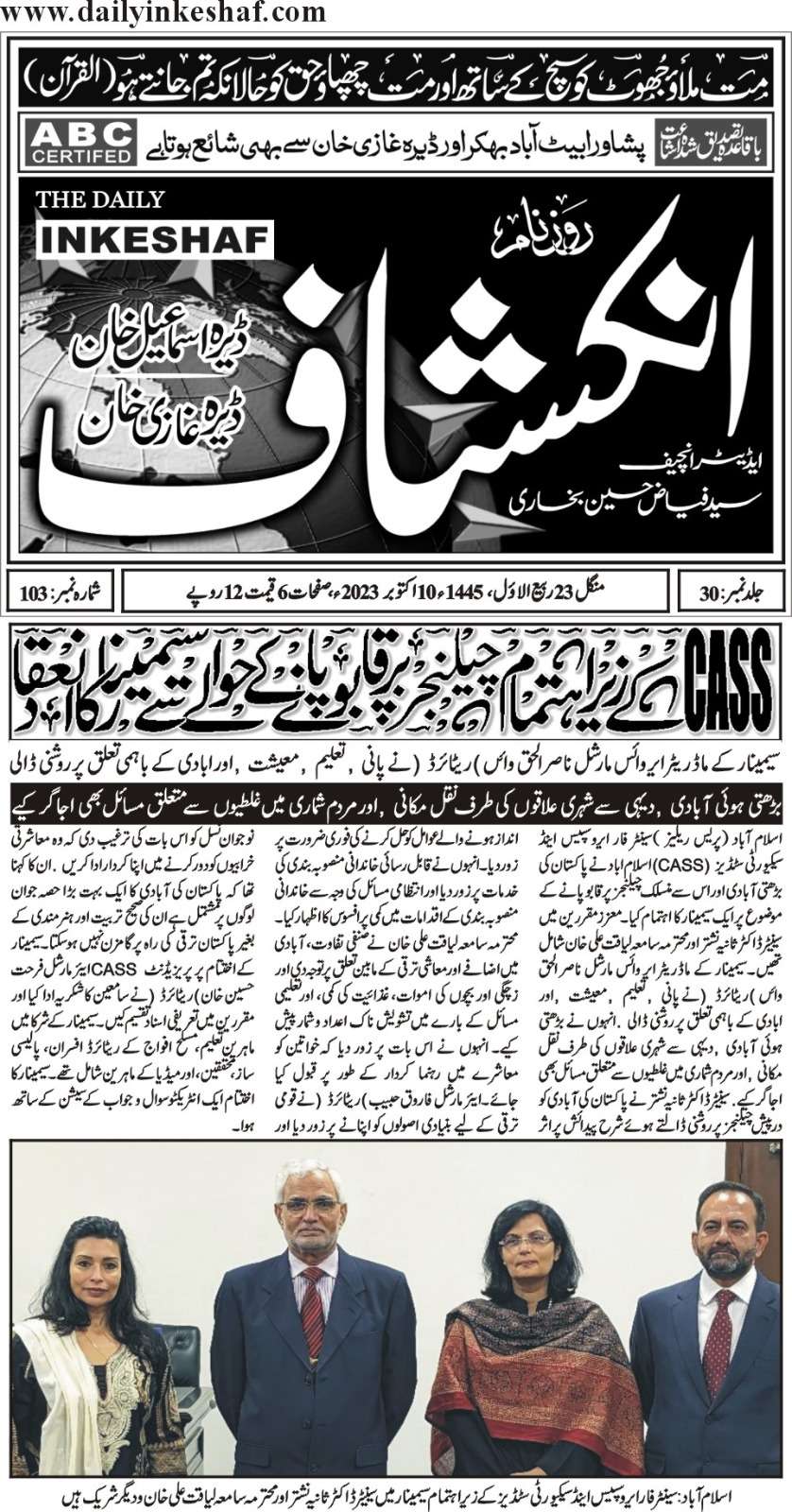
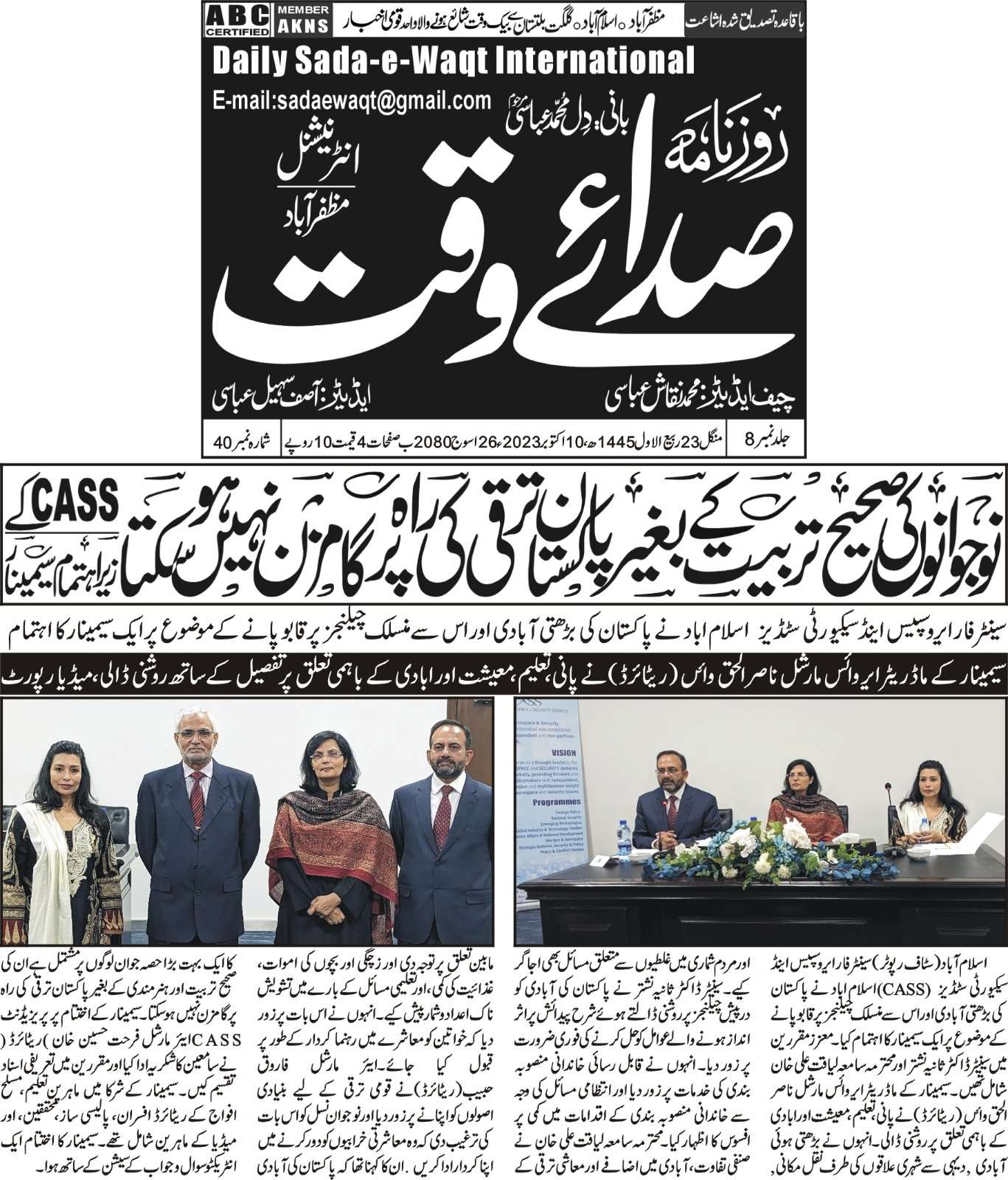
The inaugural seminar of this series was dedicated to an in-depth exploration of Pakistan’s population dynamics, a pivotal issue with far-reaching implications for the nation’s socioeconomic landscape. Since gaining independence in 1947, Pakistan has experienced remarkable population growth, progressing from 32 million to an estimated 250 million people this year. This unprecedented eightfold increase within 76 years underscores the urgency of addressing population-related challenges. Projections suggest that, with current fertility rates, Pakistan could reach 400 million by 2050. However, rigorous family planning efforts could potentially limit this figure to 266 million, while a moderate approach may still result in 342 million inhabitants. In the face of such rapid population growth, alongside urbanisation trends and the challenges stemming from inaccurate census data, effective planning becomes a critical concern. It is disheartening that the same stakeholders tasked with policymaking and implementation have contributed to inadequate policies.
The seminar delved into the multifaceted dimensions of population growth and its ramifications. Pakistan’s trajectory from the brink of food self-sufficiency in the early 1980s to today’s food security concerns is emblematic of the profound consequences of demographic changes on various sectors.
The seminar encompassed the following broad themes:
- Population Dynamics and Socioeconomic Impacts: A rigorous examination of the demographic trends and their multifaceted impacts on Pakistan’s socioeconomic landscape.
- Gender and Population Dynamics: An exploration of the unique challenges and opportunities that women encounter in the context of Pakistan’s growing population.
Press Release
Media Coverage
News Coverage
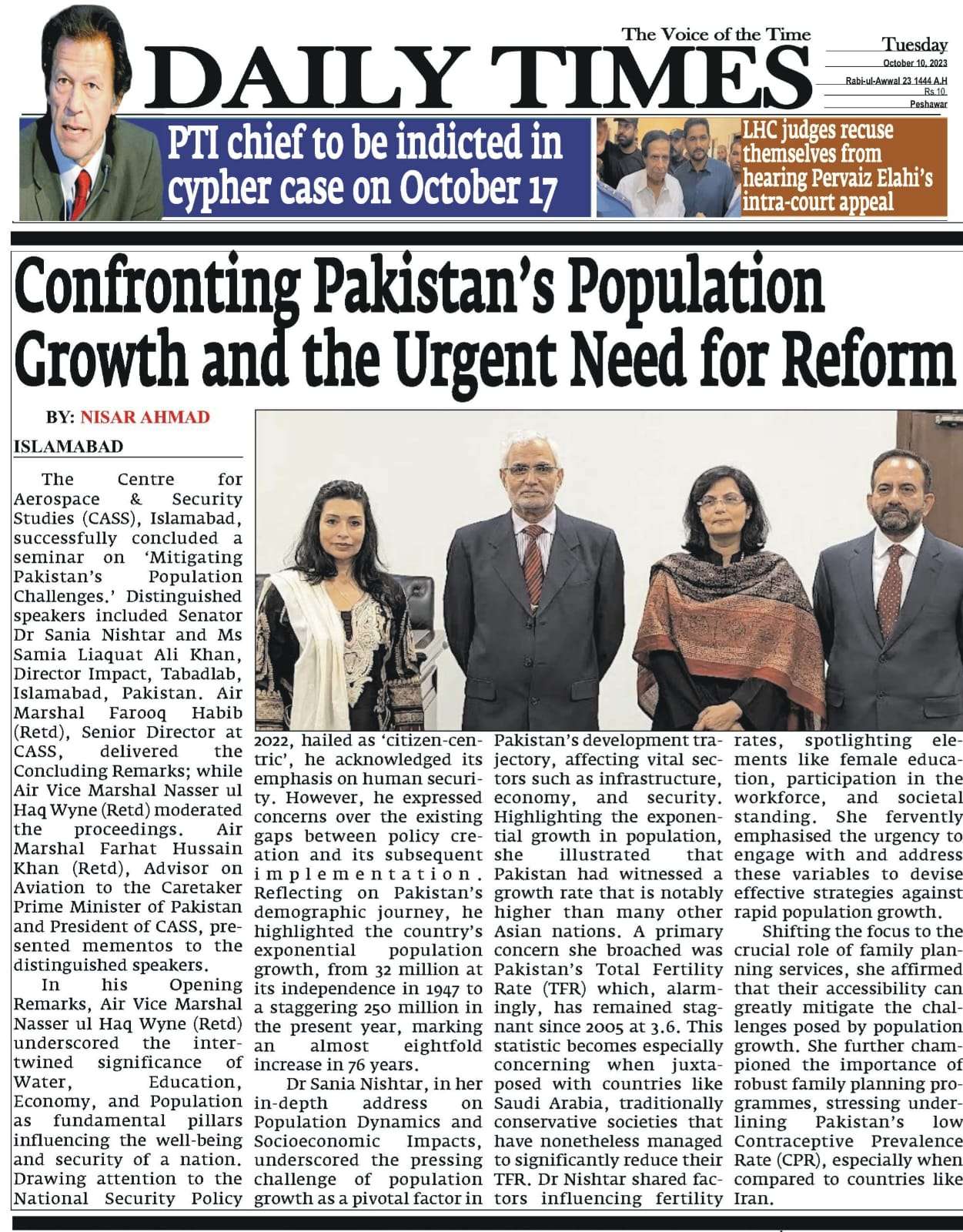
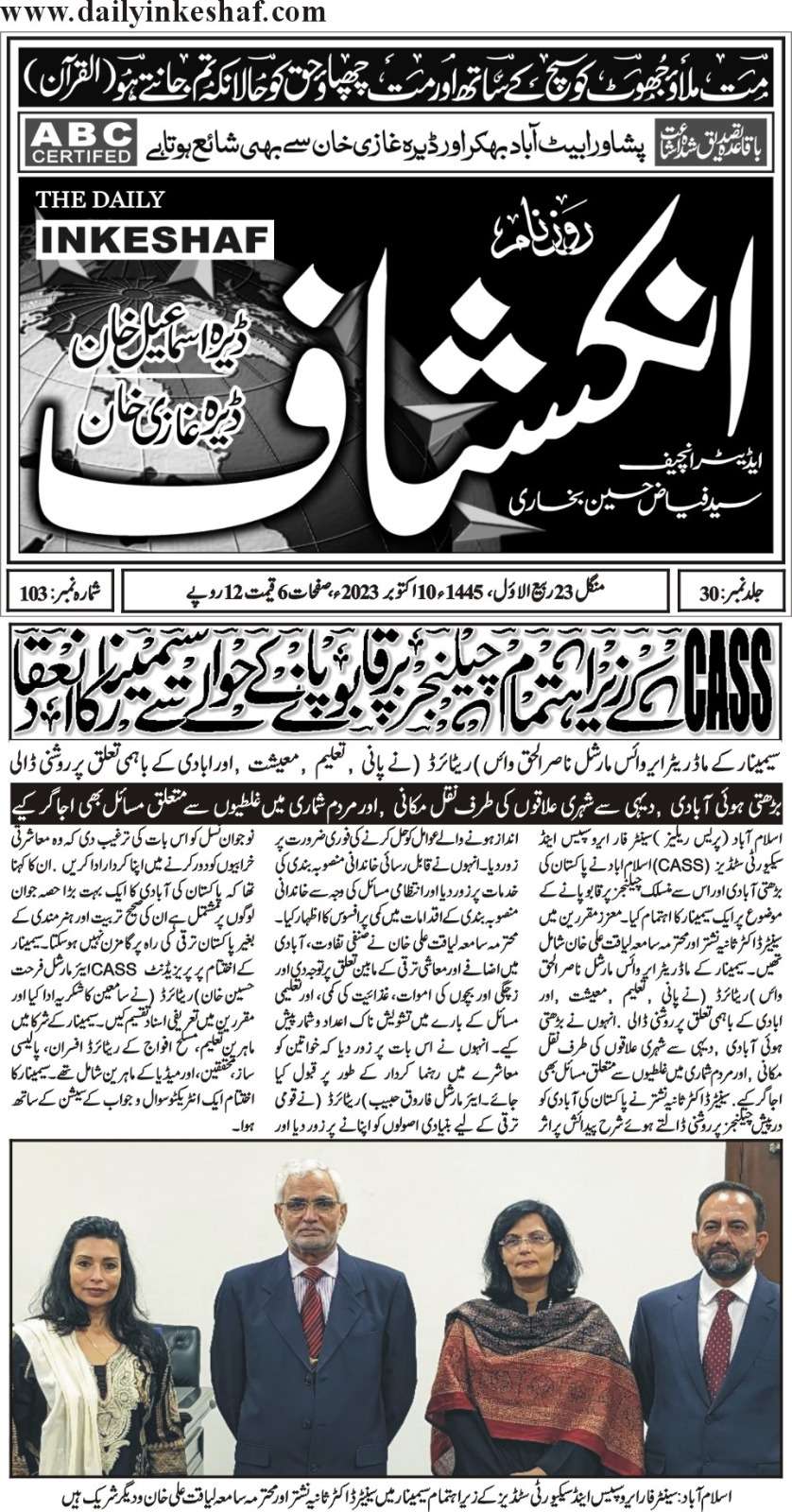
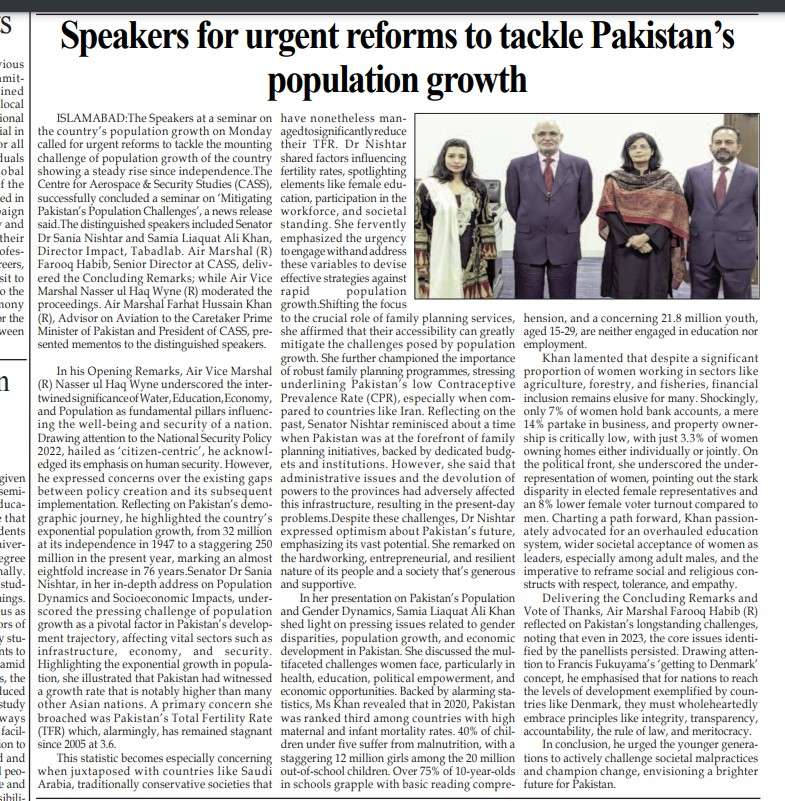

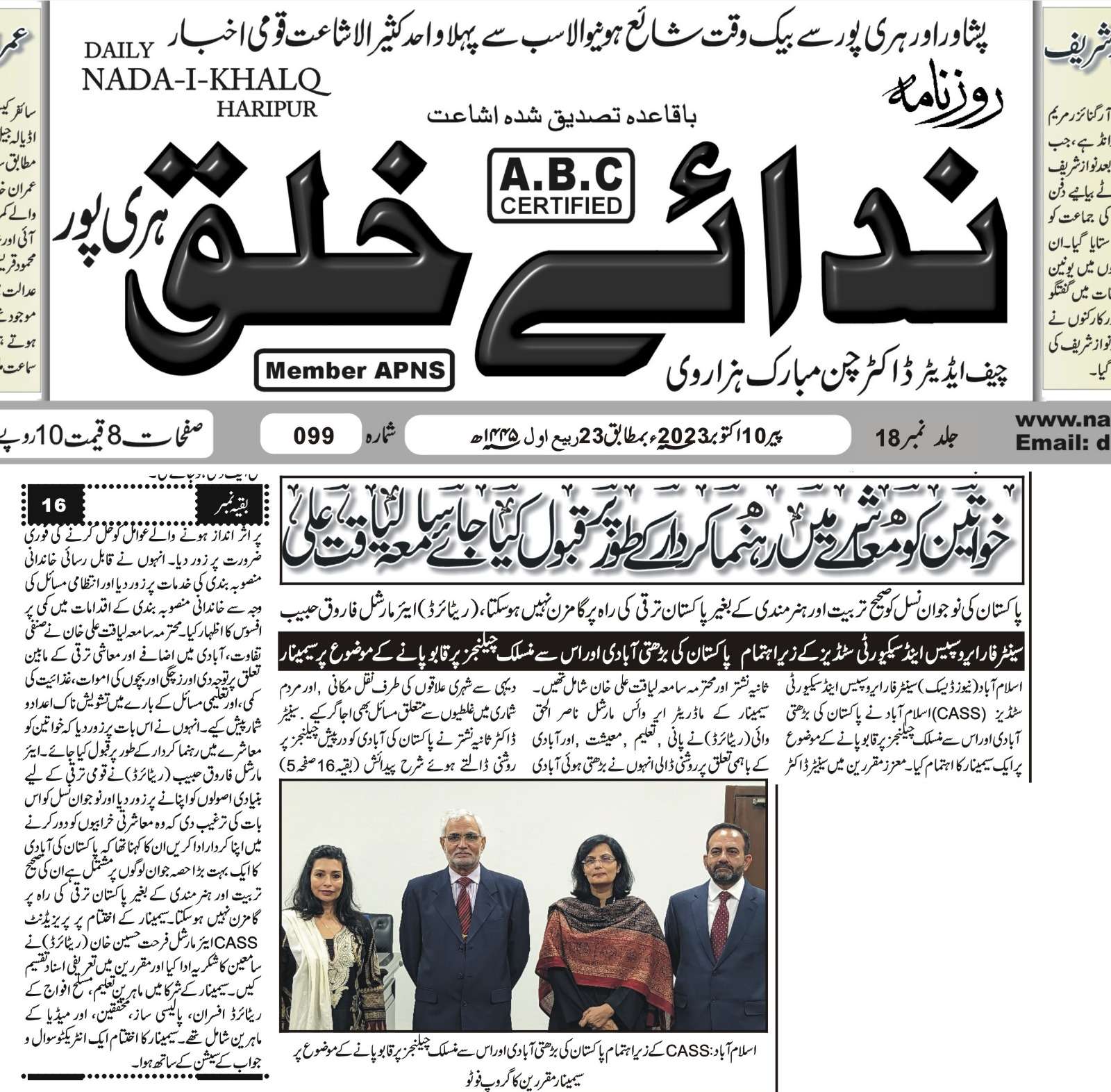
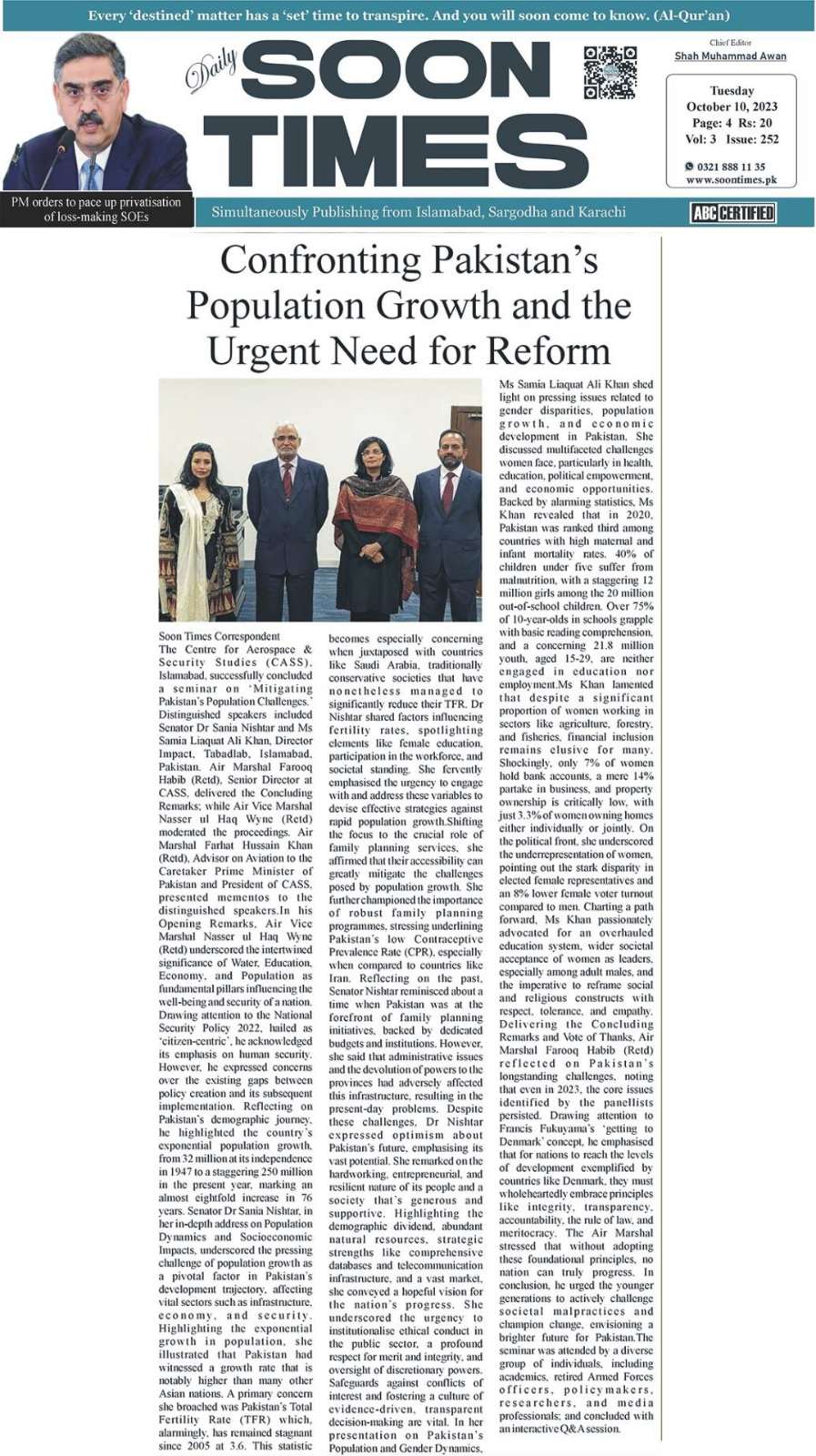
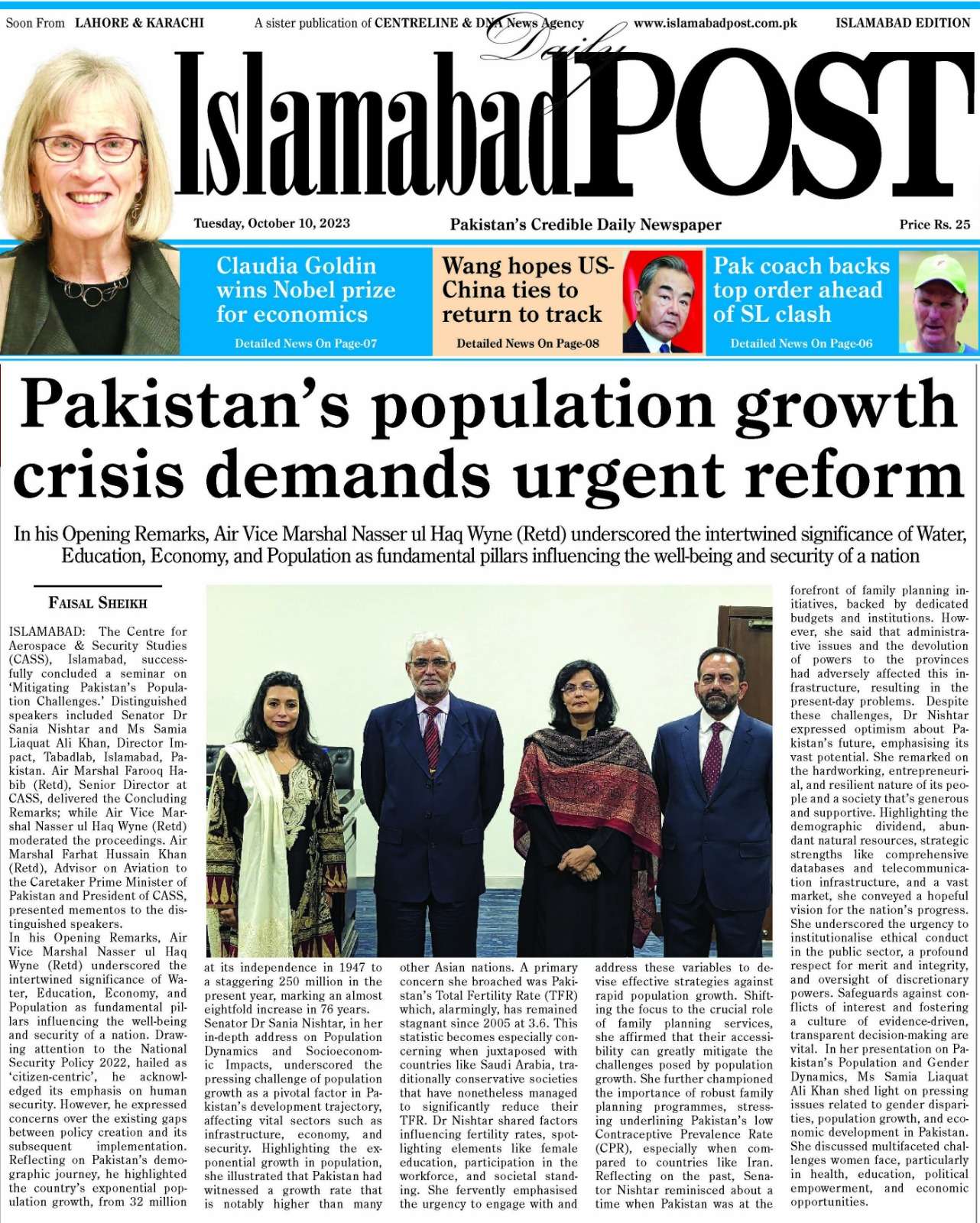
Newspaper Links