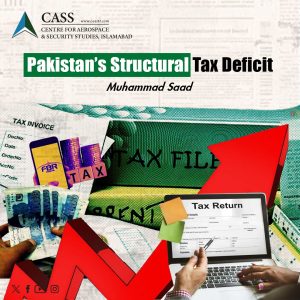
Pakistan’s Structural Tax Deficit
The latest statistics regarding Pakistan’s tax system suggest that progress has been made. As per the Federal Board of Revenue (FBR), it has registered 5.9 million tax filers as of October 2025, a 17.6% increase.

The latest statistics regarding Pakistan’s tax system suggest that progress has been made. As per the Federal Board of Revenue (FBR), it has registered 5.9 million tax filers as of October 2025, a 17.6% increase.
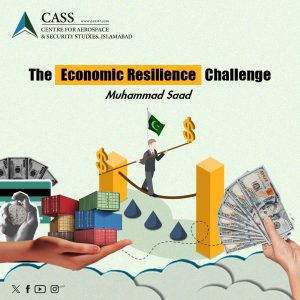
Pakistan is often termed as a ‘resilient nation.’ However, Henley & Partners’ recently published 2025 Global Investment Risk & Resilience Index (GIRRI) tells a different story by placing it in the “Least Resilient” category.

November is commemorated as Aviation History Month every year to mark the advancements in the field, while reflecting back on the lessons learnt from the past. Today, the aviation dynamics have marked a notable transformation, spread over numerous digitally linked airways.

The war in Ukraine has transformed into a high-tech siege of attrition where diplomacy has proven futile. From direct Russia-Ukraine talks in 2022 to Alaska Summit in 2025, any attempt to broker a peace settlement has consistently ended in a deadlock.
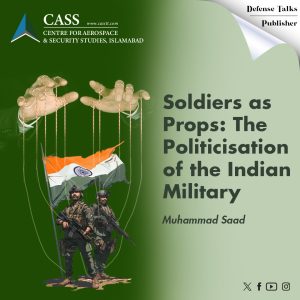
India has been redefining nationalism along Hindu majoritarian lines since 2014, when the Bharatiya Janata Party (BJP) assumed power. The Indian military, reimagined as muscular “patriots” instead of professionals tasked to defend the state, has been at the heart of this saffronized redefinition.

A new race to the moon is underway; not merely to erect flags, but to prospect for and extract water and helium-3, establish nuclear power plants and capitalize on the economic and strategic advantages that will shape the balance of power in space for decades to come.
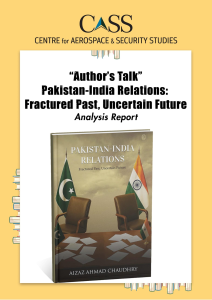
The complex and often turbulent relationship between Pakistan and India remains one of South Asia’s most enduring and consequential realities.
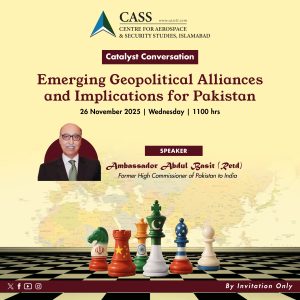
The year 2025 has redrawn the geopolitical map in many ways. The year witnessed a series of conflicts — including the recent India–Pakistan war, the Israel–Iran confrontation, and renewed instability along the Pakistan–Afghanistan border.
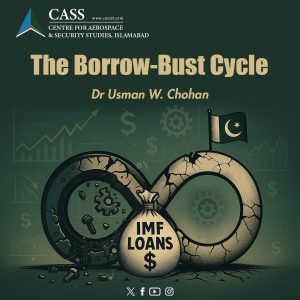
Pakistan has successfully stabilized its economy after mustering considerable effort during a grueling three-year period, which followed the multilayered crisis of 2022-23 that had causal factors ranging from domestic political friction to the global fallout of the Russo-Ukrainian War.
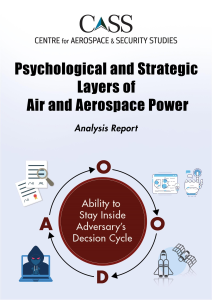
The contemporary era of warfare has transformed air and aerospace power into far more than a matter of aircraft and missiles. It now represents a comprehensive instrument of national strength — combining doctrine, technology, leadership, and psychology into a single continuum of influence.
