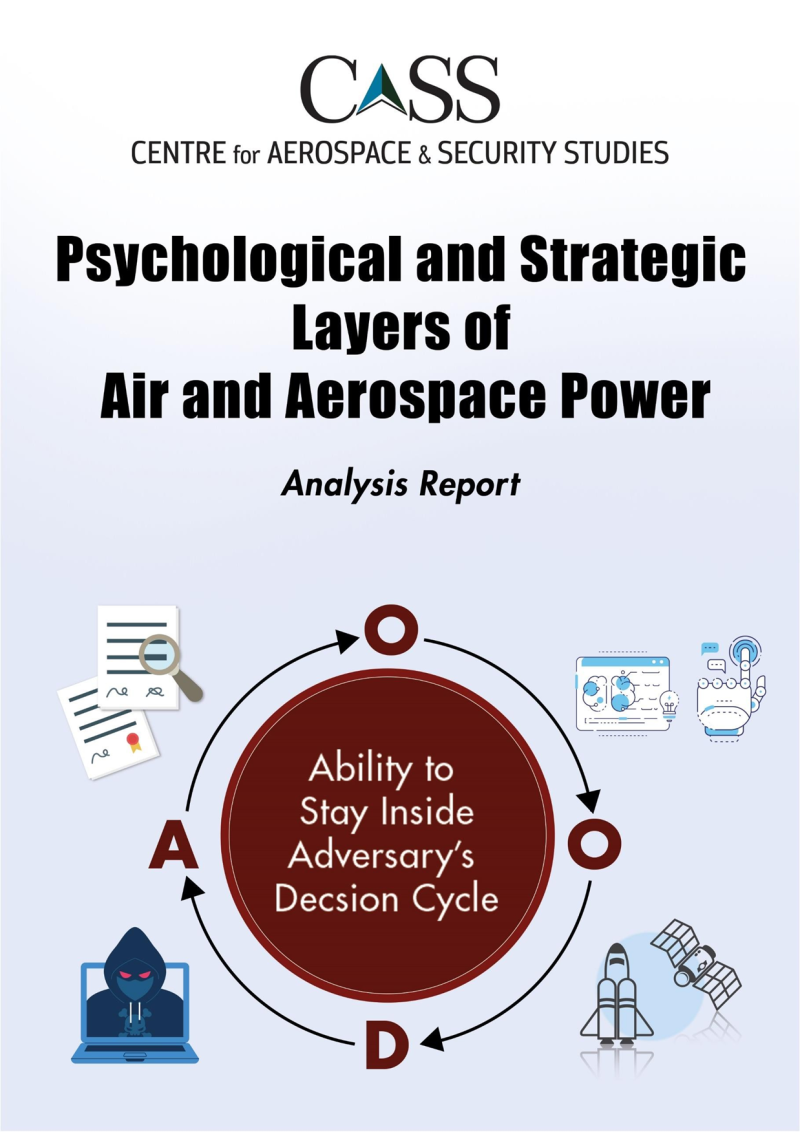
The contemporary era of warfare has transformed air and aerospace power into far more than a matter of aircraft and missiles. It now represents a comprehensive instrument of national strength — combining doctrine, technology, leadership, and psychology into a single continuum of influence. As emerging domains such as space, cyber, electronic warfare (EW), and artificial intelligence (AI) converge, the conduct of air operations is increasingly defined by information dominance, decision speed, and cognitive control rather than sheer firepower. The compression of the Observe– Orient–Decide–Act (OODA) loop has made mental agility and doctrinal clarity the real determinants of victory.
The early 21st century has demonstrated that air and aerospace power serves simultaneously as a strategic instrument and a psychological lever in both peace and conflict. Events such as Operation Swift Retort (2019) and the IAF-PAF confrontation in May 2025 illustrate that perception management, escalation control, and leadership decisiveness can shape political and military outcomes, even in technologically balanced environments. This dual reality of expanding technological sophistication and intensifying psychological contest underscores the need for integrated doctrinal and cognitive readiness.
Against this backdrop, the Roundtable Conference on ‘Psychological & Strategic Layers of Air & Aerospace Power,’ organised by the Centre for Aerospace & Security Studies (CASS) on 23rd October 2025, brought together senior air commanders, scholars, and defence experts to deliberate on how doctrine, training, and leadership can translate limited resources into strategic advantage. The discussions explored both the strategic dimensions that determine the operational effectiveness of aerospace power and the psychological mechanisms that shape morale, deterrence, and decision-making in contemporary warfare.
Through this roundtable, CASS sought to foster an understanding of how air and aerospace power, when aligned with intellectual clarity and national purpose, can serve as Pakistan’s most decisive instrument for ensuring security, stability, and strategic credibility in an increasingly complex regional environment.