PAF’s Transformation: Operation Swift Retort to the 4-Day War of May 2025

The Air Force is an inherently technology-sensitive force, and without adopting emerging technologies, concepts, and doctrines, it risks falling behind in effectiveness and relevance. Aware of this eventuality, the leadership of Pakistan Air Force (PAF) has always remained open to change and ready to embrace the evolving character of warfare. The PAF’s success in the “4 Day War of May 25” lies in its transformation during the period from Operation Swift Retort in 2019 to the May 25 war. Prior to ‘Operation Swift Retort’ in 2019, the air power balance between the PAF and the Indian Air Force (IAF) was defined by distinct yet comparable capabilities. The IAF operated a technologically diverse fleet that included SU-30 MKI, while the remaining fleet comprised older legacy fighters, such as Mirage-2000, MiG-29, MiG-21, and Jaguars. The PAF, meanwhile, had in its inventory the F-16 Fighting Falcon

Continue ReadingPAF’s Transformation: Operation Swift Retort to the 4-Day War of May 2025

MISADVENTURES INTO PAKISTAN’S AIRSPACE

The Treaty of Westphalia is considered to be the foundation and a reference point for the conceptual establishment of the idea of a “Nation State”. It solidified the notions of territorial sovereignty, state autonomy, and the structure of the international system. Signed in 1648, the treaty stabilised patterns of interstate conduct it reinforced. Since 1648, various other treaties, pacts and arrangements have been signed at international, regional, and bilateral levels. These were aimed at streamlining state-to-state relations and the movement of people and goods across geographical borders. Under “Schengen States” arrangement, for example, citizens of member states can cross over to other member states without visa or border checks. Today, the Schengen area covers over 4 million square kilometres with a population of over 450 million people and includes 29 countries. Even with this relaxed arrangement, state sovereignty and state laws are held inviolable and military activities

Continue ReadingMISADVENTURES INTO PAKISTAN’S AIRSPACE

Analysing the Strategic Paralysis of the IAF: May 2025 Air War

The May 2025 Air War between the PAF and the IAF will go down in history as the largest Beyond Visual Range (BVR) battle between two nuclear-armed neighbours. So too would the consequences of a 7-nil loss for the IAF, which resulted in a ‘strategic paralysis’ of the Indian political and military leadership. This consequential event can be analysed in light of leading air power application theories in conflicts to see how these have been affected by the advent of emerging technologies and concepts.

Continue ReadingAnalysing the Strategic Paralysis of the IAF: May 2025 Air War

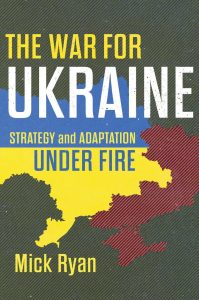
The War for Ukraine: Strategy and Adaptation Under Fire

Wars, whether they are slow and protracted or short and intense, seldom end without leaving a mark. Under extreme circumstances, they may be able to redefine geographical boundaries, upset demographics, or break alliances as the world order tries to preserve some facade of balance. The Russia-Ukraine War is no different. As one of the longest-ongoing European wars since World War II, with intensive use of emerging technology in modern history, it has undoubtedly etched itself into history.

Continue ReadingThe War for Ukraine: Strategy and Adaptation Under Fire

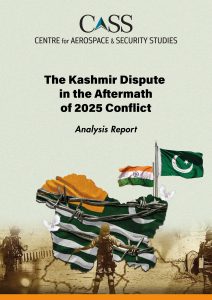
Kashmir Dispute in the Aftermath of the 2025 Conflict

  • Post author:

The Kashmir dispute remains the central fault line of South Asian security, with periodic crises underscoring its unresolved political, humanitarian, and strategic dimensions. The May 2025 Pakistan-India hostilities once again demonstrated that Kashmir is not a frozen conflict, but a deeply destabilising issue with direct consequences for regional peace, strategic stability, and human security.

Continue ReadingKashmir Dispute in the Aftermath of the 2025 Conflict

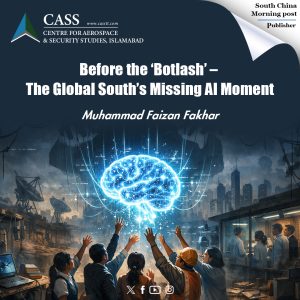
Before the ‘Botlash’ – The Global South’s Missing AI Moment

uch of the Western discourse on Artificial Intelligence (AI) has lately focused on establishing safeguards and installing guardrails against powerful new AI systems, algorithmic bias, collusion of governments and tech oligarchs, and rising environmental costs related to AI ecosystems. The growing backlash in the West against the adverse effects of AI is labelled as ‘Botlash’ in the most recent commentary by Marietje Schaake. This commentary refers to various anti-AI movements that have gained tractions in the recent past including ‘QuitGPT’, ‘Resist and Unsubscribe’, and ‘Stealing Isn’t Innovation.’ While ‘botlash’ may be an apt description of how AI is now being perceived in the developed countries, the story for the Global South is completely opposite where AI is being viewed as some magical cure for poor governance, corruption, and weak economic development. Countries in the Global South are yet to undergo indigenous AI governance, development and deployment. Therefore,

Continue ReadingBefore the ‘Botlash’ – The Global South’s Missing AI Moment

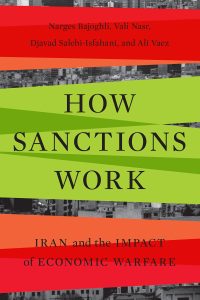
How Sanctions Work: Iran and the Impact of Economic Warfare

The ongoing war between the United States, Israel, and Iran has brought several critical questions to the fore: What lies at the root of the grievances that triggered a protest movement in Iran earlier this year, exploited by the US and Israel? How widespread are the sentiments of resentment towards the regime among the Iranian population? How did Iranian society not collapse, and what prevented the sanctions from incapacitating the Iranian economy, thereby preserving Tehran’s ability to resist today? How Sanctions Work: Iran and the Impact of Economic Warfare effectively answers these questions from different angles. It is written

Continue ReadingHow Sanctions Work: Iran and the Impact of Economic Warfare

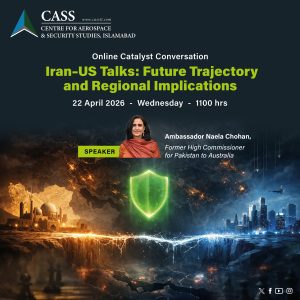
Catalyst Conversation : The US–Israel–Iran War and the Role of Gulf and Arab States

  • Post author:

The ongoing war between the United States-Israel, and Iran has emerged as a defining crisis of the modern world, with significant implications for regional security, global energy markets, and the evolving geopolitical order. While the primary confrontation involves direct and indirect exchanges between these actors, Gulf and Arab states have become increasingly central to the conflict’s dynamics. Hosting U.S. military assets and located in close proximity to key theatres of escalation, these states face growing security risks, including spillover

Continue ReadingCatalyst Conversation : The US–Israel–Iran War and the Role of Gulf and Arab States

How Sanctions Work: Iran and the Impact of Economic Warfare

The ongoing war between the United States, Israel, and Iran has brought several critical questions to the fore: What lies at the root of the grievances that triggered a protest movement in Iran earlier this year, exploited by the US and Israel? How widespread are the sentiments of resentment towards the regime among the Iranian population? How did Iranian society not collapse, and what prevented the sanctions from incapacitating the Iranian economy, thereby preserving Tehran’s ability to resist today? How Sanctions Work: Iran and the Impact of Economic Warfare effectively answers these questions from different angles. It is written by Narges Bajoghli – an anthropologist with expertise in media, power, and military dynamics, Vali Nasr – a political scientist

Continue ReadingHow Sanctions Work: Iran and the Impact of Economic Warfare