Share this event

Facebook
Twitter
LinkedIn

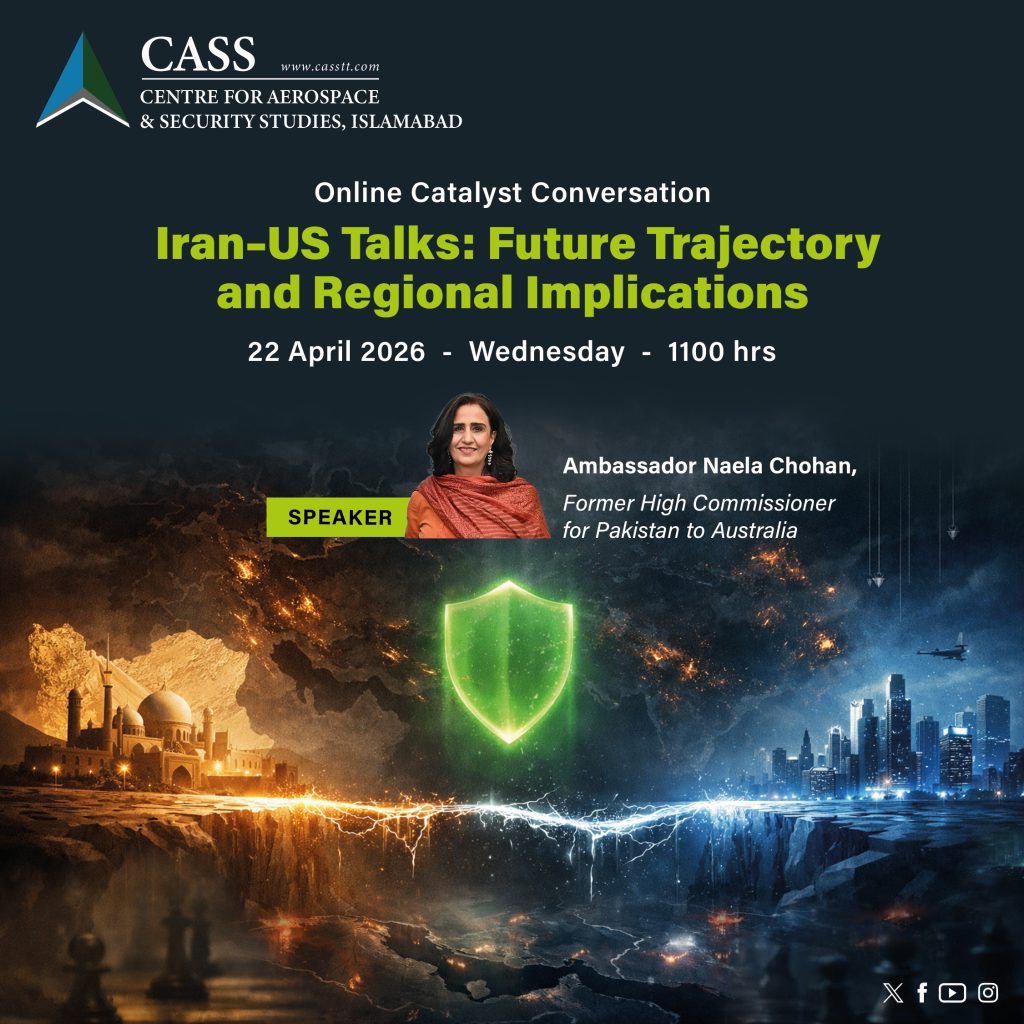
The ongoing diplomatic engagement between Iran and the United States has revived the possibility of de-escalation after a prolonged period of tensions. While the talks remain limited and fragile, they reflect a mutual recognition of the risks associated with continued confrontation. However, deep mistrust, competing strategic priorities, and political constraints continue to complicate prospects for a meaningful breakthrough.

This catalyst conversation aims to examine the trajectory of the Iran–US talks and assess their potential implications for regional security and broader geopolitical dynamics. The discussion will particularly focus on how these negotiations may shape the Middle East’s strategic environment and what they mean for regional states, including Pakistan, navigating evolving alignments. The insights will help unpack the diplomatic signalling, negotiation dynamics, and possible outcomes of the ongoing engagement.

Questions

  1. What are the major obstacles preventing a breakthrough in the ongoing Iran–US talks and how likely is a sustainable agreement?
  2. How could the outcome of these negotiations reshape regional security dynamics in the Middle East and the Gulf?
  3. What implications do the Iran–US talks hold for Pakistan’s diplomatic and strategic positioning?
Other Events

Nuclear Capability: Balancing Global Security and Energy Needs

Recent global developments—including geopolitical tensions, energy crises, and shifting power dynamics—have intensified discussions around nuclear capability. After the Russia-Ukraine conflict and the US-Israel-Iran war, nations are increasingly evaluating nuclear technology not only as a strategic defense mechanism but also as a reliable and large-scale energy source. These developments have brought nuclear capability back to the forefront of international debate.
The dual-use nature of nuclear capability—serving both military and civilian purposes—makes it a critical area of analysis. The ongoing war on Iran has introduced significant uncertainty into the future of Iran’s nuclear trajectory, particularly regarding

Read More »

Catalyst Conversation : The US–Israel–Iran War and the Role of Gulf and Arab States

The ongoing war between the United States-Israel, and Iran has emerged as a defining crisis of the modern world, with significant implications for regional security, global energy markets, and the evolving geopolitical order. While the primary confrontation involves direct and indirect exchanges between these actors, Gulf and Arab states have become increasingly central to the conflict’s dynamics.
Hosting U.S. military assets and located in close proximity to key theatres of escalation, these states face growing security risks, including spillover

Read More »