How Sanctions Work: Iran and the Impact of Economic Warfare

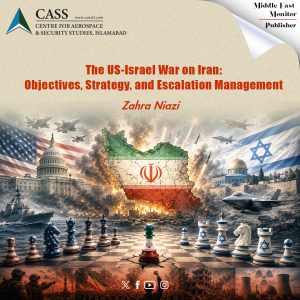
The ongoing war between the United States, Israel, and Iran has brought several critical questions to the fore: What lies at the root of the grievances that triggered a protest movement in Iran earlier this year, exploited by the US and Israel? How widespread are the sentiments of resentment towards the regime among the Iranian population? How did Iranian society not collapse, and what prevented the sanctions from incapacitating the Iranian economy, thereby preserving Tehran’s ability to resist today? How Sanctions Work: Iran and the Impact of Economic Warfare effectively answers these questions from different angles. It is written

Continue ReadingHow Sanctions Work: Iran and the Impact of Economic Warfare

Catalyst Conversation : The US–Israel–Iran War and the Role of Gulf and Arab States

  • Post author:

The ongoing war between the United States-Israel, and Iran has emerged as a defining crisis of the modern world, with significant implications for regional security, global energy markets, and the evolving geopolitical order. While the primary confrontation involves direct and indirect exchanges between these actors, Gulf and Arab states have become increasingly central to the conflict’s dynamics. Hosting U.S. military assets and located in close proximity to key theatres of escalation, these states face growing security risks, including spillover

Continue ReadingCatalyst Conversation : The US–Israel–Iran War and the Role of Gulf and Arab States

How Sanctions Work: Iran and the Impact of Economic Warfare

The ongoing war between the United States, Israel, and Iran has brought several critical questions to the fore: What lies at the root of the grievances that triggered a protest movement in Iran earlier this year, exploited by the US and Israel? How widespread are the sentiments of resentment towards the regime among the Iranian population? How did Iranian society not collapse, and what prevented the sanctions from incapacitating the Iranian economy, thereby preserving Tehran’s ability to resist today? How Sanctions Work: Iran and the Impact of Economic Warfare effectively answers these questions from different angles. It is written by Narges Bajoghli – an anthropologist with expertise in media, power, and military dynamics, Vali Nasr – a political scientist

Continue ReadingHow Sanctions Work: Iran and the Impact of Economic Warfare

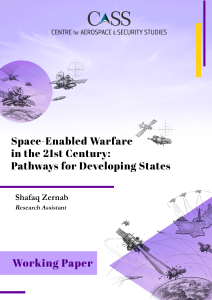
Four Dimensions of Space Power in the US–Israel War on Iran

At the beginning of Operation Epic Fury, US Space and Cyber Commands launched a coordinated campaign against Iranian satellite communication and navigation systems. Three days later, General Dan Caine, Chairman of the Joint Chiefs of Staff, publicly admitted what analysts suspected; these commands had been the ‘first movers’. Although space has received less media coverage than the air campaign or the naval dimension, it has enabled multi-domain operations. Broadly, there are four major dimensions which have defined the role of space in this war. The first dimension is satellite intelligence, particularly the evolution of commercial Earth observation into what analysts call a "glass battlefield." Accessing satellite

Continue ReadingFour Dimensions of Space Power in the US–Israel War on Iran

The Durand Line Reimagined

The ongoing conflict between Afghanistan and Pakistan is also rooted in colonial divides and the incomplete American project in Afghanistan. The 2640 km long Durand line, between the two states, has a long history ingrained in political contention and geographical challenges. However, the solution to this contention lies beyond historical shadows and conventional tactics of border management. The legal foundation of the Durand Line is based on the agreement reached between the representative of the Imperial British colony in the subcontinent, Sir Mortimer Durand, and the Emir of Afghanistan, Abdur Rahman Khan, on 12 November 1893. However, the legal foundation faced contention from the Afghan side in 1947, as soon as the Radcliffe award announced the contours of the decolonised state of Pakistan. The

Continue ReadingThe Durand Line Reimagined

India’s Foreign Policy Hits a New Low

India’s recent diplomatic engagement with Israel marks a striking departure from decades of its carefully balanced foreign policy. Prime Minister Narendra Modi’s visit to Israel on February 25 came against the backdrop of intense global scrutiny on Israeli Prime Minister Benjamin Netanyahu regarding his government’s actions in Gaza and rising regional tensions. The visit signals a shift away from India’s long-standing neutrality and non-alignment, raising serious questions about the country’s foreign policy independence, strategic autonomy, and moral stance on major global issues. Historically, New Delhi has played a calibrated and neutral role in West Asia. It not only supported Palestinian sovereignty

Continue ReadingIndia’s Foreign Policy Hits a New Low

On BJP’s Foundation Day: How India Drifted from Its Founding Ideals

India projects itself as one of the most vibrant democracies in the world, but its rankings in global risk indices present a fundamentally different picture. Notably, in 2025, India ranked fourth among 168 countries at risk of future mass killings of civilians, behind Myanmar, Chad, and Sudan. One is compelled to ask: How did a country, founded on the Gandhian principles of non-violence and the welfare of all, lose its moral direction? And how, if at all, can these ideals be rebuilt? 6 April, the foundation day of the Bharatiya Janata Party (BJP), offers

Continue ReadingOn BJP’s Foundation Day: How India Drifted from Its Founding Ideals

The Return of Great Powers: Russia, China, and the Next World War (New York: Dutton, 2024)

The Return of Great Powers: Russia, China, and the Next World War is a comprehensive guide that seeks to understand the major global shifts in contemporary times. It provides an analysis of the state of international politics and acts as a guide to navigate the intricacies of the current geopolitical landscape. With an understanding of the role, motives, and aspirations of the key actors involved, the book offers a detailed, nuanced, and in-depth commentary on the current world order and where it is headed.  The book’s author, Jim Sciutto is CNN’s Chief National Security Correspondent, who also served as Chief of Staff to US Ambassador Gary Locke in China from 2011 to 2013. The analysis in the book is drawn from interviews with the USA’s senior policymakers and military figures. The book incorporates extensive use of the primary data drawn from those interviews.In his book, Jim Scuitto discusses the ‘flash points’, which

Continue ReadingThe Return of Great Powers: Russia, China, and the Next World War (New York: Dutton, 2024)

The Missing Tejas

In the world governed by the nation-state system, Air power is considered to be an eminent symbol of national pride. The ability of a nation-state to develop air power by indigenous means signifies technological superiority of a state. In this context, India has ardently been promoting the self-construed narrative of indigenous defence production. The aim of this narrative propagation is two-fold: firstly, to promote Indian defence exports, and secondly, to immunise India from excessive dependence on foreign defence imports. However, the narrative seems to be falling upon its own foundations, reflected in the absence of Tejas in the Republic Day Parade of 2026. The Republic Day Parade is a national symbol for the glorification of the defence and military capabilities of any state. Indian Republic Day Parade

Continue ReadingThe Missing Tejas