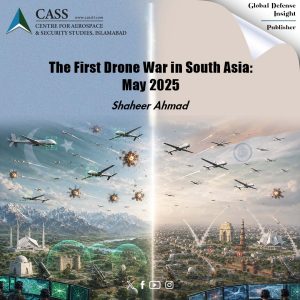
The First Drone War in South Asia: May 2025

The four-day India-Pakistan conflict saw the emergence of drone warfare as a new strategic reality in the South Asian theatre. Drawing inferences from the Russia-Ukraine war, both sides deployed drones for precision targeting, probing air defences, and performing intelligence, surveillance, and reconnaissance (ISR) tasks. The conflict marked a qualitative escalation where unmanned systems were used for coercive targeting besides their utility for tactical surveillance and reconnaissance. The loss of 7 top-of-the-line fighter aircraft in the initial phase of battle swiftly ended the Indian Air Force (IAF) bid for air dominance, forcing it to retreat to the rear bases. The loss of control of air created a decision dilemma and operational pause for the Indian leadership, compounded by the absence of a coherent strategic direction
Continue ReadingThe First Drone War in South Asia: May 2025

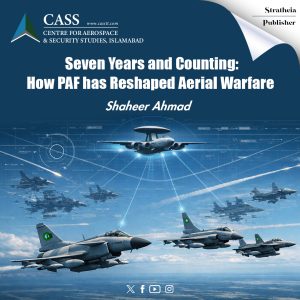
Seven Years and Counting: How PAF has Reshaped Aerial Warfare

‘What all could have happened if we had Rafale?’ This statement by Indian Prime Minister Narendra Modi surfaced after the 2019 India-Pakistan aerial showdown. The Indian Air Force’s (IAF) failed airstrikes near Balakot met a swift broad daylight response by the Pakistan Air Force (PAF) under Operation Swift Retort.

Continue ReadingSeven Years and Counting: How PAF has Reshaped Aerial Warfare

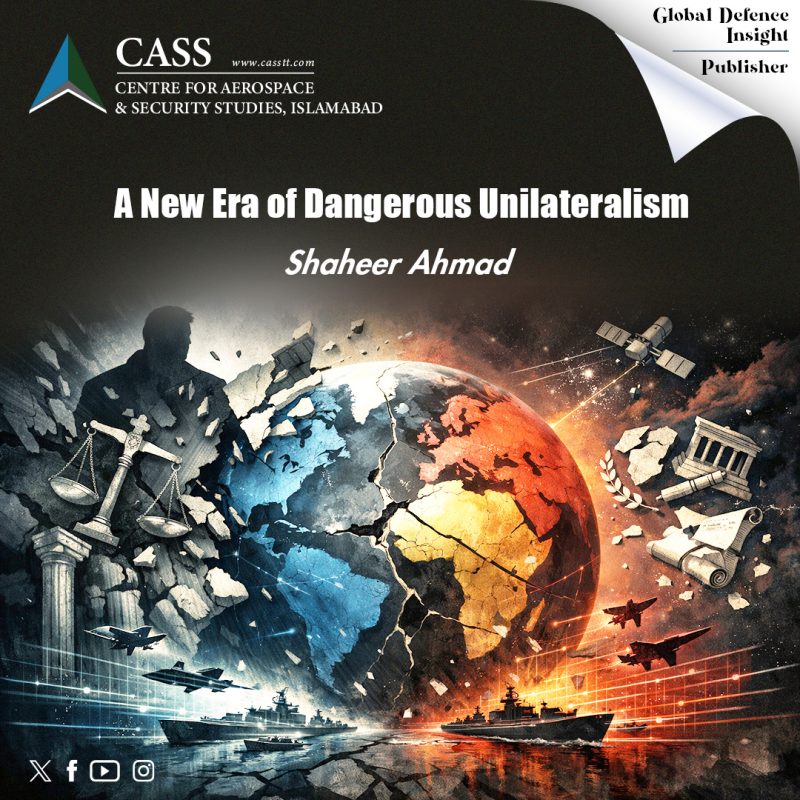
A New Era of Dangerous Unilateralism

The United States’ use of brute force to oust Venezuelan President Nicolas Maduro marks a turning point for the US foreign policy in the Western hemisphere. The overnight swift execution of the integrated joint operation by the United States Air Force, Navy, Cyber Command and Special Operations Aviation Regiment (SOAR) has sent shockwaves in geopolitical hotspots elsewhere.

Continue ReadingA New Era of Dangerous Unilateralism