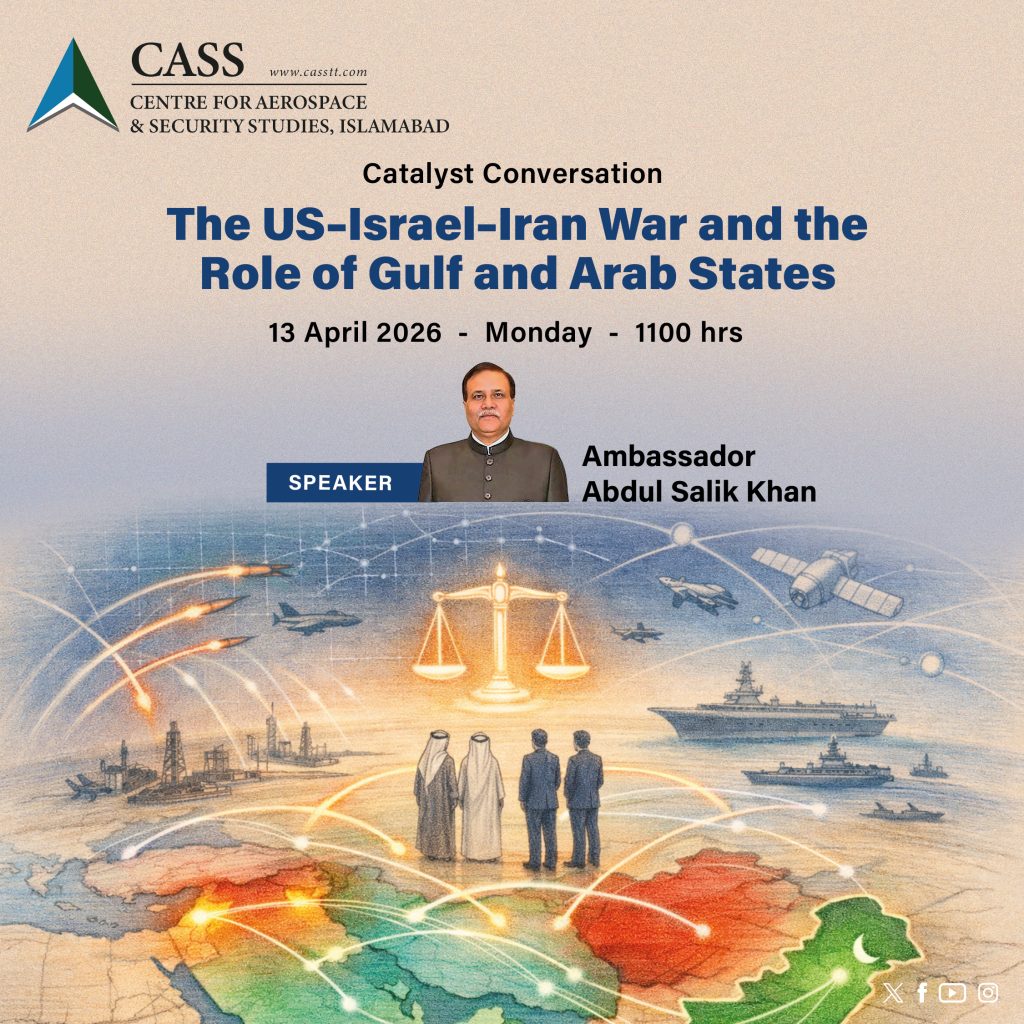
The ongoing war between the United States-Israel, and Iran has emerged as a defining crisis of the modern world, with significant implications for regional security, global energy markets, and the evolving geopolitical order. While the primary confrontation involves direct and indirect exchanges between these actors, Gulf and Arab states have become increasingly central to the conflict’s dynamics.
Hosting U.S. military assets and located in close proximity to key theatres of escalation, these states face growing security risks, including spillover in the form of missile and drone attacks. At the same time, they are navigating a delicate strategic balance—maintaining security partnerships with the United States, cautiously engaging with Israel, and managing complex relations with Iran.
Beyond immediate security concerns, the conflict also poses economic and political challenges, particularly in relation to energy flows, maritime security, and domestic and regional public opinion. As a result, Gulf and Arab states are not merely passive observers but are shaping—and being shaped by—the trajectory of the conflict.
This Catalyst Conversation aims to explore the strategic positioning of Gulf and Arab states, their policy choices under conditions of uncertainty, and their potential role in influencing escalation dynamics or facilitating de-escalation. Following questions are to be discussed:-
- How are the Gulf and Arab states emerging as active strategic actors in shaping the trajectory of the ongoing war?
- How is the conflict influencing regional alignments, particularly in terms of security cooperation, energy supply and diplomatic engagement?
- What role can Gulf and Arab states play in mediating or de-escalating the conflict?
- How should Pakistan position itself in this evolving crisis, particularly in balancing its relations with Arab partners, Iran, and the Western actors?