Syed Ahmed Ali

Research Assistant

Syed Ahmed Ali

Professional Experience

Syed Ahmed Ali is a Research Assistant at the Centre for Aerospace & Security Studies, Islamabad. Earlier, he worked with the Islamabad Policy Research Institute (IPRI) and taught at National Defence University as visiting faculty. His research interests include emerging technologies, particularly cyber security and Artificial Intelligence. His insights are frequently published in leading newspapers such as ‘Express Tribune’ and ‘The News International’. He completed his MPhil in Strategic Studies from the National Defence University and his undergrad from SZABIST University in International Relations.

Publications

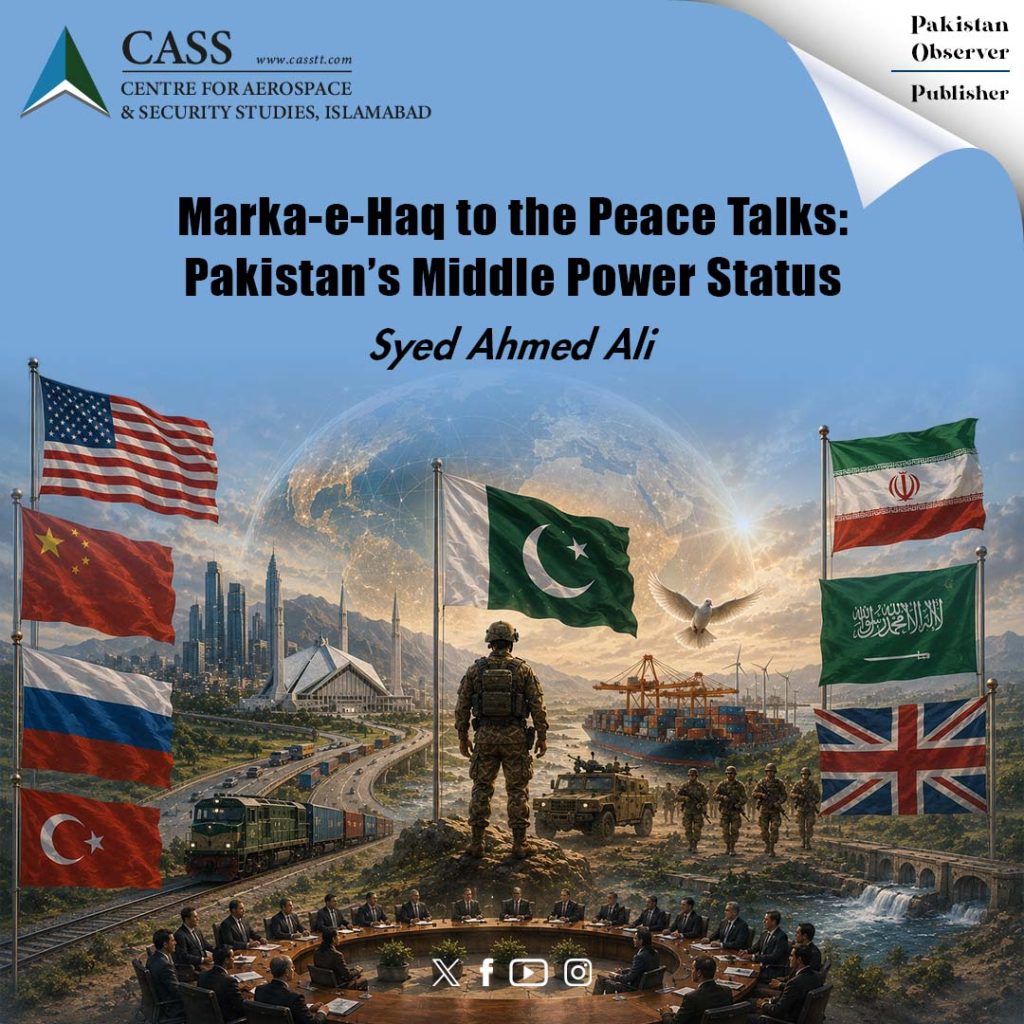
Marka-e-Haq to the Peace Talks: Pakistan’s Middle Power Status

On 7th May 2025, Pakistan’s military forces took the international security community by surprise when it demonstrated operational superiority against its larger belligerent adversary India with its rapid and coordinated response. The Four-Day conflict proved to be a watershed moment for Pakistan, marking its rapid emergence as an important player in the region. In recent years, amidst the ongoing global competition between the United States and China, Islamabad has adopted a position of ’Strategic Balancing,’ where it maintains ties of cooperation with both Beijing and Washington. Deft diplomacy, emphasis on geo-economics, and credible conventional and strategic deterrence have remained the foundational pillars for Pakistan’s ambition as a rising middle power
Read More »

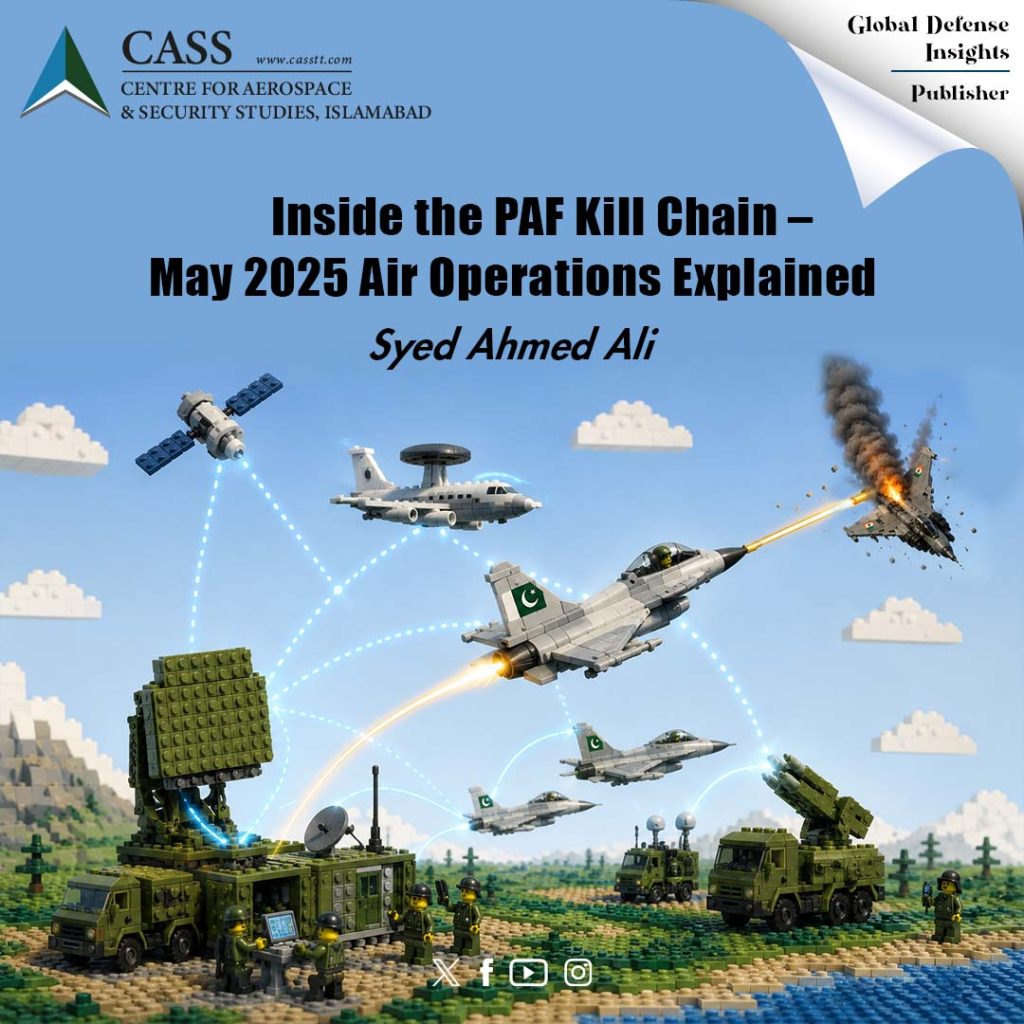
Inside the PAF Kill Chain – May 2025 Air Operations Explained

Air combat has come a long way from traditional visual based kinetic manoeuvre warfare. Modern aerial combat relies heavily on technological sophistication which has given the birth to new concepts such as Beyond Visual Range (BVR) capability, multi domain operations, systems and network centric warfare. This complex web of intertwined capabilities, platforms and domains culminates into a single kill chain providing a firing solution. On 7 May 2025, Pakistan Air Force (PAF) demonstrated its superiority over its archival India by shooting down seven of its aircraft. The PAF achieved this feat by compressing its kill chain while simultaneously disrupting the adversary’s targeting cycle.
The Air & Space Forces Magazine defines Kill Chain as a process used to put munitions on a specified target. This complex process is broken into five different parts

Read More »

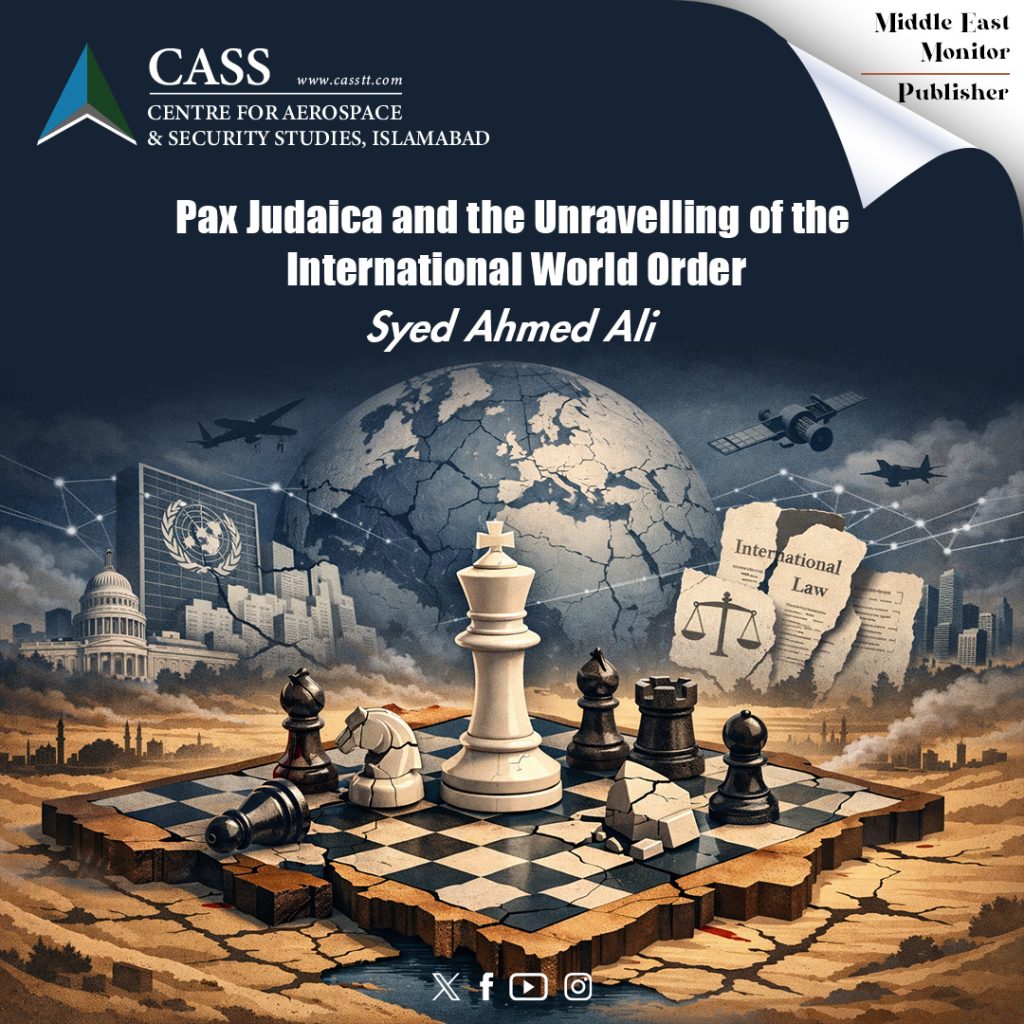
Pax Judaica and the Unravelling of the International World Order

Israel’s aggressive settlement expansion and blatant disregard for international law have contributed towards the fragmentation of the international rules-based order. In the midst of this upheaval, Tel Aviv has cemented itself as the dominant power in the Middle East, creating what commentators term “Pax Judaica”. This regional order is dominated by Israeli perceptions of security threats which it must eliminate for the preservation of the Jewish state.

Read More »

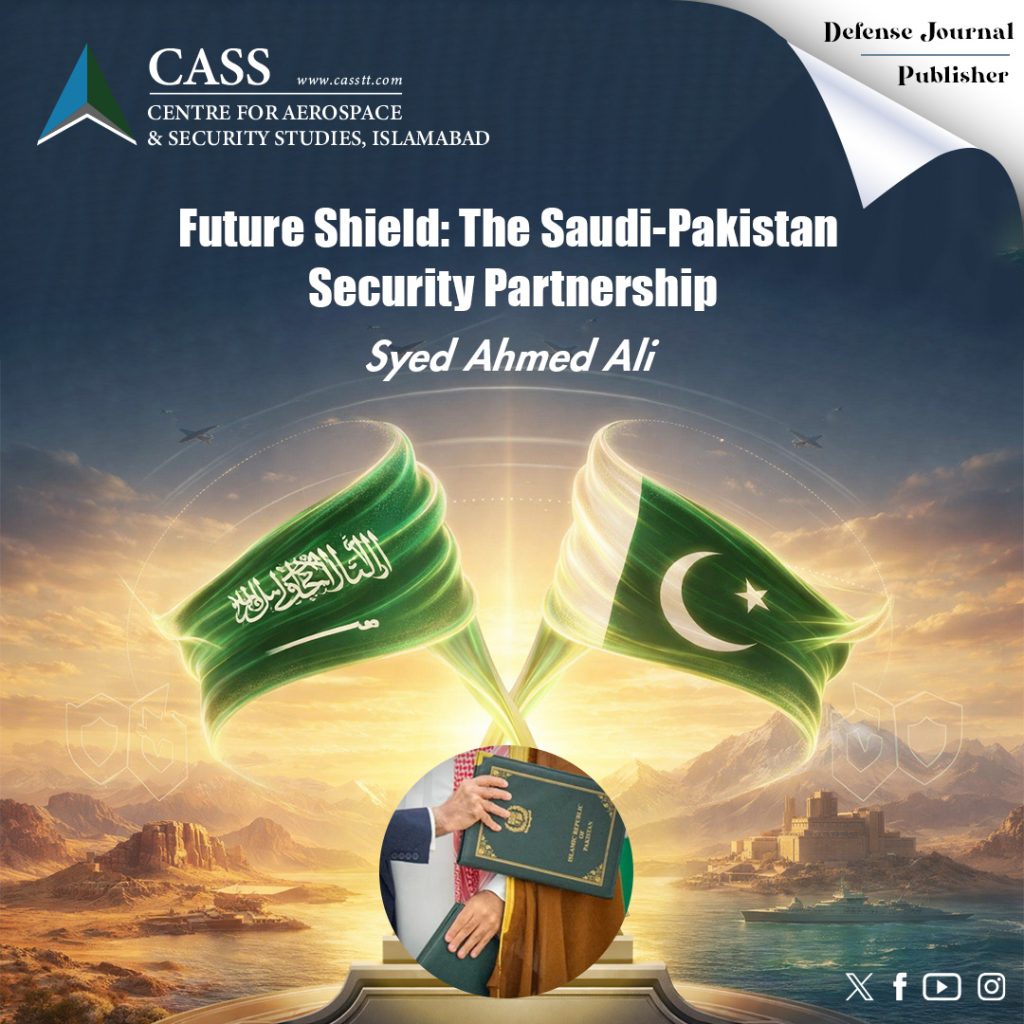
Future Shield: The Saudi-Pakistan Security Partnership

Although the SDMA does not identify an adversary, effectively functioning as a deterrent, it cannot be viewed in isolation from the Israeli belligerence in the Middle East. Israel’s war against Hamas has expanded beyond the genocide of Gaza; it has bombed the West Bank, Lebanon, Syria, Yemen, Iran, and recently Qatar. Tel Aviv’s campaign under the banners of ‘anti-Semitism’ and ‘terrorism’ has engulfed the whole Middle East in a war-like situation, which has generated new enemies and has deepened the instability of the region.

Read More »

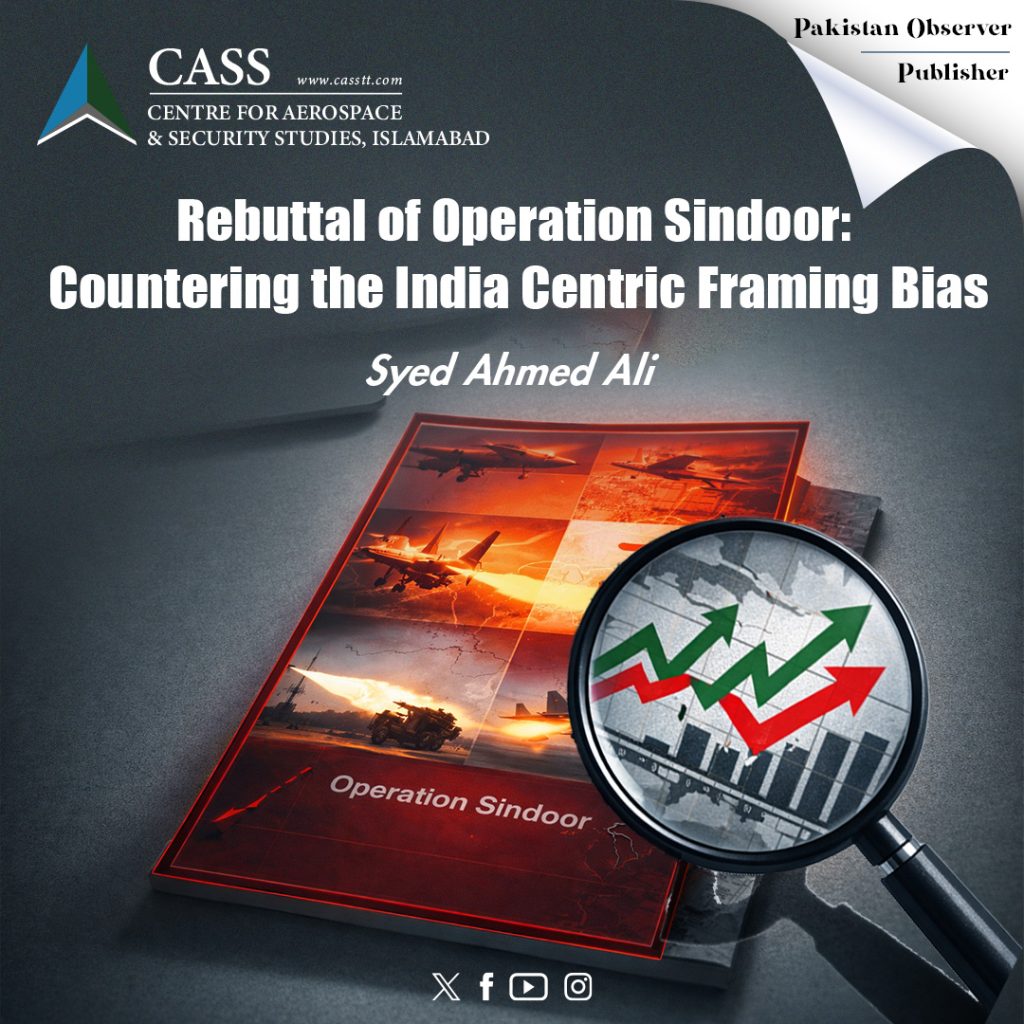
Rebuttal of Operation Sindoor: Countering the India Centric Framing Bias

The recent account by the Center for Military History and Perspective Studies (CHPM), Switzerland, on the May 7th conflict between Pakistan and India reflects an over-simplification of a complex issue.  The historical account suffers from selective framing and a lack of empirical verification, which skews the understanding of the Indo-Pak conflict.

Read More »