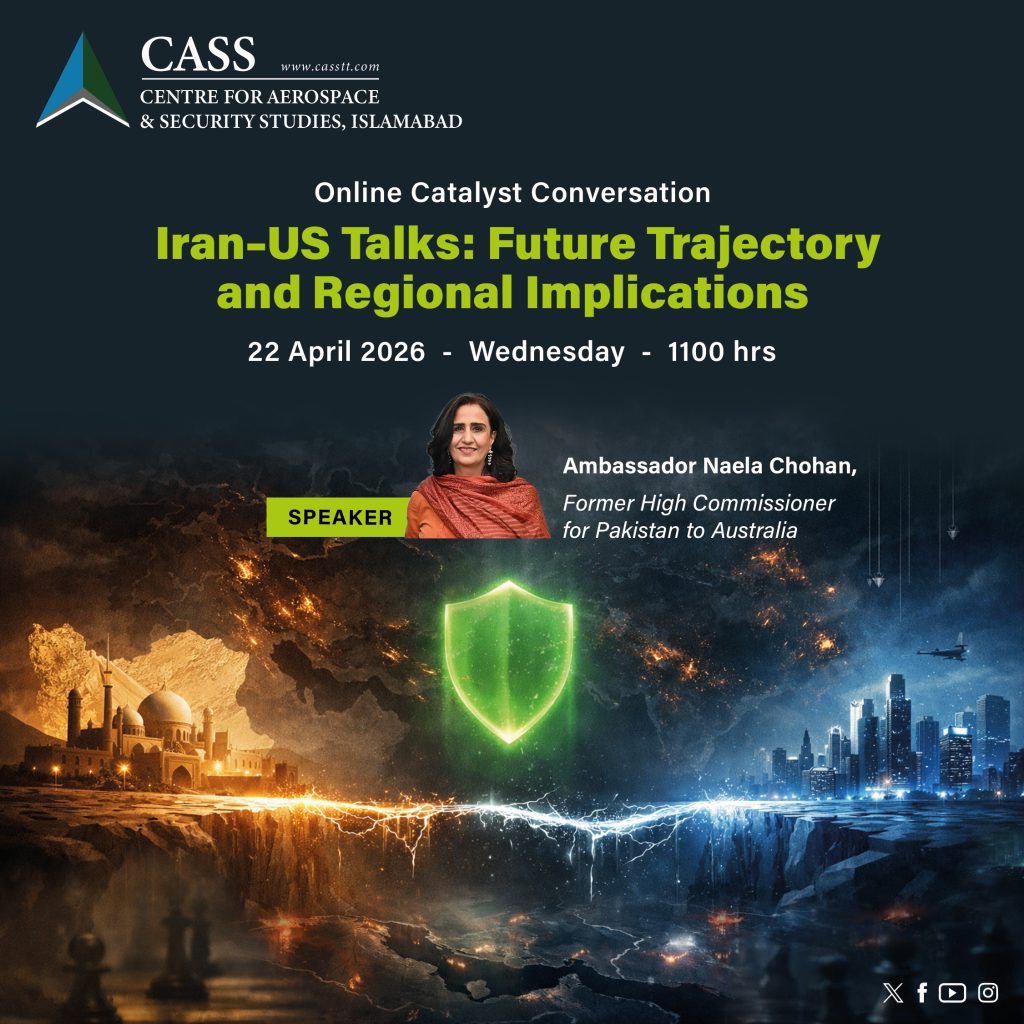
The ongoing diplomatic engagement between Iran and the United States has revived the possibility of de-escalation after a prolonged period of tensions. While the talks remain limited and fragile, they reflect a mutual recognition of the risks associated with continued confrontation. However, deep mistrust, competing strategic priorities, and political constraints continue to complicate prospects for a meaningful breakthrough.
This catalyst conversation aims to examine the trajectory of the Iran–US talks and assess their potential implications for regional security and broader geopolitical dynamics. The discussion will particularly focus on how these negotiations may shape the Middle East’s strategic environment and what they mean for regional states, including Pakistan, navigating evolving alignments. The insights will help unpack the diplomatic signalling, negotiation dynamics, and possible outcomes of the ongoing engagement.
Questions
- What are the major obstacles preventing a breakthrough in the ongoing Iran–US talks and how likely is a sustainable agreement?
- How could the outcome of these negotiations reshape regional security dynamics in the Middle East and the Gulf?
- What implications do the Iran–US talks hold for Pakistan’s diplomatic and strategic positioning?