1. In the contemporary battlespace, information has become a powerful a tool. The weaponisation of narratives, control over public perception, and the psychological conditioning of populations are now core elements of modern warfare. South Asia, particularly the enduring rivalry between India and Pakistan, presents a critical case for understanding the evolving landscape of information warfare.
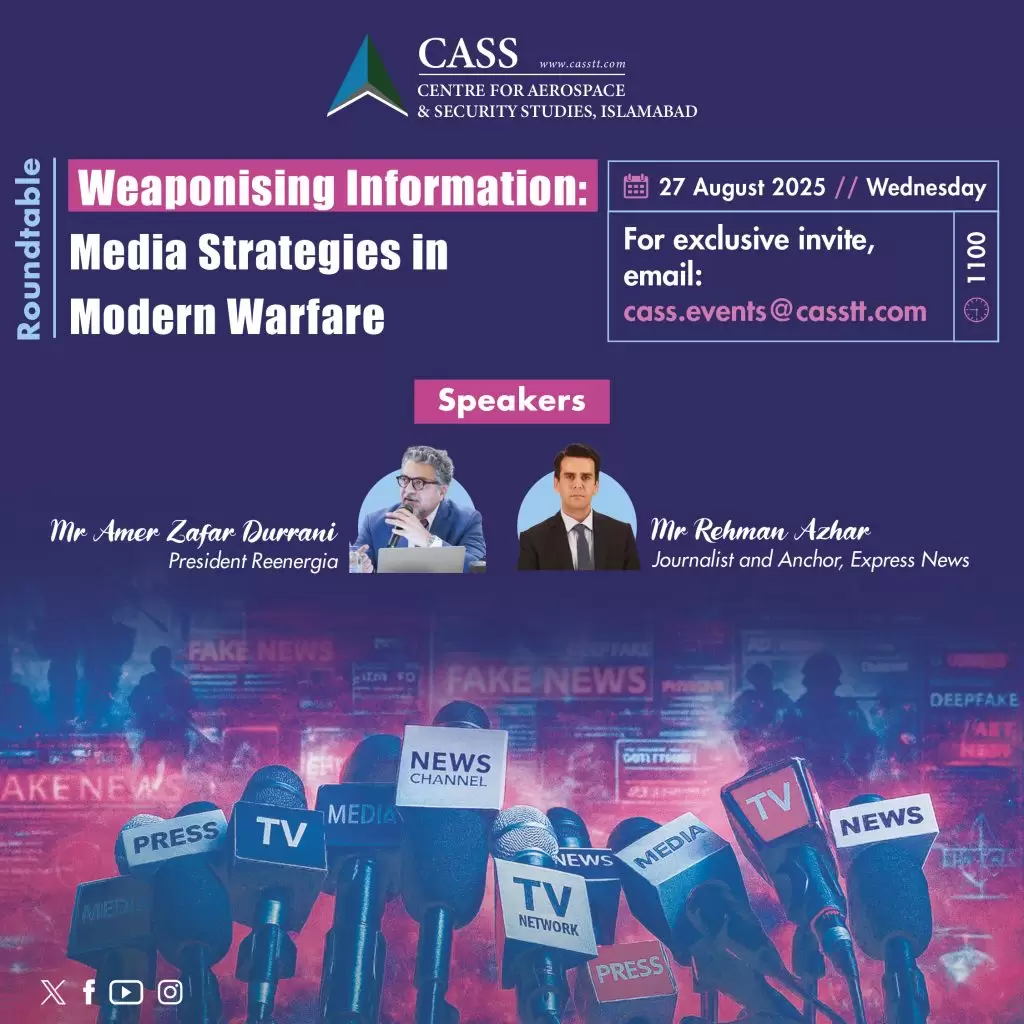
2. The recent 2025 India-Pakistan escalation not only highlighted the vulnerabilities of traditional media systems but also exposed the growing influence of artificial intelligence-generated content, deepfakes, and bot-driven discourse in shaping both domestic and international opinion. From premature victory claims to the mass circulation of fabricated videos, the conflict was marked by an intense battle of (mis)information— all fought through screens.
3. The 2025 escalations also underscored the centrality of information operations in modern conflict. While both sides utilised media platforms for dissemination of information, this domain became a key battleground for shaping narratives. Pakistan faced a highly coordinated campaign of disinformation aimed at distorting facts and manipulating perceptions. The experience highlighted the growing sophistication of contemporary information warfare and the need to further integrate national media strategy.
4. This roundtable conference seeks to unpack the dynamics of information warfare, assess the media strategies employed by both sides, and reflect on the need for Pakistan to build an anticipatory information ecosystem in preparation for future. The discussion focuses on the following questions:-
(a) How has the role of media evolved in shaping the battlefield outcomes and public perception during modern conflicts?
(b) What institutional frameworks and tools are required to identify, counter, and pre-empt hostile information operations in real time?
(c) What were the key strengths and shortcomings of Pakistan’s media strategy during the 2025 conflict, particularly in countering disinformation and psychological warfare?
(d) How can Pakistan develop a more integrated national media strategy for future crises?