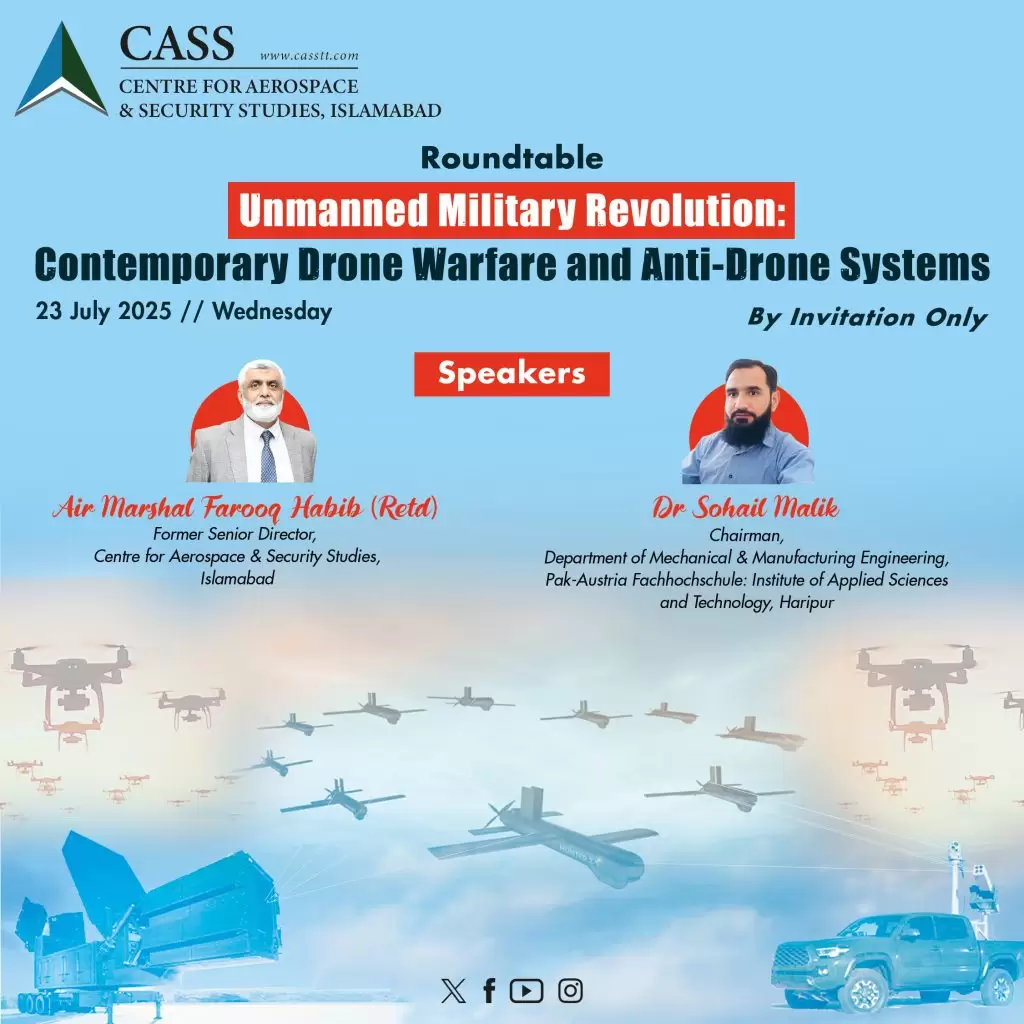
1. Unmanned Aerial Vehicles (UAVs), commonly known as drones, have revolutionised modern warfare, emerging as critical assets in both offensive and defensive military strategies. Over the past decade, drone warfare has transitioned from limited tactical use to central roles in strategic military operations, surveillance, and targeted strikes. This transformation has not only changed the dynamics of battlefield engagements but has also raised complex challenges in international law, security, and defense technology. The experts are also of the view that the unmanned military revolution is paving the way for the autonomous military revolution.
2. Recent conflicts such as Ukraine’s Operation Spider Web against Russia, the Iran-Israel confrontation, and the unmanned dimension of the Indo-Pak conflict have underscored the operational value of drones and the urgency for developing effective counter-drone measures. From loitering munitions and kamikaze drones to autonomous swarm systems, the scope and impact of drone warfare have expanded significantly. Simultaneously, the proliferation of drone technologies among state and non-state actors demands robust anti-drone capabilities that integrate kinetic, electronic, and AI-based responses. In this regard, CASS is planning a roundtable, in its exclusive Tech Talk series, that aims to analyse the contemporary drone warfare with the following objectives:
(a) To critically examine the evolving nature of drone warfare in contemporary conflicts.
(b) To analyse operational case studies including the Russia-Ukraine war (Operation Spider Web), the Iran-Israel war, and the Indo-Pak conflict.
(c) To assess the effectiveness and future trajectory of anti-drone systems and countermeasures.
(d) To explore the technological, industrial, and strategic dimensions of drone manufacturing.
(e) To discuss the potential implications for Pakistan and generate informed policy recommendations for national defense and strategic communities.
Topics for Speakers
3. Contemporary Drone Warfare.
(a) To what extent are drones redefining deterrence and escalation dynamics in the context of modern warfare?
(b) How is drone warfare evolving in light of Operation Spider Web, Israel-Iran war and Indo-Pak conflict?
(c) What are potential implications for Pakistan and how can the country prepare for future drone warfare?
4. Anti-Drone Systems & Drone Manufacturing.
(a) What are the key innovative solutions in developing indigenous drone manufacturing capabilities, particularly for countries like Pakistan in light of complex challenges?
(b) What are the most promising counter-drone technologies currently in use, and how effective are they in high-intensity combat zones?
(c) How should policymakers prepare for the emergence of AI-powered drones, and what implications do they hold for future warfare?
Press Release
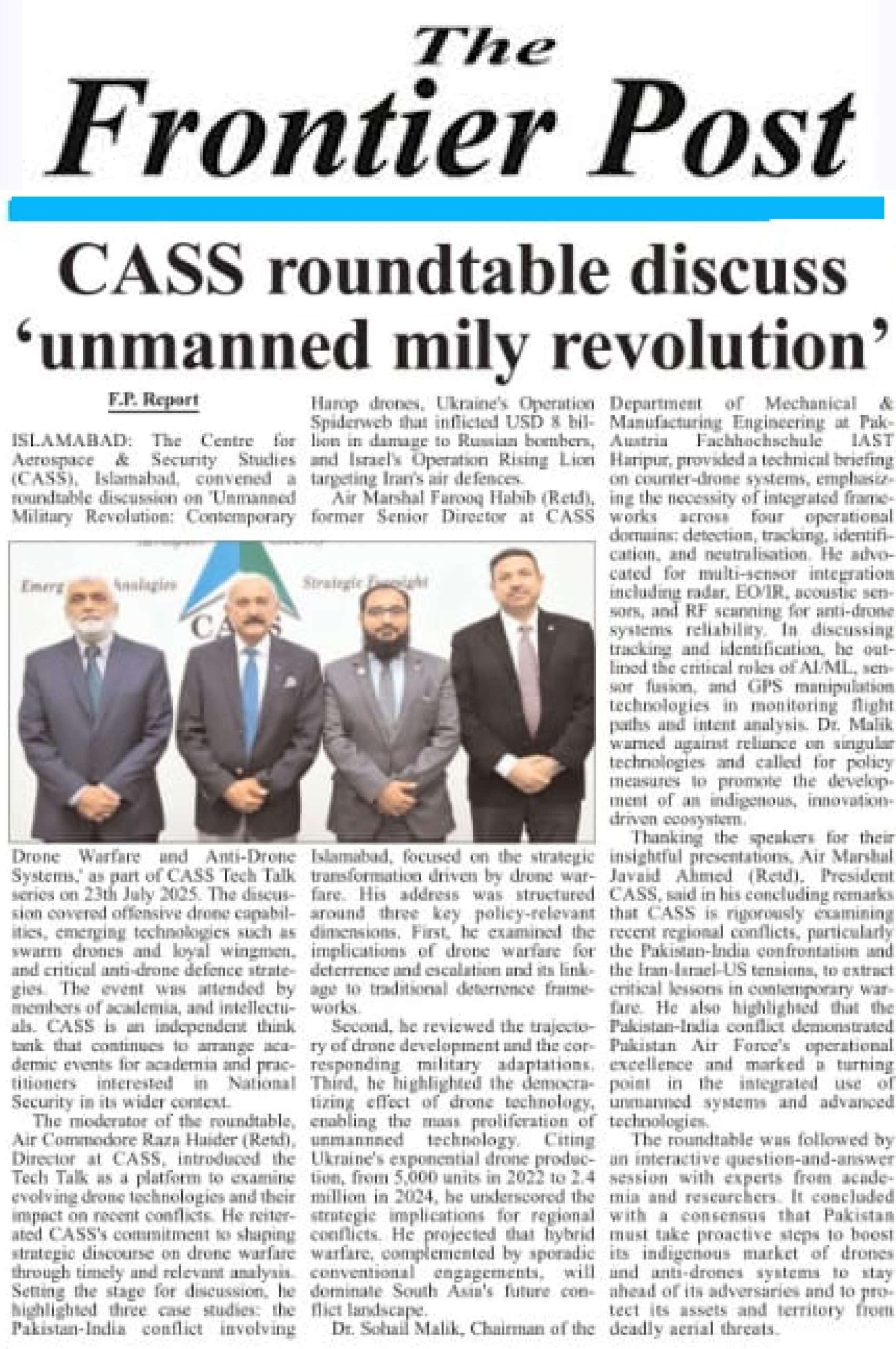
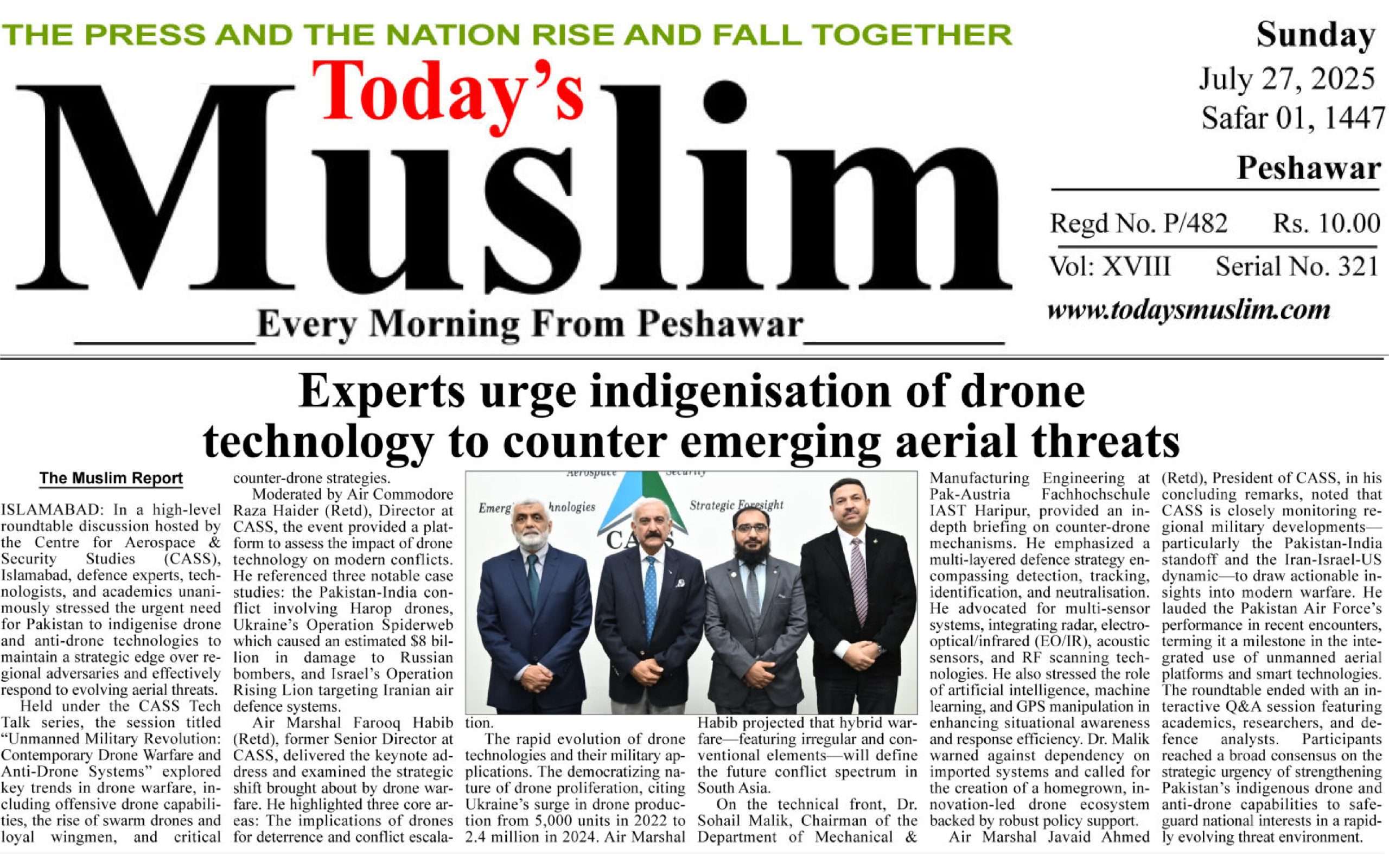
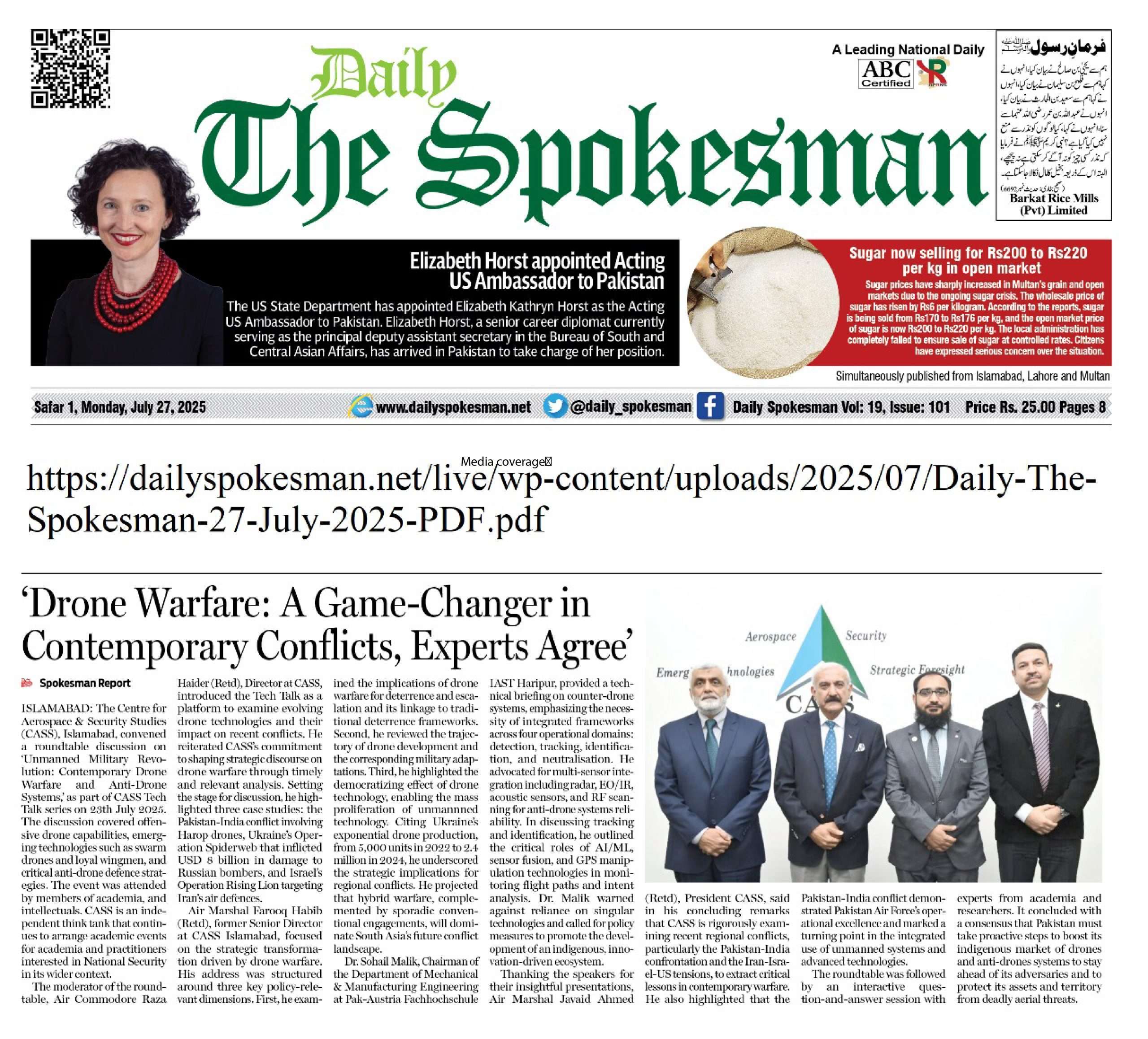
News Coverage
Newspaper Links