
Screenshot_(275)

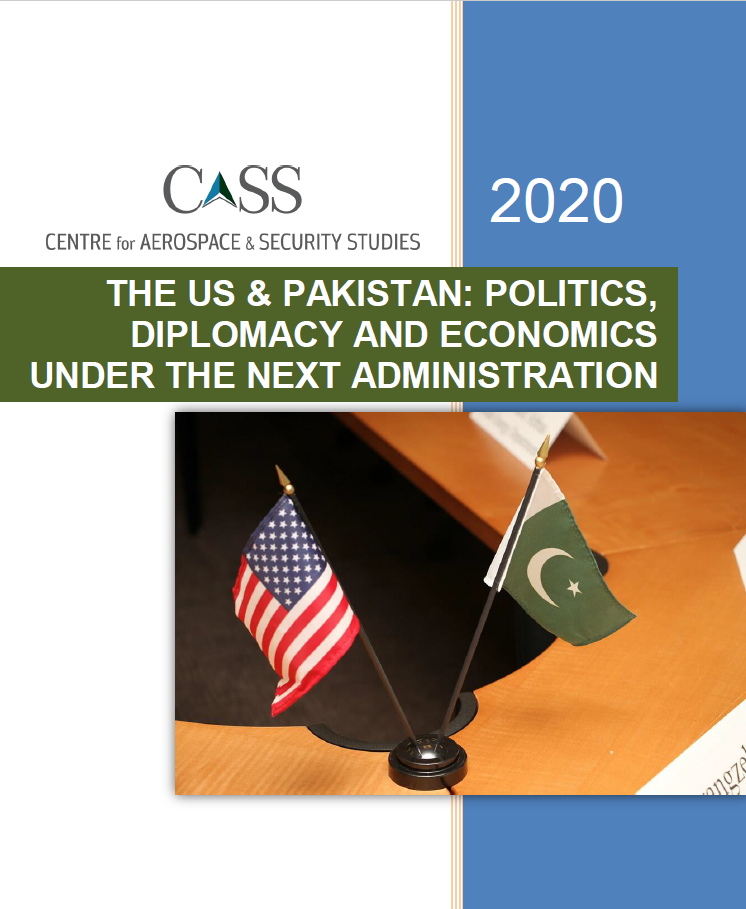
The Centre for Aerospace & Security Studies (CASS) organised a webinar titled ‘The US & Pakistan: Politics, Diplomacy and Economics under the Next Administration’ on 3 October 2020. The webinar discussion focused on the following
key areas:

  • Political, diplomatic, and economic fundamentals of the US-Pakistan relationship going forward;
  • Major domestic, regional, and global considerations shaping American and Pakistani interests;
  • Pakistan’s perspective on the changing contours of the bilateral relationship under the next administration; and,
  • Sensitising the Pakistani diaspora in the US about the issues critical to Pakistan’s future and their inputs in the conduct of diplomacy and advocacy.
Share this article

Facebook
Twitter
LinkedIn

Recent Publications

Browse through the list of recent publications.

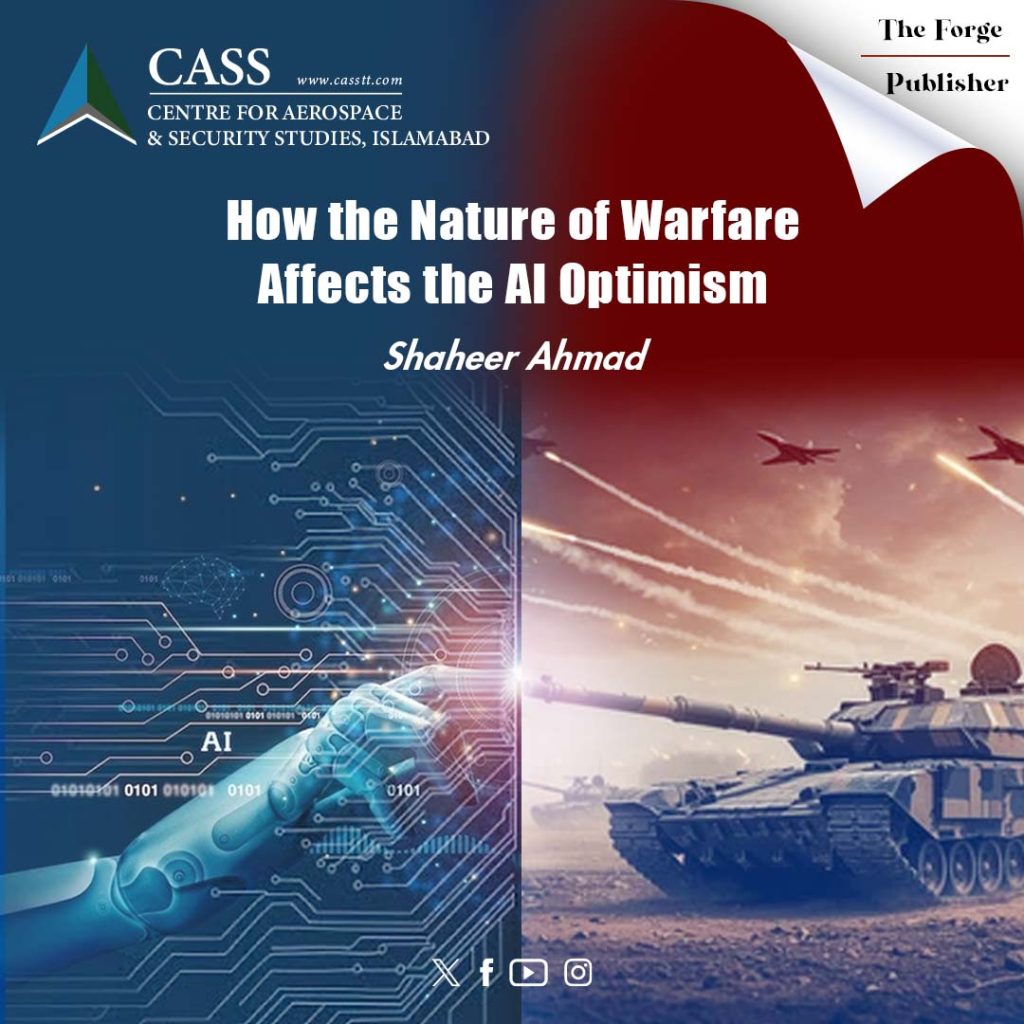
How the Nature of Warfare Affects the AI Optimism

Since the advent of Artificial Intelligence (AI), a pressing question is being asked: Is Clausewitz still relevant? The game-changing potential of AI and the idea of human-machine teaming (centaur systems) have led many to doubt the seemingly unchanged nature of war. Apparently, it has given rise to the belief that AI-powered systems will replace humans (generals) in the command loop. However, this view is detached from the complex nature of warfare, which remains fundamentally a human endeavour guided by violence, chance and friction.

Just like other social institutions, war is generally an interpretivist paradigm rooted in complex human nature. It is a non-linear phenomenon whose conduct and outcomes cannot be determined by analytical predictions or algorithmic patterns. In other words, war usually does not proceed on pre-determined rules of engagement, prescriptive manuals, established patterns and predictive modelling. Instead, it is fought on judgment, adaptation to changing realities, commander’s intuition and paying attention to the unfolding of the unknown. 

Read More »

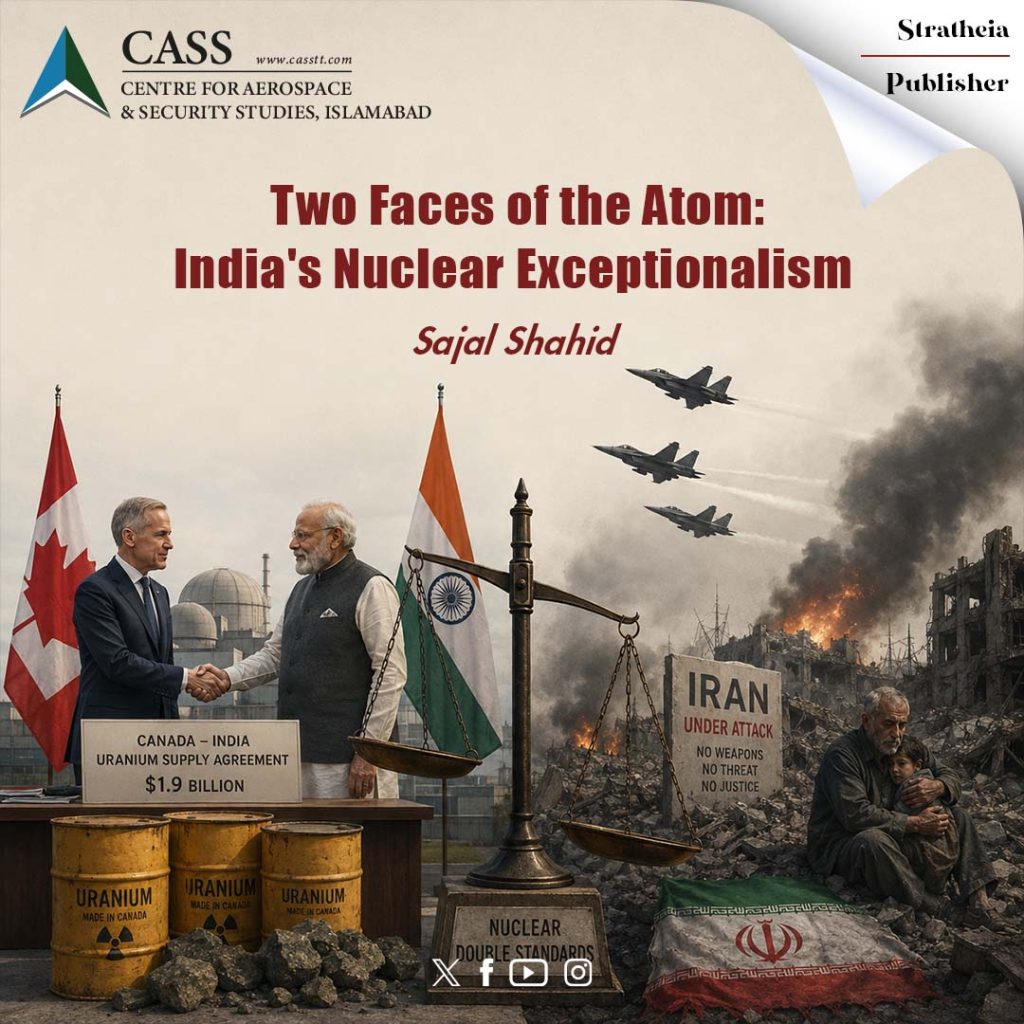
Two Faces of the Atom: India’s Nuclear Exceptionalism

ew examples capture the inconsistencies of the nuclear world order more starkly than the events of 2 March 2026: as Prime Ministers’ Mark Carney and Narendra Modi signed a landmark 1.9 billion USD uranium supply deal for India’s civil nuclear sector, Iran was subjected to the third day of indiscriminate airstrikes by the US and Israel under the banner of nuclear non-proliferation, despite Iran agreeing to zero stockpiling of enriched uranium just days prior. This event, unfortunately, was not an isolated one, rather it reflects a pattern of nuclear exceptionalism where certain states such as India, continue to be rewarded for non-compliance with international regulations, while others such as Iran, are censured and even subjected to military action based on hypothetical realities.

The latest deal would see Canada sell close to 22 million pounds of uranium concentrate to India over 8 years, starting in 2027, a sale more than ten times the last Canada-India uranium agreement of 2015, which supplied 7 million pounds of concentrate over 5 years.

Read More »

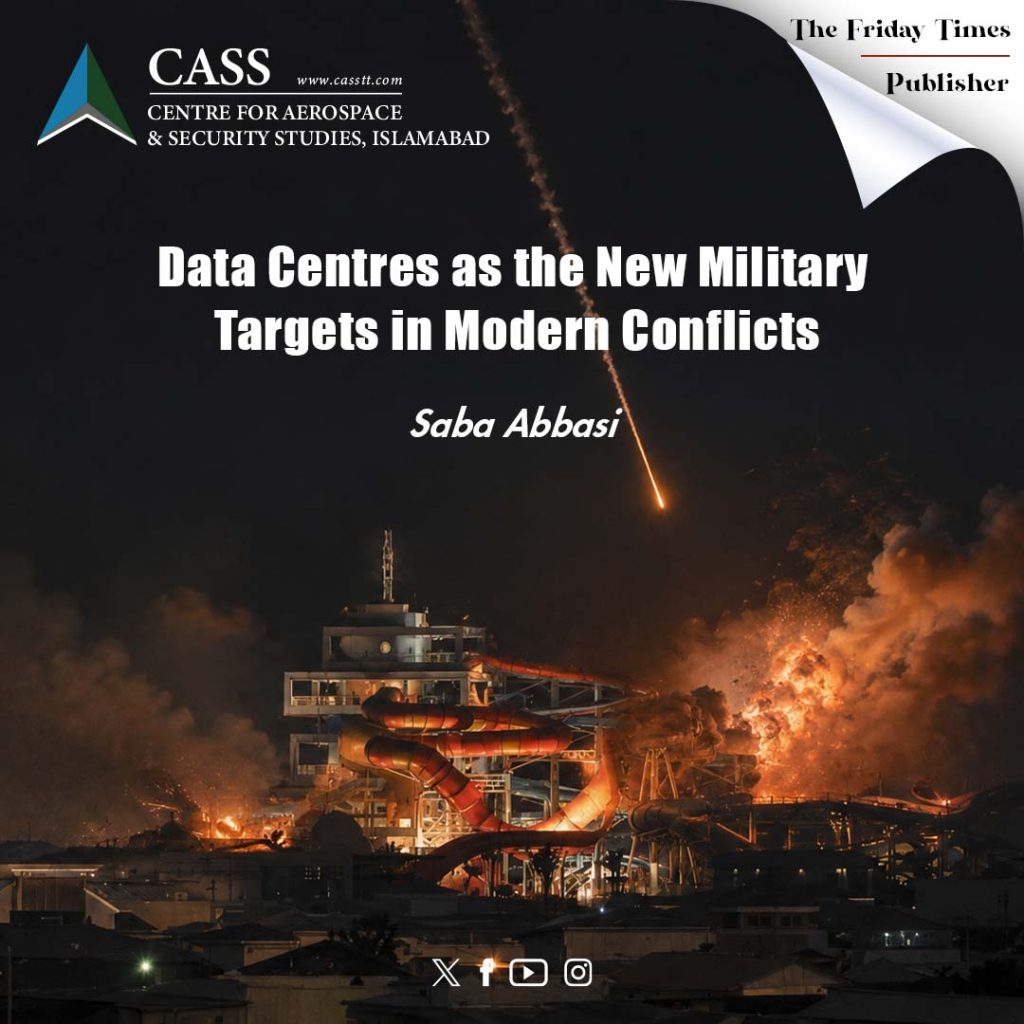
Data Centres as the New Military Targets in Modern Conflicts

The character of warfare has evolved in tandem with the changing nature of military targets. In early March 2026, Iran bypassed traditional military targets and struck the physical part of the digital infrastructure at Amazon Web Services (AWS) data centres in the UAE and Bahrain. Until now data centres had been considered an unassuming target, as they did not house any military equipment or hardware. However, the US-Israel war on Iran, has transformed these billion dollar sites into high-value targets because of their ability to act as server farms on which adversaries’ websites, apps, AI systems and the entire digital infrastructure run.

Data centres are digital ecosystems where the delivery of cloud services depends on the integrity of physical infrastructure. Disruption in any one part of the shared infrastructure does not remain isolated and risks triggering widespread systemic failure. In the case at hand, Amazon operated multiple availability zones within each region in the United Arab Emirates and Bahrain. Iran struck two of the three availability zones in the UAE, while in Bahrain, a zone was damaged by drone debris causing an extended power outage and connectivity problems that further disrupted service across the Gulf.

Read More »
