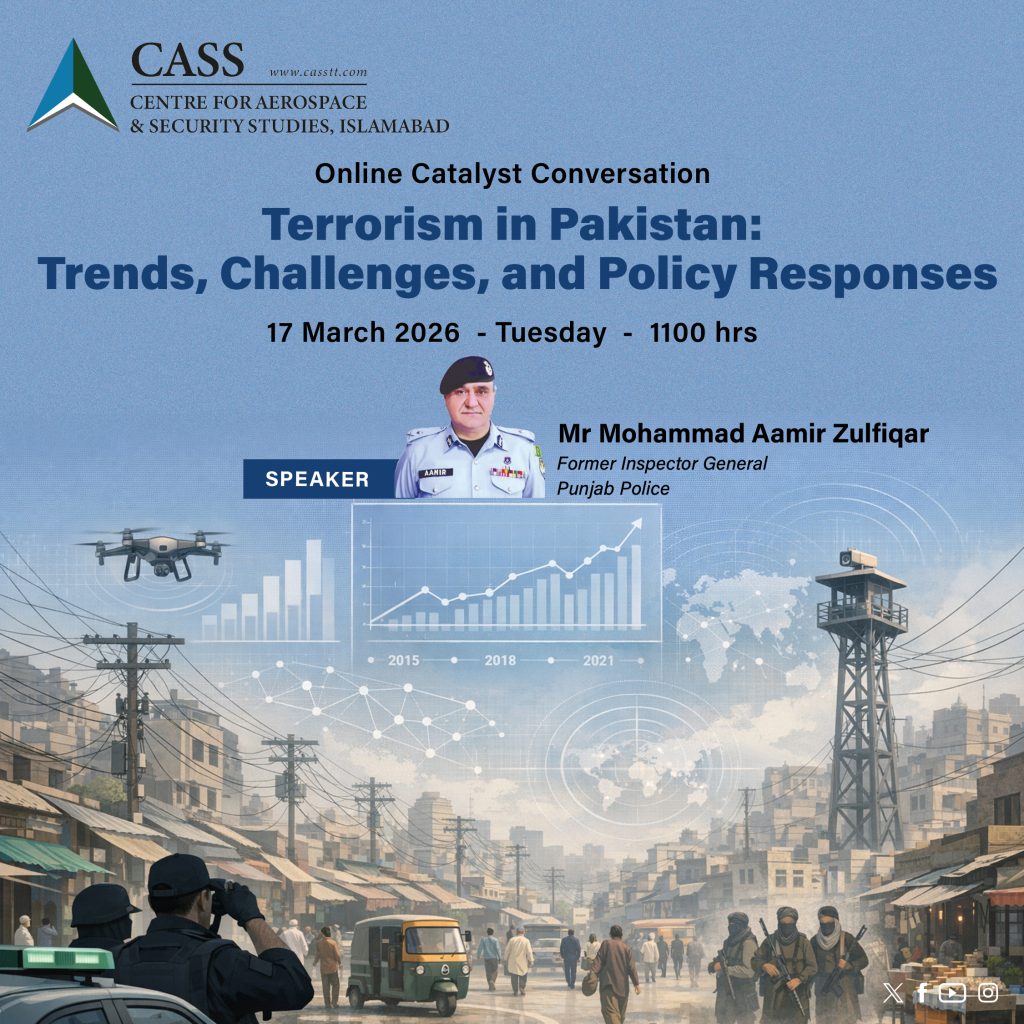
Terrorism has remained one of the most persistent security challenges in Pakistan over the past two decades, impacting stability,economic growth, and social cohesion. Despite significant improvements in counter-terrorism operations and law enforcement capabilities, the threat landscape continues to evolve, with new actors, tactics, and networks emerging both domestically and across the region. Understanding the complex interplay of ideological, socio-economic, and geopolitical factors that drive terrorism is essential for developing effective strategies. This webinar seeks to analyze current trends of terrorism in Pakistan, evaluate the effectiveness of existing counter-terrorism measures, and explore actionable policy recommendations to strengthen Pakistan’s resilience against terrorism.
The discussion will focus on the following
questions:
1. What are the major drivers and evolving trends of terrorism in Pakistan?
2. How effective have Pakistan’s counter-terrorism policies and law enforcement measures
been in addressing the threat?
3. What role do regional dynamics and cross-border influences play in shaping the
terrorism landscape, and how can policy responses be adapted accordingly?