Share this event

Facebook
Twitter
LinkedIn

Concept Note

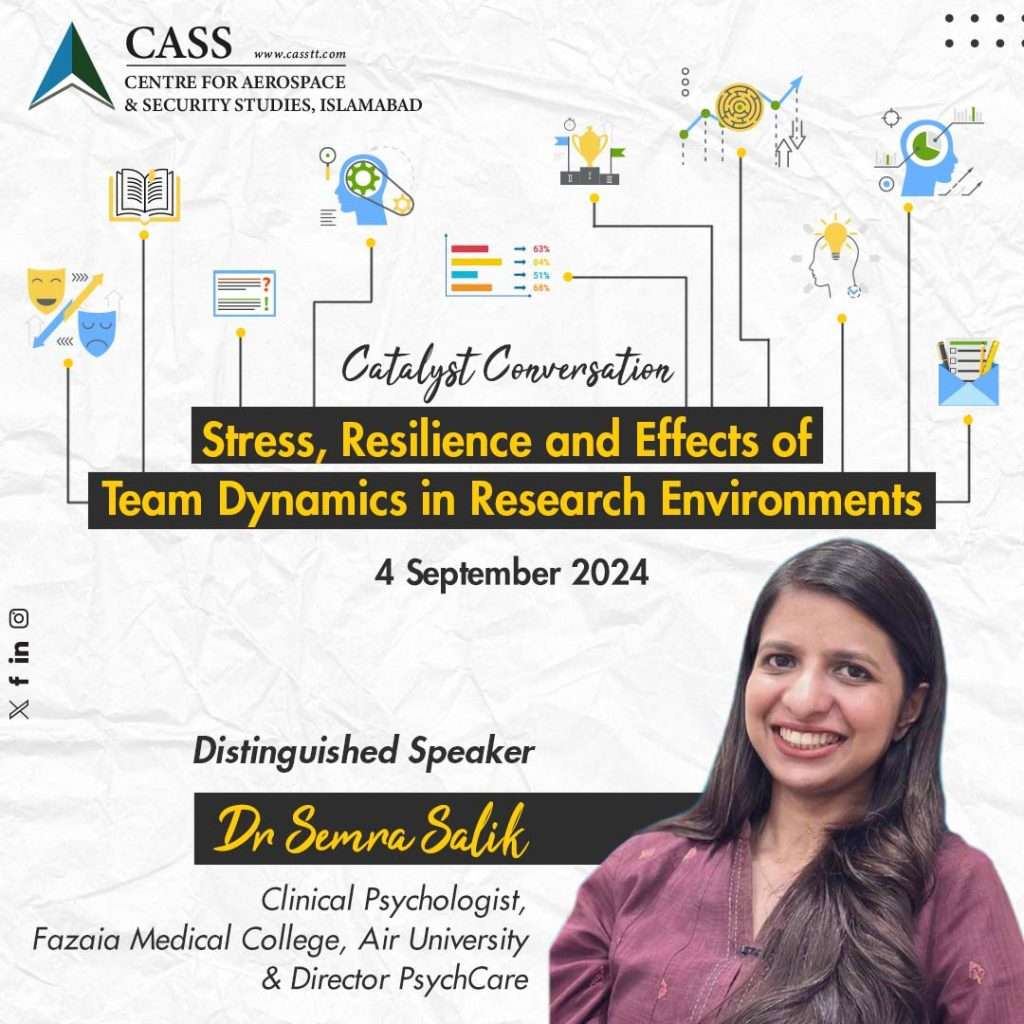
In the demanding environments of research, particularly within think tanks, understanding and managing stress is crucial for maintaining resilience and fostering effective team dynamics. These factors significantly impact the success of collaborative projects, especially in critical fields like aerospace and security. This Catalyst Conversation will provide a platform for such essential discourse on enhancing team performance through better stress management and resilient practices in research environments, drawing on the insights and expertise of Dr Semra Salik, a Clinical Psychologist at Fazaia Medical College, Air University; and Director of PsychCare.
Other Events

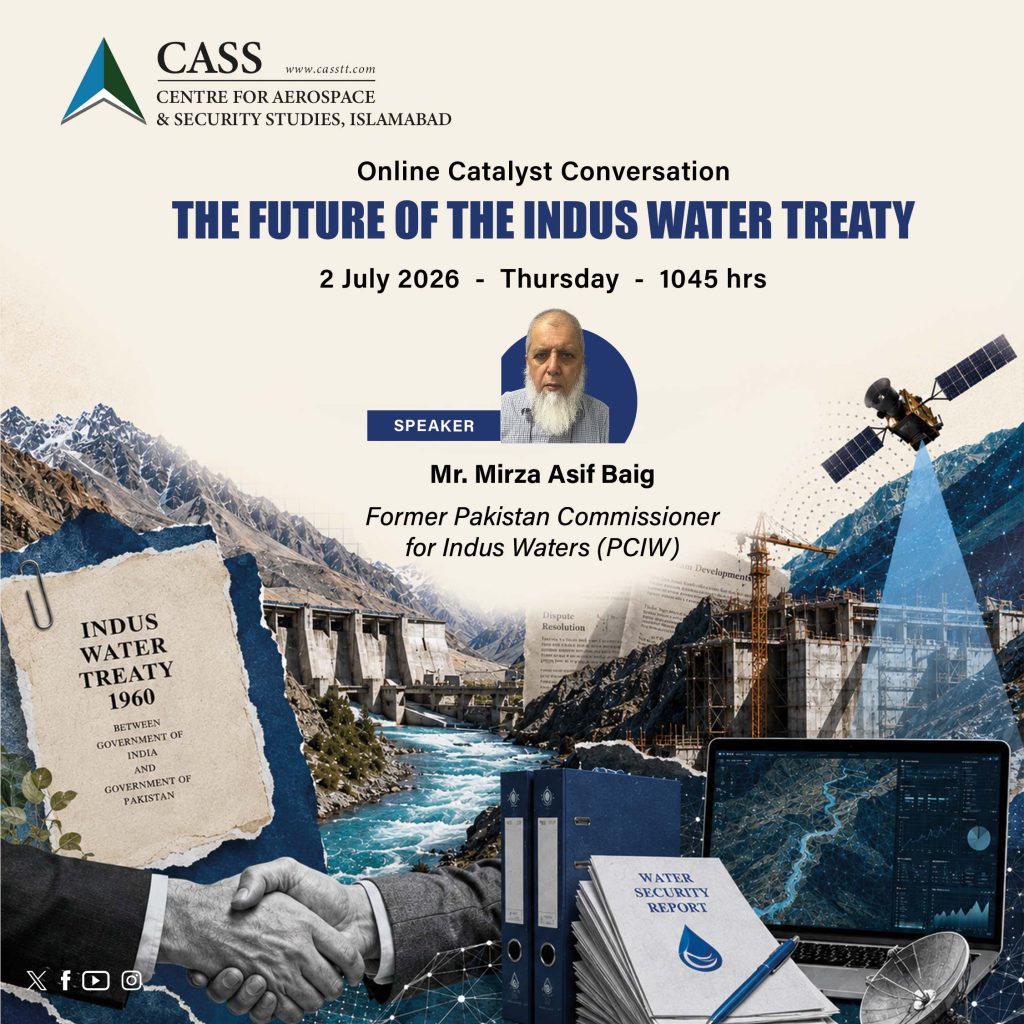
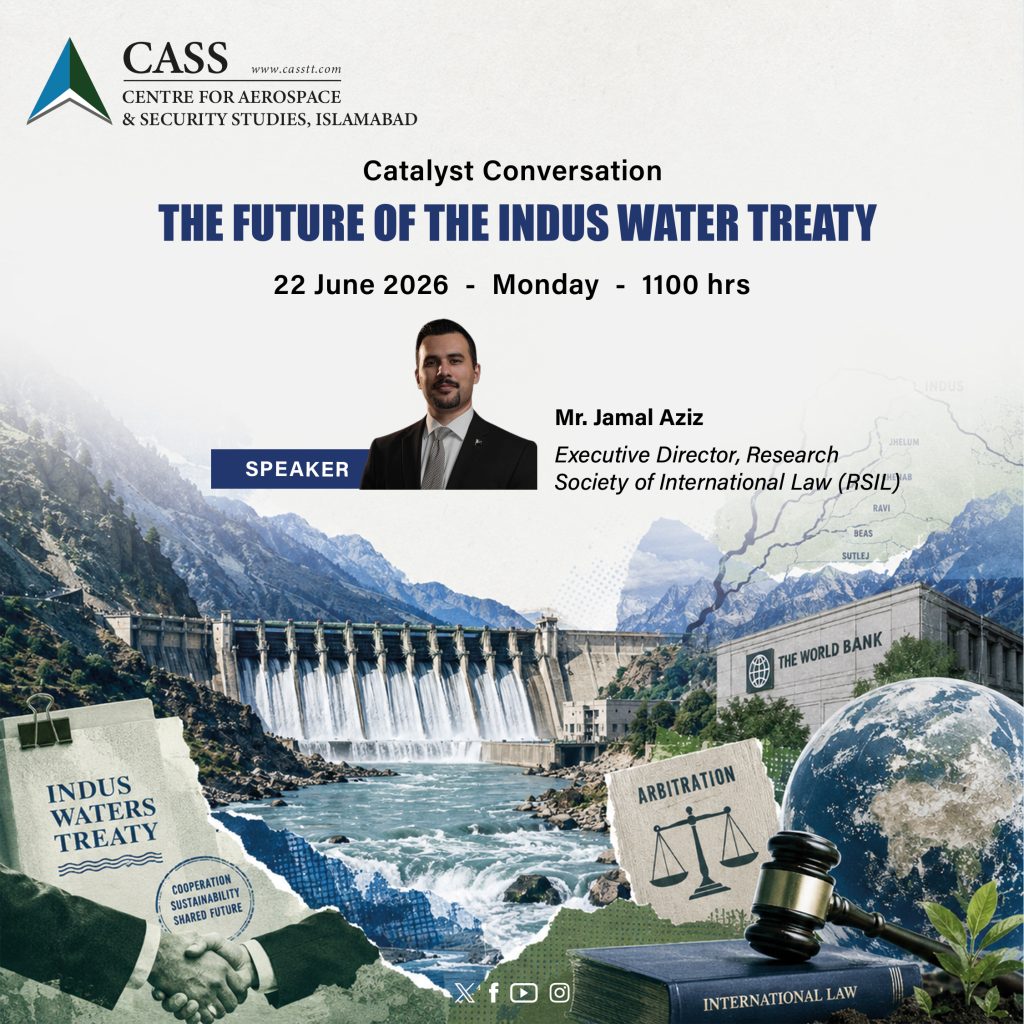
THE FUTURE OF THE INDUS WATER TREATY

For more than six decades, the Indus Water Treaty (IWT), signed in 1960 between Pakistan and India, remained as one of the most enduring transboundary water-sharing agreements in the world. Despite multiple wars, political crises, and prolonged periods of bilateral hostility, the treaty largely continued to govern the allocation and management of the waters of the Indus Basin

Read More »

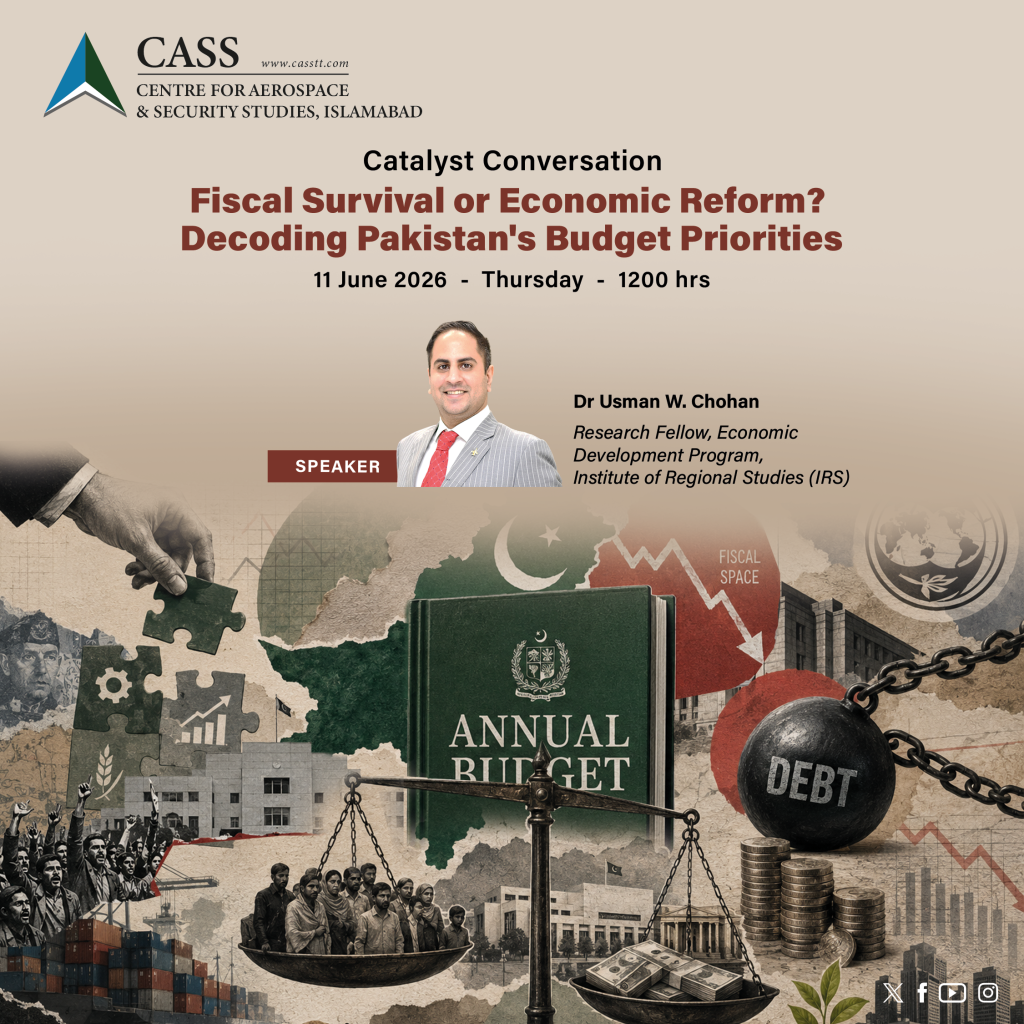
Fiscal Survival or Economic Reform? Decoding Pakistan’s Budget Priorities

Pakistan’s annual budget is more than a fiscal document; it is a reflection of the country’s structural economic constraints, political choices, and shifting development priorities. The tension between fiscal survival and meaningful economic reform has become increasingly pronounced amid rising debt servicing obligations, limited fiscal space, and recurring dependence on external financing. In this context, budget-making often appears reactive—focused on stabilisation and compliance with short-term macroeconomic targets—rather than transformative, aimed at broad-based productivity, institutional reform, and sustainable growth.

Read More »

Nuclear Capability: Balancing Global Security and Energy Needs

Recent global developments—including geopolitical tensions, energy crises, and shifting power dynamics—have intensified discussions around nuclear capability. After the Russia-Ukraine conflict and the US-Israel-Iran war, nations are increasingly evaluating nuclear technology not only as a strategic defense mechanism but also as a reliable and large-scale energy source. These developments have brought nuclear capability back to the forefront of international debate.
The dual-use nature of nuclear capability—serving both military and civilian purposes—makes it a critical area of analysis. The ongoing war on Iran has introduced significant uncertainty into the future of Iran’s nuclear trajectory, particularly regarding

Read More »