1. South Asia’s security environment remains deeply influenced by the enduring rivalry between Pakistan and India. The region remains vulnerable to instability through non-conventional and indirect means. The use of proxy actors, hybrid warfare tactics, and cross-border insurgencies has become a persistent feature of the conflict dynamics.
2. For Pakistan, the increasingly aggressive Indian posture in the hybrid domain– particularly after the revocation of Article 370 and 35-A in IIOJK, Balakot airstrike (2019) and Marka i Haq (2025) – has raised serious concerns. Pakistan has consistently pointed to India’s covert support to insurgents, the use of Afghan soil for launching subversive activities, and the weaponisation of cyberspace and media.
3. The complex interplay between domestic insurgencies, regional rivalries, digital influence operations, and geopolitical alignments (including India’s strategic ties with the West) has deepened the asymmetry of the conflict. This demands a critical policy introspection for Pakistan, not only about India’s actions and regional destabilisation efforts but also regarding how Pakistan can recalibrate its response.
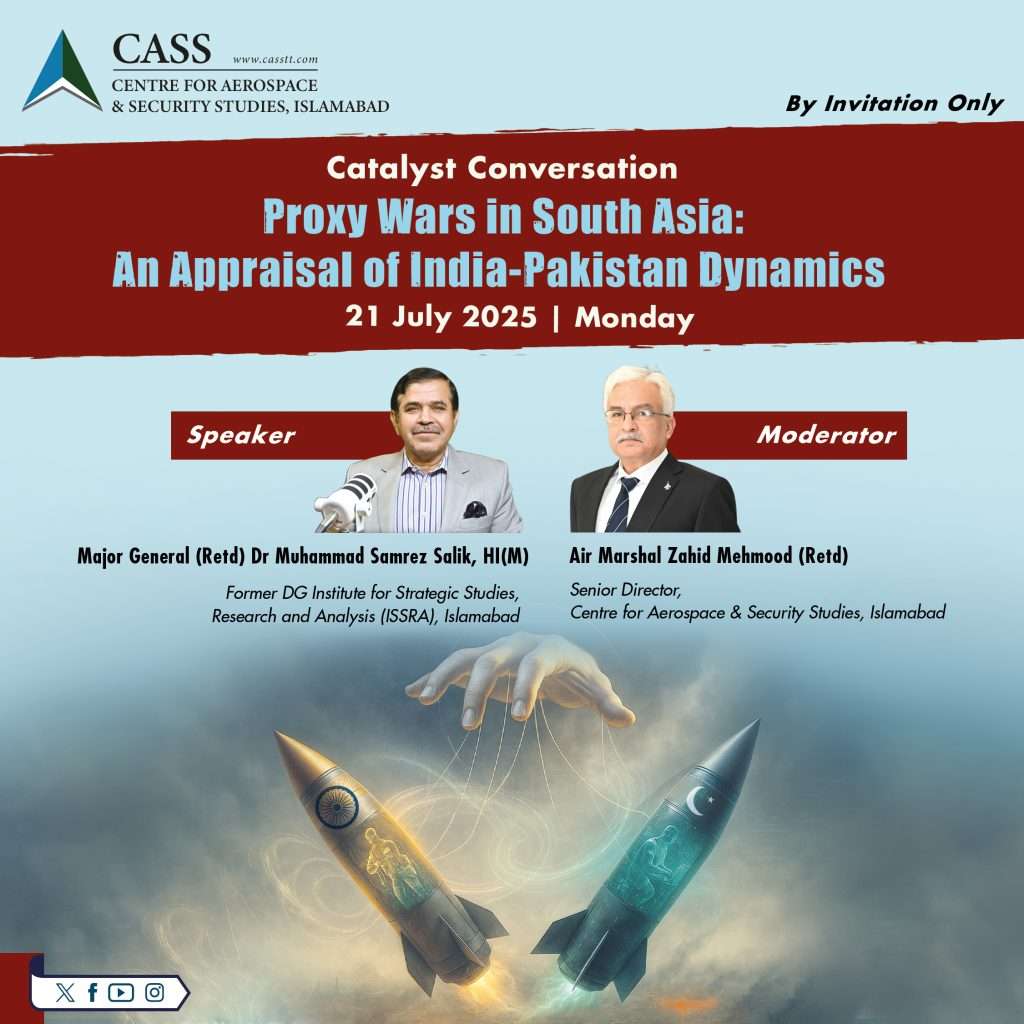
4. With this context in mind, CASS is organising a discussion on the trajectories, impact and future trends of proxy wars in the region.
(a) How have proxy war strategies evolved in the region over the years?
(b) To what extent do emerging technologies alter the character of proxy conflict in South Asia?
(c) How can proxy warfare in the India-Pakistan context be addressed through regional conflict management frameworks?