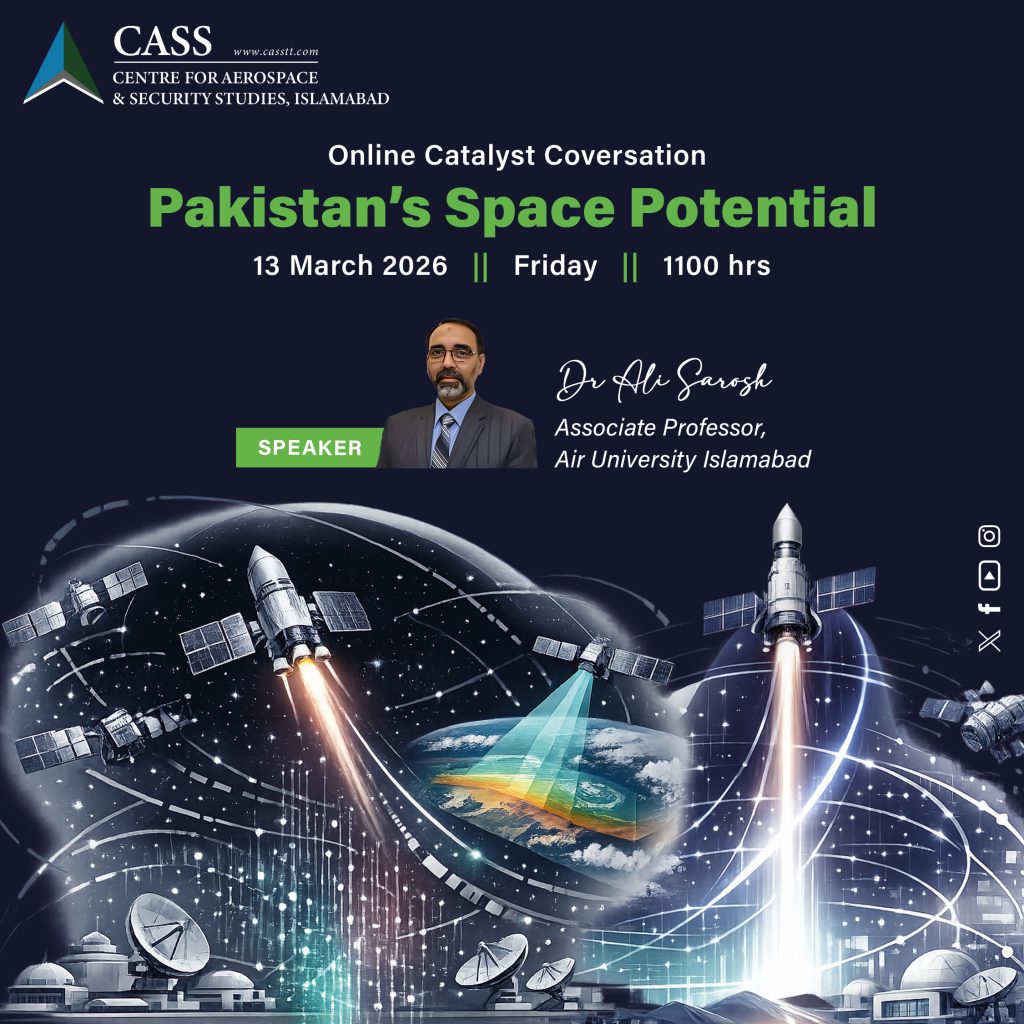
Outer space has emerged as a critical domain shaping national power, economic development, and military effectiveness in the 21st century. Space-based assets today underpin communication networks, navigation systems, disaster management, climate monitoring, intelligence gathering, and modern warfare capabilities.
Although Pakistan entered the space domain later than many regional peers, recent years have witnessed renewed efforts to expand its presence in space. Progress in satellite development, partnerships, and institutional strengthening indicates a growing recognition of the strategic importance of space. However, Pakistan’s journey has been marked by structural, financial, policy, and technological constraints that have slowed sustained advancement.
This webinar aims to critically examine Pakistan’s space trajectory, assess the challenges that have limited its progress, and explore viable pathways toward long-term space capability and sovereignty. The discussion will focus on the following questions:
- Why is space increasingly indispensable for both civilian development and military effectiveness in the contemporary strategic environment?
- Despite entering the domain relatively late, what significant steps has Pakistan taken in recent years to establish and expand its space presence?
- What were the caveats in Pakistan’s slow progress, what steps should be taken, not to repeat those and maintain a steady advancement towards space capability and sovereignty.
- Can space autonomy be achieved without domestic launch capability?
- What are political/ diplomatic or technical/ capability related issues related to indigenous space launch by Pakistan?
- How can Pakistan overcome challenges described in (a)?