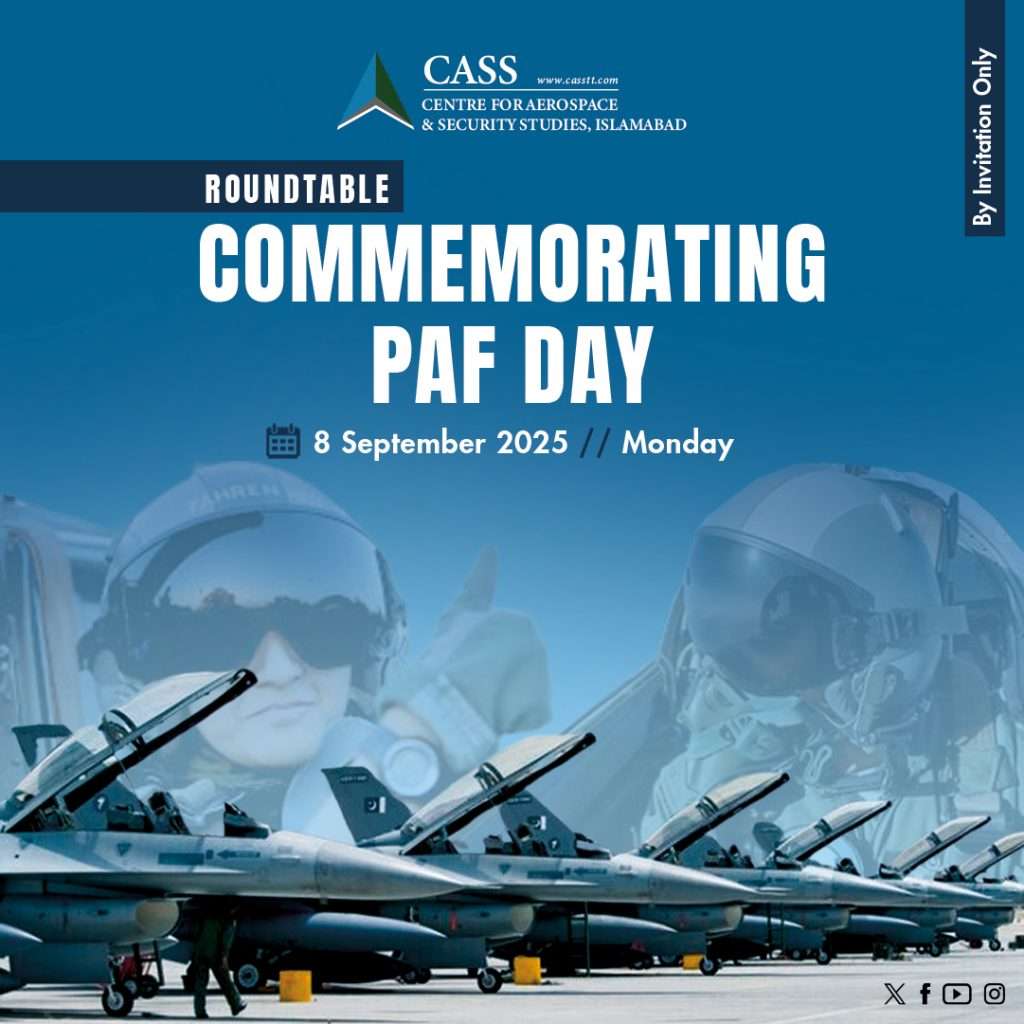
The Pakistan Air Force (PAF) has always stood as a symbol of courage, professionalism, and sacrifice, safeguarding our skies with unmatched dedication. From its earliest days, the PAF has earned a reputation as one of the finest air forces in the world, defined by the valor of its officers and the strength of its traditions. To commemorate Pakistan Air Force (PAF) Day, CASS is organising a commemorative event that will bring together veterans, serving officers, scholars, and experts to reflect on the sacrifices, achievements, and enduring legacy of the PAF. The event aims to honour the valiant spirit of the force and highlight its historic contributions to the nation’s defense.
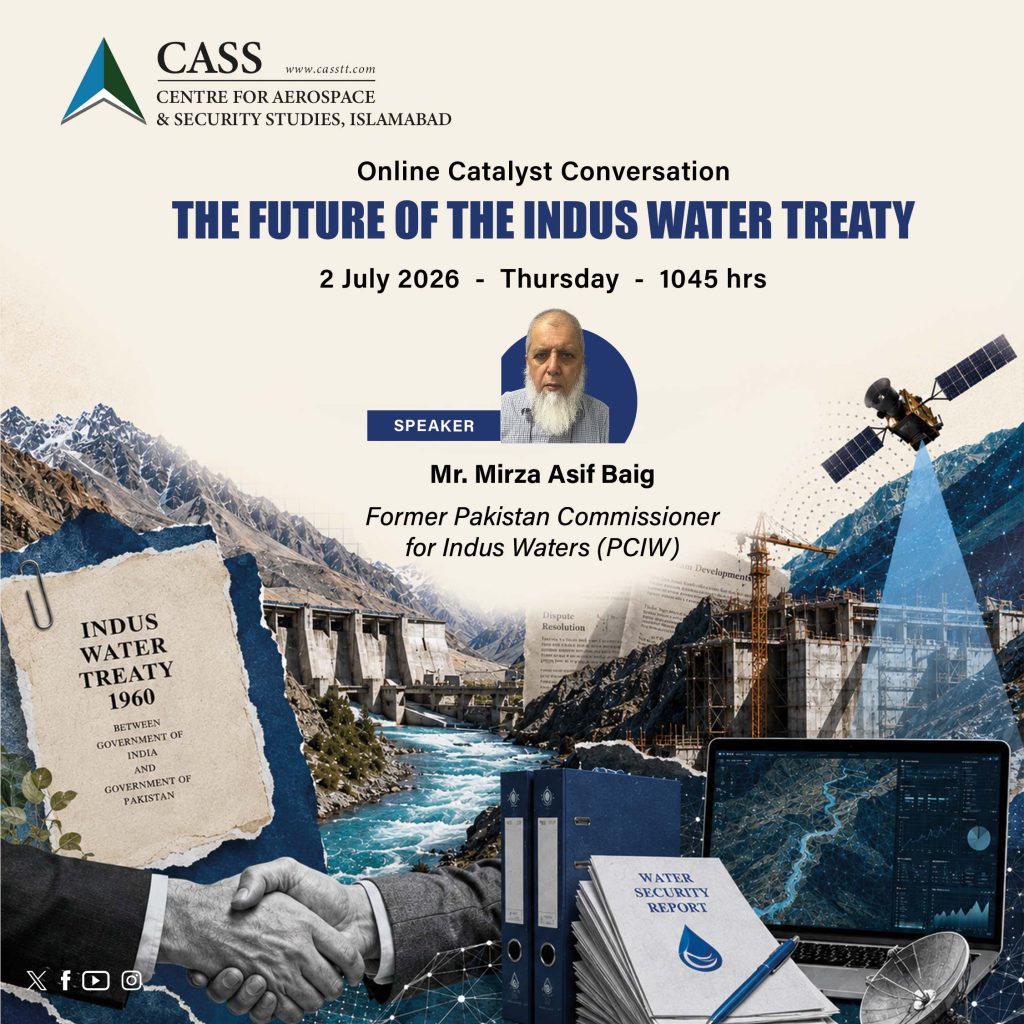
ONLINE CATALYST CONVERSATION THE FUTURE OF THE INDUS WATER TREATY
For more than six decades, the Indus Water Treaty (IWT), signed in 1960 between Pakistan and India, remained as one of the most enduring transboundary water-sharing agreements in the world. Despite multiple wars, political crises, and prolonged periods of bilateral hostility, the treaty largely continued to govern the allocation and management of the waters of the Indus BasinFor more than six decades, the Indus Water Treaty (IWT), signed in 1960 between Pakistan and India, remained as one of the most enduring transboundary water-sharing agreements in the world. Despite multiple wars, political crises, and prolonged periods of bilateral hostility, the treaty largely continued to govern the allocation and management of the waters of the Indus Basin