Concept Note
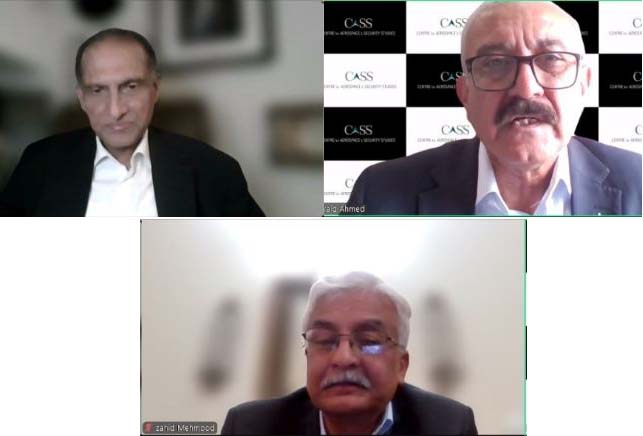
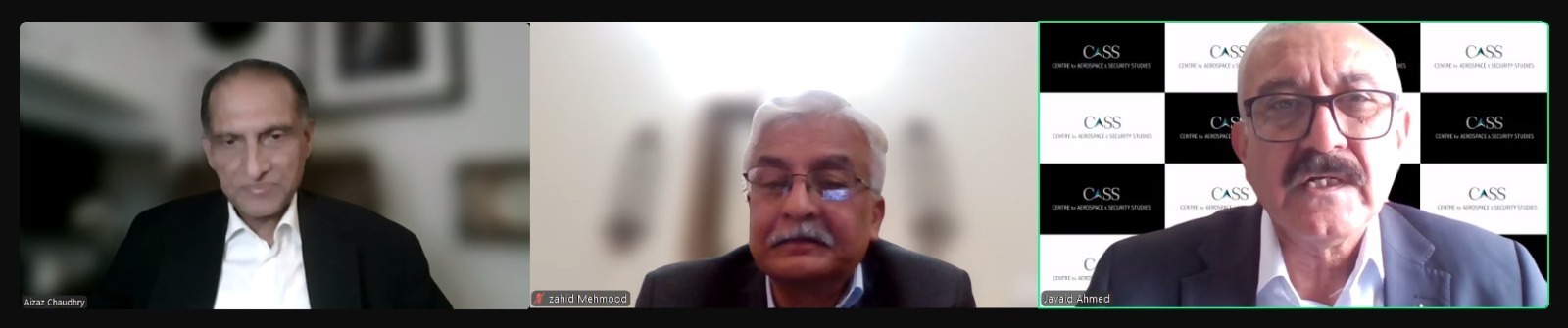
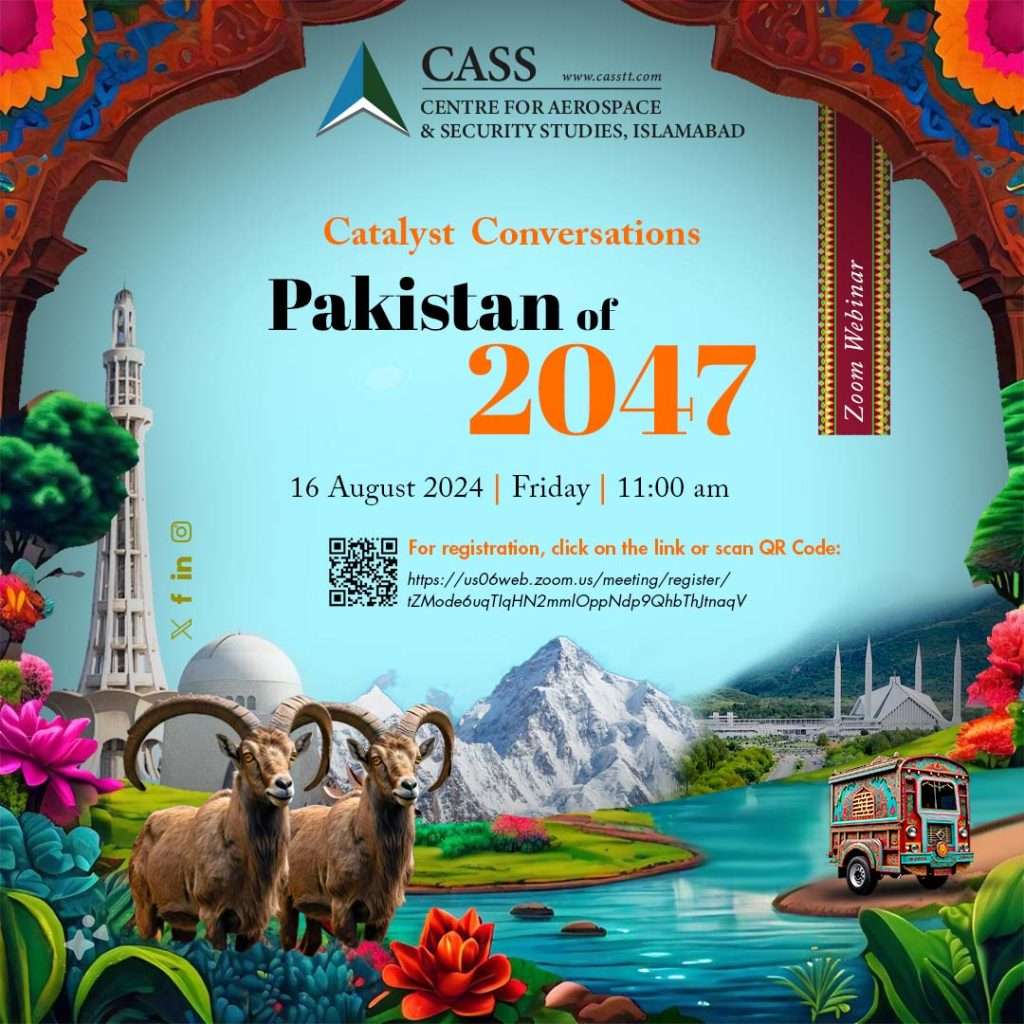
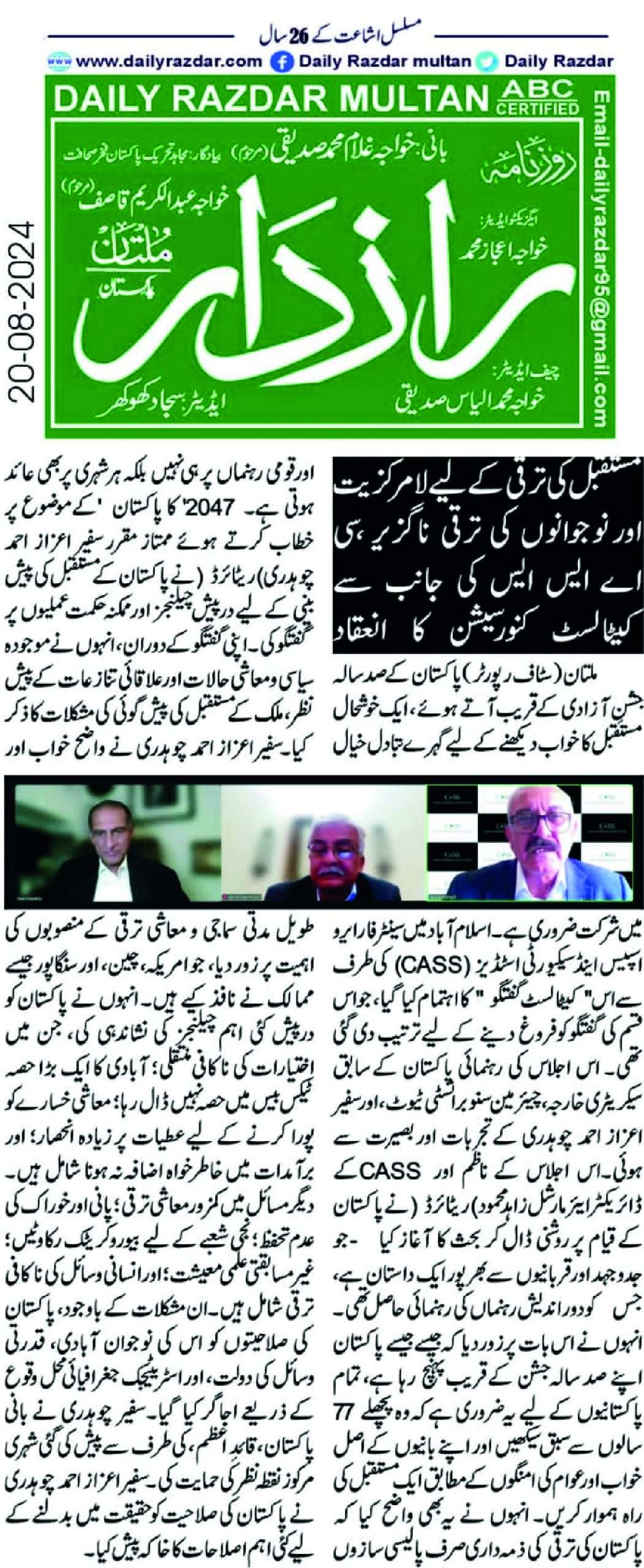
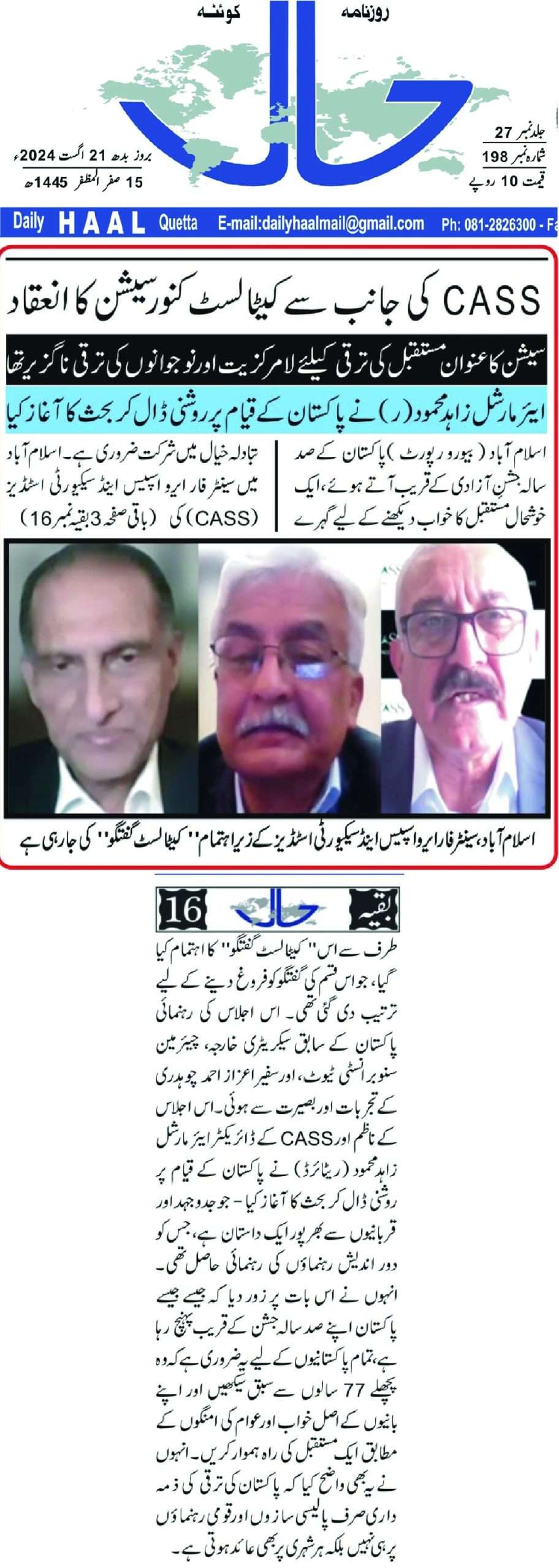
Predicting Pakistan’s future is a complex task given its challenging socio-political landscape, economy, law and order, and rapidly evolving regional and global geopolitics. Uncertainties surrounding these factors make it difficult to project the country’s future trajectory. However, by analysing current trends and identifying necessary reforms, we can develop a strategic vision for the nation’s progress and prosperity. As Pakistan approaches its centennial year of independence, it is imperative to engage in this thoughtful discussion and envision a prosperous and stable future. This Catalyst Conversation aims to provide a platform for such discourse, with insights and expertise of Ambassador Aizaz Ahmad Chaudhry, former Foreign Secretary, Government of Pakistan & Chairman Sanober Institute, guiding the conversation. Discussions will centre around proposed reforms and initiatives that Pakistan should legislate and earnestly implement to reconstruct and enhance the socio-political trajectory it embarked upon at the time of its independence. The conversation will address several key themes, including political stability, economic revival, law and order, geopolitical dynamics, and sustainable development. Strategies to achieve constancy and strengthen democratic institutions will be explored, alongside necessary economic reforms to revive and sustain growth, and investments in human capital and technology. Measures to strengthen law and order for a secure and prosperous Pakistan will be discussed in light of pragmatic judicial and law enforcement reforms. Navigating global and regional geopolitics to enhance Pakistan’s strategic positioning and building resilient foreign policy strategies will also be covered. The session will also touch upon the importance of implementing the UN Sustainable Development Goals (SDGs) to balance economic growth with environmental sustainability.
Outcomes
- Identification of key reforms and policy recommendations to shape Pakistan’s future.
- Insights into strategic initiatives for achieving sustainable economic and political stability.
- Enhanced understanding of the geopolitical and regional dynamics influencing Pakistan’s trajectory.
Press Release
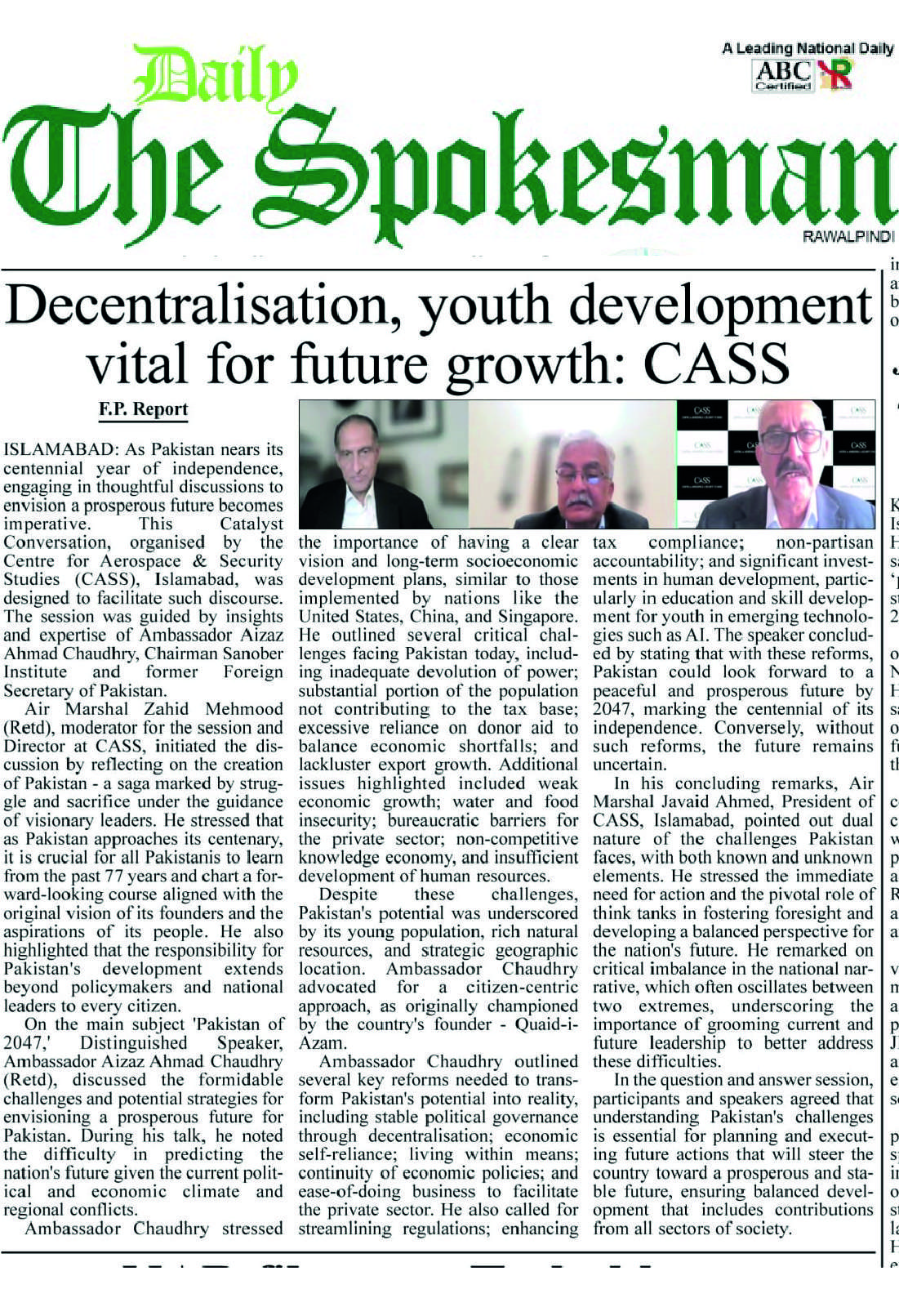
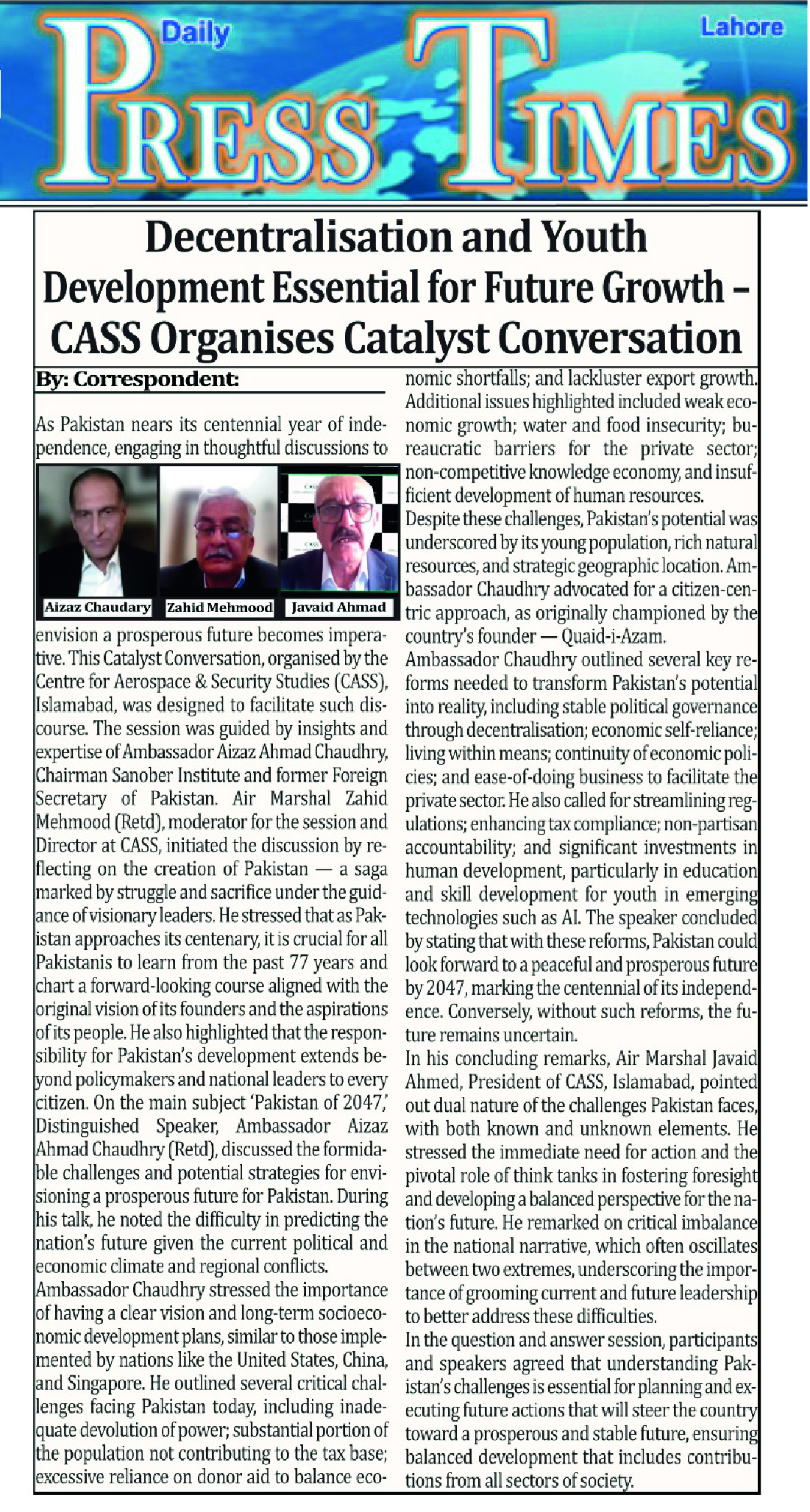
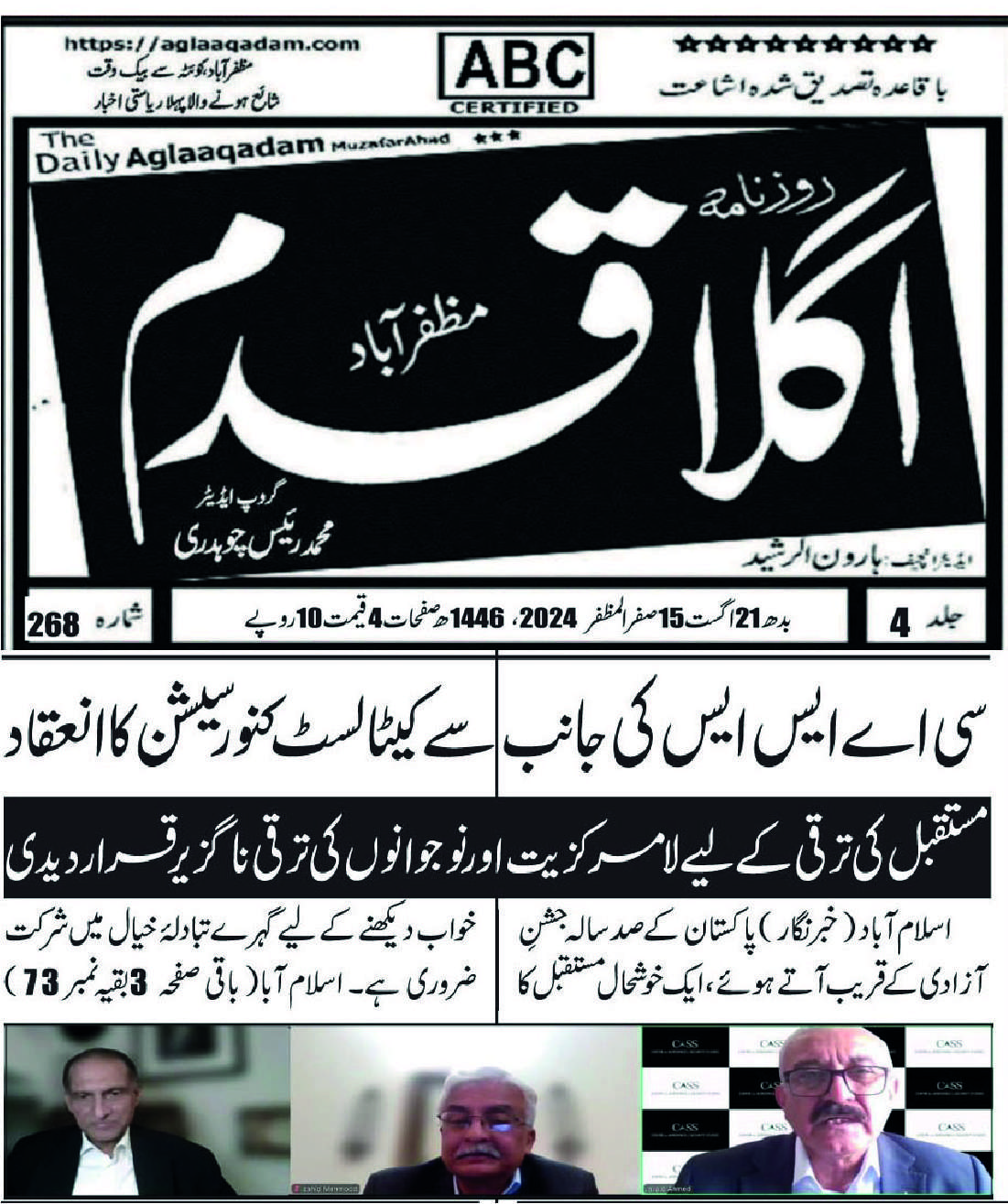
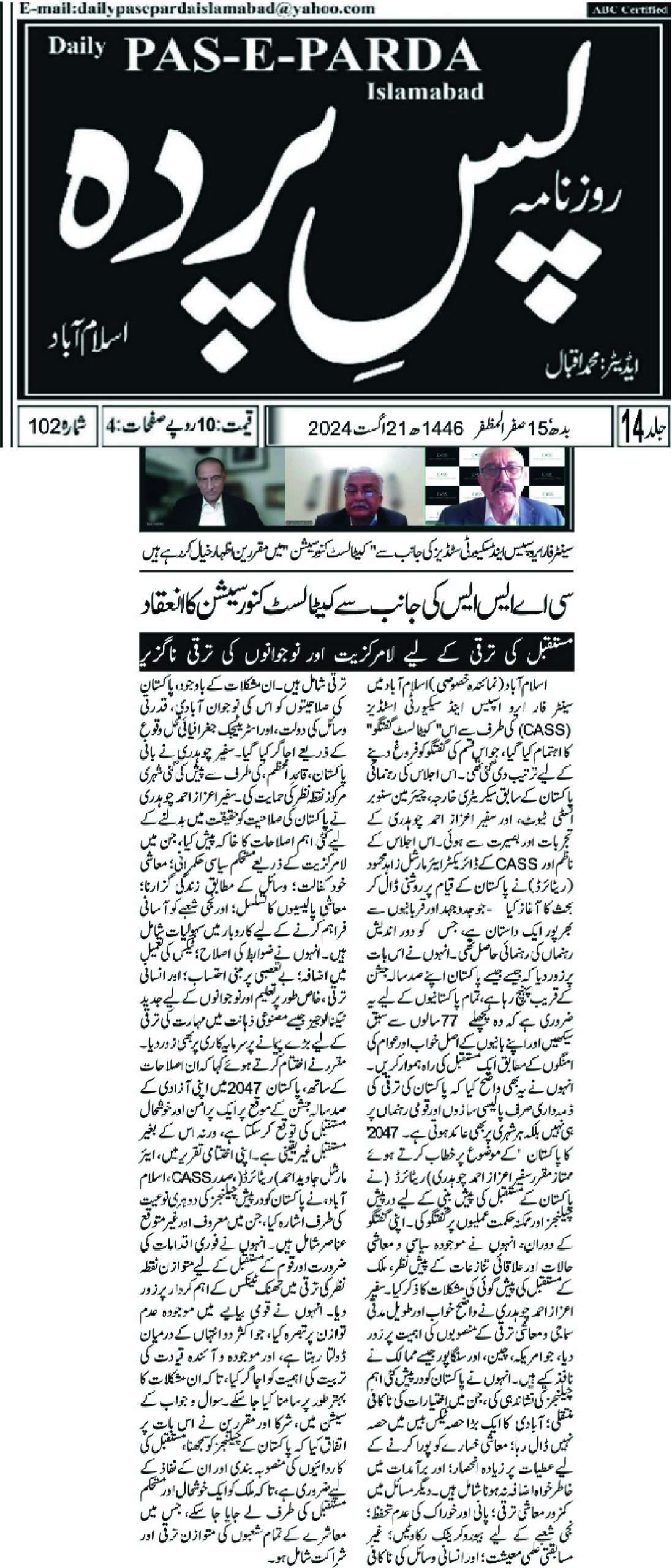
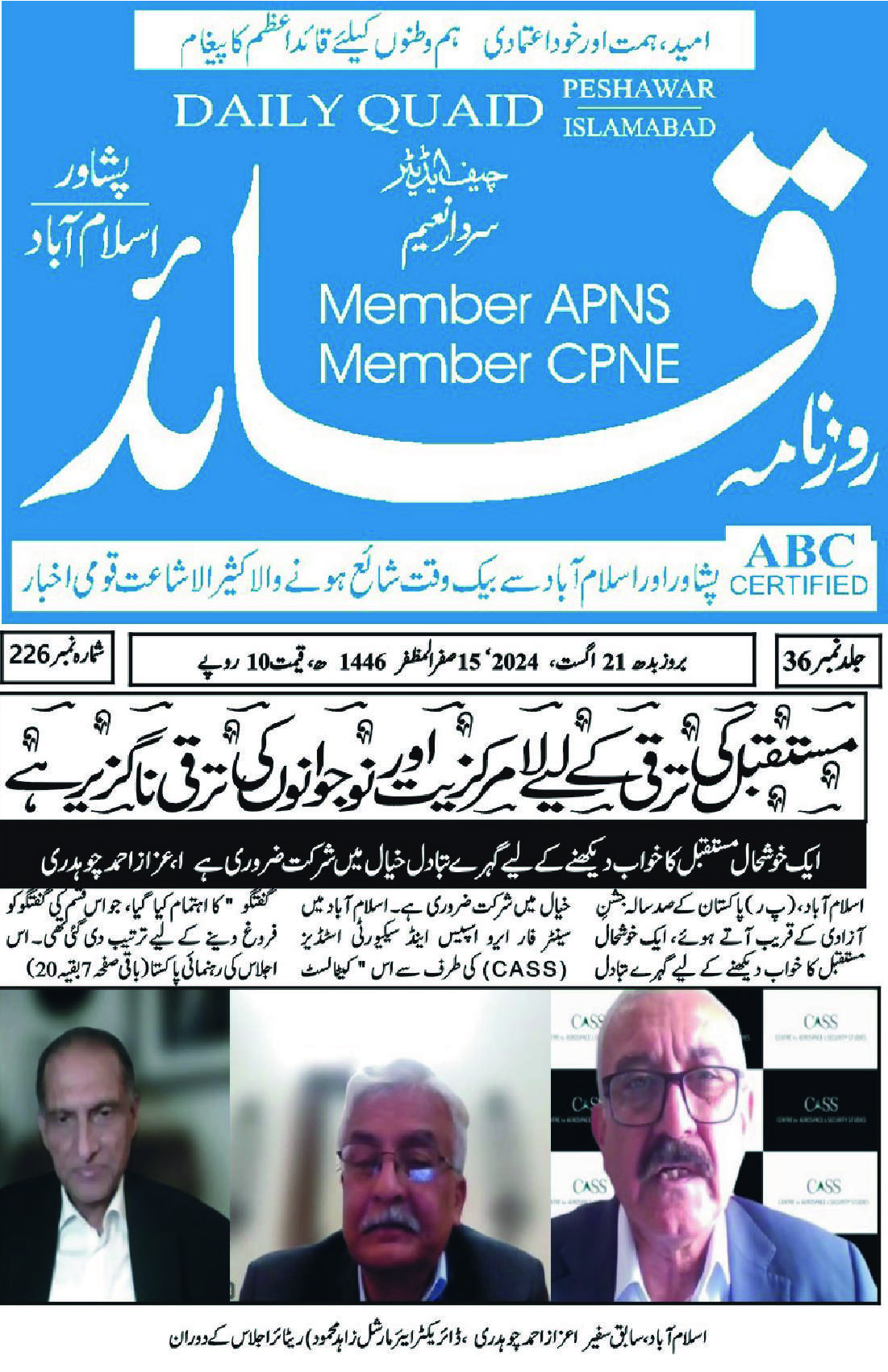
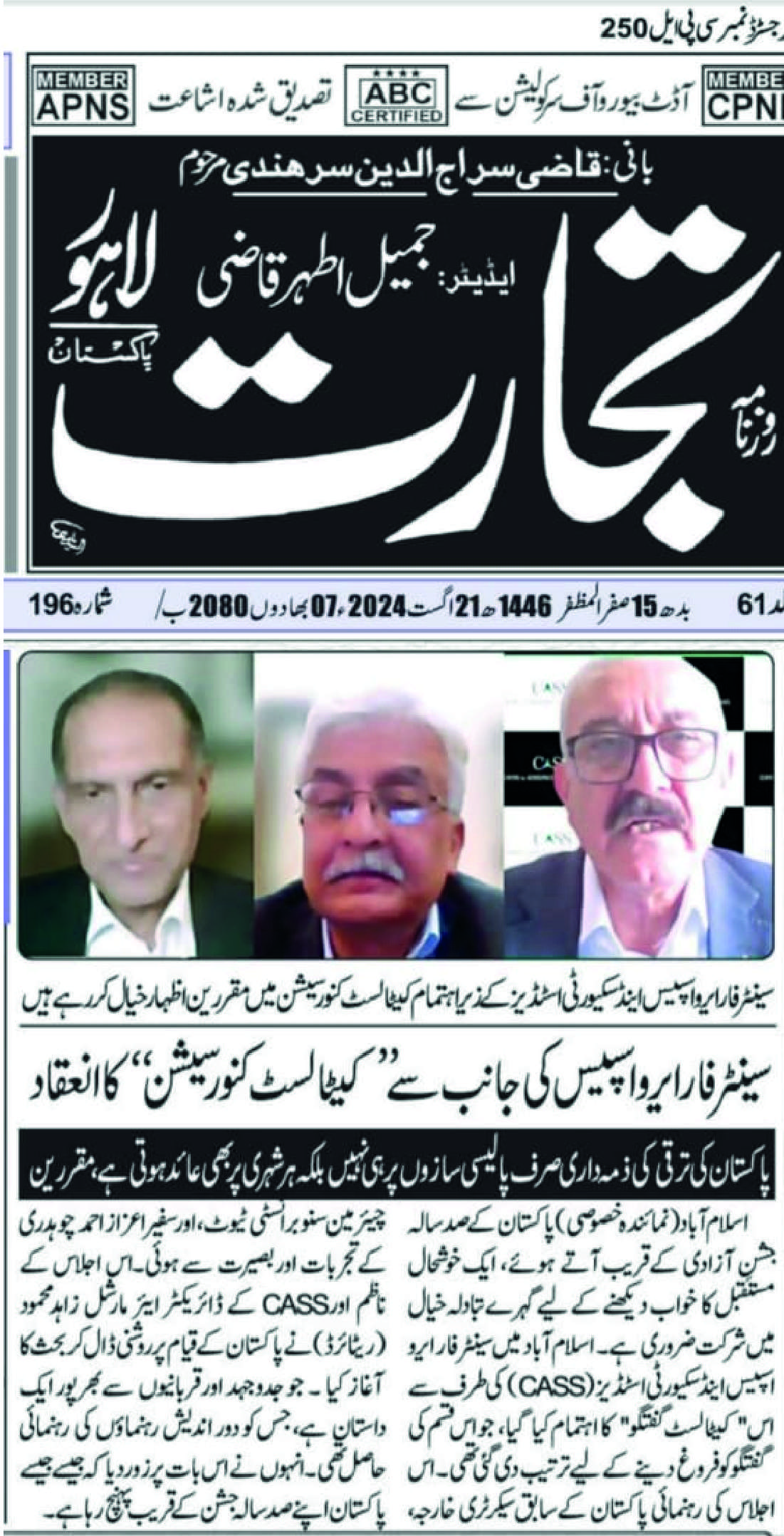
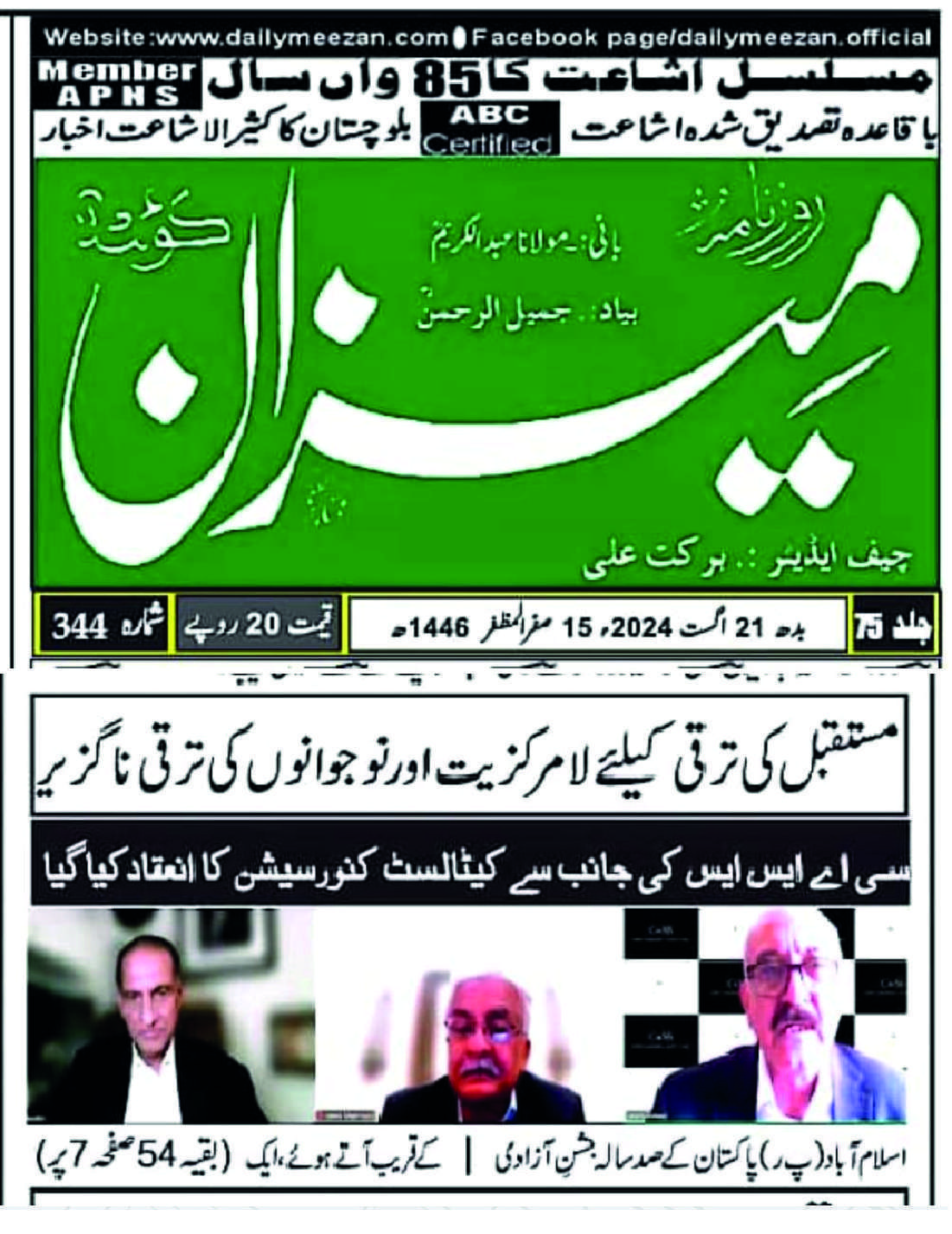
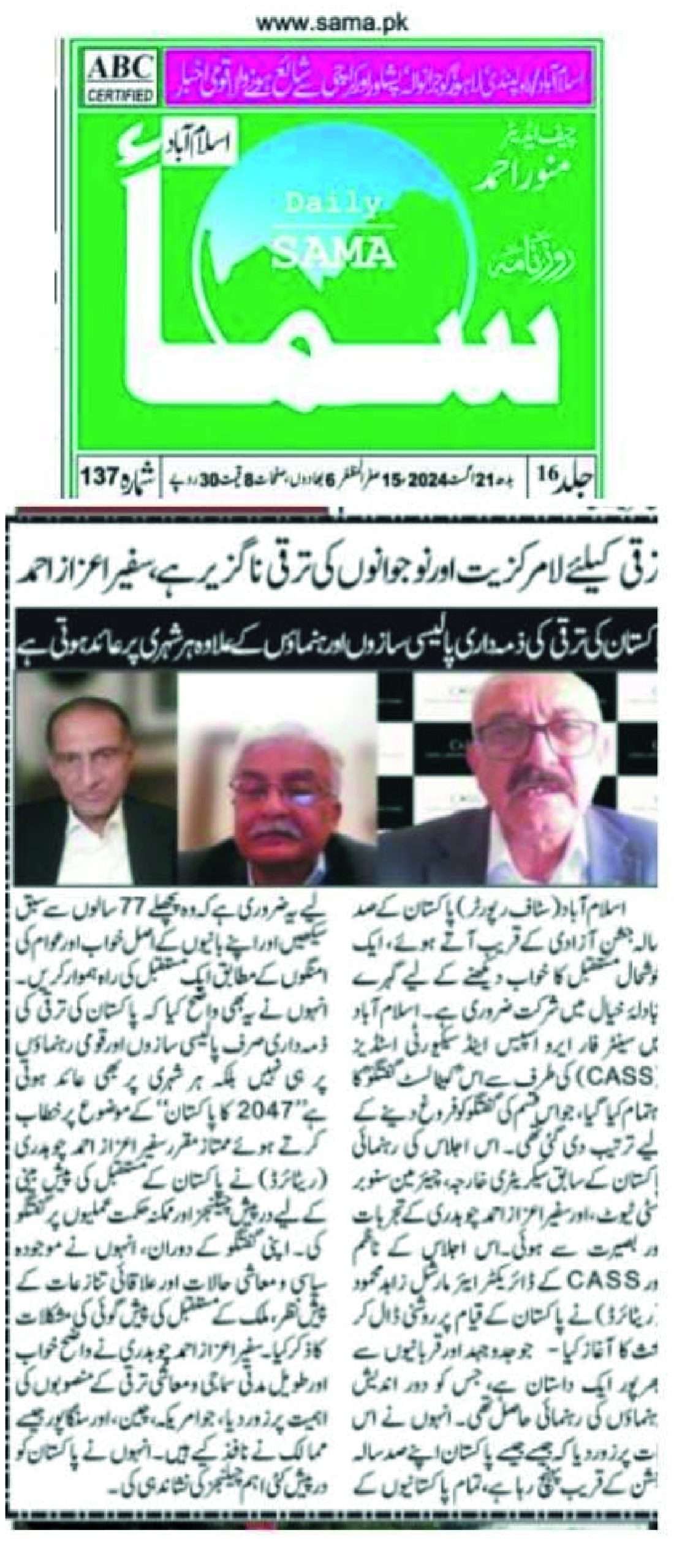
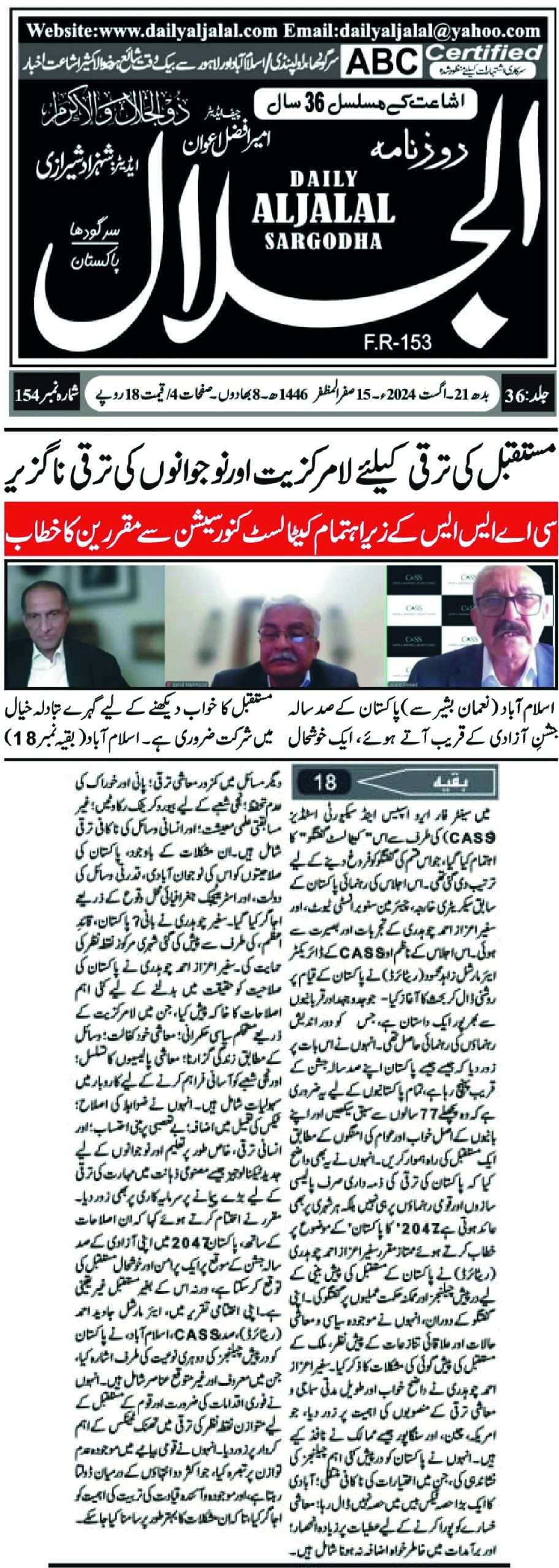
News Coverage
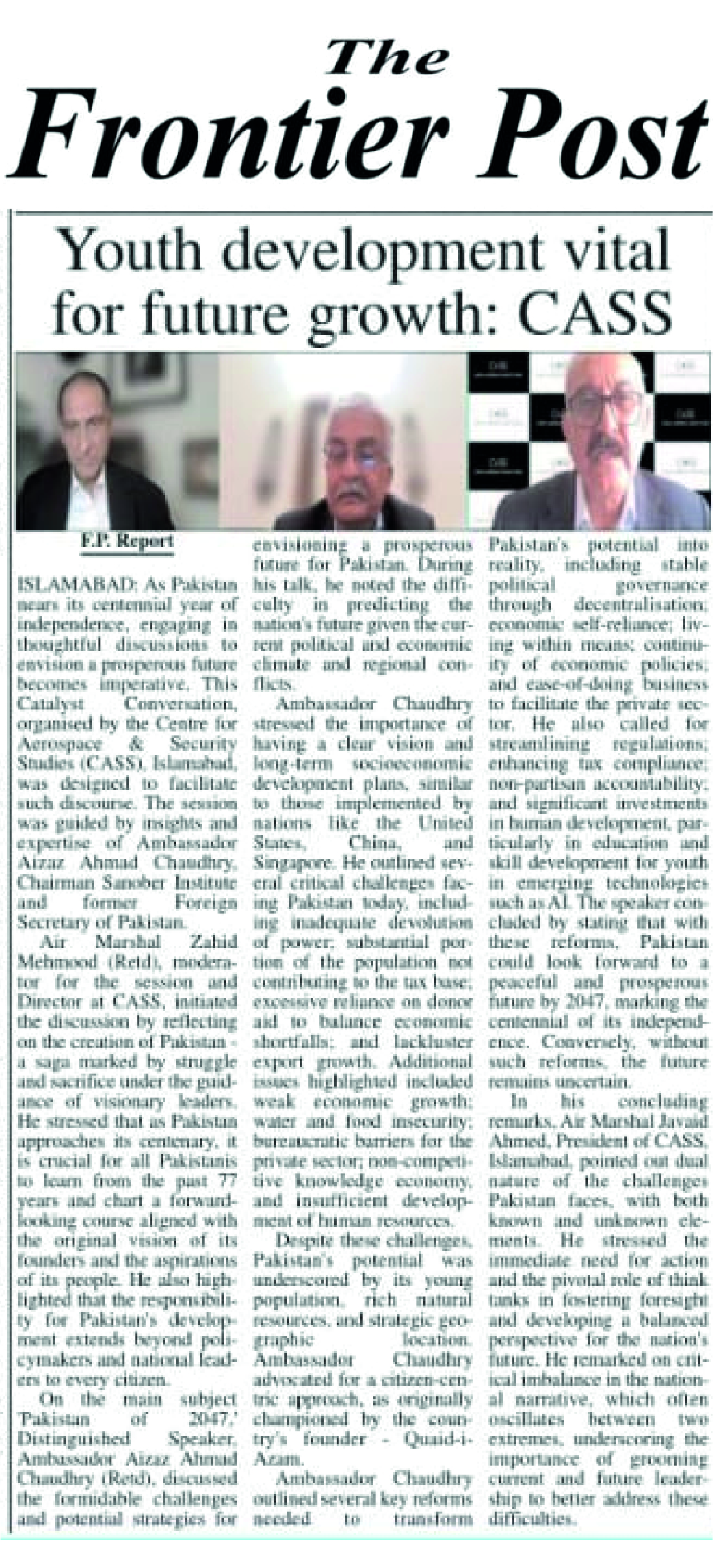
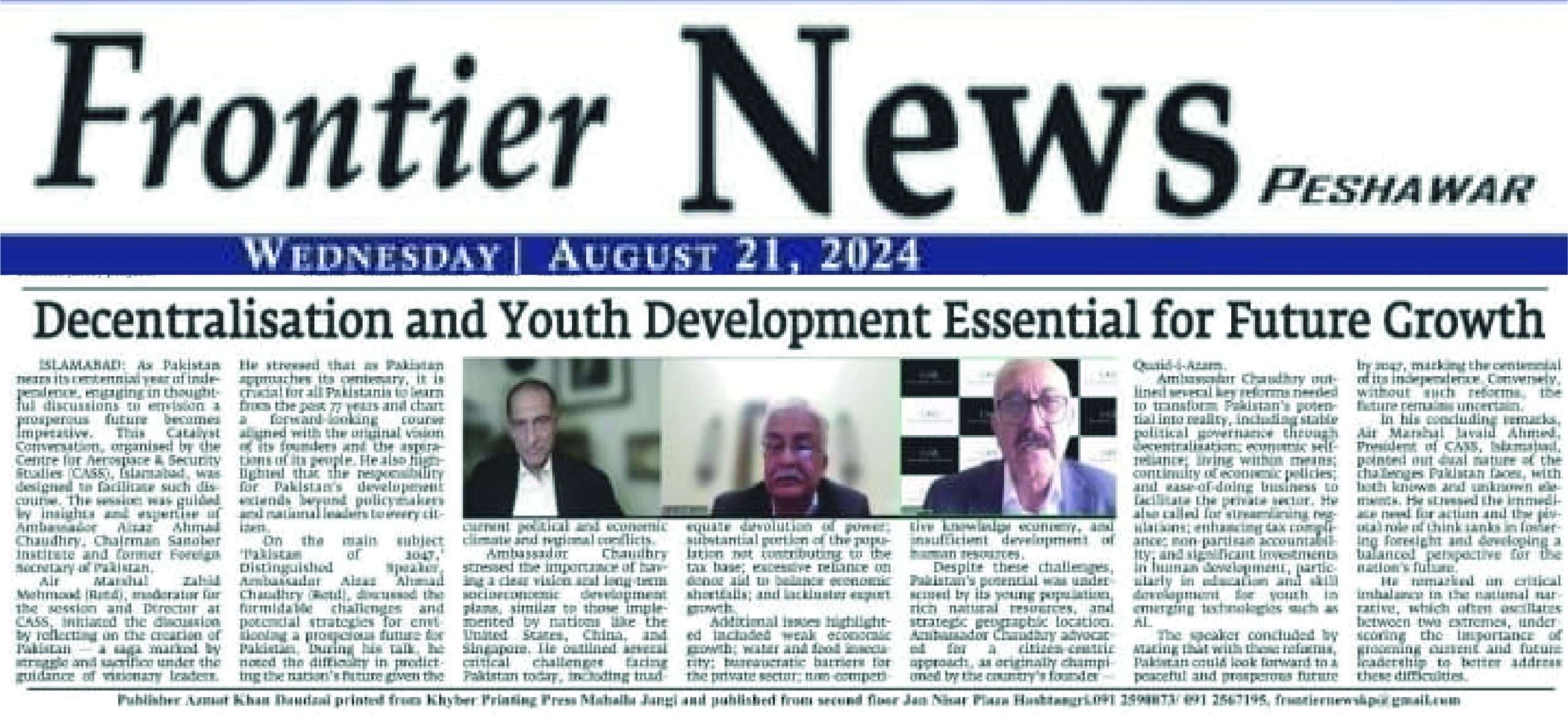
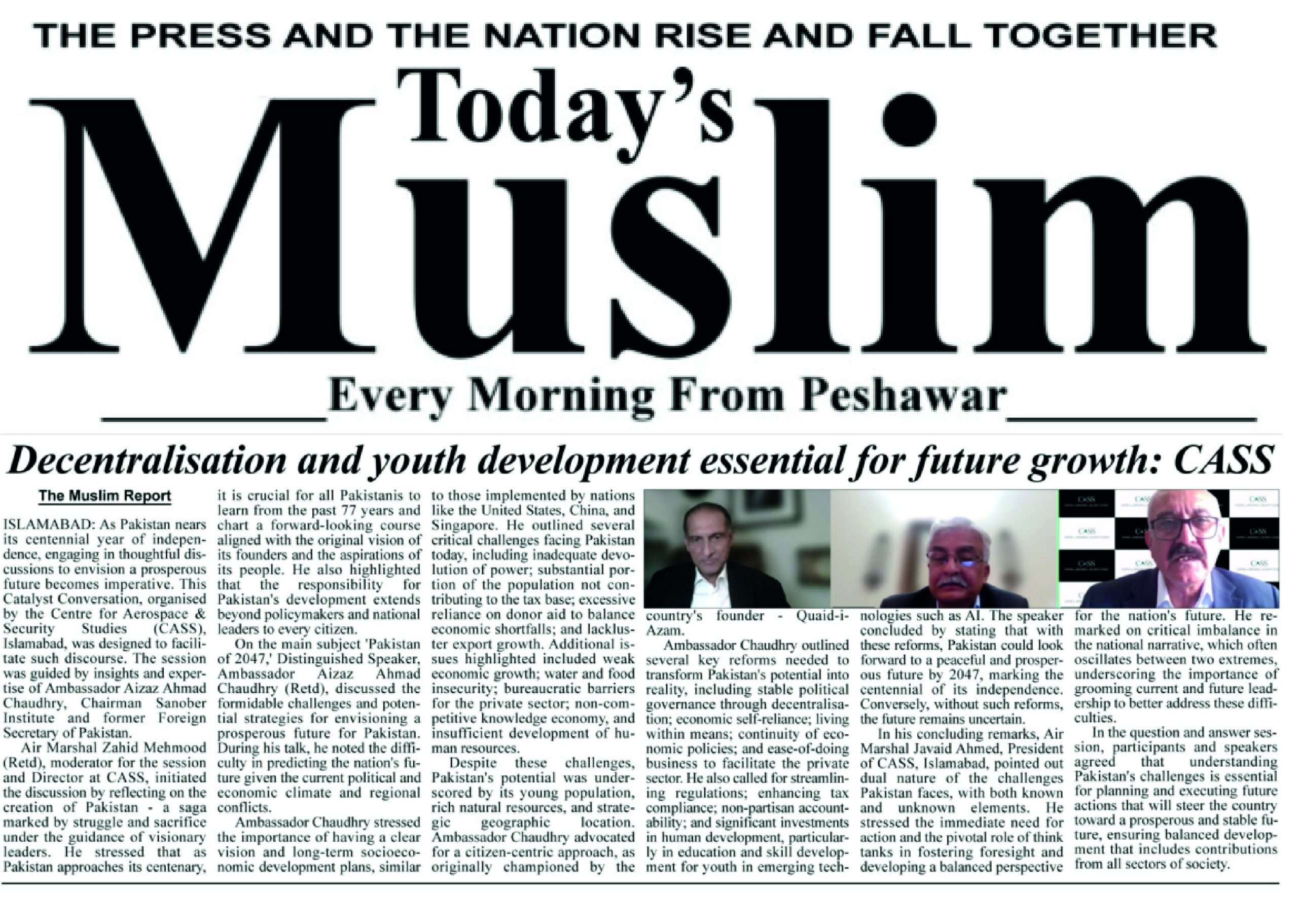
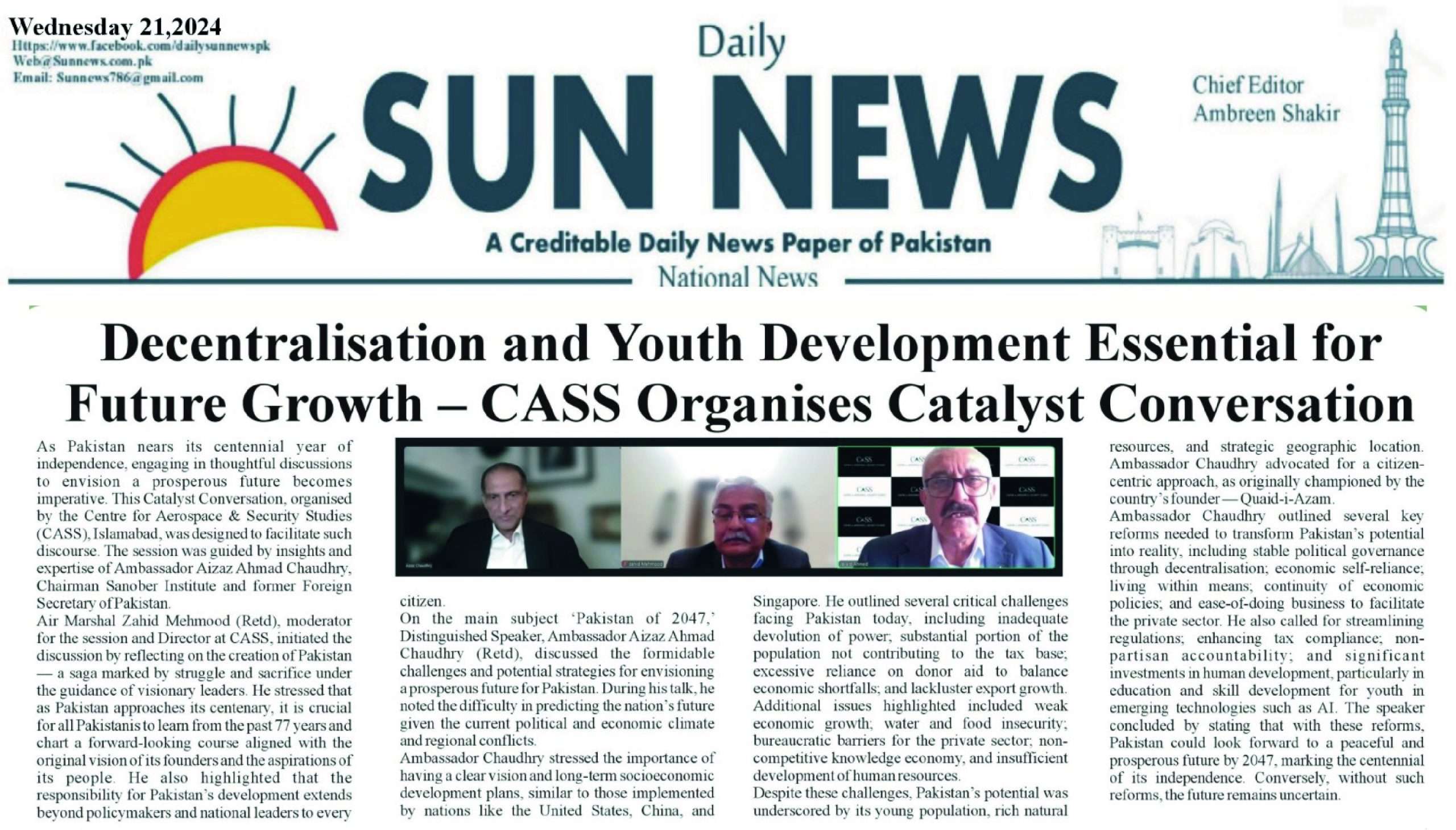
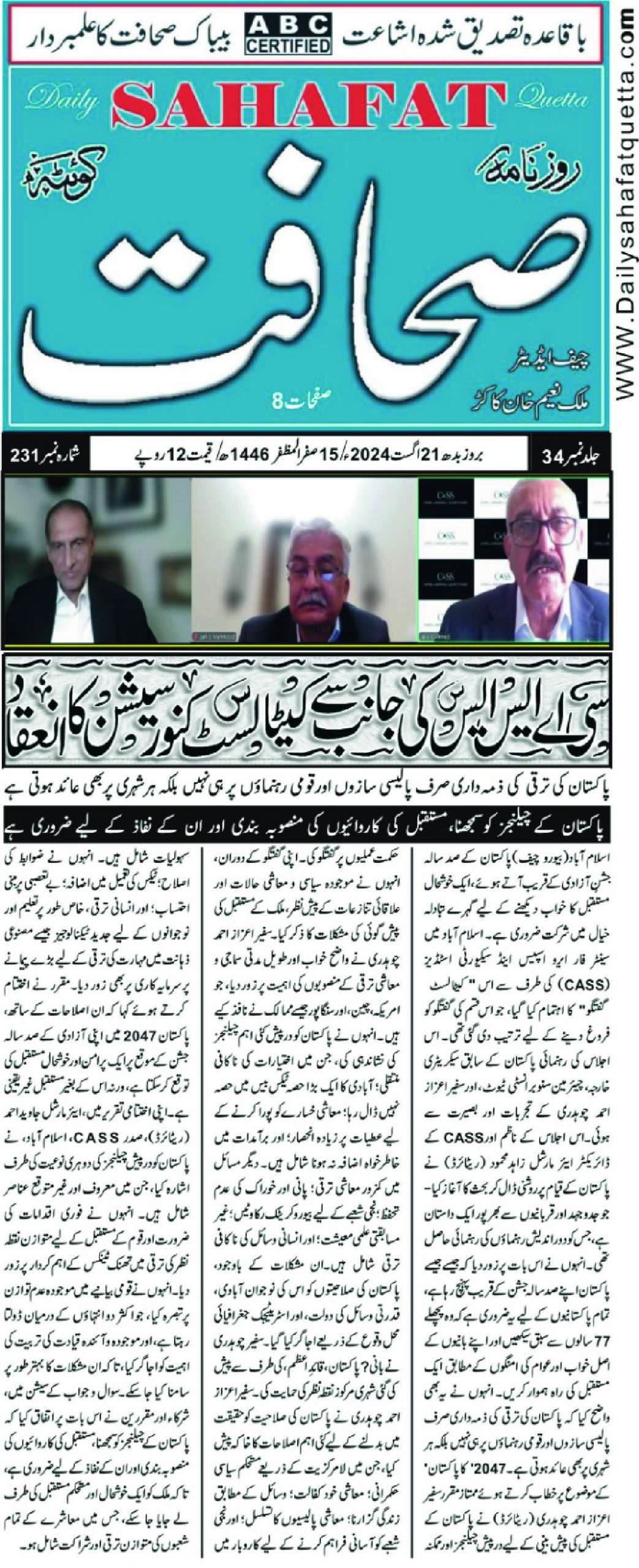
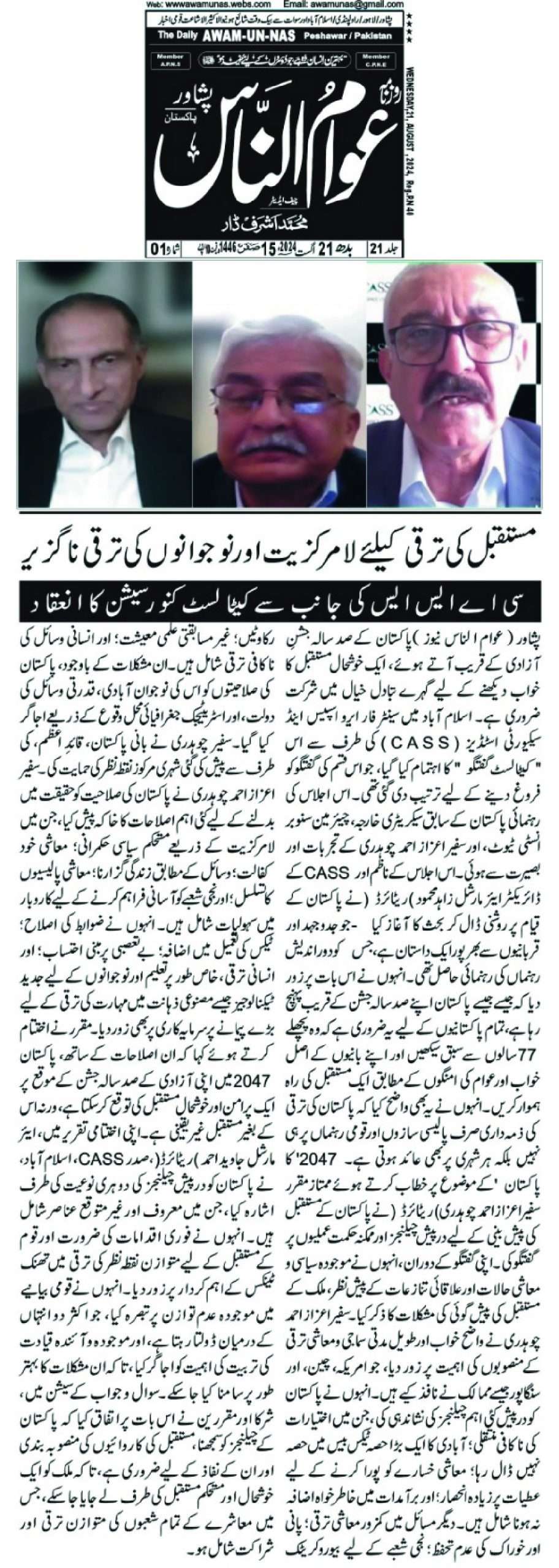
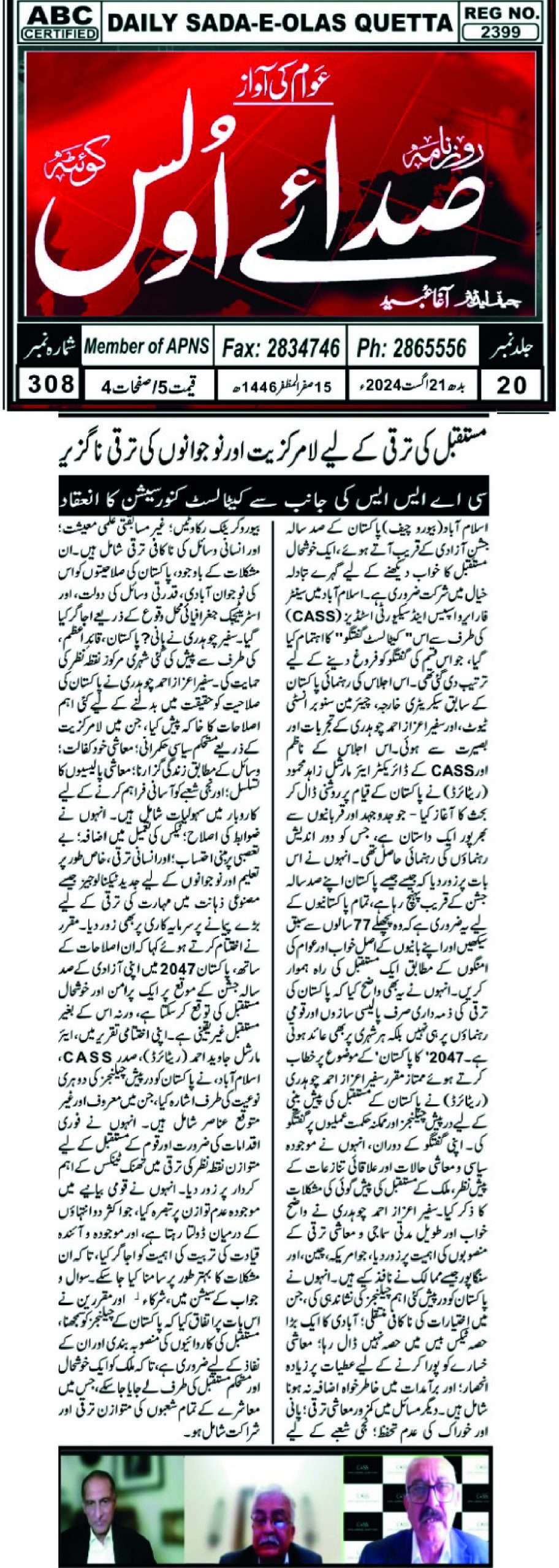
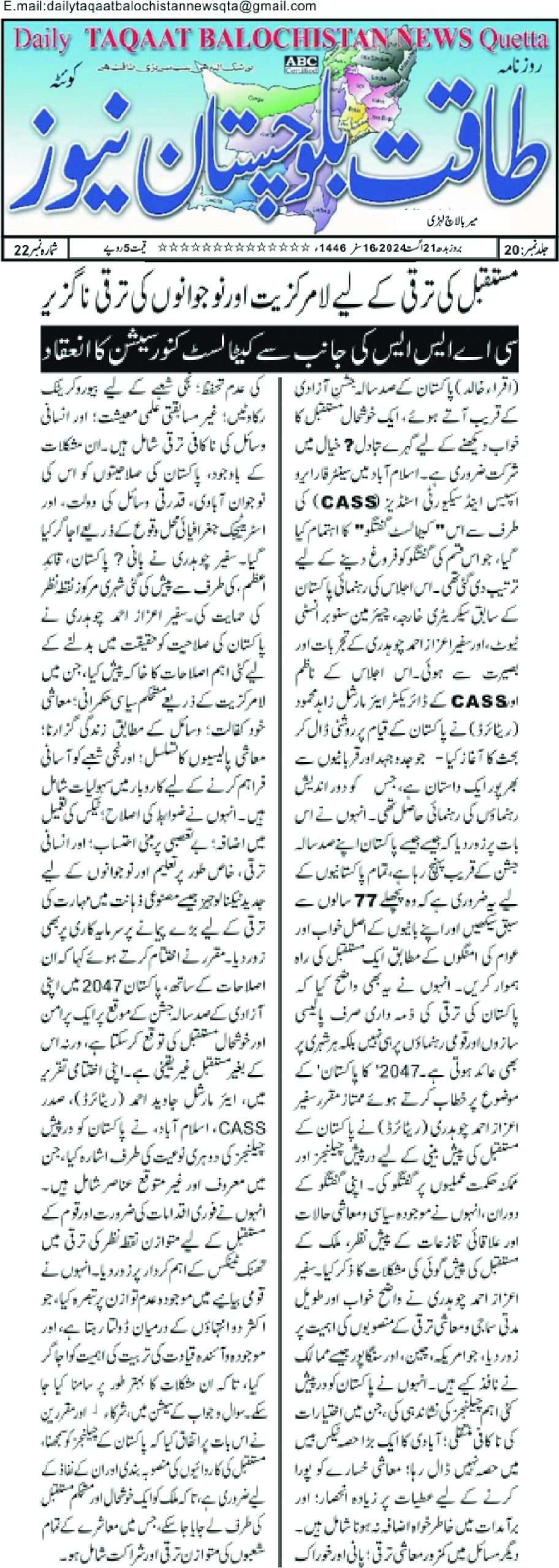
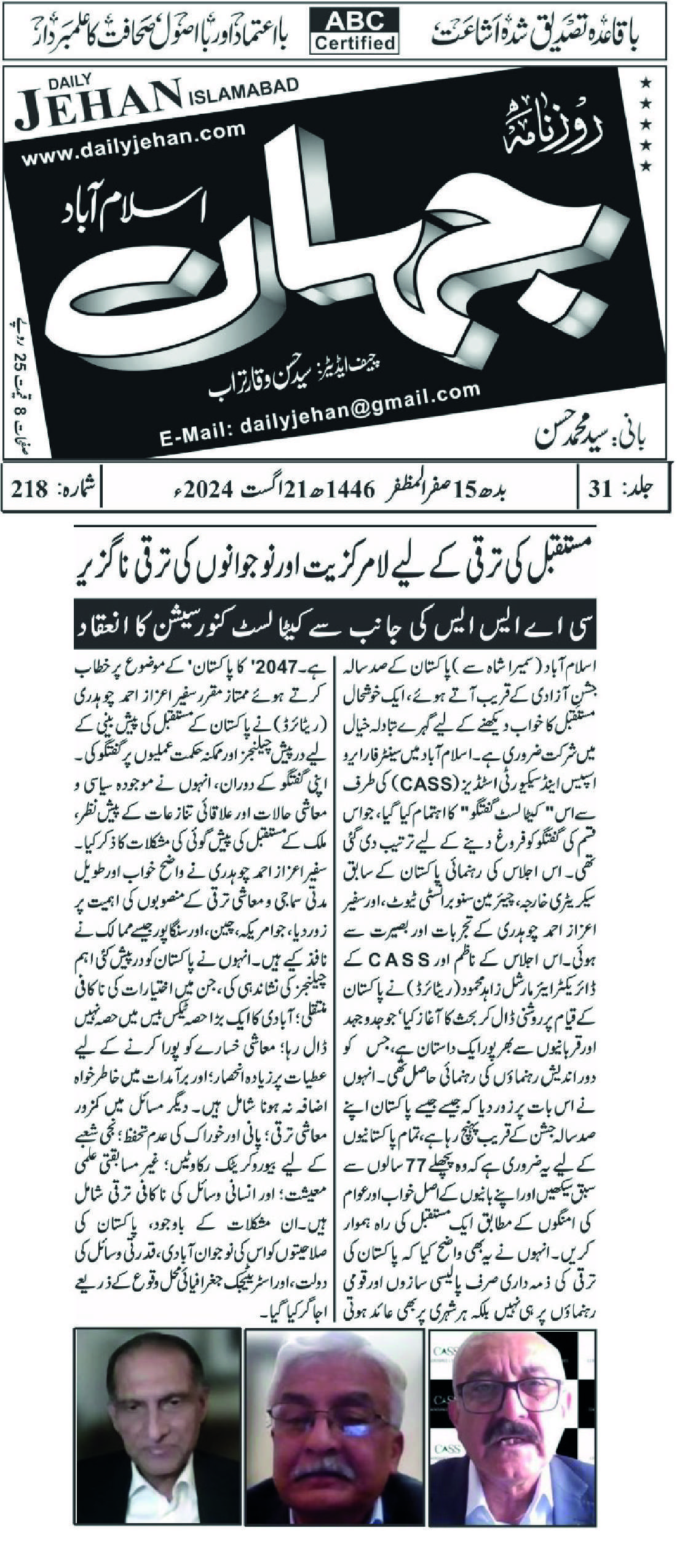
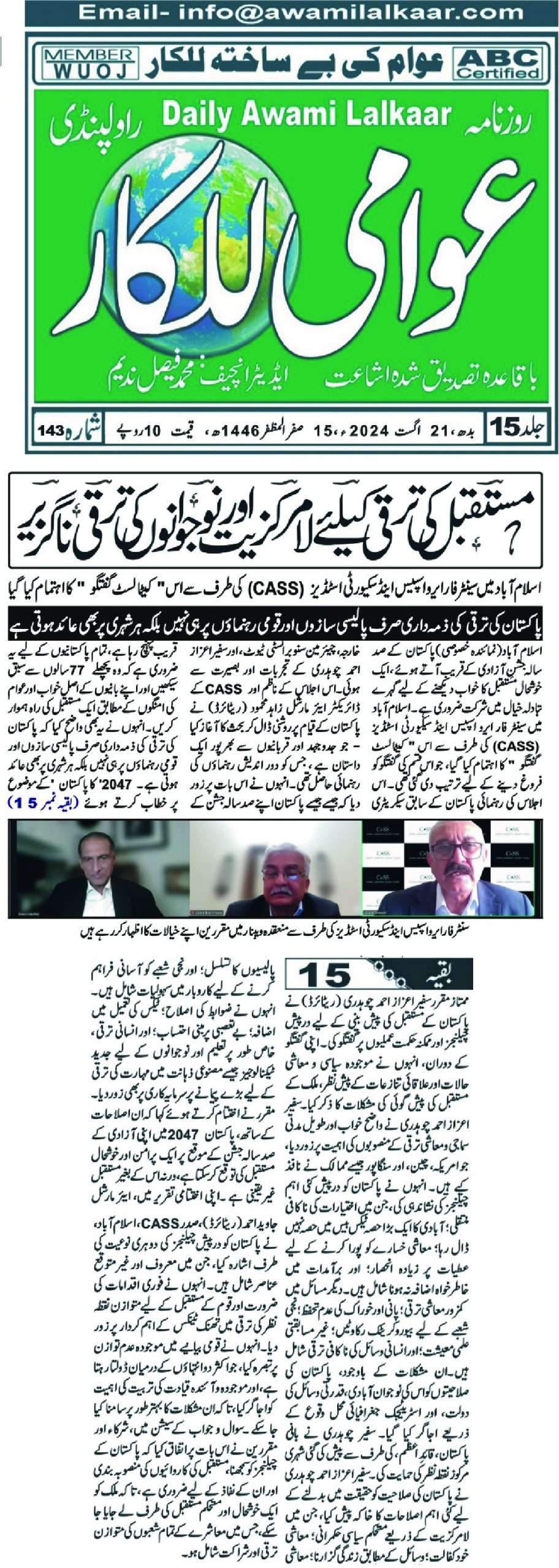
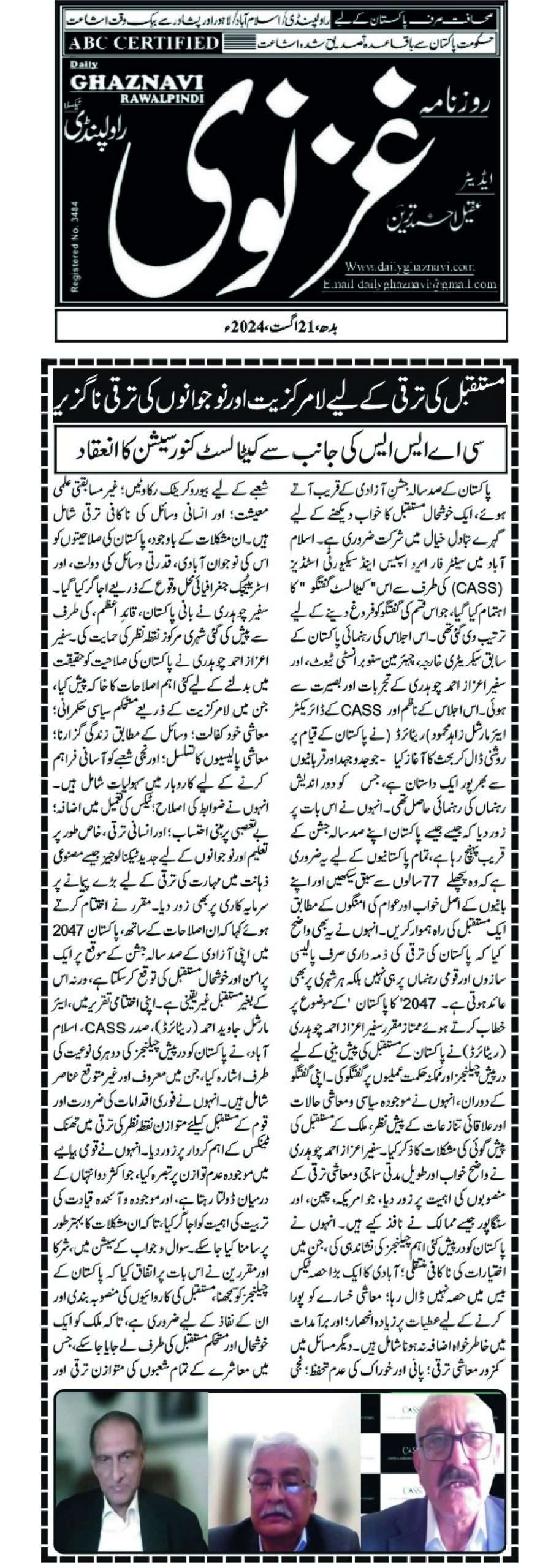
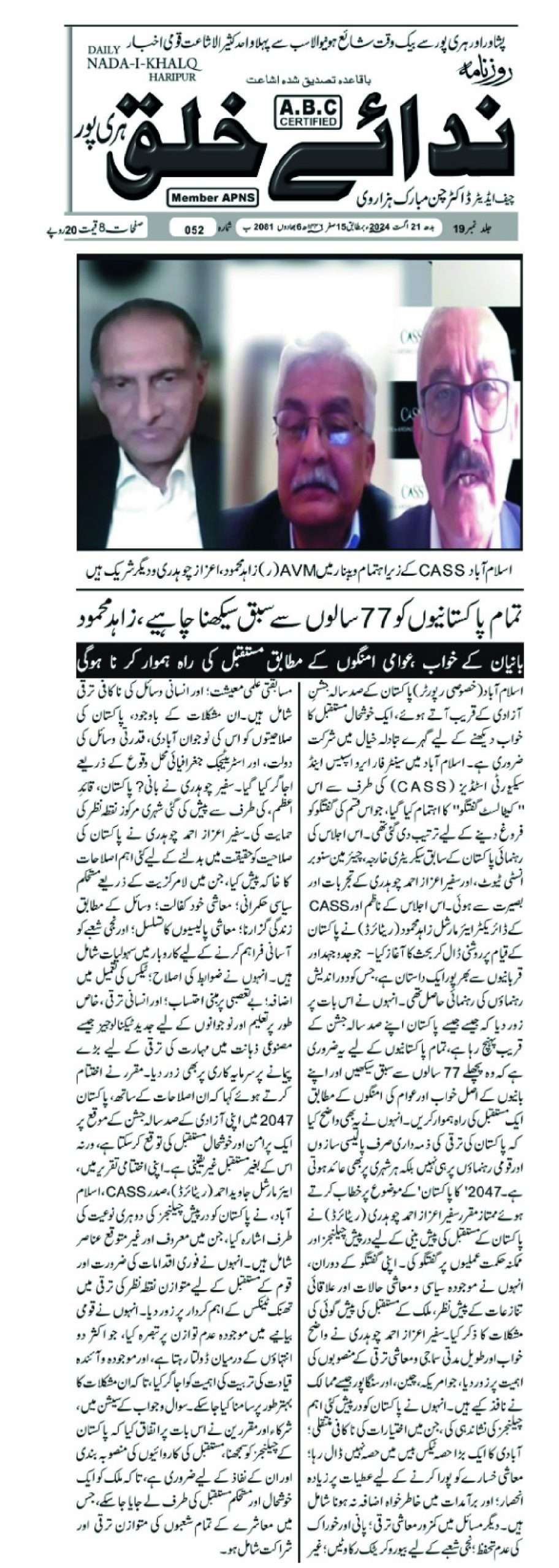
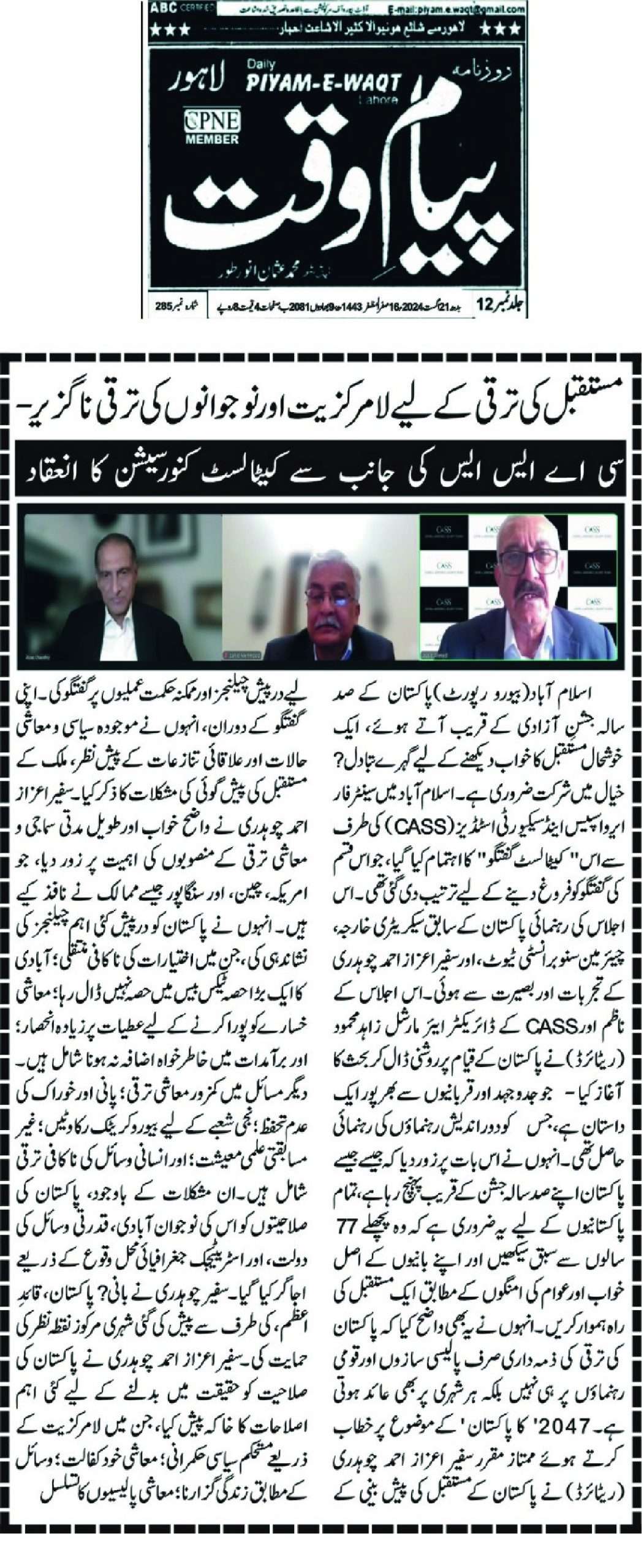
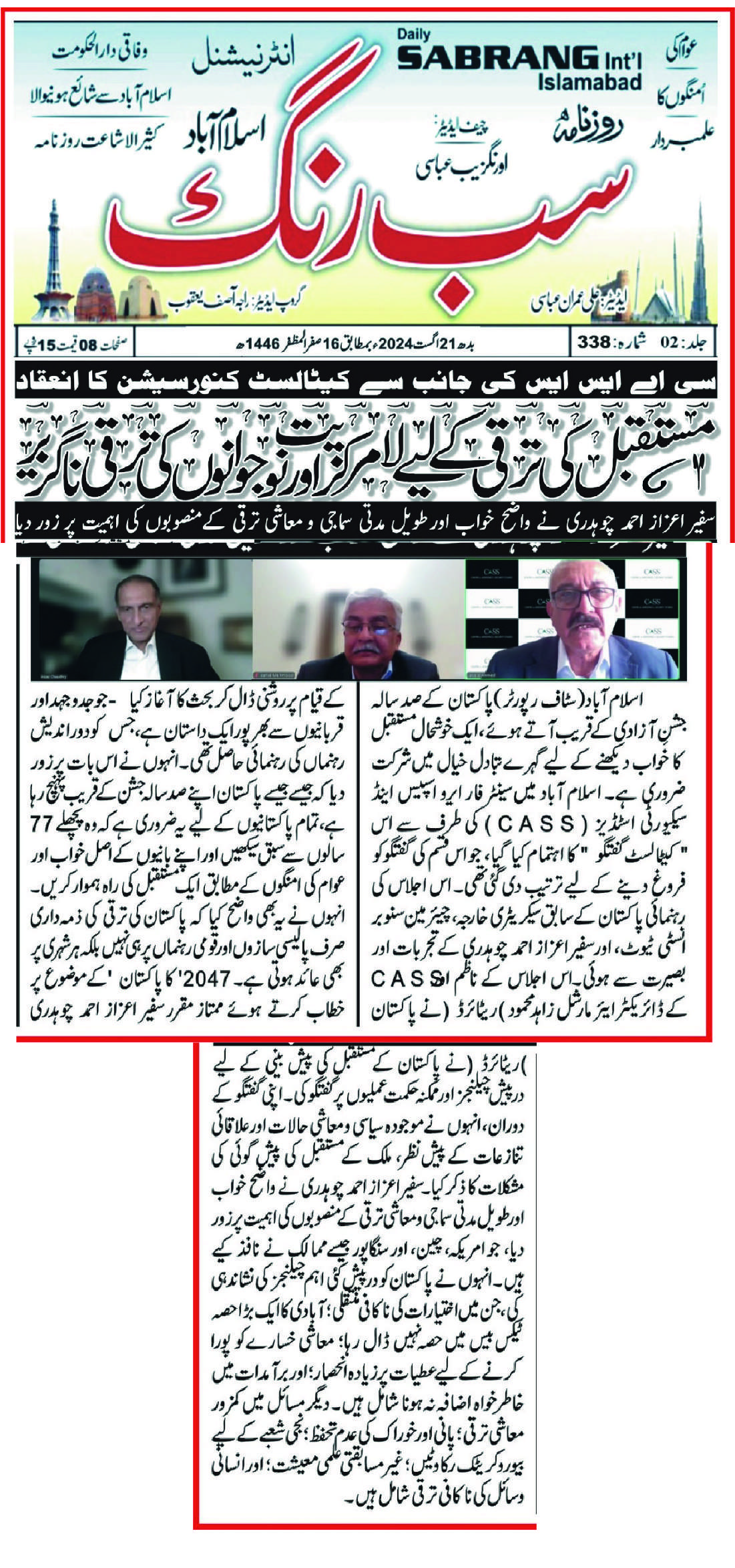
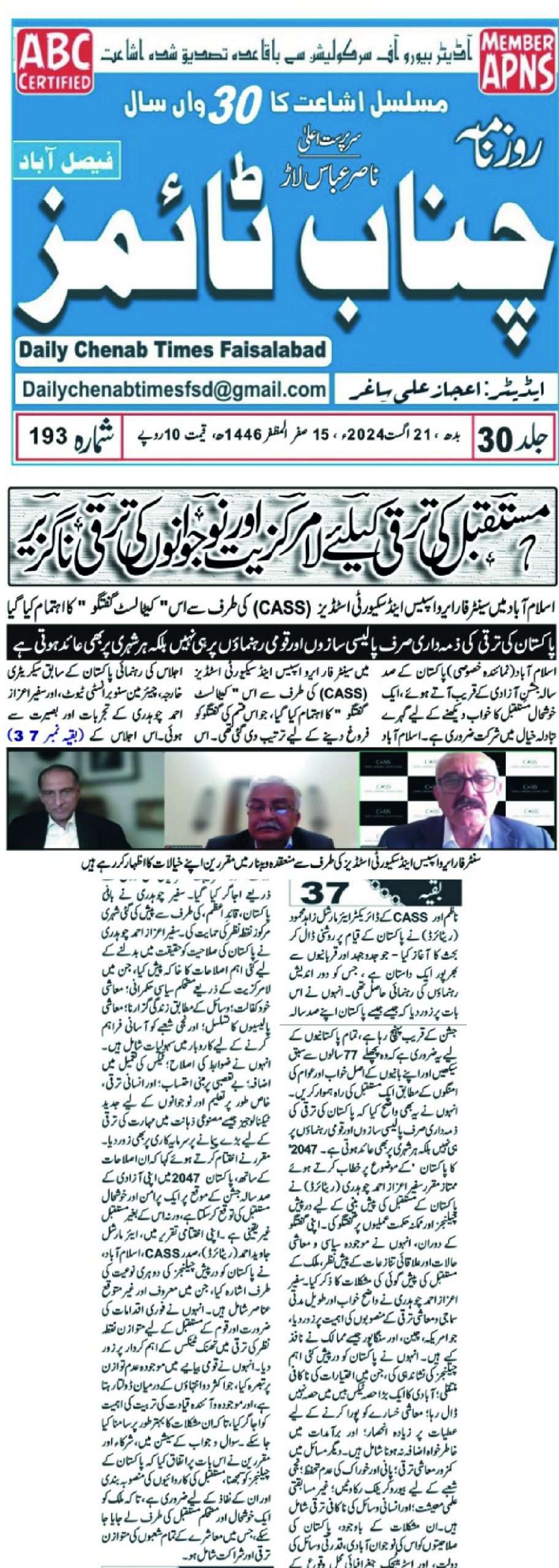
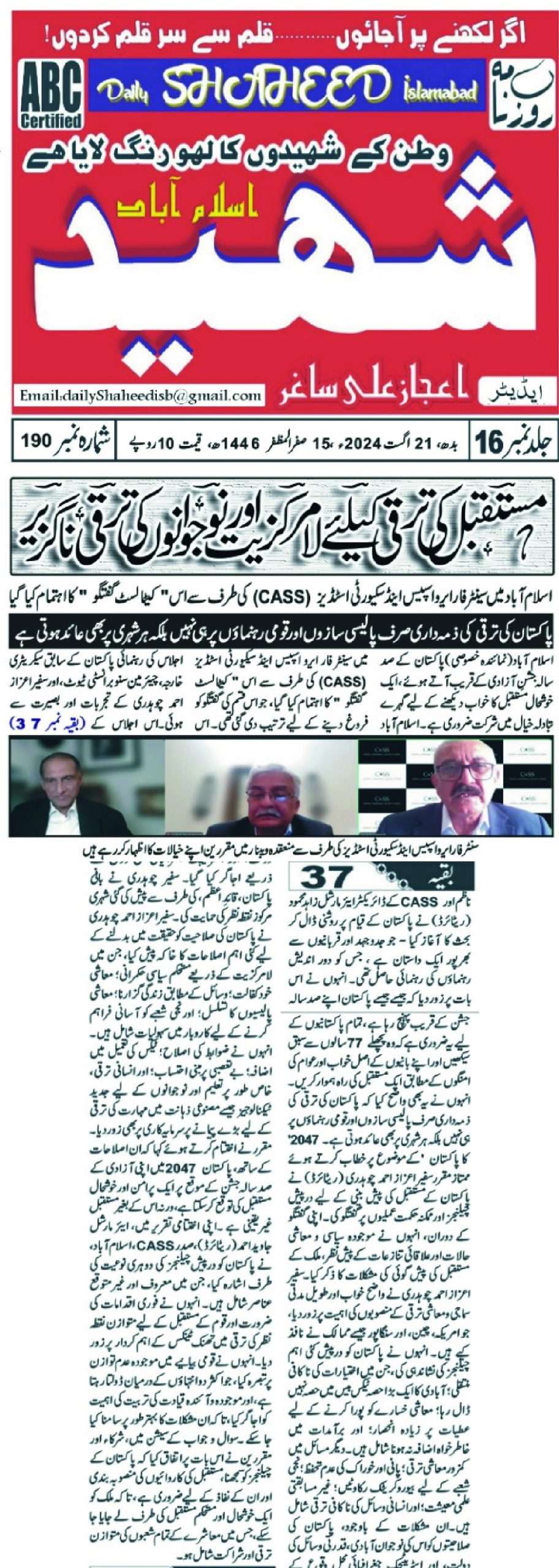
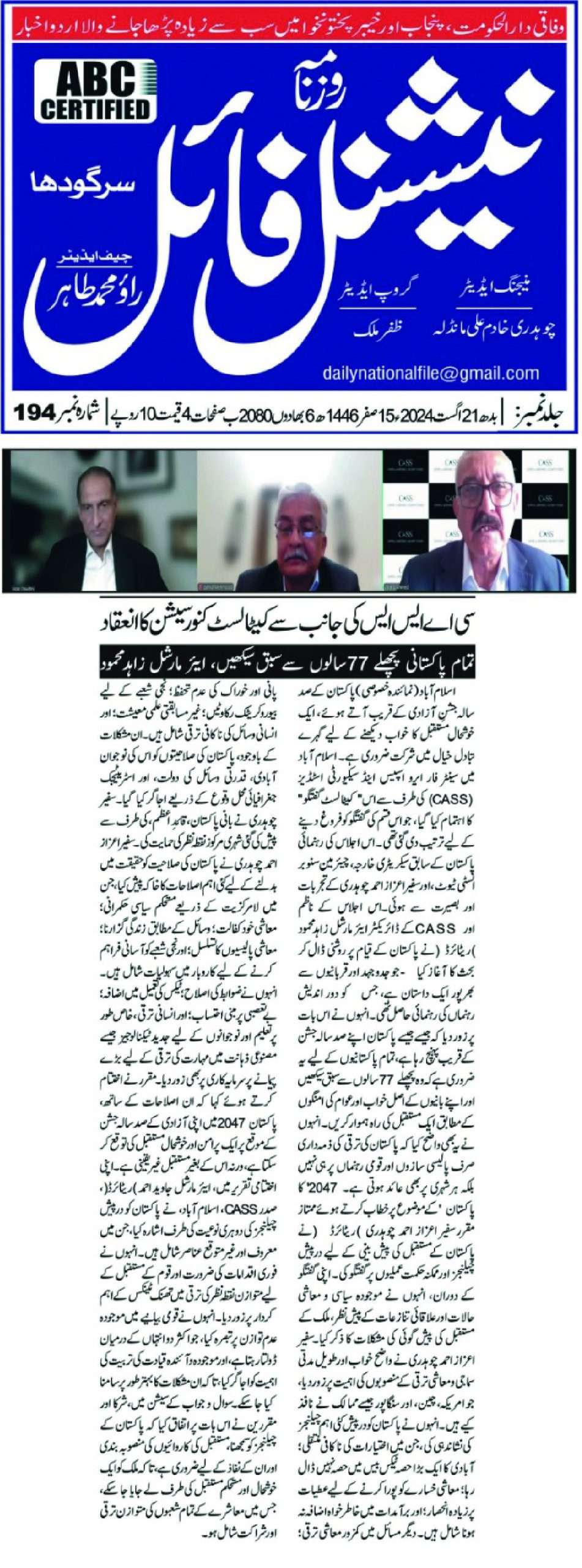
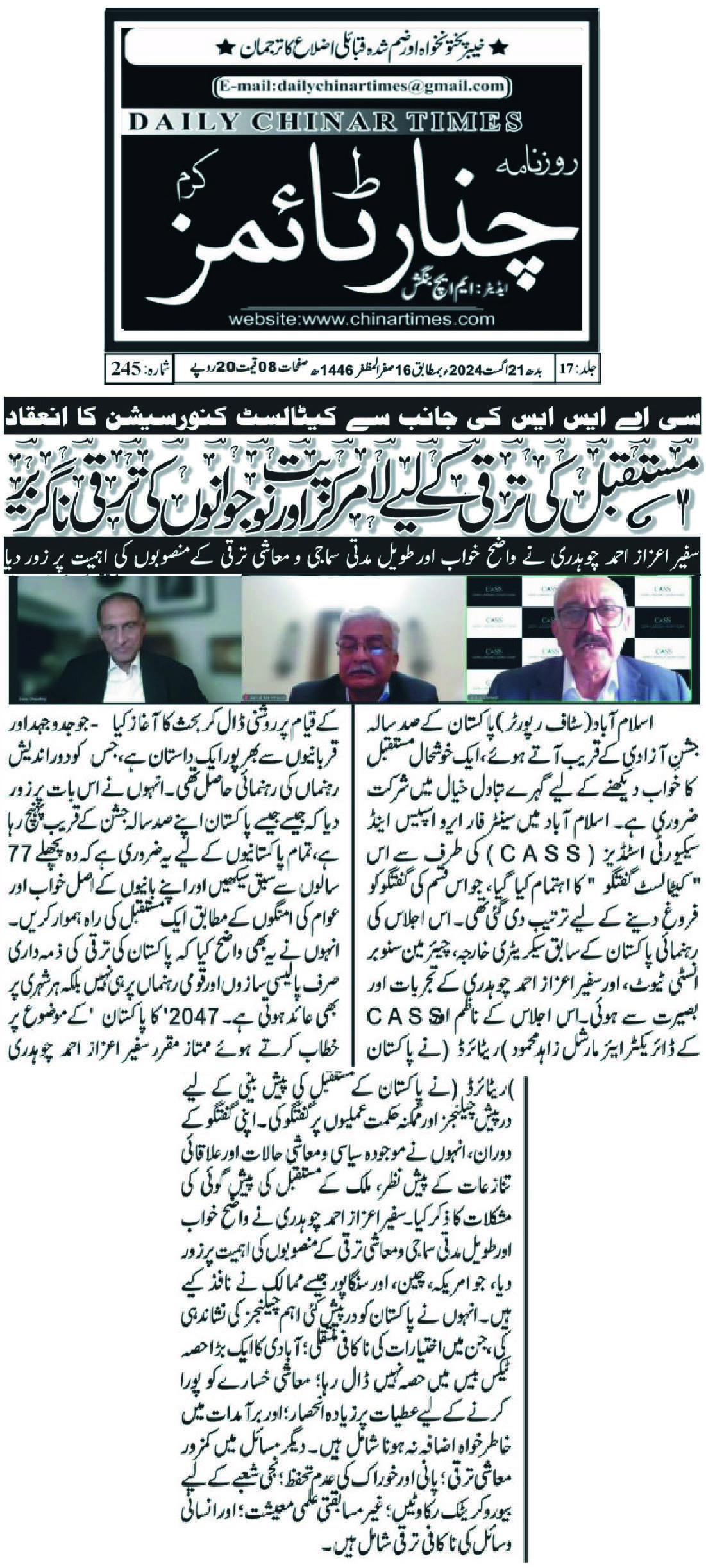
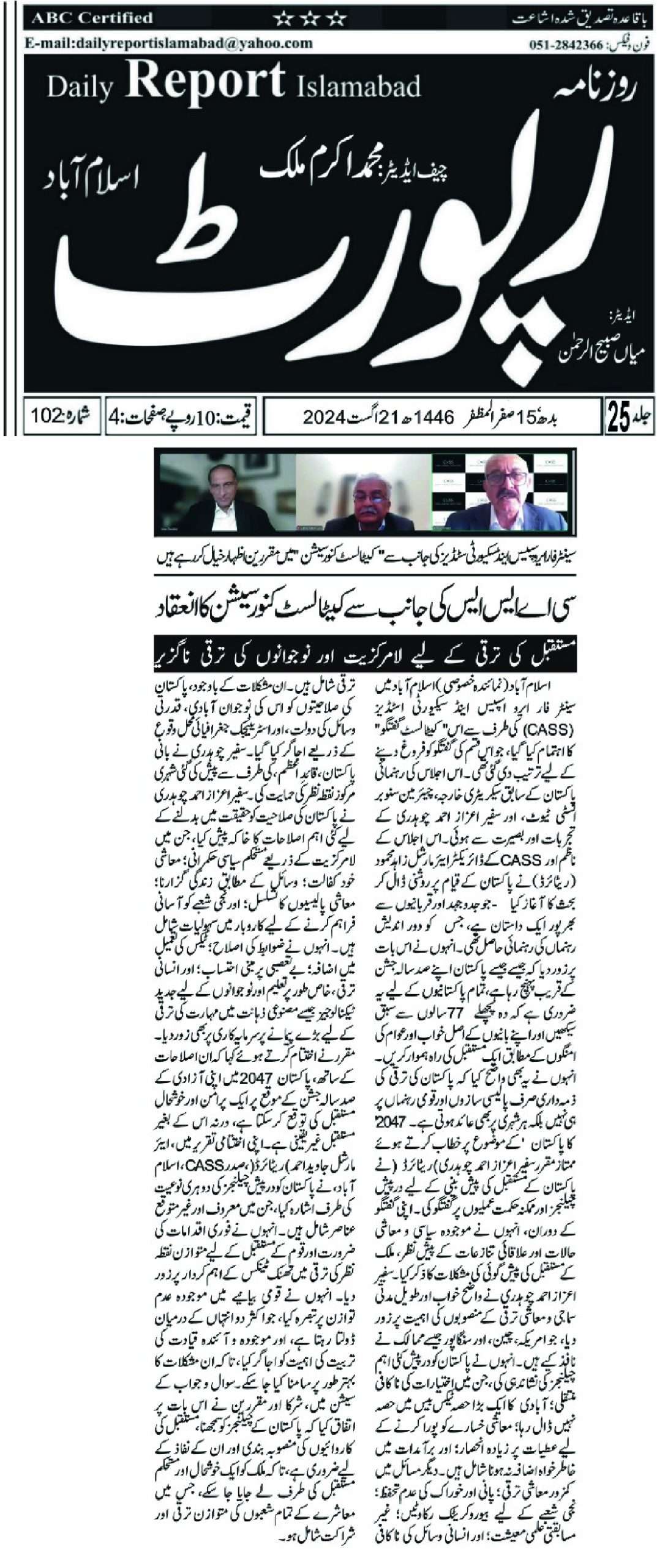
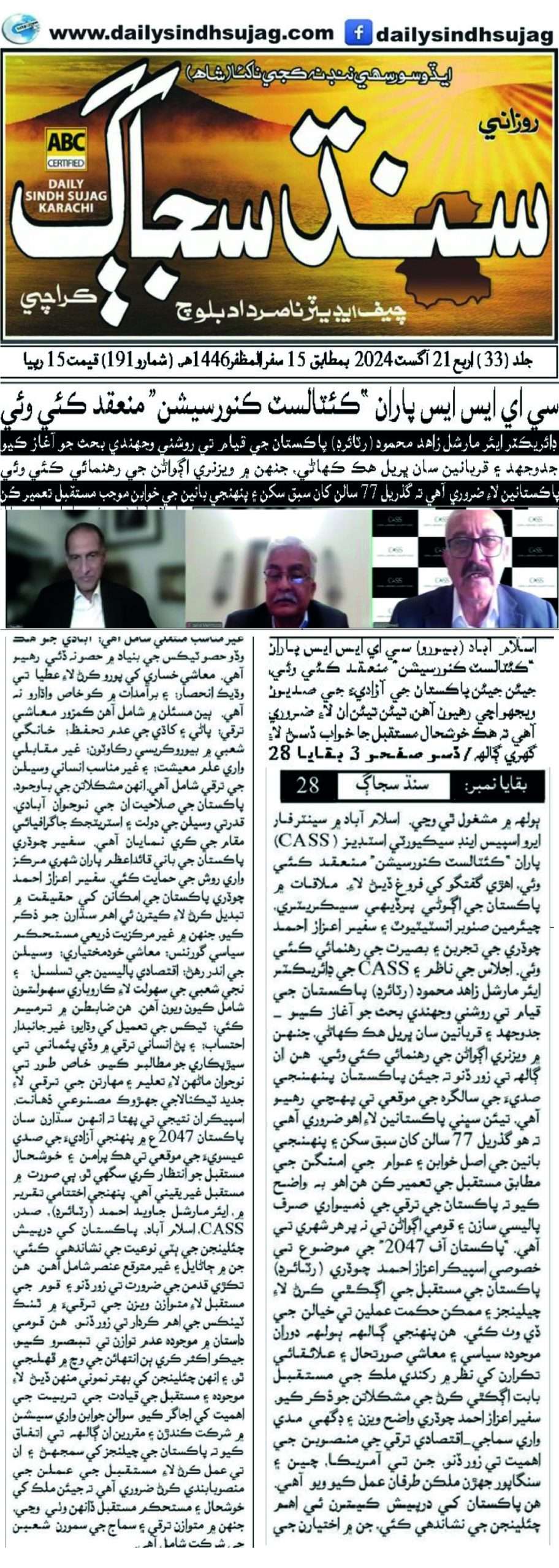
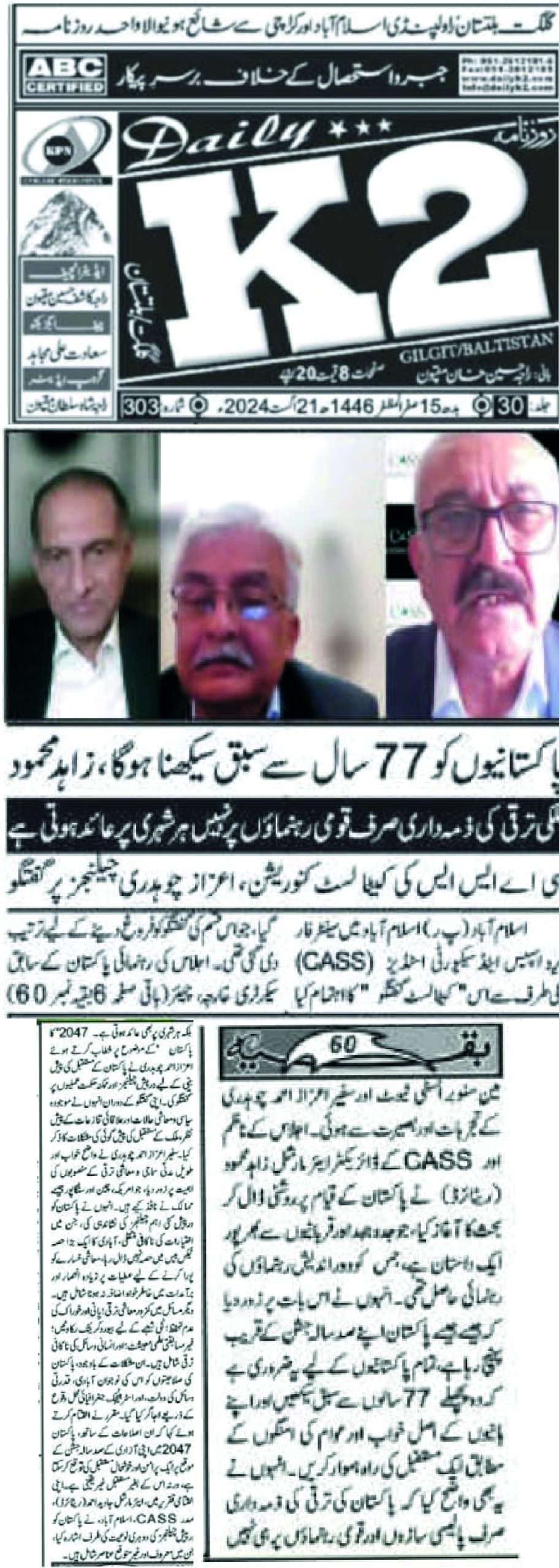
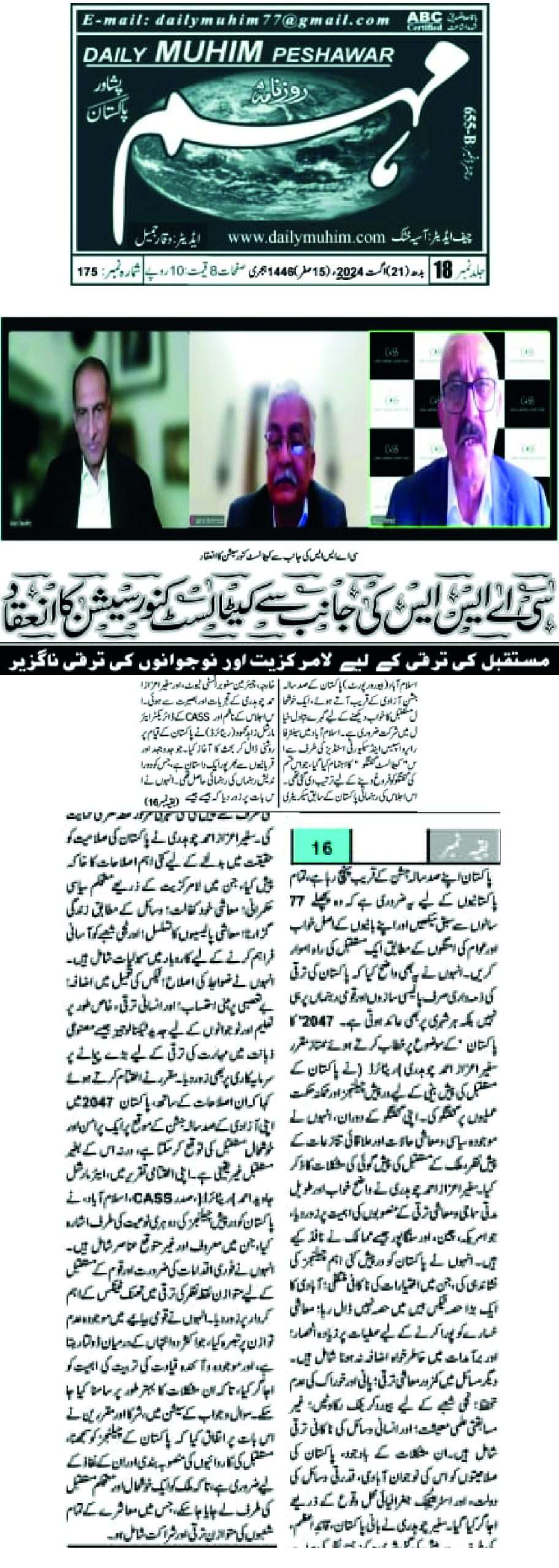
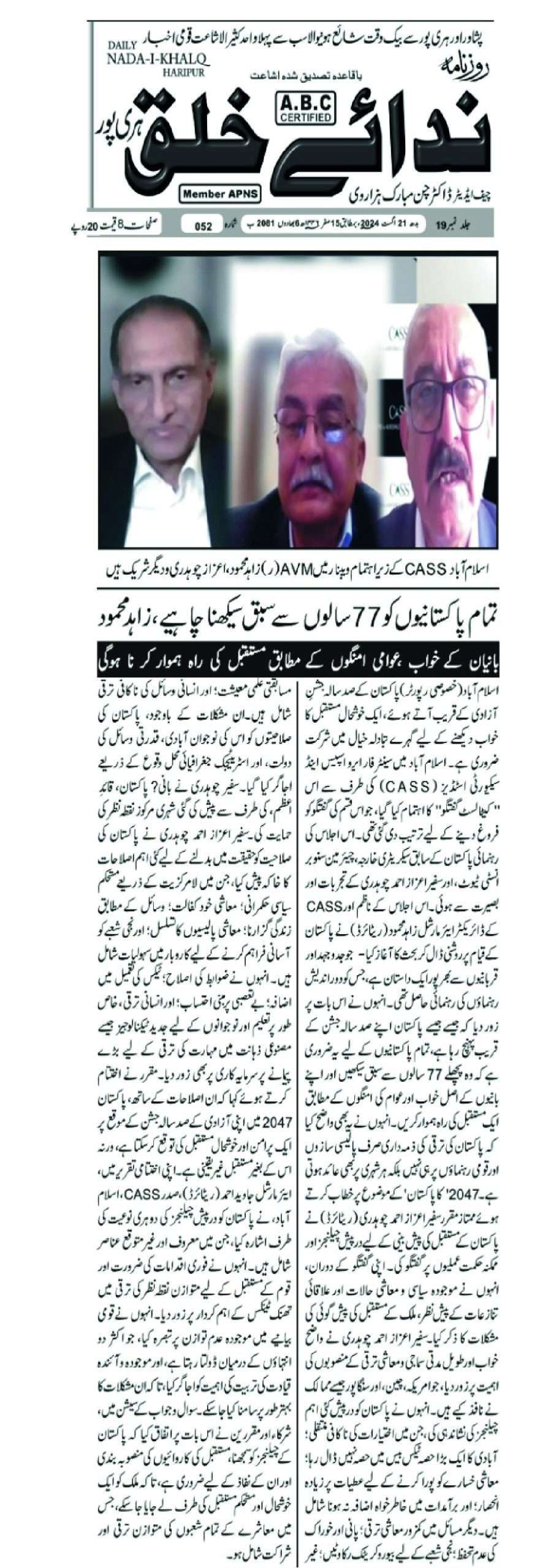
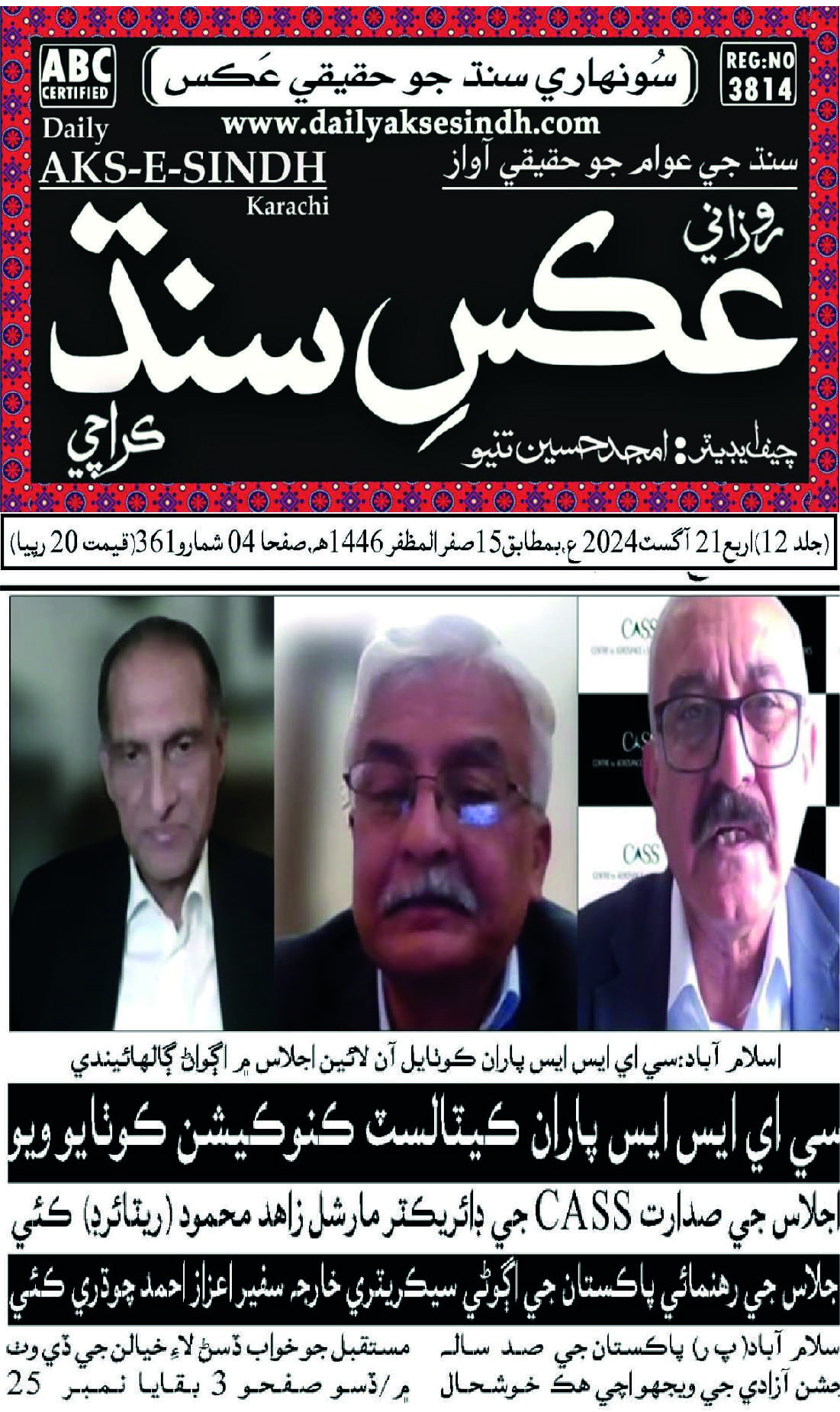
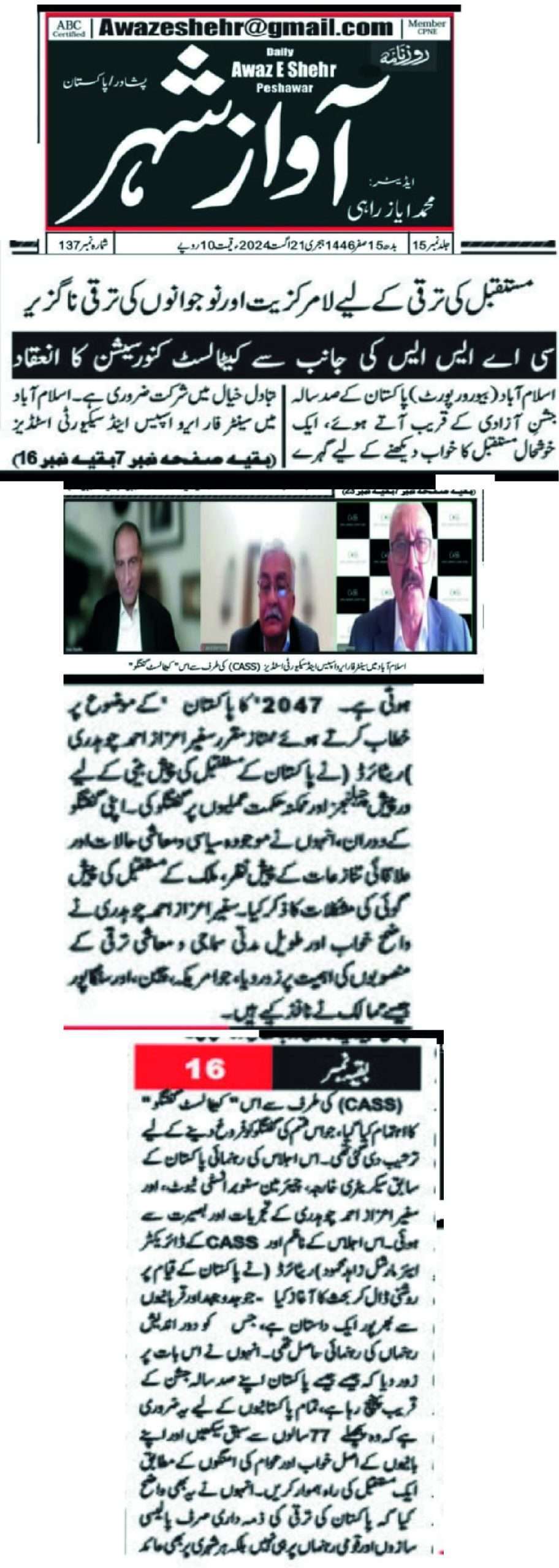
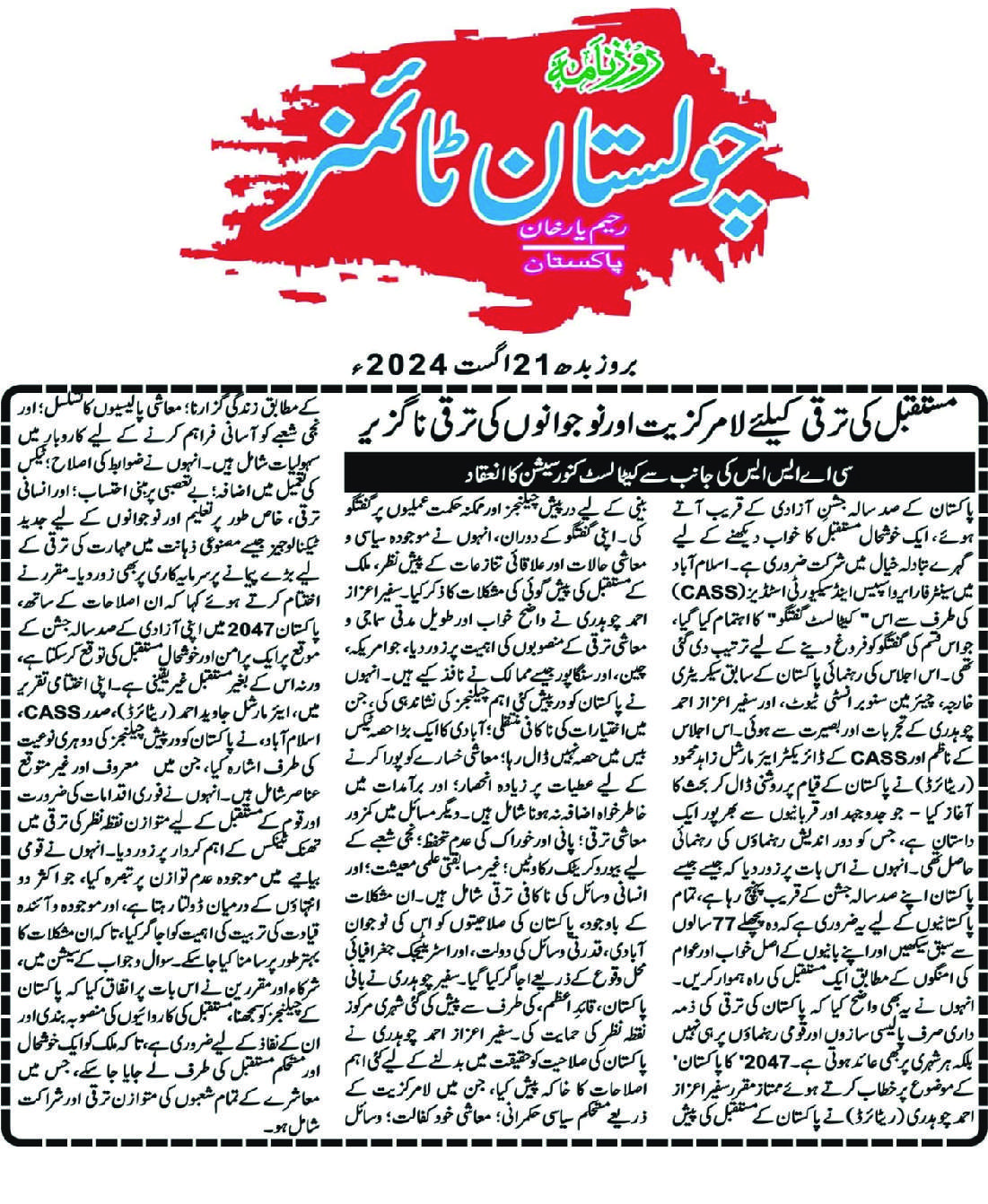
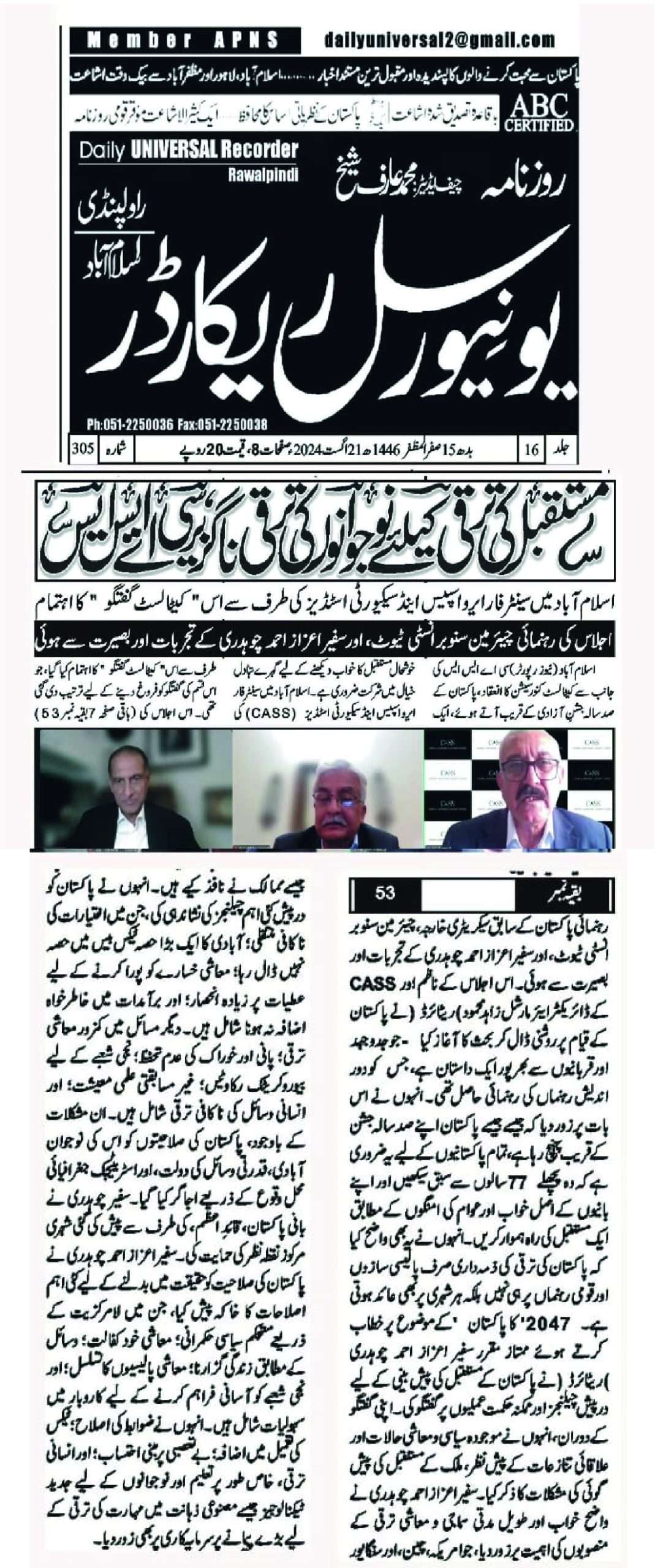
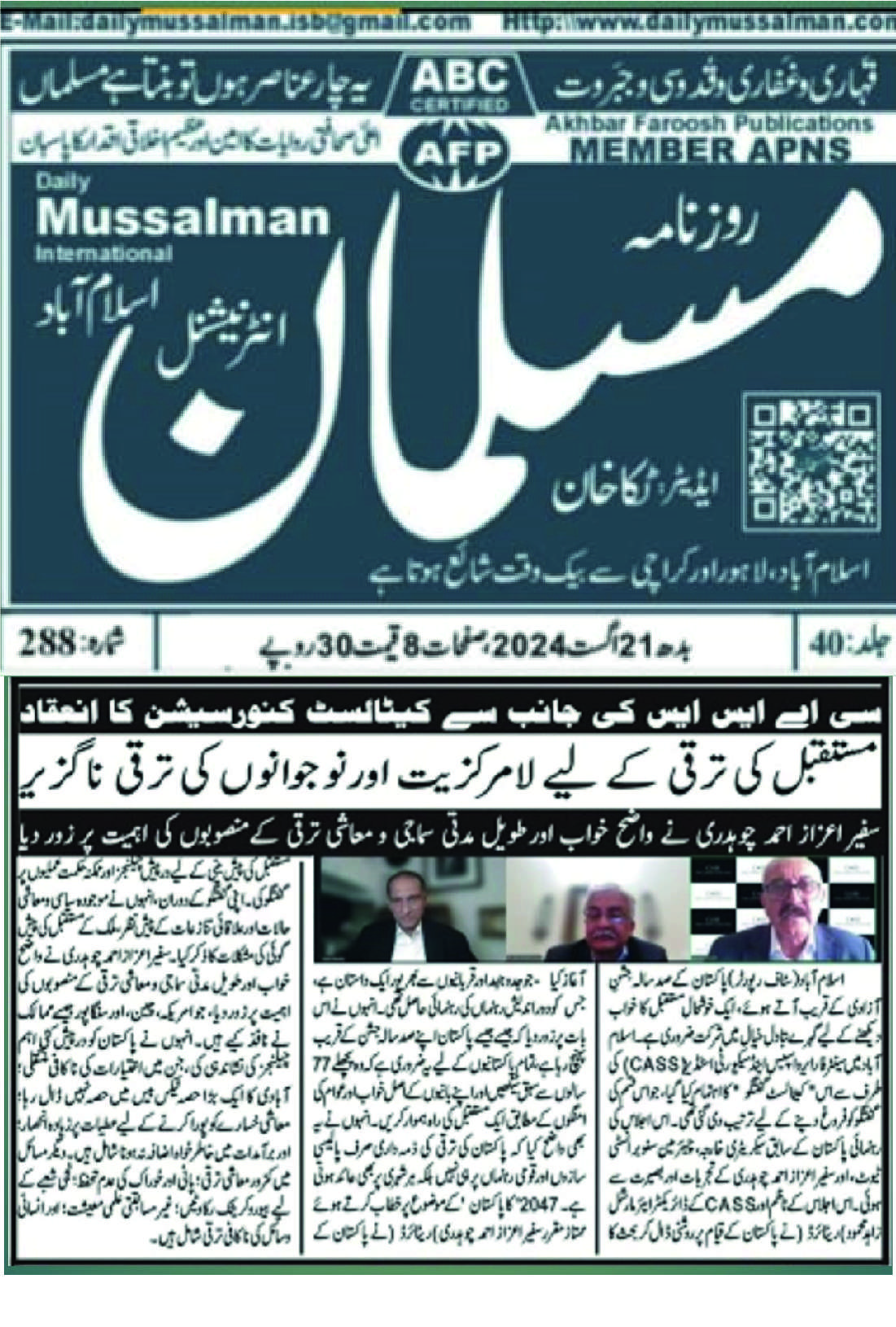
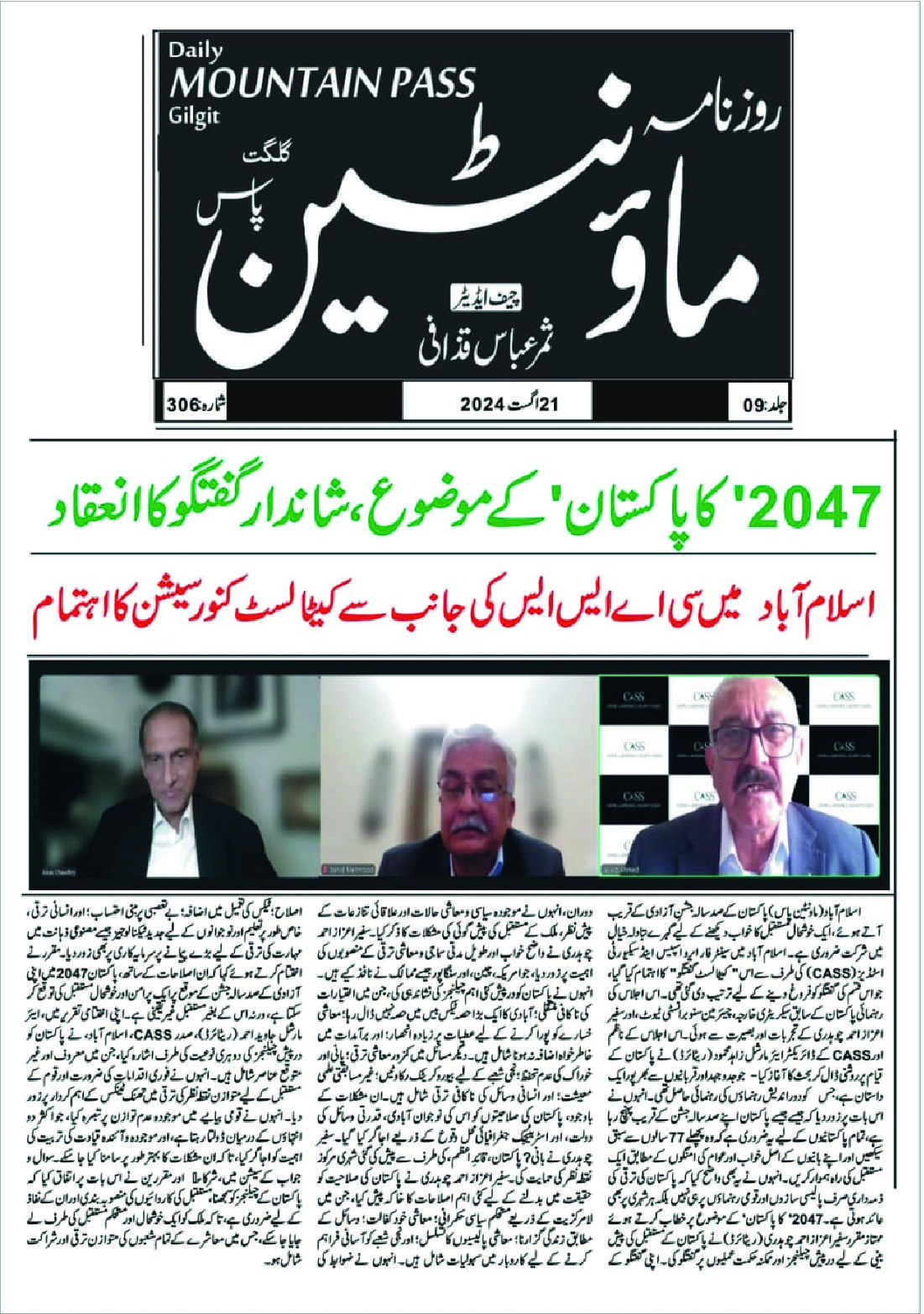
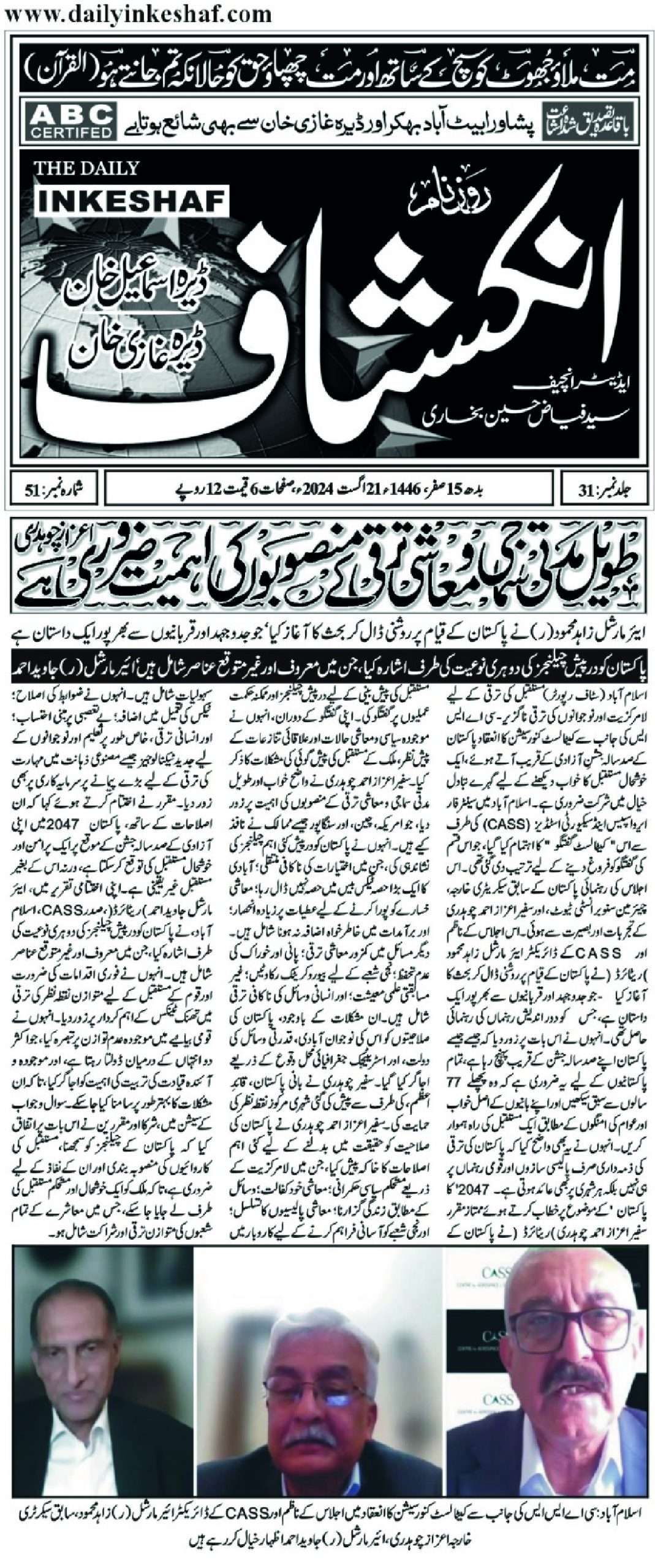
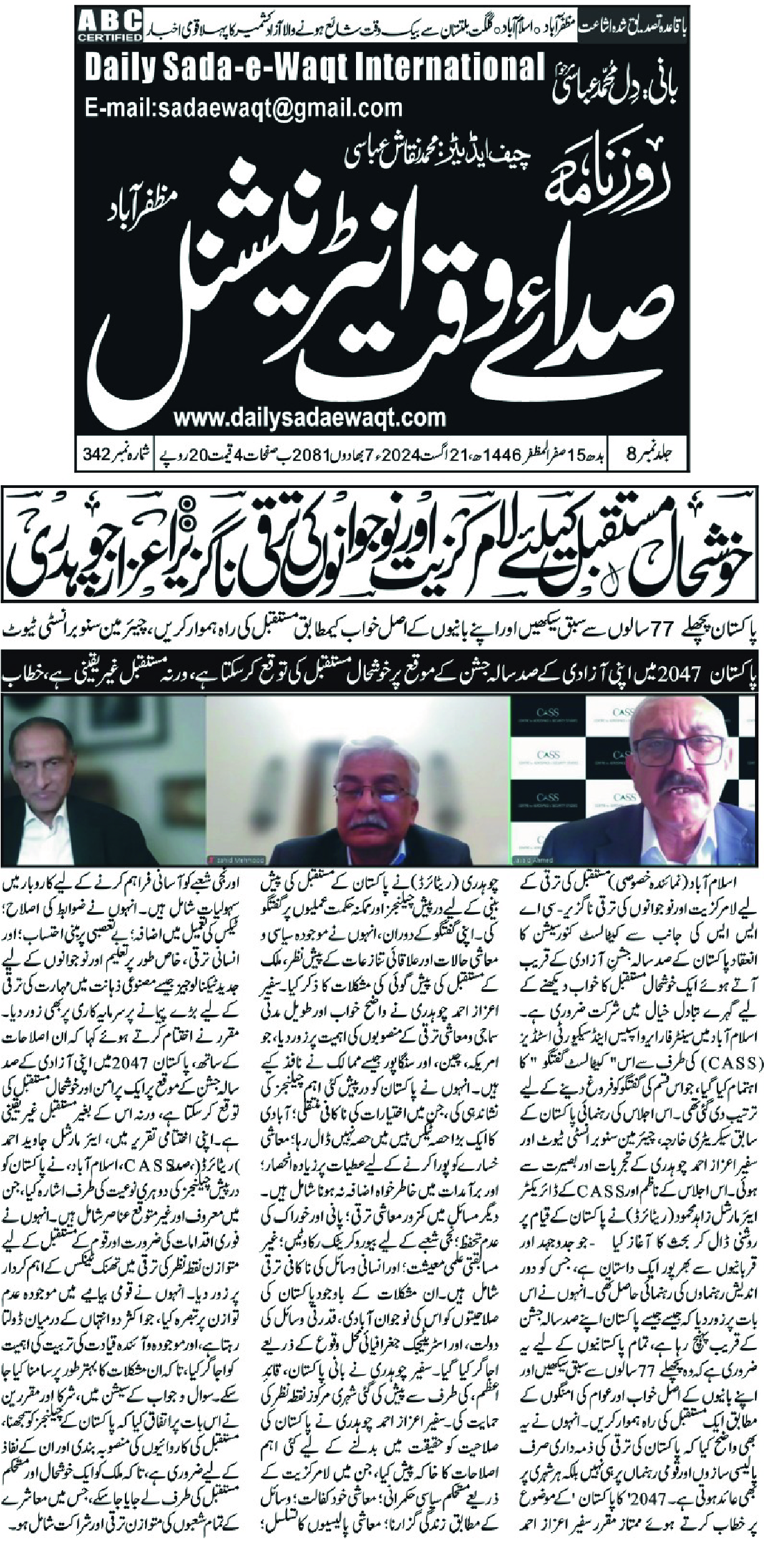
Newspaper Links