Concept Note
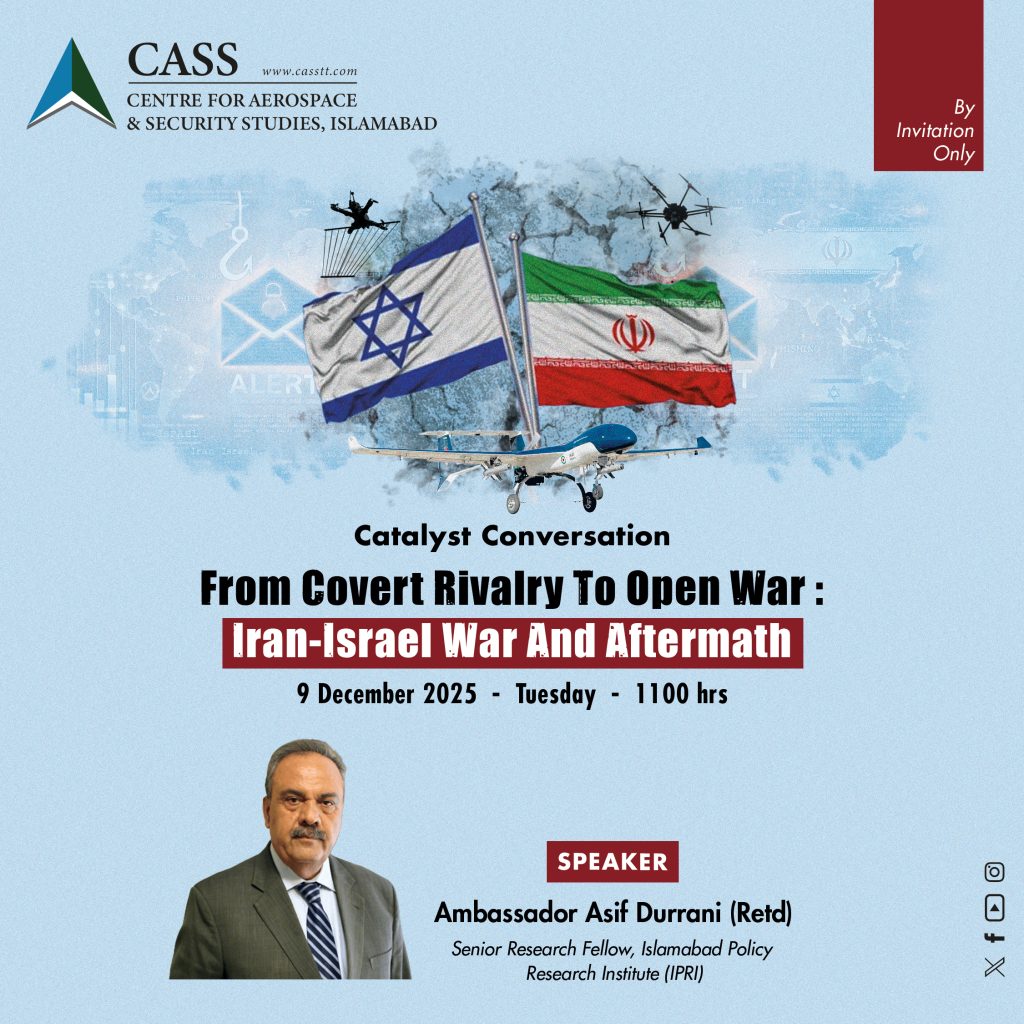
- For decades, Iran and Israel had been engaged in a shadow conflict. Israel pursued a strategy of “active disruption,” targeting alleged Iranian assets in Syria and Iraq. Iran, in turn, leveraged its regional network of partners—especially in Lebanon, Syria, Iraq, and Yemen—to exert pressure on Israel and counterbalance the U.S. and Israeli strategic advantages. Diplomatic efforts, including the JCPOA negotiations and various region-led de-escalation initiatives, attempted to stall escalation but ultimately failed to produce sustainable security guarantees for either side.
- The outbreak of the Iran–Israel war in May 2025 marked a decisive rupture in Middle Eastern security architecture. The conflict marked a rapid shift from covert engagement to open hostilities. Israel conducted widespread airstrikes, drone attacks, cyber warfare and special ops against Iranian strategic infrastructure and leadership, while Iran retaliated with ballistic and cruise missile attacks on Israeli military bases, energy facilities, and key urban centers.
- The role of diplomacy during the conflict was mixed. While several states attempted crisis mediation, including Oman, Qatar, Turkey, and China, deep mistrust between Tehran and Tel Aviv, compounded by the strategic stakes involved, limited the feasibility of quick de-escalation. The United States also became an active participant in the conflict by attacking Iran, while the UN Security Council remained gridlocked. Although an eventual ceasefire was achieved through intense
back-channel negotiations and Iran’s threat of expanding the war. The episode underscored the fragility of existing diplomatic frameworks.
- The post-war environment has opened both risks and opportunities. The scale of destruction and the global political fallout have prompted renewed debate over regional arms control, crisis-communication mechanisms, and multilateral diplomatic engagement. Middle Eastern states—particularly those affected by spill over
effects—are increasingly advocating for structured de-escalation frameworks that can prevent future conflict.
- For Pakistan and other states in the region, the geopolitical realignments emerging from the 2025 war carry important implications. Pakistan’s strategic ties with Gulf States, its desire for balanced relations with Iran, and its interest in regional stability underscore the need to closely assess emerging diplomatic opportunities and constraints. In this context, CASS is inviting a seasoned diplomat and an authority on the subject to share insights on the conflict and the evolving diplomatic landscape to inform policy discussions within Pakistan’s strategic community.