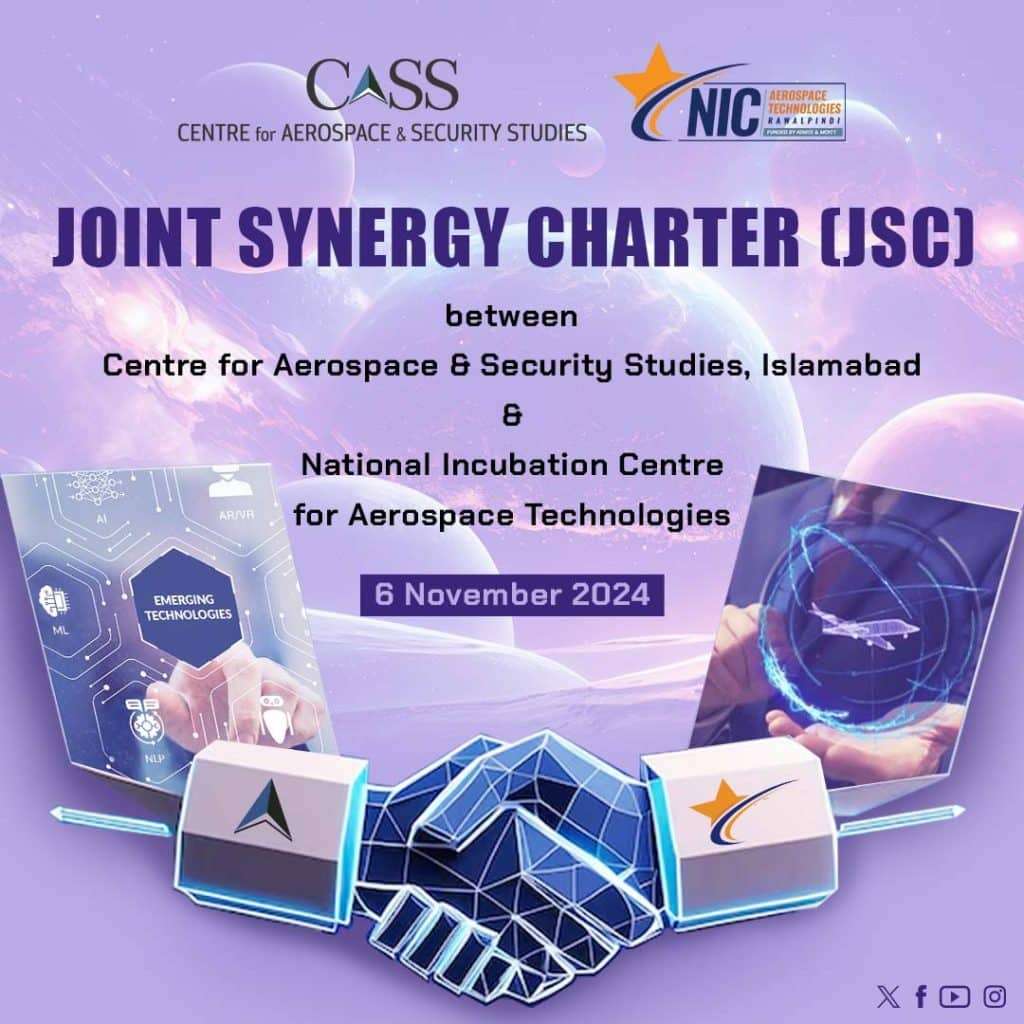
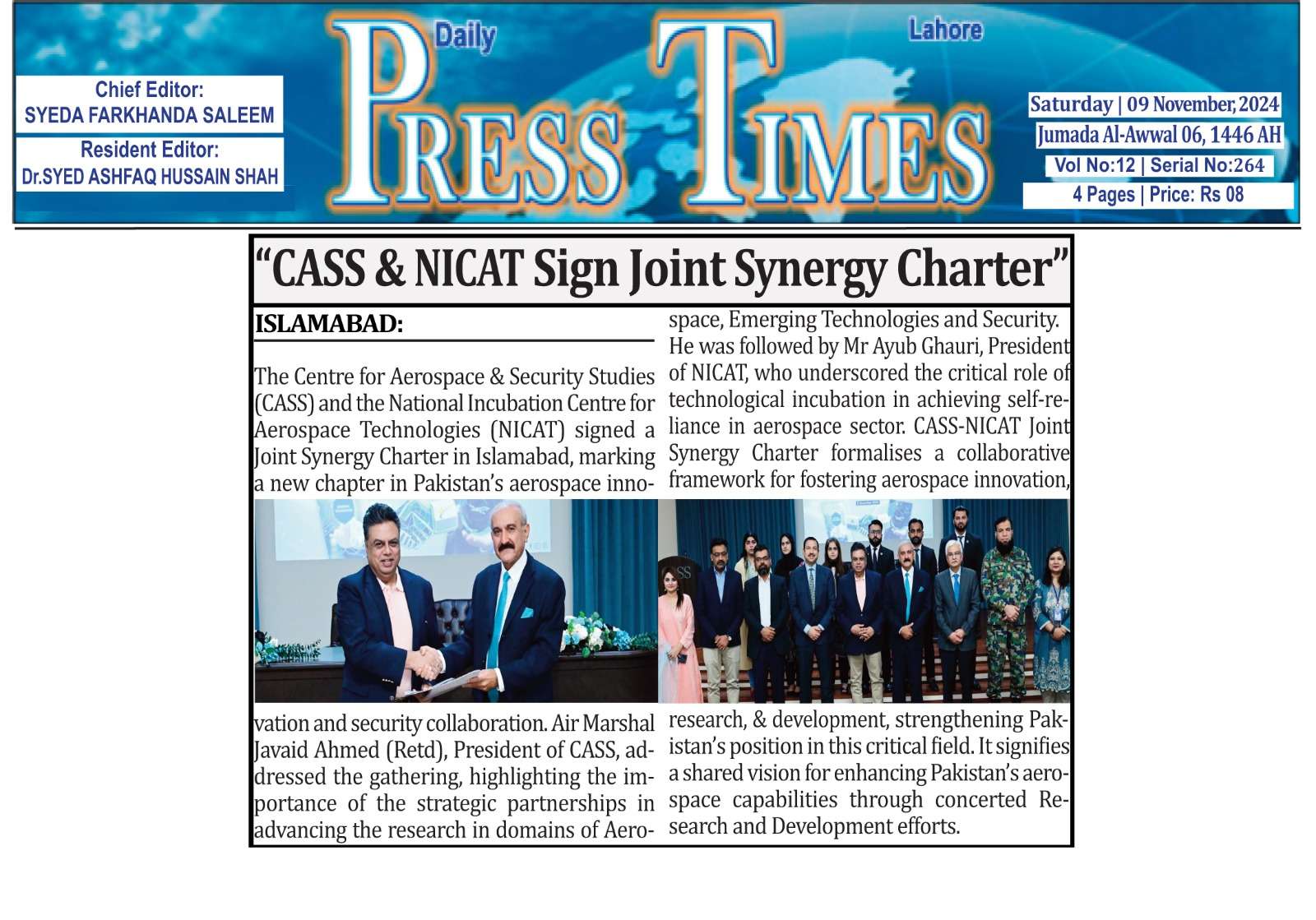
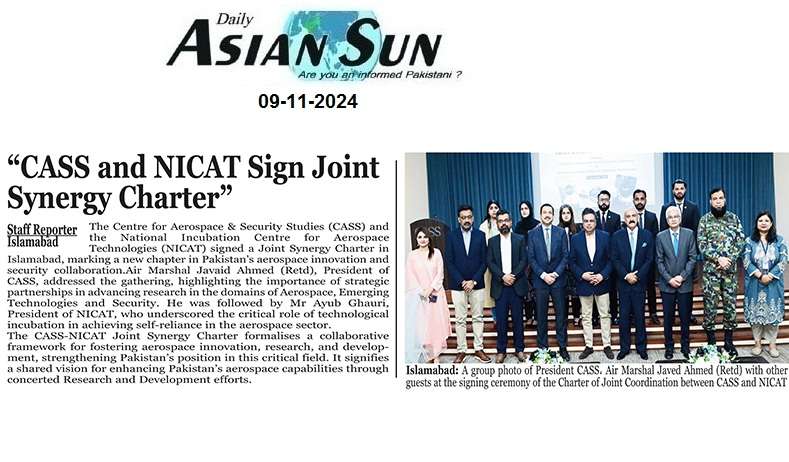
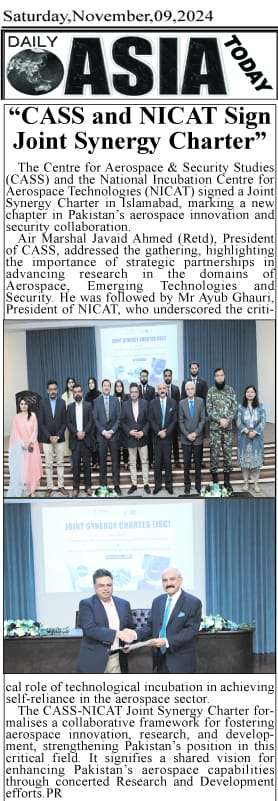
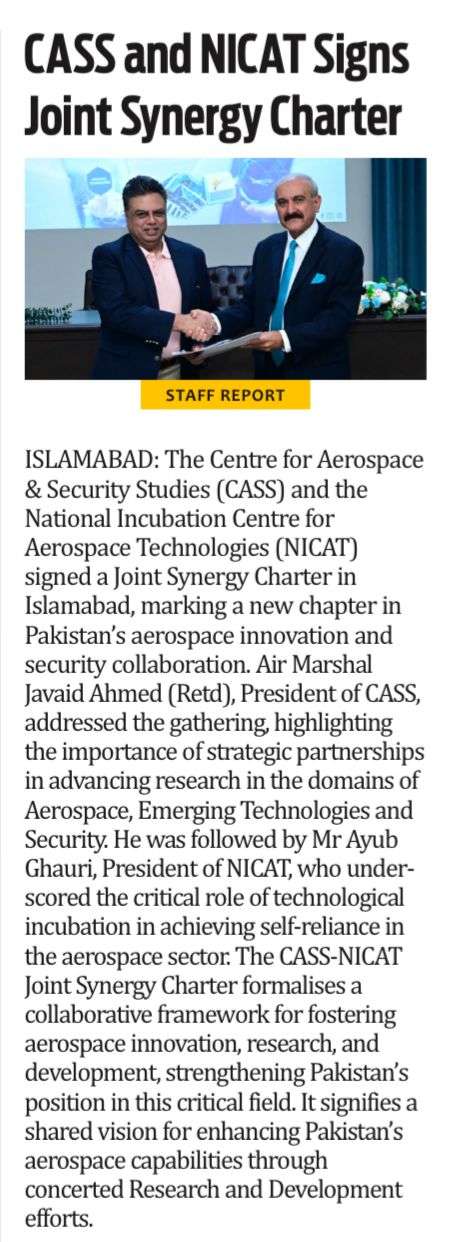
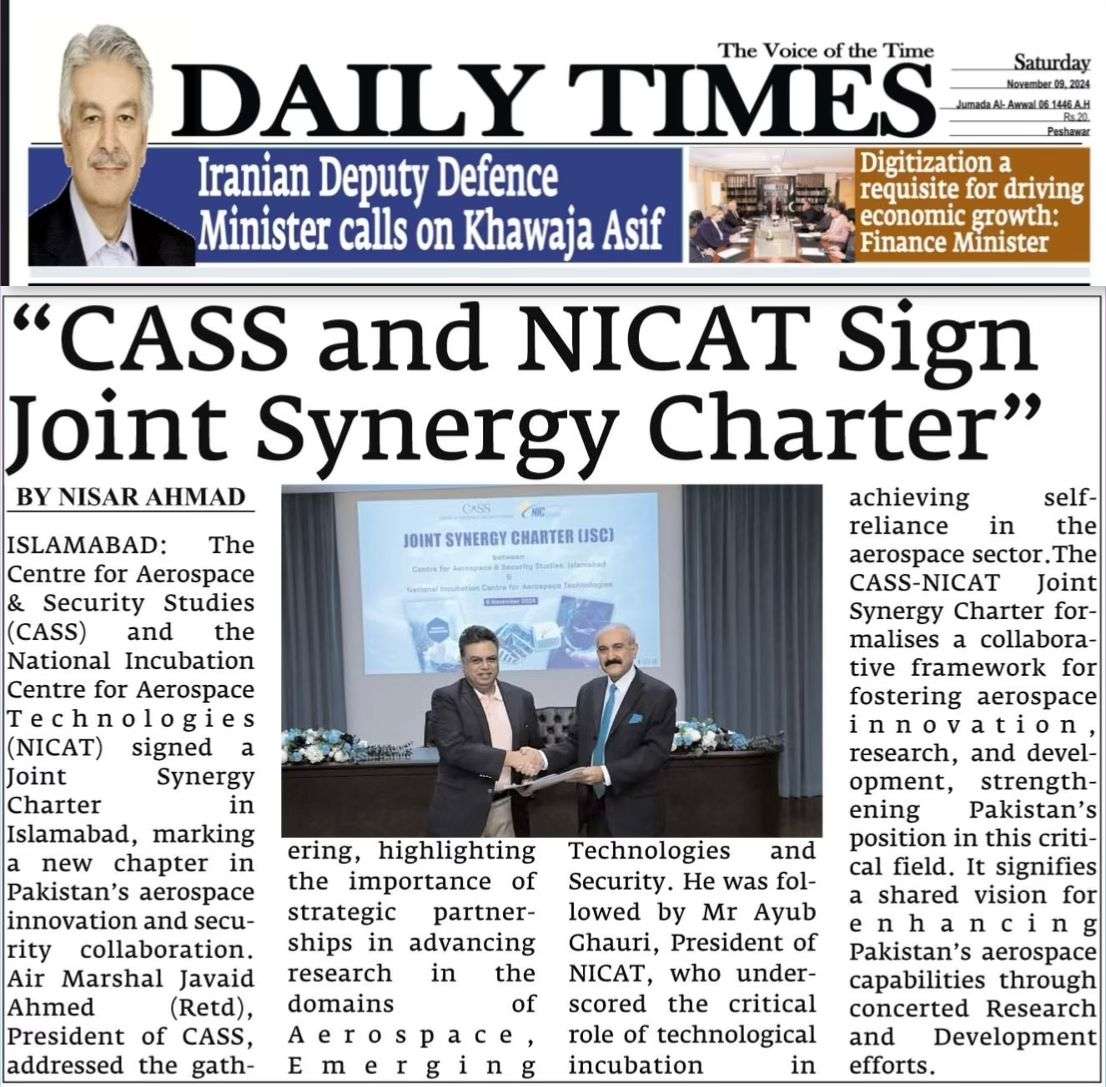
On 6 November 2024, the Centre for Aerospace & Security Studies (CASS) and the National Incubation Centre for Aerospace Technologies (NICAT) formalised collaboration through the signing of a Joint Synergy Charter in Islamabad. This partnership marks a significant step forward in advancing Pakistan’s aerospace innovation and security capabilities.
Through this Charter, CASS and NICAT have established a comprehensive framework to foster research, innovation, and development in aerospace, reinforcing Pakistan’s position in this pivotal field. This collaboration reflects a shared commitment to elevate Pakistan’s aerospace capabilities through unified Research and Development initiatives.
Press Release
News Coverage
Newspaper Links
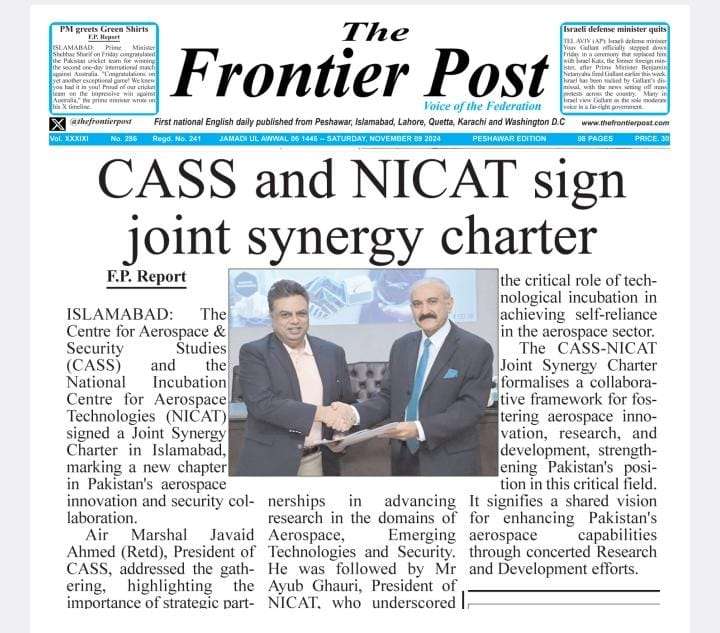
CASS and NICAT Sign Joint Synergy Charter
The Centre for Aerospace & Security Studies (CASS) and the National Incubation Centre for Aerospace Technologies (NICAT) signed a Joint Synergy Charter in Islamabad, marking a new chapter in Pakistan’s aerospace innovation and security collaboration.
Air Marshal Javaid Ahmed (Retd), President of CASS, addressed the gathering, highlighting the importance of strategic partnerships in advancing research in the domains of Aerospace, Emerging Technologies and Security. He was followed by Mr Ayub
Air Marshal Javaid Ahmed (Retd), President of CASS, addressed the gathering, highlighting the importance of strategic partnerships in advancing research in the domains of Aerospace, Emerging Technologies and Security. He was followed by Mr Ayub
CASS-NICAT ink synergy charter for aerospace innovation, security collaboration
ISLAMABAD ( WNAM REPORT): The Centre for Aerospace & Security Studies (CASS) and the National Incubation Centre for Aerospace Technologies (NICAT) signed a Joint Synergy Charter in Islamabad, marking a new chapter in Pakistan’s aerospace innovation and security collaboration.
CASS and NICAT Unite for Aerospace Innovation with Joint Synergy Charter in Islamabad
The Centre for Aerospace & Security Studies (CASS) and the National Incubation Centre for Aerospace Technologies (NICAT) signed a Joint Synergy Charter in Islamabad, marking a new chapter in Pakistan’s aerospace innovation and security