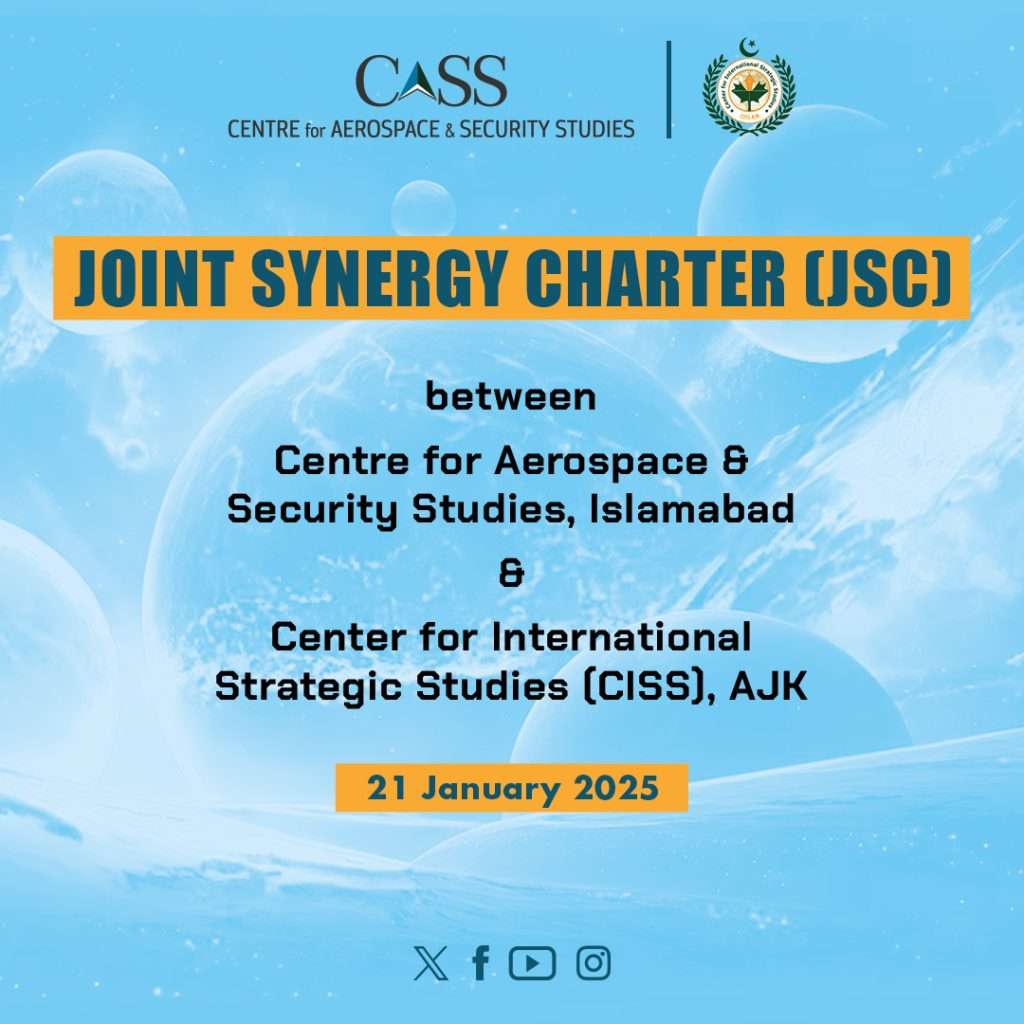
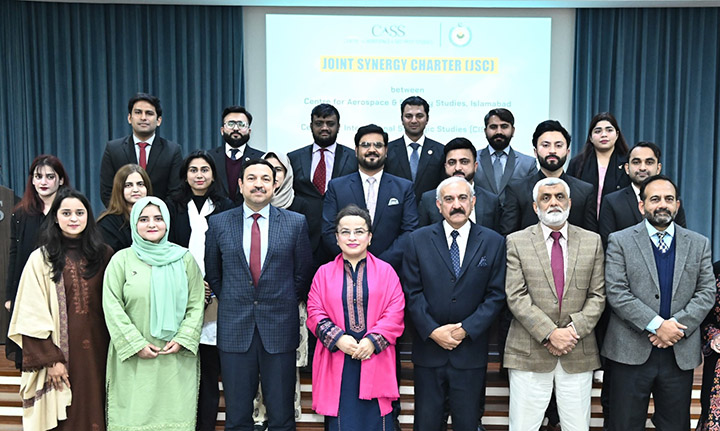
The Centre for Aerospace & Security Studies (CASS) and the Center for International Strategic Studies, Azad Jammu and Kashmir (CISSAJK) have formalised a strategic partnership by signing a Joint Synergy Charter in Islamabad. The charter outlines a framework for collaboration in areas such as conducting joint academic research, conferences, and seminars; publishing collaborative research and exchanging academic literature; and sharing institutional expertise, to enhance and promote narratives on key national security issues, especially the Indian Illegally Occupied Jammu & Kashmir conflict.
News Coverage
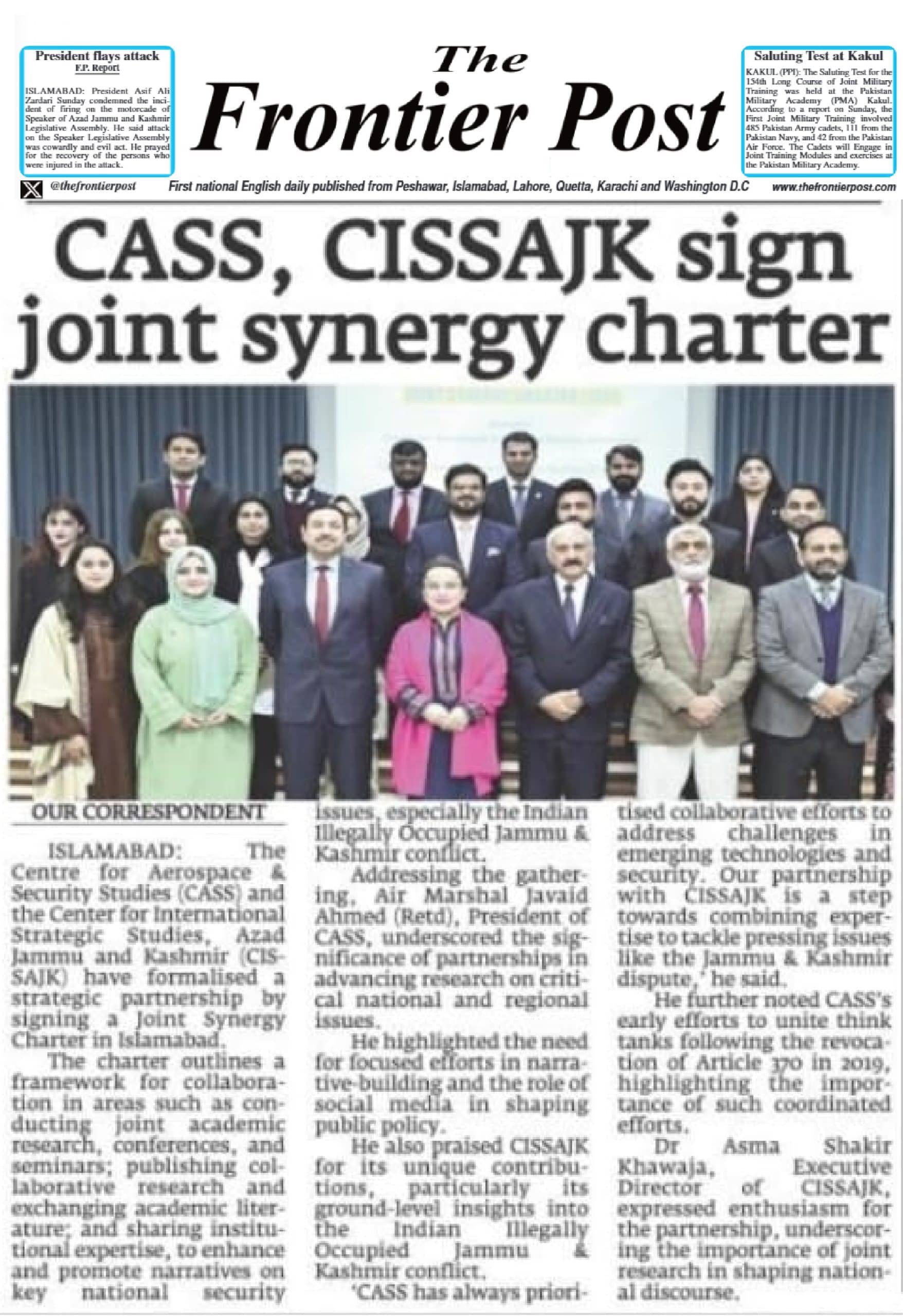
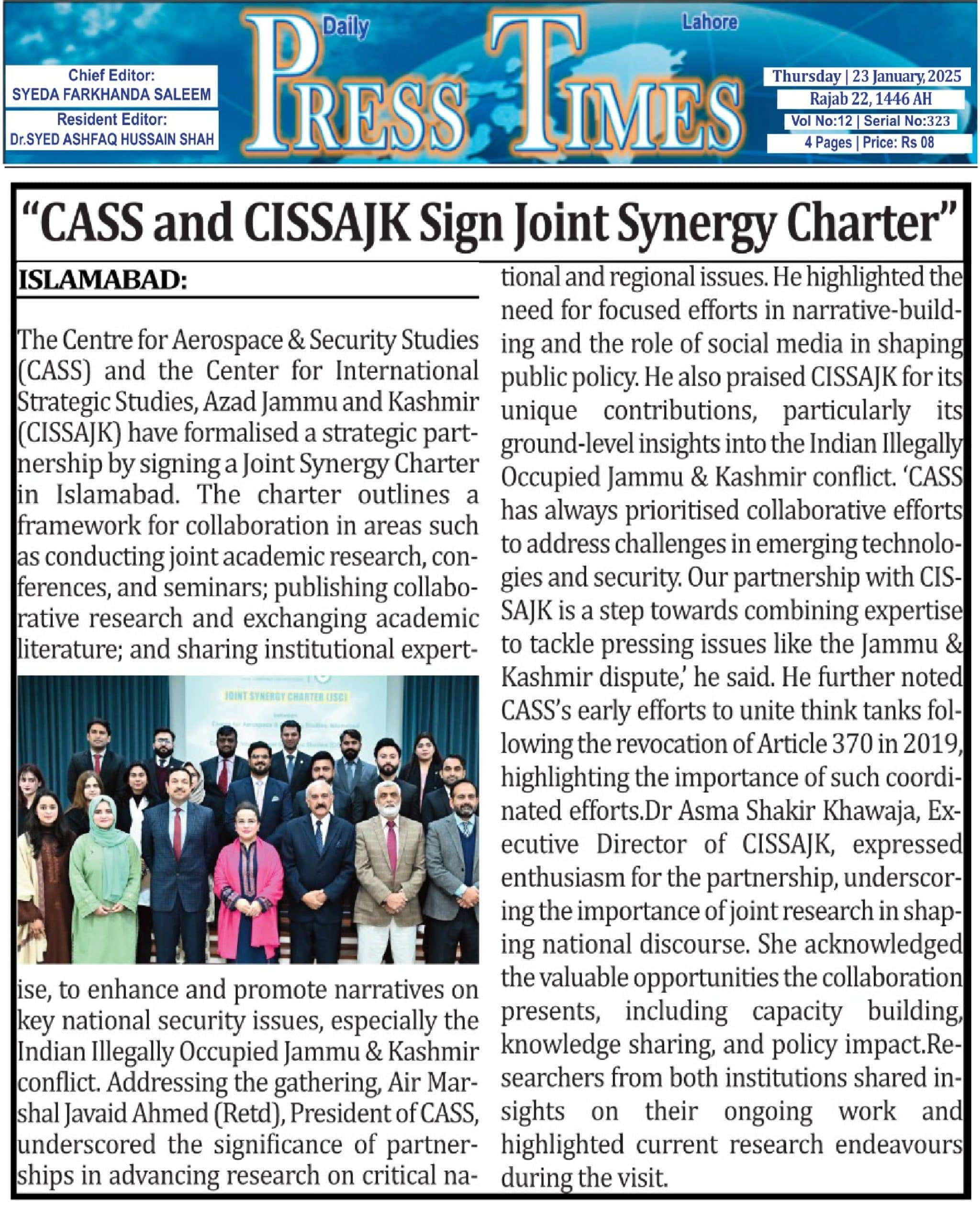
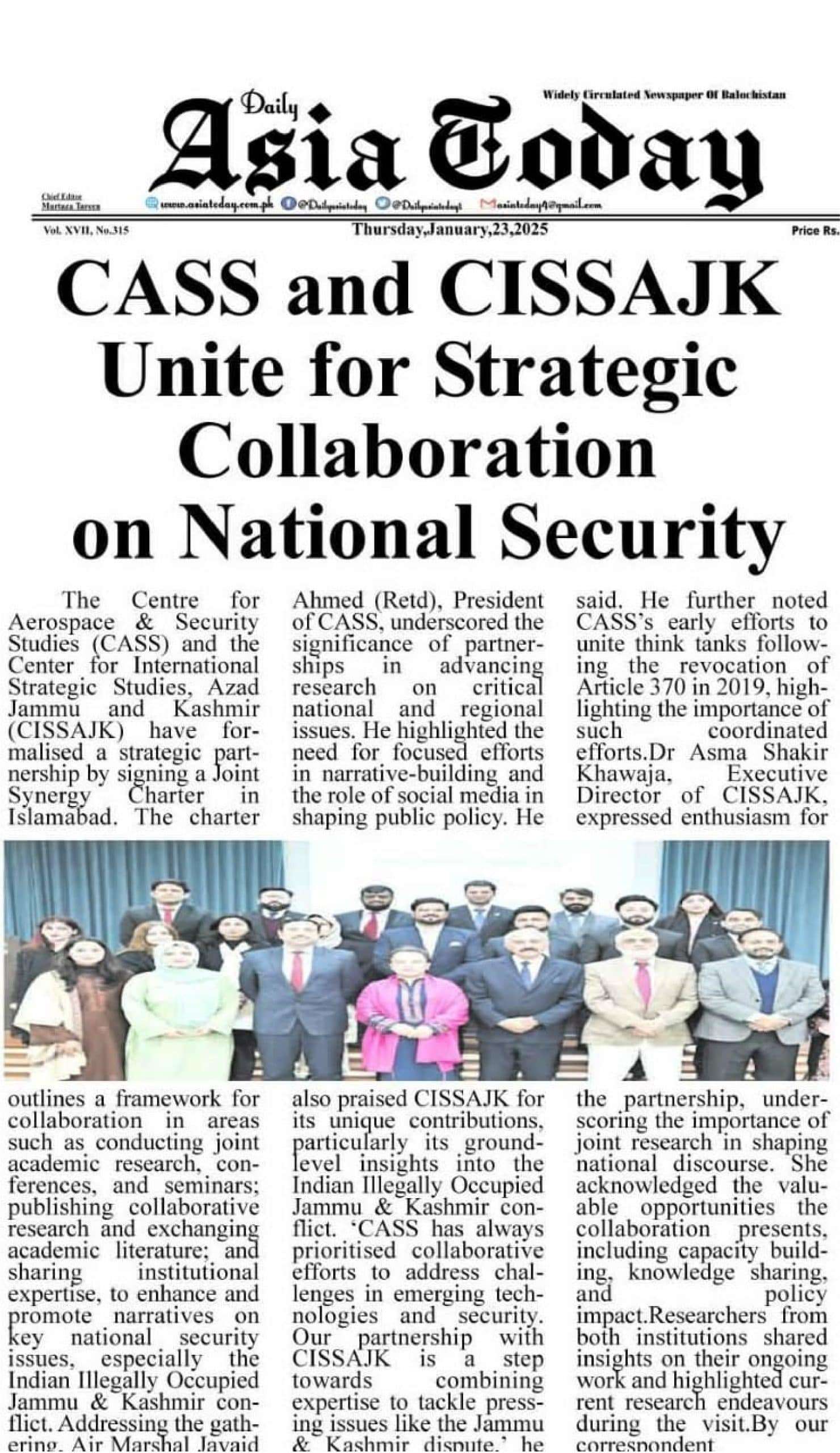
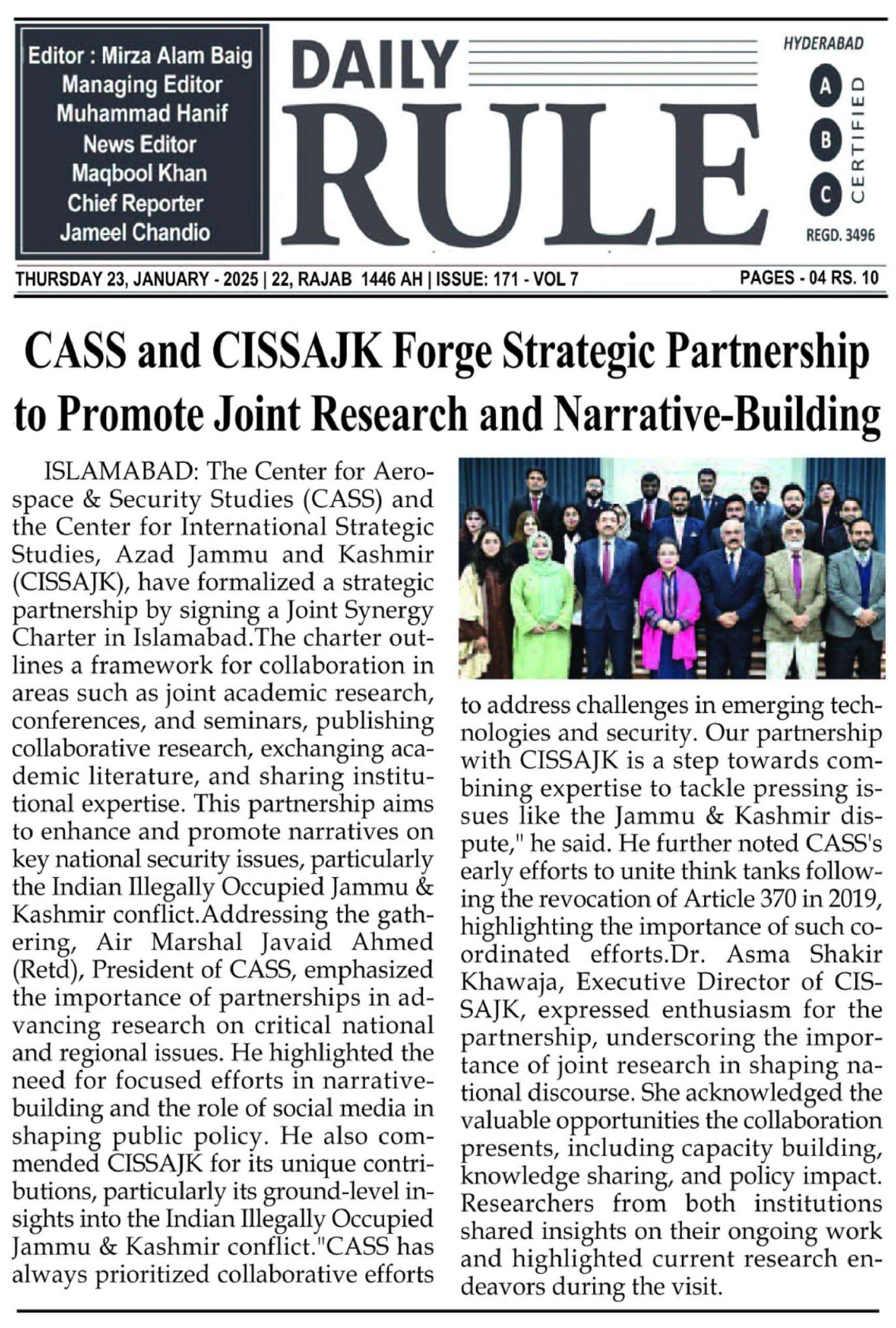
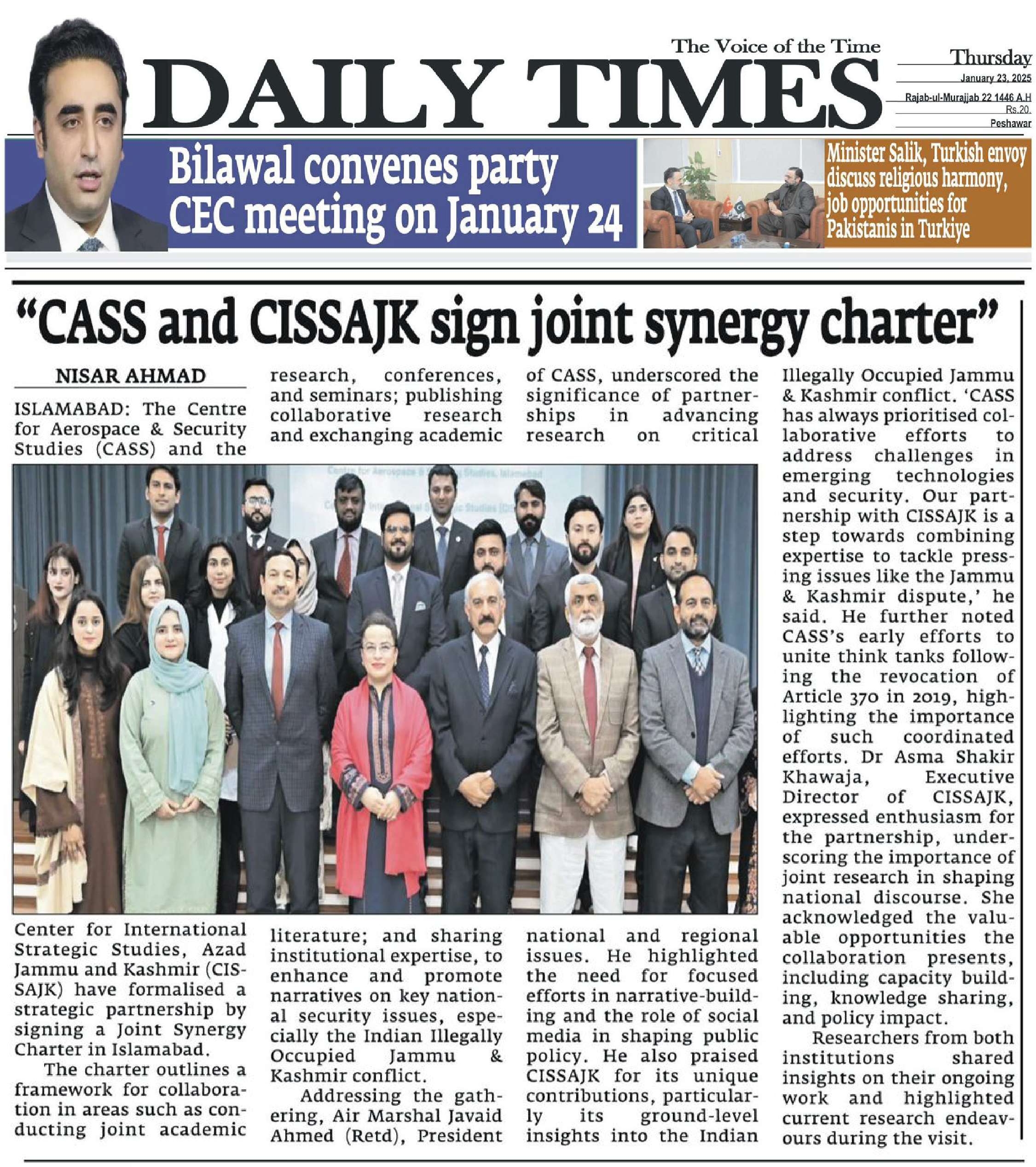
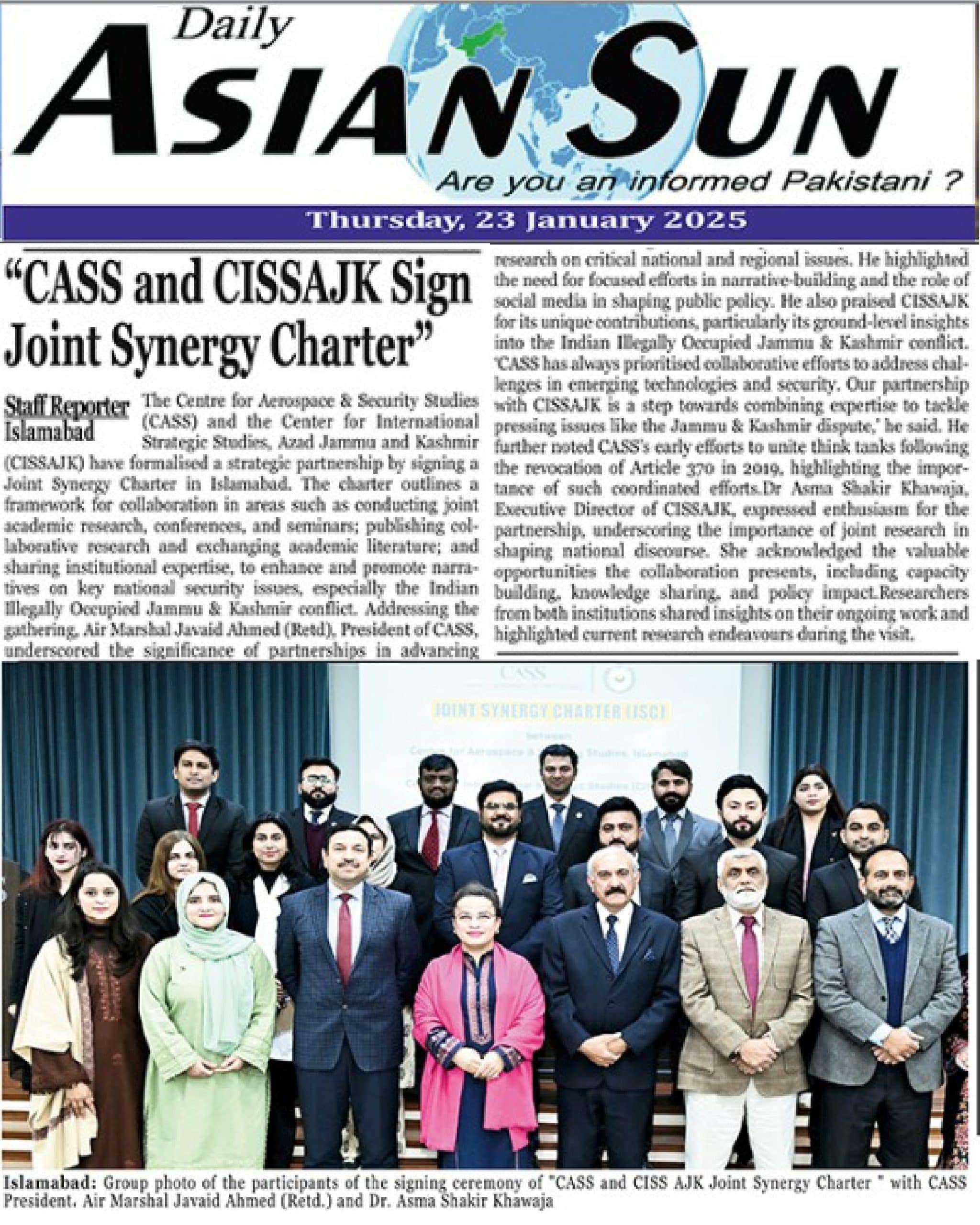
Newspaper Links
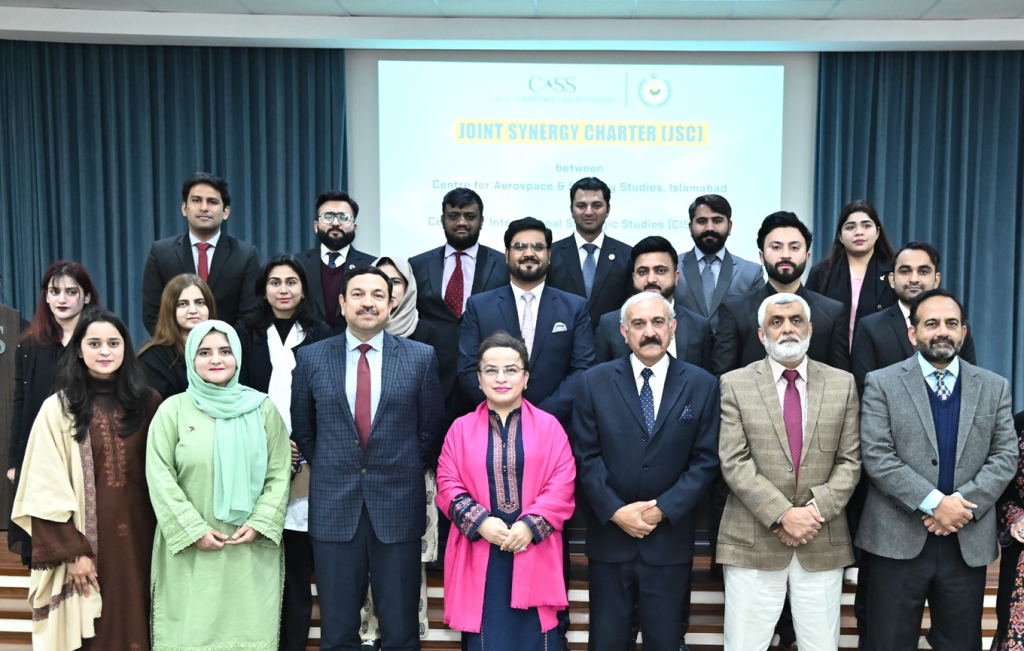
“CASS and CISSAJK Sign Joint Synergy Charter” – Islamabad Post
ISLAMABAD, JAN 22 (DNA):The Centre for Aerospace & Security Studies (CASS) and the Center for International Strategic Studies, Azad Jammu

“CASS and CISSAJK Sign Joint Synergy Charter” – DNA News Agency
ISLAMABAD, JAN 22 (DNA):The Centre for Aerospace & Security Studies (CASS) and the Center for International Strategic Studies,

“CASS and CISSAJK Sign Joint Synergy Charter”
“CASS and CISSAJK Sign Joint Synergy Charter”Islamabad.Jan. 22: The Centre for Aerospace & Security Studies (CASS) and the Center for International Strategic Studies, Azad Jammu and Kashmir (CISSAJK) have formalised a strategic partnership by sig

CASS and CISSAJK Unite for Strategic Collaboration on National Security Issues –
The Centre for Aerospace & Security Studies (CASS) and the Center for International Strategic Studies, Azad Jammu and Kashmir (CISSAJK) have formalised a strategic partnership by signing a Joint Synergy Charter in Islamabad. The charter outlines a framework for collaboration in areas such as conducting joint academic research, conferences, and seminars; publishing collaborative research and exchanging academic literature; and sharing institutional expertise, to enhance and promote narratives on key national security issues, especially the Indian Illegally Occupied Jammu & Kashmir conflict.
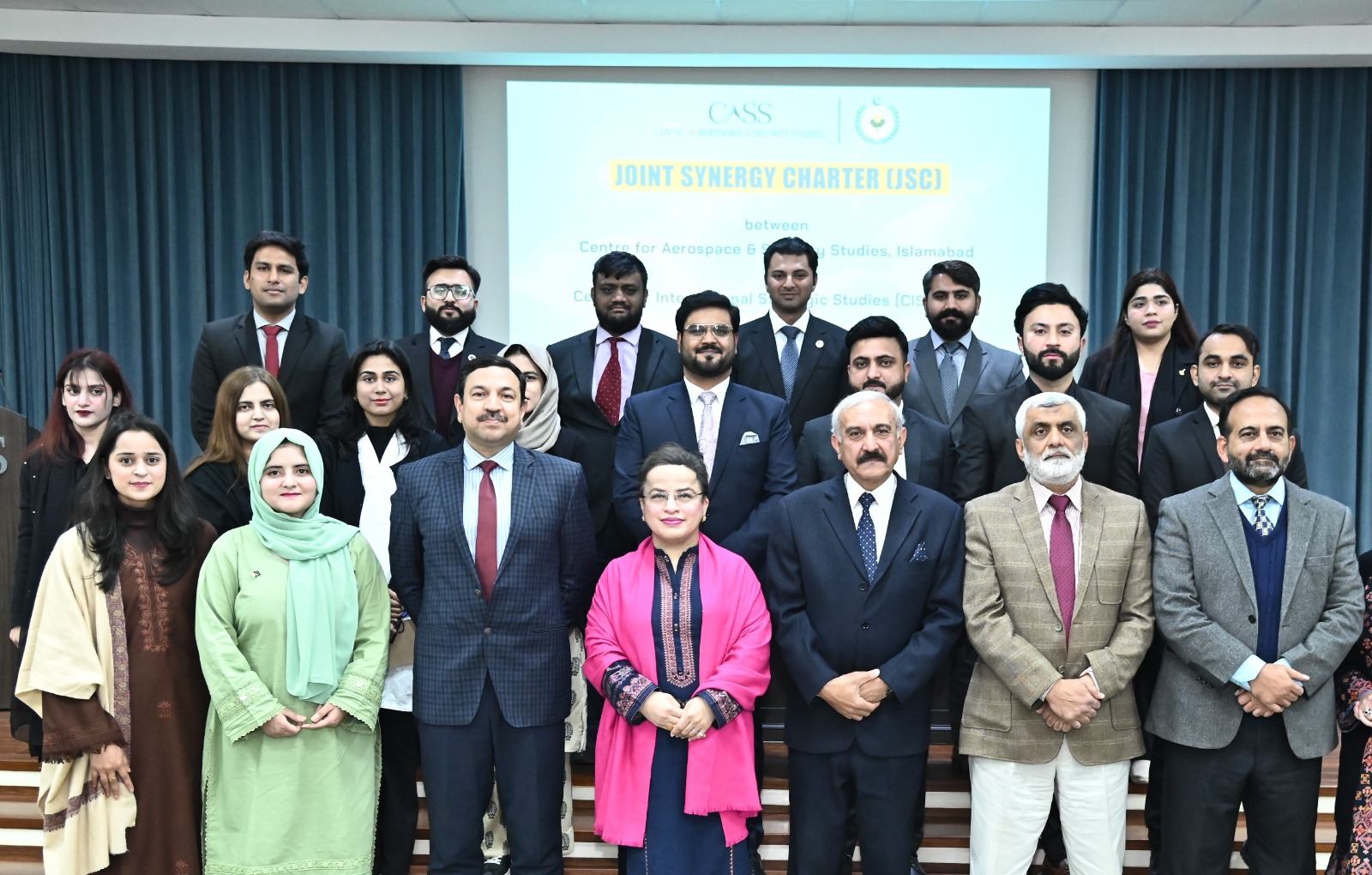
“CASS and CISSAJK Sign Joint Synergy Charter”
WNAM REPORT: The Centre for Aerospace & Security Studies (CASS) and the Center for International Strategic Studies, Azad Jammu and
CASS and CISSAJK Formalize Partnership with Joint Synergy Charter – Khyber Mail
Islamabad (Khyber Mail): The Centre for Aerospace & Security Studies (CASS) and the Center for International Strategic Studies, Azad Jammu and Kashmir (CISSAJK) have entered into a strategic partnership by signing a Joint Synergy Charter in Islamabad. This agreement aims to foster collaboration on key national security issues, with a particular focus on the Indian Illegally Occupied Jammu & Kashmir conflict.