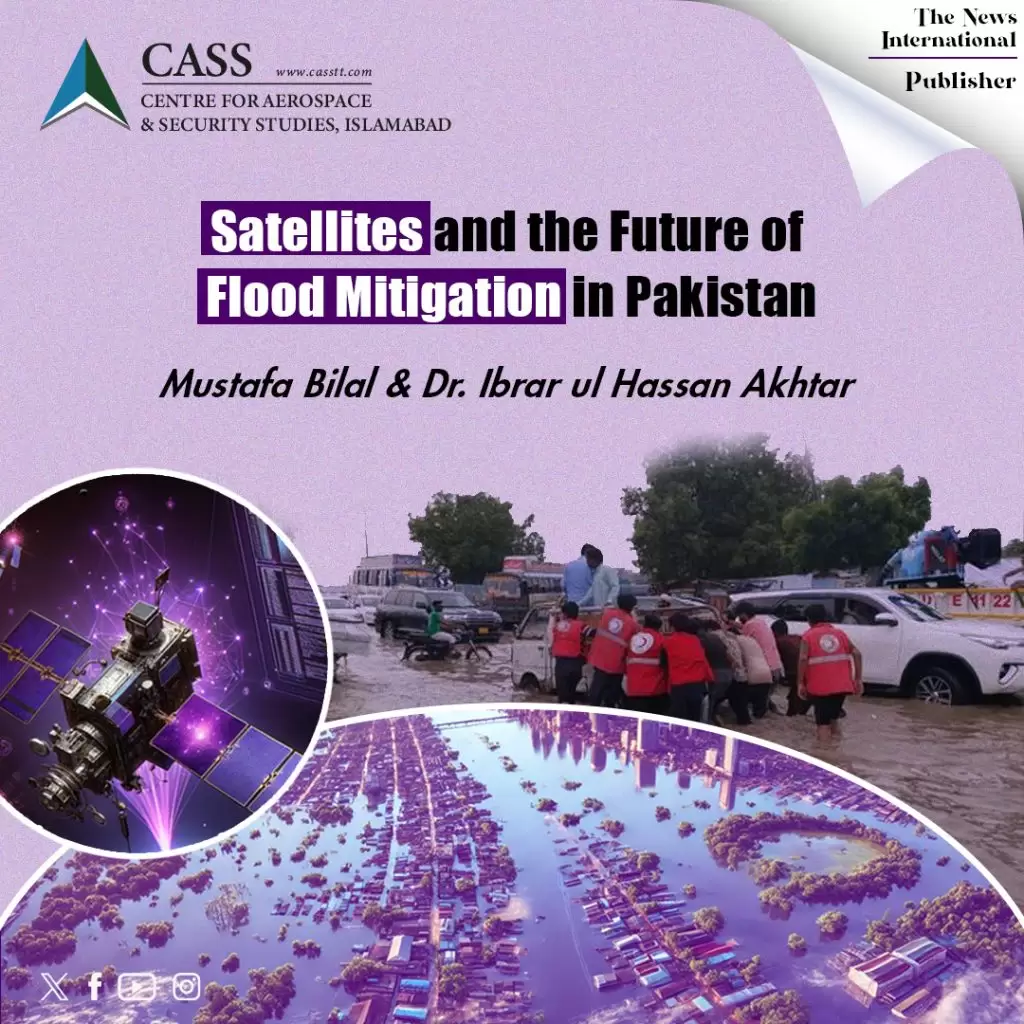
Satellites and the Future of Flood Mitigation in Pakistan
On 19 October 2025, Pakistan launched its first hyperspectral satellite, the HS-1 to augment the country’s capability of observing, analyzing and responding to environmental hazards.
Research Assistant

Mustafa Bilal is a Research Assistant at the Centre for Aerospace & Security Studies (CASS), Islamabad. He has done his BS in International Relations from the National Defence University (NDU), Islamabad. His research interests include technopolitics, astropolitics, military aviation and warfare.
On 19 October 2025, Pakistan launched its first hyperspectral satellite, the HS-1 to augment the country’s capability of observing, analyzing and responding to environmental hazards.
A new race to the moon is underway; not merely to erect flags, but to prospect for and extract water and helium-3, establish nuclear power plants and capitalize on the economic and strategic advantages that will shape the balance of power in space for decades to come.
Between May 2024 and July 2025, Pakistan’s space program soared to new heights. Planning Minister Ahsan Iqbal rightly described this shift in Pakistan’s space momentum by stating
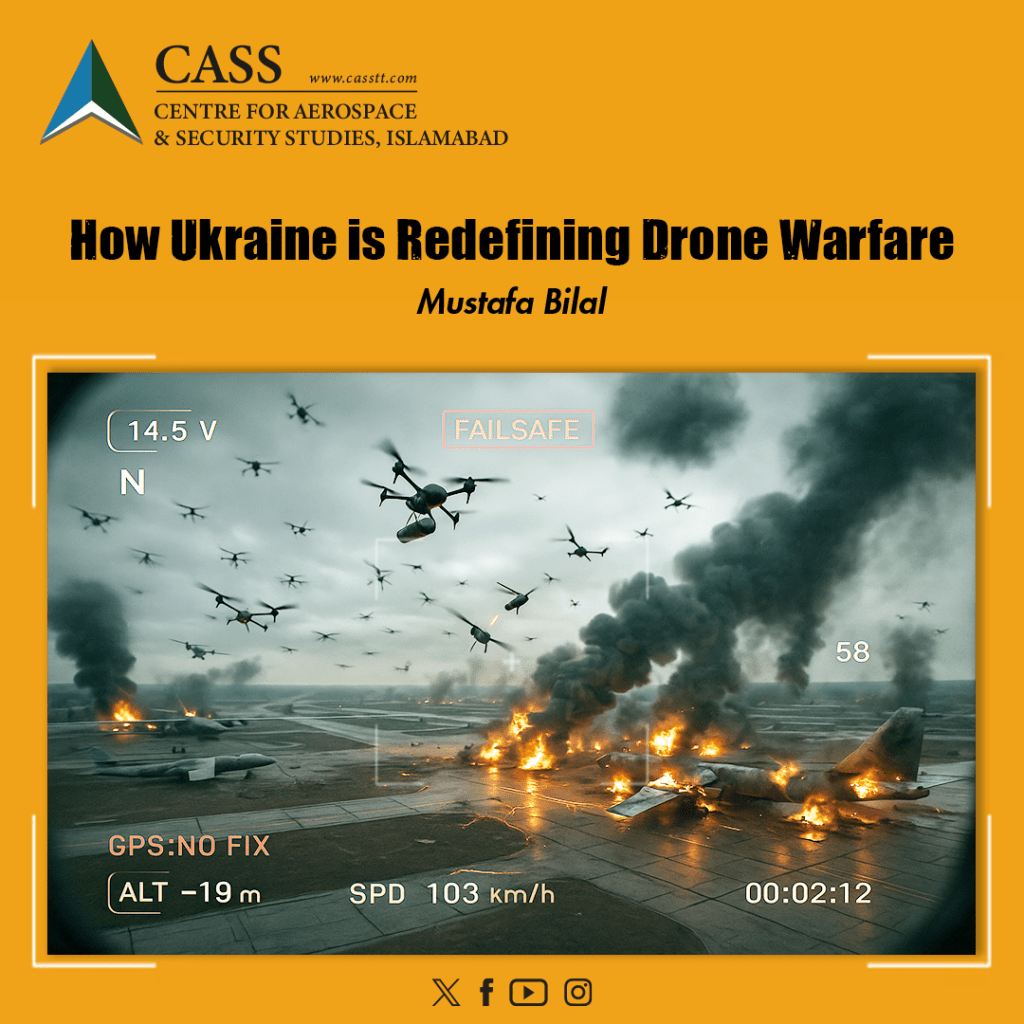
Last month, from 1st June to 1st July, the Ukrainian employment of drones against Russia marked a qualitative evolution in drone warfare.
This paper examines the militarisation of NanoSats and applies the U.S. Space Force’s Competitive Endurance framework
The Indus and its tributaries are not just rivers; they are the arteries of Pakistan. Over 90% of Pakistan’s agriculture relies on the Indus River System,
1111 views

All views and opinions expressed or implied are those of the authors/speakers/internal and external scholars and should not be construed as carrying the official sanction of CASS.