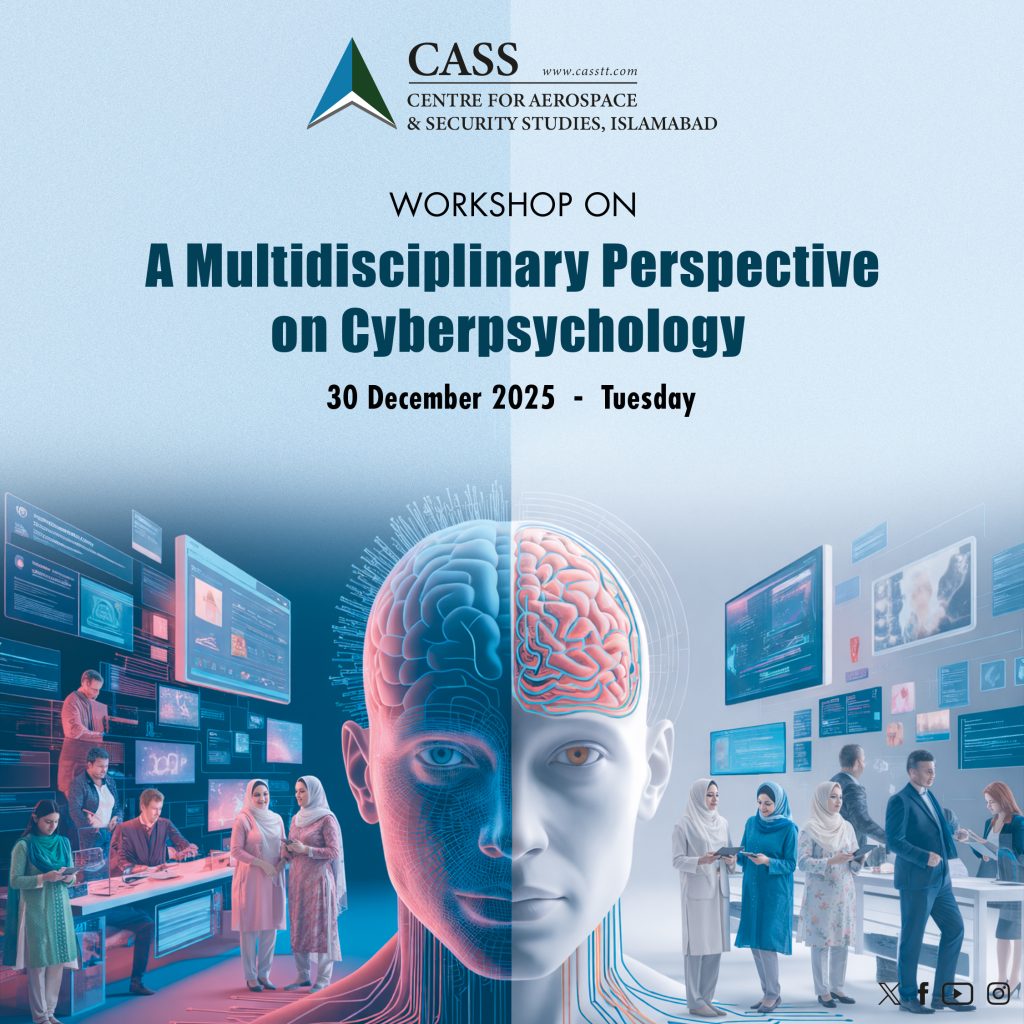
In an era where digital platforms increasingly shape opinions, behaviour, and decision-making, understanding the psychological dimensions of cyberspace has become critically important. Cyberpsychology is an emerging and dynamic discipline that examines how human behaviour, cognition, and emotions interact with digital technologies. For students at Air University stepping into this new and evolving discipline, a workshop has been designed by to ignite curiosity, build confidence, and highlight the powerful career and research opportunities that lie ahead.
The workshop introduces Cyberpsychology as a multidisciplinary domain that bridges psychology, technology, security, and policy. A dedicated segment of the workshop focuses on cognitive warfare and the psychology of digital influence, helping students understand how psychological principles are used in shaping narratives, influencing public opinion, and conducting information operations in the digital domain.The workshop also includes an applied group-based exercise that places students in the role of expert consultants responding to real-world cyber challenges. The brainstorming exercise will enable students to explore how digital platforms influence perception, decision-making, and behaviour, and how these insights are increasingly critical in areas such as cybersecurity, information warfare, social media governance, and national security.
The workshop aims to reassure students of the strong academic, professional, and research scope of Cyberpsychology, positioning it as a vital field for the future digital society.
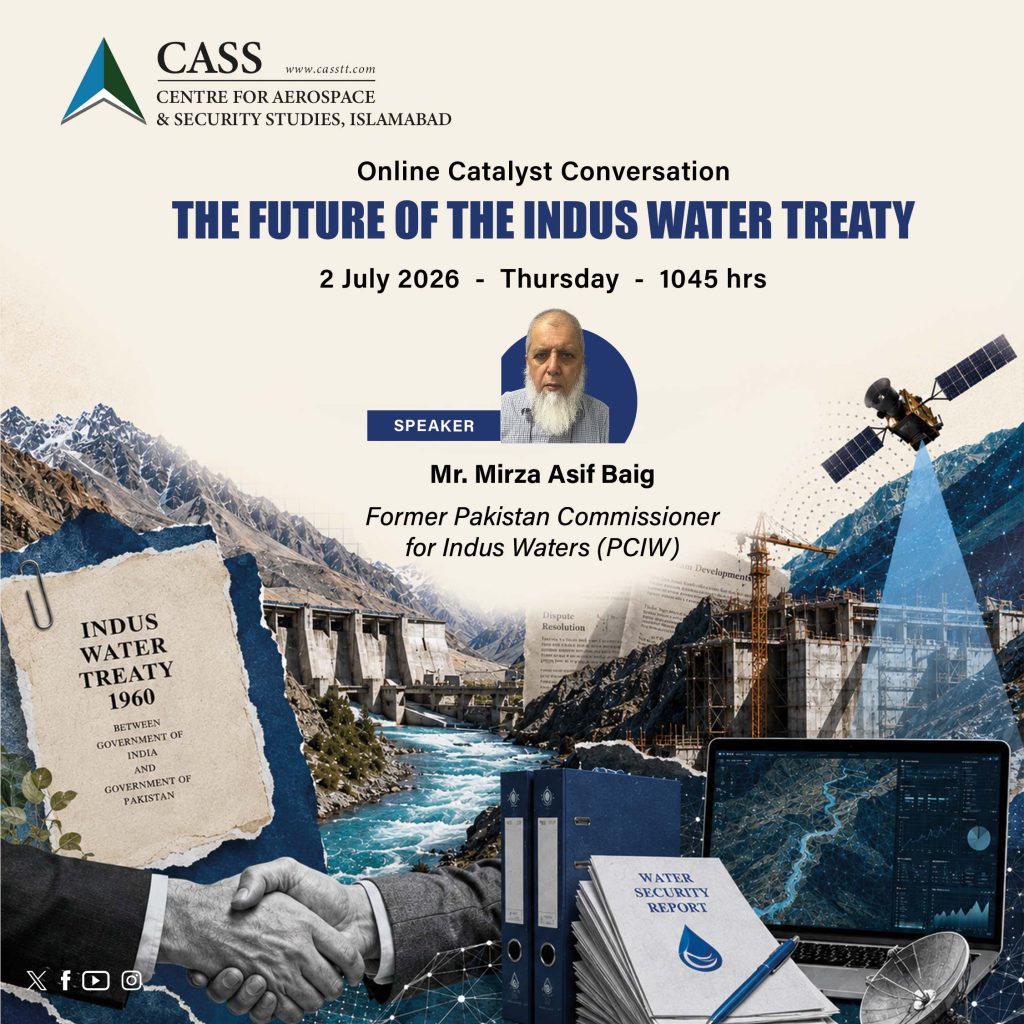
ONLINE CATALYST CONVERSATION THE FUTURE OF THE INDUS WATER TREATY
For more than six decades, the Indus Water Treaty (IWT), signed in 1960 between Pakistan and India, remained as one of the most enduring transboundary water-sharing agreements in the world. Despite multiple wars, political crises, and prolonged periods of bilateral hostility, the treaty largely continued to govern the allocation and management of the waters of the Indus BasinFor more than six decades, the Indus Water Treaty (IWT), signed in 1960 between Pakistan and India, remained as one of the most enduring transboundary water-sharing agreements in the world. Despite multiple wars, political crises, and prolonged periods of bilateral hostility, the treaty largely continued to govern the allocation and management of the waters of the Indus Basin