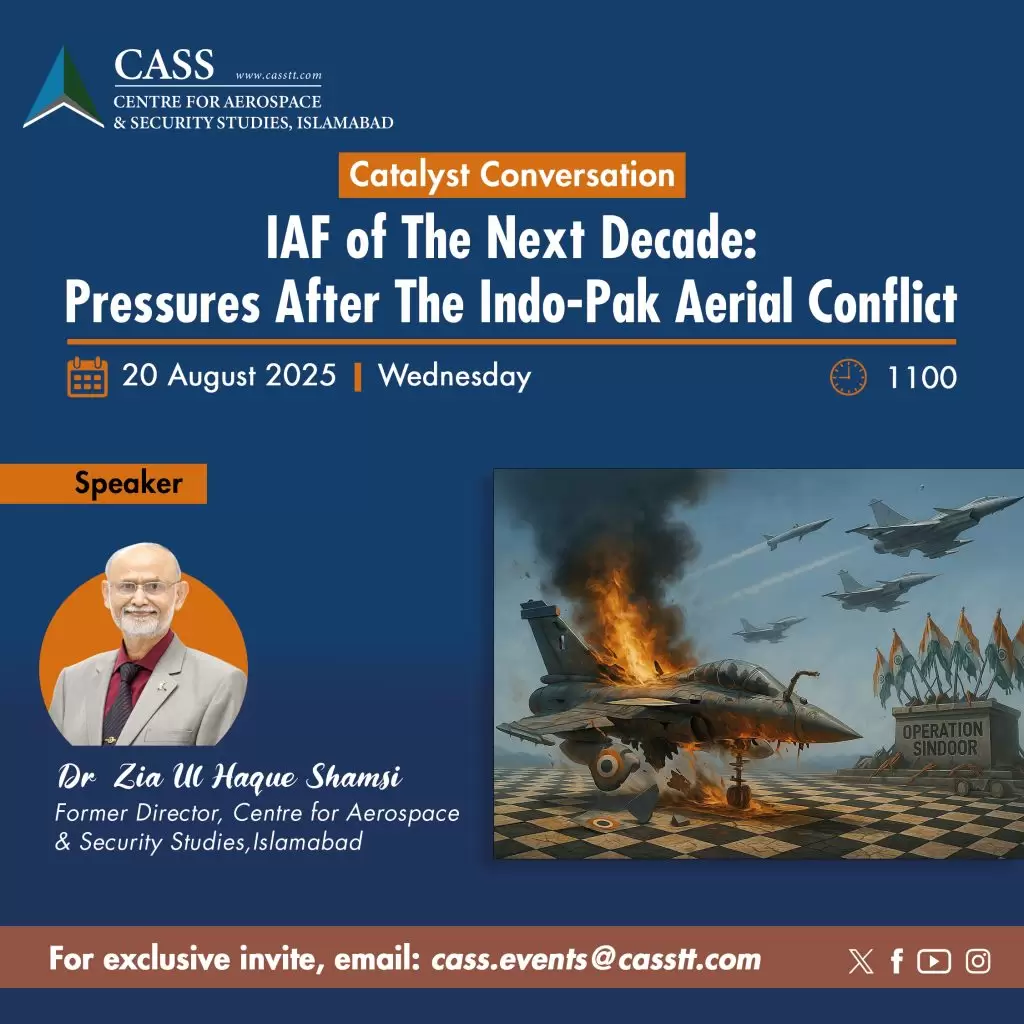
The brief but intense aerial conflict between India and Pakistan in May 2025 marked a turning point in South Asia’s air power dynamics. It demonstrated the growing reliance on beyond-visual-range (BVR) combat, electronic warfare, multi-domain integration, space-based assets, and unmanned platforms. For the Indian Air Force (IAF), this conflict has exposed operational, technological, and doctrinal gaps. As India aspires for regional dominance and global recognition, the IAF faces significant internal and external pressures; ranging from its doctrinal and employment challenges to budget constraints and procurement delays. Resultantly, the IAF had to face significant embarrassment from a relatively smaller but agile Pakistan Air Force (PAF). Numerous lesson could be drawn for IAF, post Marqa-e Qarar (A name given by PAF to the 87 hour IAF-PAF conflict). The next decade will be crucial in determining whether the IAF can transform itself into a fully networked, tech-integrated, and doctrine-driven force, capable of conducting decisive air operations in a high-threat environment.
ONLINE CATALYST CONVERSATION THE FUTURE OF THE INDUS WATER TREATY
For more than six decades, the Indus Water Treaty (IWT), signed in 1960 between Pakistan and India, remained as one of the most enduring transboundary water-sharing agreements in the world. Despite multiple wars, political crises, and prolonged periods of bilateral hostility, the treaty largely continued to govern the allocation and management of the waters of the Indus BasinFor more than six decades, the Indus Water Treaty (IWT), signed in 1960 between Pakistan and India, remained as one of the most enduring transboundary water-sharing agreements in the world. Despite multiple wars, political crises, and prolonged periods of bilateral hostility, the treaty largely continued to govern the allocation and management of the waters of the Indus Basin