The problem with realists is that they are not only selfish but also very stubborn in their approach. Moreover, human lives are not important to them and they do not fear the rise of peoplism.
Without undermining the significance of the state in the present international system, it is necessary to emphasize the importance of the people, without whom the state would just be a piece of land. Remember, for a state to be viable and legitimate, it has to have a defined territory, a legitimate government, and above all the people.
While all wars are the same with little variations in the character, I look at the ongoing war in Europe from a different perspective, because I define WAR as the Waste of Available Resources. When I first published this definition in my book, Nuclear Deterrence and Conflict Management between India and Pakistan, I was immediately labelled as an Idealist or a Liberalist. Then I came up with my theory of Realism with Z. I argued that I am replacing S with Z because S is representing the Selfishness of the realists, whereas Z is representing Realization by the stakeholders.
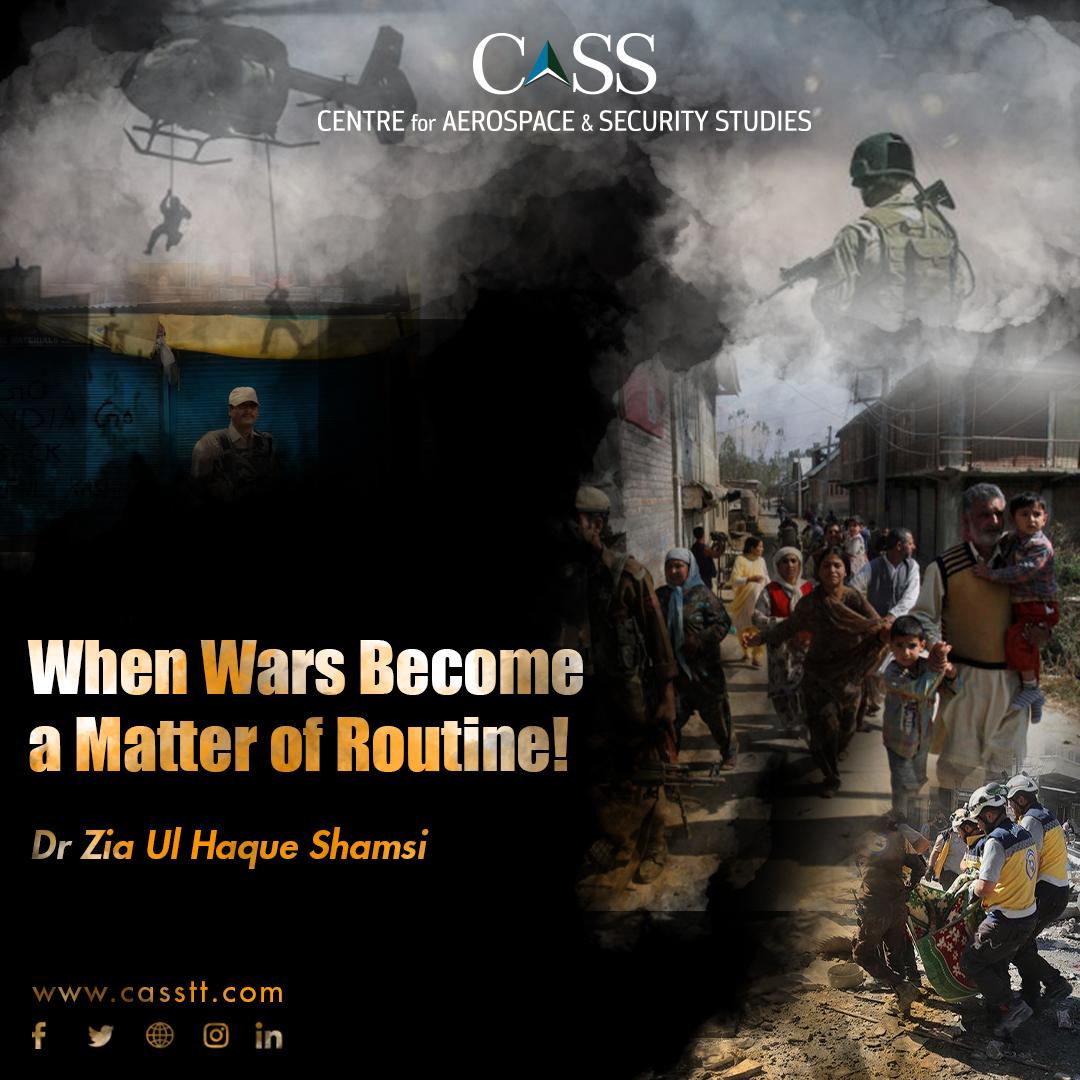
My problem with war is not the sound of fighter jets, because I am a fighter pilot by profession, but the human lives, and that too of the non-combatants. Those who do not know who has hit them and why. Likewise, the soldiers carrying out the attack do not know who they are attacking and how many children, women, or the old are behind this wall. We have seen this in Iraq, Libya, and Afghanistan. We are seeing this every day in Palestine, Kashmir, Yemen, and most currently in Ukraine.
The twentieth century saw two Great Wars and several protracted wars and conflicts, over 100 years, the twenty-first century has already seen concurrent wars and conflicts across many regions. While Palestine and Kashmir are still burning, Yemen and Syria are engaged in an unending conflict with multiple stakeholders. These two wars in the Middle East are not only complex but also have the potential to expand horizontally as well as vertically.
While the developing nations were still grappling with the aftershocks of the pandemic, two of the largest food-producing states in the world: Russia and Ukraine engaged themselves in one of the most violent conflicts of the twenty-first century in Europe. The war has now entered into the seventh month with no predictable end in sight. Russia may not have achieved a quick victory but it has been able to test the resolve of the US-led western supporters of Ukraine to its limit. On the other hand, Ukrainians may have put up a brave effort, but the fact of the matter is it is fast losing ground that Russia may never leave in an endeavour to keep a buffer zone between its new territorial borders with potential NATO countries.
There is little doubt that all wars are unnecessary, but the twenty-first-century wars were and still are unwarranted. Beginning the century with the Second Afghan War after the unfortunate happenings of 9/11, the US decision to go to war and its withdrawal after two decades of dismay and destruction, are both questionable. Neither was an attack on Afghanistan within weeks of 9/11 advisable without a proper investigation nor was the hasty withdrawal of August 15, 2021, following Doha Agreement with the same Taliban who were declared responsible for the 9/11 attacks. Likewise, the Second Gulf War against Iraq for the want of Weapons of Mass Destruction (WMDs) in Iraq also rested on fake intelligence folders and achieved nothing except the killing of Saddam Hussein, perhaps to satisfy the ego of the US leadership.
Staying in the Middle East, Yemen War has entered into its 8th year, with no practicable end in sight. It is necessary to mention that the initiators had envisaged and claimed that the politico-military objectives would be achieved within weeks. Yemen is facing famine and an extremely precarious human rights situation.
Moving to Europe, where people are not used to listening to the thunders of wars and conflicts, are now facing the deadliest war in their heartland. The racist statements by certain people in the initial days of war were heart breaking for the people of developing countries, which have been at the mercy of aggression by the developed west for a very long time.
Unfortunately, the powerful nation’s adoption of war as an instrument of policy has become a routine and that too as a tool of the first choice, instead of a last resort. Moreover, the lack of legal instruments that could have deterred the aggressors is also causing disappointments with international organizations responsible for protecting the weaker states against the stronger ones. Unless a serious effort is made in this regard, the wars and conflicts will continue to be treated as routine affairs, causing deaths and destruction in developing countries.
Dr Zia Ul Haque Shamsi is the author of ‘Nuclear Deterrence and Conflict Management between India and Pakistan’ and ‘South Asia Needs Hybrid Peace.’ He is presently working as Director (Peace and Conflict Studies) at the Centre for Aerospace & Security Studies (CASS), Islamabad, Pakistan. The article was first published in Daily Times. He can be contacted at: [email protected]
Image Credit: Online Sources