
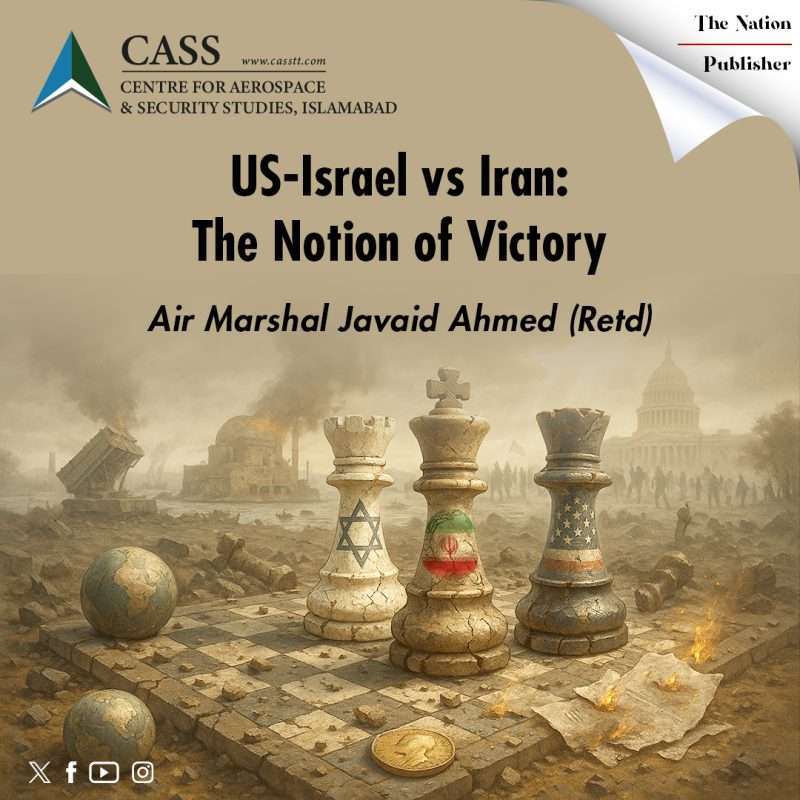
It took 12 days of intense action for the US-Israel-Iran conflict to end. Whether the pause is temporary or long-lasting, each party has walked away with a notion of victory. However, to date, the Israeli and US aims, objectives, and the endgame still remain ambiguous.
Probably Benjamin Netanyahu thought the time was right – Lebanon was silenced with Hamas and Hezbollah under check, the Palestinians were brutally crushed, and friendly governments were installed in Syria and Iraq. The IAEA (International Atomic Energy Agency) had done its snooping. The Gulf States were pliant, fresh out of a lavish Trump-wooing visit six months into his eventful presidency. AIPAC (American Israel Public Affairs Committee) lobby in the US was fully active, and the G7 and European Union were towing the US line under pressure of support for NATO and US tariffs. At home, a looming Knesset showdown to dissolve parliament, a corruption scandal, and sagging popularity needed to be remedied. Predictably, Iran was the next target, a lone warrior with no coalition partners.
It would be naive to assume that the US was not on board. The negotiations were a deception – Mossad and the CIA have been active in Iran for years. The time was ripe to play the decades-old nuclear card.
Control of the air could easily be gained with US help. The initial strike was planned in a ‘shock and awe’ style killer blow, a multi-domain operation to wipe out the top tier Iranian leadership. Reza Pahlavi had already been launched as a replacement candidate of the new planned Iranian Government. By all means, a brilliant first strike plan.
Surprisingly, the Iranians stood firm and retaliated after the initial onslaught. What began as a one-sided affair quickly turned into a long, drawn-out war, rapidly ascending the escalation ladder. Under Iran’s tactical brilliance, the Iron Dome crumbled. The manoeuvring hypersonic missiles scored direct hits, giving Israelis a rare taste of Gaza. The narrative of ‘going after nukes’ was altered to a ‘leadership change’, an ‘unconditional Iranian surrender’, and then back to ‘destroying the nukes’.
With hordes of Israelis fleeing to Cyprus and beyond, by whatever means available, the pressure on Netanyahu mounted steadily. It was time to use the US or face defeat. Trump obliged happily, forgetting his two-week decision deadline, or any concerns of radiation leaks and dropped half a million pounds of TNT, proclaiming victory a minute after the bomb hit Fordo, Natanz and Isfahan.
What came next was a game-changer move by the Iranians – the Hormuz and Al Udeid factor. While continuing to pound Israel, the Iranians threatened to block the Strait of Hormuz, a reality so often war-gamed. With Iran’s missile domination, the US bases in the Middle East became sitting ducks and a dangerous embarrassment for the host governments. Much to Israel’s relief, Iran’s strategic attack on Al Udeid Air Base, termed symbolic, saved the day, turning Trump’s warmongering tone into congratulations, an offer of a ceasefire, and back to his Nobel Prize rhetoric.
Netanyahu, whose aggressive plans turned out to be a shot in the foot, limped back through Tel Aviv’s rubble to proclaim victory. He had no other choice. The status of Iran’s nuclear sites, though unknown, were claimed as destroyed.
The Iranians had proved their point, struck back hard at Israel, and defended with whatever they had. It was a ‘notion of victory’ for all. The ships diverted from Hormuz turned back. The world was not willing to pay more for oil, and the US forces in the Gulf heaved a sigh of relief. The strikes on US bases could have been catastrophic for the future of US presence in the Middle East.
The Qataris, despite being hit, became key winners as chief negotiators. With trade and NATO coalition at stake, the EU stood by Trump. The NATO Chief lavishly praised Trump on successful Iranian strikes and secured a defence deal for the EU. The Indians stood as bystanders, with spy rings busted, having lost Iran’s support in backing Israel. Pakistan hailed its stance of standing with Iran and rejoiced. The Chinese and Russians articulated their position but kept their interests in mind.
What now, then, when everyone proclaims victory?
The new narrative by AIPAC is already out, claiming that Iran’s nuclear facilities have been damaged, only setting back the nuclear programme by a few months. Consequently, another war appears to be on the cards. The question is after how many months.
Meanwhile, the Iranians are justifiably out of the IAEA, which has lost credibility and, in turn, given Iran greater incentives to pursue nuclear weapons.
Where does the conflict place the rest of the world? With the collapse of a rule-based order, does it incentivise nations to develop nuclear capabilities to safeguard their national security? Is Israel more unpopular than before? Is an end to Gaza in sight? Is President Trump a dependable peace broker? All difficult questions.
In all probability, the world could be back to square one in a few months. It is unlikely that Iran will give up its nuclear plans. The Israelis would not sleep peacefully unless the Iranian ability to hit back has been taken out. The Iranians are the only stumbling block in the ‘greater Israel’ project. Again, the plan would require full involvement of the US, which will be tasked to keep Israel’s interest in mind during the upcoming negotiations if any. Consequently, Tehran could demand security guarantees. But from whom? A superpower that just bombed them a week ago, or a collapsed global justice system? It’s a tough road ahead.
The message to countries like Pakistan is clear: they are on their own.
Air Marshal Javaid Ahmed (Retd) is President of the Centre for Aerospace & Security Studies (CASS), Islamabad and a former Vice Chancellor of Air University. Email: [email protected]



