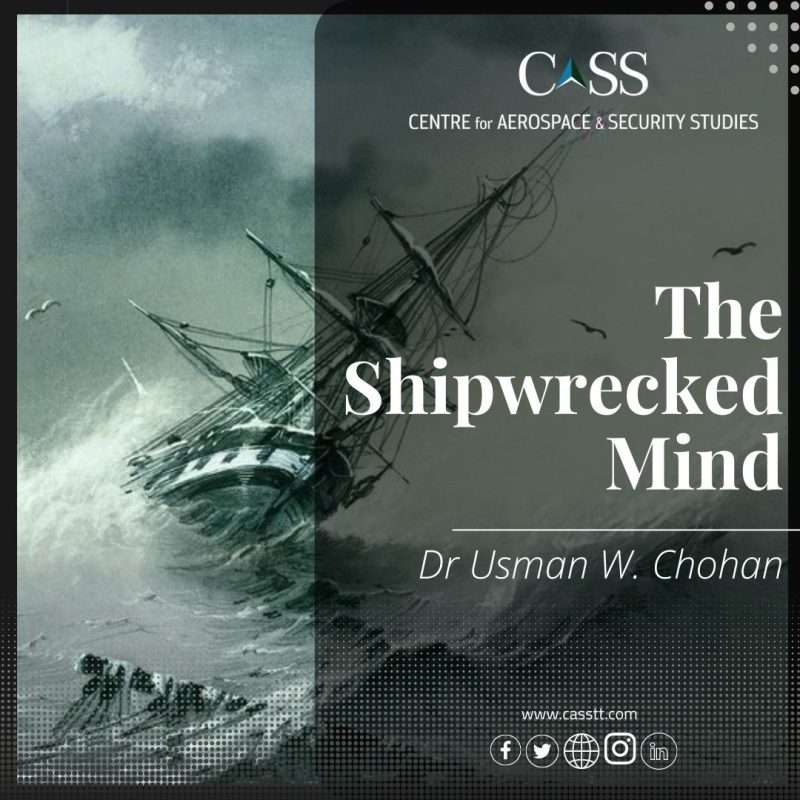
In his groundbreaking work The Shipwrecked Mind, Mark Lilla attempts to understand the zeal of reactionaries, unable to grapple with the present and lost in a sea of tumultuous ideas. The title resonates on multiple levels with those who have seen a flurry of disquieting events transpire recently, not least in: those who heard of the drowning of Pakistani migrants in the Mediterranean sea, those who were bombarded with the news coverage of the OceanGate submarine, those who have been watching a continued political crisis since 2022, those whose incomes are being compressed by rampant inflation, and those who fret for the economic stability of the country. Everywhere, it seems, Pakistanis are being drowned. But they are being drowned not because they are sinking beneath shipwrecked boats; they are being submerged by shipwrecked minds.
The outpouring of legal and illegal migrants from the developing world, including Pakistan, is at the root an economic problem: a dearth of prospects domestically as compared to what might be found overseas. One must say might because there is no guarantee of milk and honey abroad, and the squalor and disenfranchisement within which migrants often reside is not something that homebound aspiring-migrants either know or see. To remedy the situation, there is a need for a fairer, more inclusive, and more dynamic economy. But it is also a question of how many people are being produced relative to the opportunities being created. If a country of 240 million people grows at 3% per year, it means that every year there are 72 lakh new people added to the country. 72 lakhs. What country can create opportunities for this many new people? None.
At the same time, one sees a staggering economic inequality in the world where luxury-seeking billionaires can go underwater to view old wreckages, in some cases joining those wreckages in the process. But the coverage of the OceanGate failure is interesting on two counts. First, the mainstream media created a public fascination around the rescue attempt, diverting the public’s attention in many countries from immediate crises around them. Second, if social media is anything to go by, there was great jubilation in the failure to recover the OceanGate vessel, as many felt it would be hard for them to shed a tear for billionaires. This is the product of immense economic inequities that create a distance between peoples, unable to act in solidarity because they do not enjoy either the same economic opportunities or economic outcomes.
At the same time, the public in Pakistan is being bulldozed by high inflation, compressing their purchasing power and generating significant social tensions, particularly in households that are struggling to make ends meet. In some cases, the initial premise of too large a household comes into play. Not too long ago, a politician asked how, “If flour is being sold for 160/kg, how can the head of a household feed 12 people?” What the politicians must realize in revisiting those words is, why does a household have 12 people to begin with? Even in a world of zero inflation, or even deflation, maintaining a household like that is close to ruddering a rickety boat.
Finally, to those who fret for the economy, as many indeed do, the most important thing to realize is that all the tools necessary for our economic revival already lie at our disposal. What is missing is the dispassionate, hard-working, committed leadership that acts with a public value mindset. Pakistan’s economic problems are 18th century problems, and so can be solved with 19th century solutions. The issues are rudimentary in nature and subject to common-sense remedies. But the problems are political in nature, held hostage to vested interests that are narrow-minded, arrogant, and selfish in spirit. They have led, and continue to lead, the country on an otherwise perfectly-functioning boat headlong towards the rocks. Before we end up with a shipwrecked boat, we must dispose of their shipwrecked minds. It is tragic to see Pakistanis drowning, literally and metaphorically, in all directions. The lifebuoy, however, has always been within our collective grasp.
Dr. Usman W. Chohan is Advisor (Economic Affairs and National Development) at the Centre for Aerospace & Security Studies, Islamabad, Pakistan. He can be reached at [email protected].