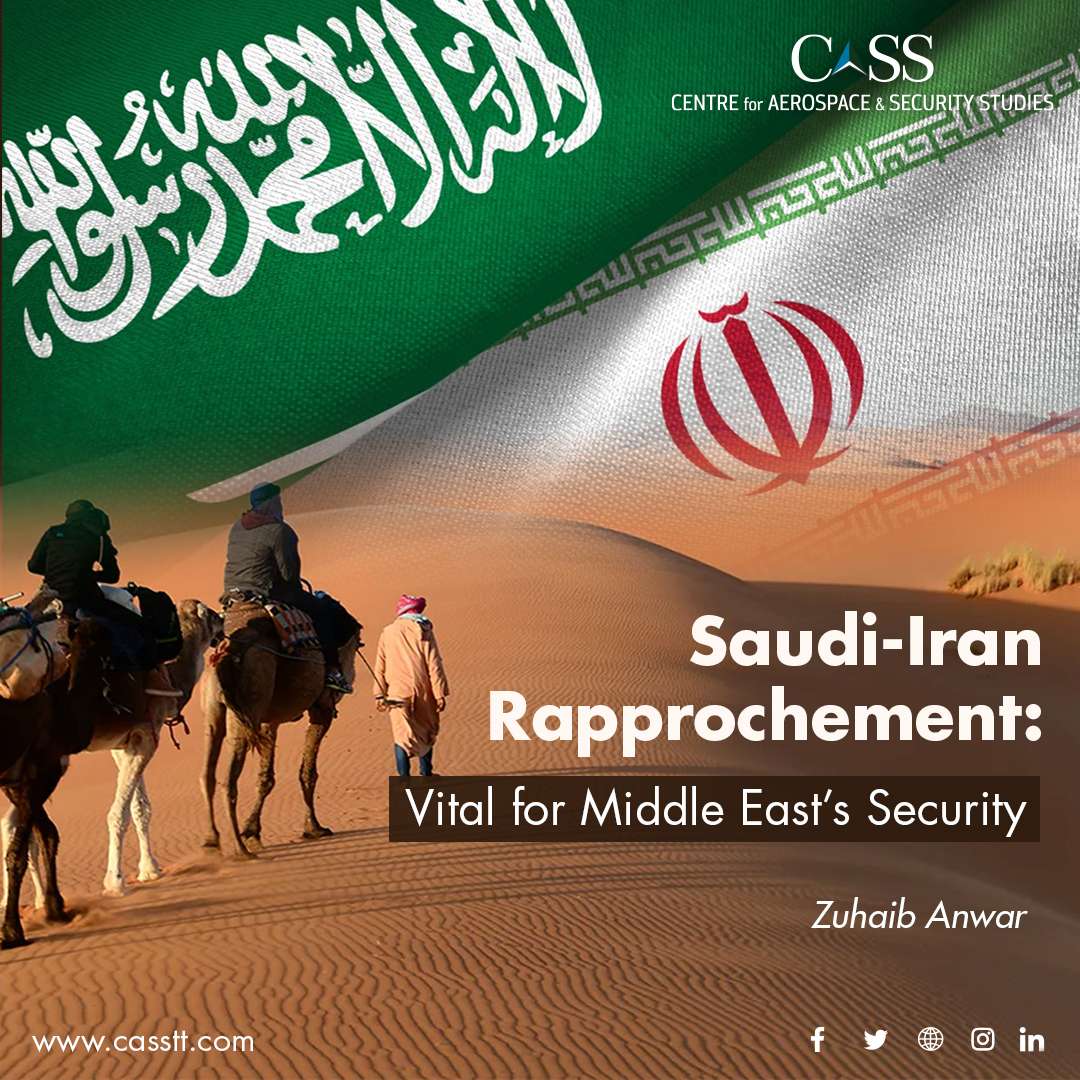
Iran and Saudi Arabia, two regional powers and important members of the Muslim world, have a history of strained relations. Geopolitical contestation between them goes back at least as far as the 1979 Iranian Revolution. The two states follow different interpretations of Islam and are engaged in a struggle for regional dominance. Both also have divergent views on several regional and international issues. In 2016, diplomatic relations between the two broke when Iranian protestors stormed the Saudi embassy in Tehran in response to the execution of a prominent Saudi Shia cleric Sheikh Nimr al-Nimr by Saudi authorities. Tensions further increased when Iran-backed Houthi militia in Yemen launched attacks on mainland Saudi Arabia.
However, there has been a shift in Saudi regional policy since President Biden came to office and the United States focused its attention away from the Middle East. Relations between Saudi Arabia and the US have not been as cordial as earlier. Noticing a change in US policy, Saudi Arabia has been willing to engage regional competitors, particularly Iran. Iranian officials, on different occasions, also called for regional peace and engagement. In this regard, three rounds of talks were held with Saudi Arabia under former Iranian President Hassan Rouhani. Upon assuming office, the new President Ebrahim Raisi also expressed his willingness to mend ties. During his first press conference, he said, ‘I say that there is no obstacle to having a dialogue with Saudi Arabia and relations with all countries. We are ready to reopen embassies.’ So far, five rounds of talks have been held which were hosted and mediated by Iraq, whereas Oman is also reported to have played a constructive role in organising the latest round. This fifth round of direct talks was held this year in April in Baghdad. The Iranian delegation was led by Saeed Iravani, Deputy Secretary of the Iranian Supreme National Security Council, whereas the Saudi delegation was led by Khalid bin Ali al Humaidan, Chief of Saudi intelligence.
The two sides have expressed hope that bilateral and regional tensions could ease as a result of the talks, but also downplayed expectations of a breakthrough. So far, the only outcome of the talks has been the re-opening of Iran’s representative office at the Jeddah-based Organisation of Islamic Conference (OIC).
The latest round of talks has sparked a fresh optimism but still, there is a long way to go. Yemen has been the main bone of contention between the two sides. Both countries are supporting opposing sides in the conflict. The protracted war has severely impacted the lives of common Yemenis. Afflicted by widespread hunger, disease and insecurity, Yemen’s dire humanitarian crisis is expected to worsen in the coming months if urgent steps are not taken. The United Nations (UN) brokered two-month ceasefire in Yemen between the Iranian backed Houthis and the Saudi backed Yemeni Government that went into effect on April 2nd, and expired on June 2nd has been extended for another two months. This truce reflects the willingness of both countries to enter into a broader détente arrangement.
The situation in Syria also tells a similar story – Iran is supporting the incumbent regime of Bashar al Asad, while Saudi Arabia is aiding different local rebel groups against the Asad regime. Similarly, the race for dominance between the two regional powers continues in Lebanon and Bahrain, which are relatively peaceful, but there is a continued struggle between opposing (Saudi vis-à-vis Iranian) sides, striving for power. The Bahraini government supported by Saudi Arabia was able to suppress an uprising that was allegedly supported by Iran. Lebanon also faces a similar situation where Iran backed Hezbollah dominate the political scene, but at the same time, Saudi Arabia also enjoys considerable influence.
The two regional powers have remained at loggerheads for decades, but the dialogue process can lead to a new era of peace and cooperation between them. The talks should focus on resolving outstanding issues and advancing recognition, representation, and cooperation because the security and well-being of the entire Middle Eastern region depends on détente between these two countries. If Saudi Arabia and Iran focus on their common interest, regional countries would perhaps follow suit.
Both Iran and Saudi Arabia should use the dialogue process to engage in comprehensive discussions on the contentious issues between them, work sincerely to reach substantive resolutions and use their influence to promote peaceful co-existence throughout the region.
The author is a researcher at the Centre for Aerospace & Security Studies (CASS), Islamabad, Pakistan. The article was first published in Daily Times. He can be reached at [email protected].