
This study critically evaluates NASA’s Public-Private Partnerships (PPPs) with commercial space firms, applying a principal-agent framework to assess their national security implications and briefly contrasting these with the European Space Agency’s (ESA) partnership model. Drawing on case analyses, the paper identifies core vulnerabilities like cyber dependencies; regulatory gaps; and supplier concentration risk with a discussion on NASA’s risk mitigation framework. Despite documented gains in technological innovation and cost reduction, the study finds that PPPs can undermine strategic oversight and introduce systemic risk to mission‑critical infrastructure. The analysis demonstrates how information asymmetries and agency drift could compromise US national security objectives. By refining oversight mechanisms, regulatory coordination, and drawing on lessons from other models, the US space programme may be able to sustain innovation while safeguarding national security.

The West: The History of an Idea
The world is witnessing the collapse of the Western order, if not the emergence of an alternative one. The idea of ‘West’ as against the rest is still at the root of contemporary understanding of world politics. Georgios Varouxakis, a remarkable voice on Modernity and Nationalism, has provided the historical origins and modern connotations attached with the idea of ‘West’. In his book ‘The West: The History of an Idea’, Varouxakis has argued that the West is not an eternal entity, rather it is a modern socio-political construct that emerged in the political philosophy of the early 19th century and evolved with the passage of time. The book provides an in-depth historical analysis of the idea to determine the roots of its modern interpretation.
Space-Enabled Warfare in the 21st Century: Pathways for Developing States
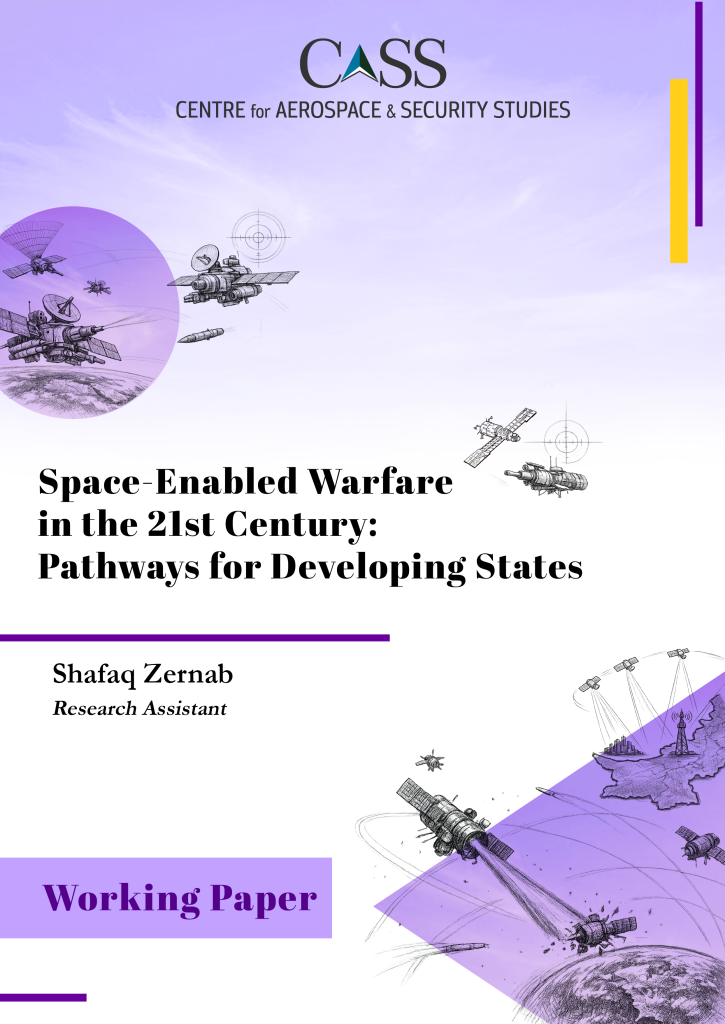
Space has emerged as a distinct domain of warfare alongside land, sea, air, and cyber. Developed countries like the United States, Russia, and China possess offensive and support capabilities in space. In the shadowed expanse of Low Earth Orbit (LEO), where satellites operate like silent custodians, the 2022 Russian invasion of Ukraine transformed the nature of modern conflict. As Russian troops marched forward, the commercial satellites like Maxar and Planet, which are operated by Western firms, captured high-resolution imagery of Russian troops, providing real-time intelligence to Ukrainian commanders, unlike ever before.
