The presidency of Ebrahim Raisi holds multiple opportunities for Pak-Iran relations to flourish in the backdrop of changing regional apparatus. As the new regime in Kabul struggles to establish itself amid mounting challenges, Pak-Iran security and strategic concerns are no less different.
At this critical juncture, both sides envision flourishing bilateral relations grounded in already established economic and political arenas of interests. President Raisi, in his inaugural addresses highlighted multiple prospects to enhance the scope of Pak-Iran relations and reassert Iran strategically in the region and world at large.
Ebrahim Raisi’s road to presidency
President Ebrahim Raisi was sworn in as the eighth President of Iran at a ceremony held at Iranian Parliament House on August 5, 2021. Turnout in the presidential elections, held in June this year, is considered to be the lowest-ever since the 1979 Iranian Islamic revolution. President Raisi has spent most of his life serving in judiciary and relevant departments of Iran, rising to the status of Chief Justice. Prior to this 2021 win, he also contested in the 2017 presidential election but failed to get the required votes. He is also under US sanctions because of his alleged human rights violations while recording verdicts during his time on the bench.
Boosting Iran relations with region and the world
In his inaugural address, he reiterated his stance that boosting relations with regional countries and constructive and extensive engagement with the world, would be his foreign policy priority. He further stated that Iranian presence in the region created security and supported peace and stability.
Nevertheless, no major policy shift is expected from President Raisi’s government vis-à-vis issues of strategic importance for Iran including revival of the Joint Comprehensive Plan of Action (JCPOA), its regional role, relations with Saudi Arabia and stance on Israel’s role in the Middle East.
Overcoming stumbling blocks in Pak-Iran relations
Iran-Pakistan relations, despite being immediate neighbors, have remained inconsistent with many twists and turns. It is important for both countries to find avenues for cooperation and enhance bilateral relations to exploit their full geo-economic potential.
Prime Minister Imran khan congratulated President Raisi on his election and expressed his wish for both countries to work together to promote regional peace, progress and prosperity. Traditionally, there have been several areas of common interest between the two neighbors, including facilitating the peace process in Afghanistan, bilateral trade, and border management, etc.
Of immediate and serious concern is the situation in Afghanistan. As an immediate neighbor, given the deadlock in intra-Afghan dialogue, withdrawal of international occupation forces and war raging across the country, achieving peace in Afghanistan is a priority.
Prospects of increasing Pak-Iran trade
Pak-Iran bilateral trade stands at $359 million. Steps that can be taken to increase the volume of bilateral trade include: signing a Free Trade Agreement (FTA), setting up markets at the border region, establishment of banking channel, elimination of illegal trade, visits of business delegations, organizing joint trade exhibitions etc.
Since Iran has also signed an agreement with China similar to the China-Pakistan Economic Corridor (CPEC) and shown interest to join CPEC with the goal to expand trade ties with Pakistan, cooperation can be further enhanced through greater road and railways connectivity. There is also a huge potential for energy trade.
Developing impetus on Pak-Iran gas pipeline
Iran is already providing electricity to Gwadar, Turbat and Makran regions of Pakistan. However, the electricity imported from Iran is 100 megawatt and at times faces technical problems. This needs to be addressed, especially since Iran has offered to increase electricity supply to 3000 megawatts.
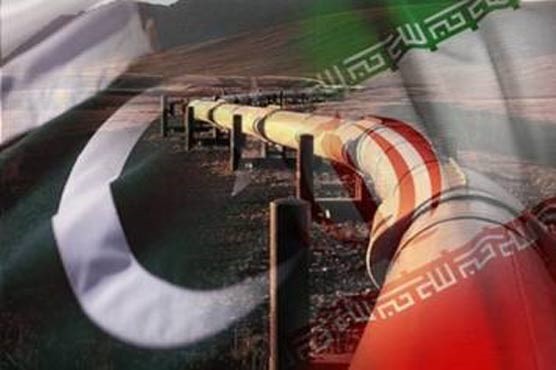
To meet Pakistan’s energy needs, a mechanism may be developed to complete work on the Iran-Pakistan gas pipeline and other electricity and oil supply related projects. A diplomatic and/or political resolution/methodology may be pursued to find ways and means to engage and trade with Iran while remaining within UN and other international sanction regimes. This path may be difficult but not impossible.
Pak-Iran bilateral cooperation on enhancing border security
Border security and management is another important area where the two sides can work together. Both countries share a 928 kilometers border and there are concerns about illegal trade, human/drug trafficking, contraband items’ smuggling and movement of terrorists.
Miscreants and international terrorist organization have used the porous border to conduct malicious activities on both sides of the border that creates tension between the two countries. In order to curb illegal cross border movement, Pakistan has already started work on fencing the border with Iran. The work is expected to be completed by December this year.
Pak-Iran collaboration on bridging Saudi-Iran rivalry
Apart from these areas, Pakistan, considering its friendly relations with both Iran and Saudi Arabia, can renew its efforts to bridge a constructive relationship between these two important countries of the Muslim world. With a new government in Iran, Pakistan can work with both to help reconcile their differences.
Peace between the two countries would contribute to an amicable settlement of the conflicts in Yemen and Syria, bringing peace and stability to the region at large. By ending tensions between two divergent countries, Pakistan’s stature as an important and responsible actor in the region will also increase.
An enhanced Pak-Iran bilateral relationship will not only benefit these two countries, it is conducive to the advancement of regional peace and stability. Any positive initiative from Pakistan shall thus, add the gestures of goodwill towards the new government.
The author is a researcher at Centre for Aerospace & Security Studies (CASS). This article was first published in Global Village Space. He can be reached at [email protected]
Image Source: Fareed, M. Prospects brighten for Iran-Pakistan gas pipeline project as sanctions lifted from Iran – SpecialReport – Dunya news. March 31, 2021.