The COVID-19 pandemic, termed as a “nuclear war in slow motion”, has exposed the global leadership crisis and the vulnerability of the international community to deal with the new and unforeseen hazards. The global pandemic that continues to inflict heavy losses, in both the developed and the developing world has raised serious questions on the fragility of the international security architecture that mainly caters to military-related threats, and is ill-equipped to deal with the new breed of viruses and climatic changes that pose an existential challenge to humanity.
It is not certain how long it will take for the international community to recover from the effects of the current pandemic and what the nature of the post-COVID-19 world will be. Will the US remain the leading global power, or it will be replaced by China? And how will it affect globalization?
The Post-COVID-19 World Order. Every major event in world history had a deepening impact on the international system, but the principles of realpolitik that continue to regulate inter-state relations have remained unchanged. The end of World War 2 transformed the global governance structure with new institutions and security alliances shaping the world order. The post-WWII alliance politics came to an abrupt end after the demise of the former Soviet Union with the US emerging as an undisputed global leader. This authority, however, was briefly challenged after the terrorist attacks of 9/11, but it was manipulated by the US to build a new security narrative that revolved around the threat of terrorism, which eventually became a coercive tool to protect and promote US global interests.
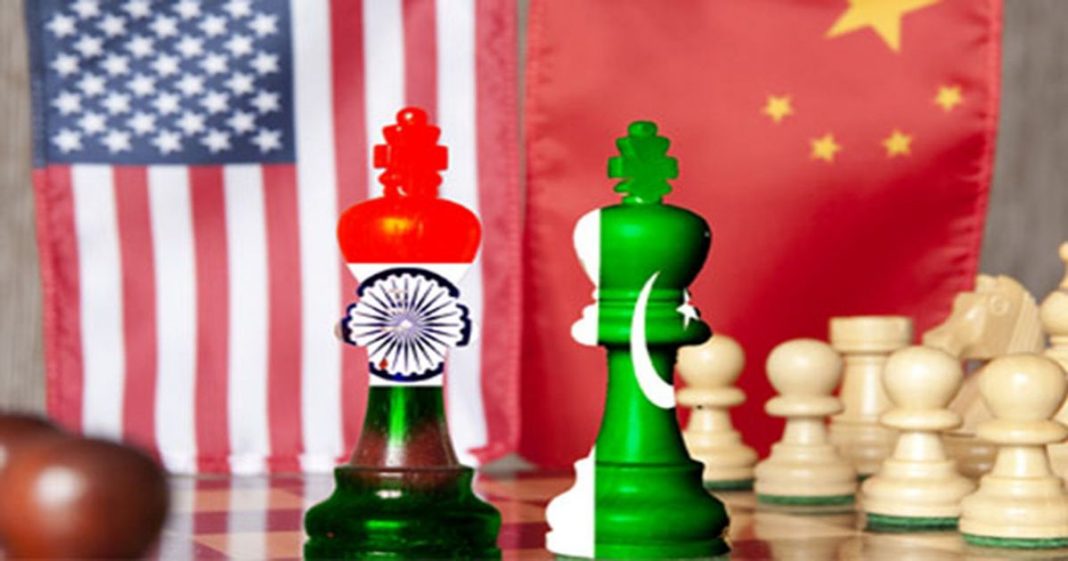
The rise of China as a potential economic and military rival is a relatively new justification for the US to continue modernizing its military capabilities and build strategic partnerships with other regional countries. The ongoing pandemic was a useful opportunity, to pause and engage in “cooperative and internationalist” approaches to help mitigate its consequences; instead, it has led to a new battle of narratives with China, where both countries are accusing each other of triggering the global health crisis.
The post-COVID-19 world, therefore, is not likely to be much different, albeit with expanded threat perceptions and increased focus on the possibility of bio-terrorism, as was the case in the post-9/11 environment, where the threat of “nuclear terrorism” became a market commodity to be capitalized by various interest groups for their commercial and political interests. In the post-pandemic world, the “Medical Industrial Complex” – like the military industrial complex (MIC) – is likely to emerge as the major beneficiary, with large investments pouring in for the research and development of new vaccines against future potential pandemics.
ls China Ready to Take Over the Leadership Role? The US remains the leading military and economic power but has failed the leadership test. Its inability to predict and pre-empt the crisis despite sufficient warning has exposed its vulnerability to new and unforeseen threats. The US’ failure to support its European allies and NATO partners during their worst crisis is likely to strengthen the naysayers who had been wary of the US’ security commitments.
Major US allies, including the United Kingdom, France, Germany, Italy, Spain and others are all trying to deal with the pandemic on their own. Southeast Asian countrieshave emerged more resilient and capable of dealing with the pandemic without US support. This may reignite the debate in these countries on the utility and credibility of US security guarantees against the “less likely” military threats, if the US is incapable of assisting against the “more likely” threat of pandemics in the future.
In contrast to the US, China has emerged more confident and demonstrated potential to deal with the pandemics on its own. It is now assisting the rest of the world by engaging in aggressive “medical diplomacy” and sending doctors and nurses along with necessary equipment to US allies in Europe and even to India.
Instead of joining hands with China to help the international community, the US has opted for a confrontational approach, accusing China of triggering the crisis and by labelling the virus as the “Chinese” or “Wuhan virus.” Most countries have shown no interest in this blame game and remain appreciative of Chinese assistance; however, if the US once again decided to provide the stark choice of “with us or against us” – as it did post-9/11, it could permanently damage US credibility as a reliable partner.
The US still has the largest size of the economy and maintains overwhelming influence in global politics, but this could change in the near future. According to the 2019 Financial Times report, Asian economies in 2020 would be larger than the rest of the world combined together. The Asian region is home to more than half of the world’s population with 21 out of the world’s 30 largest cities in Asia, and thus, is more vulnerable to the growing cycle of pandemics. If the Asian powers including Japan and South Korea, and possibly India, agreed to reorient their security priorities in the post-COVID-19 world and joined hands for to developing a regional mechanism to deal with future security challenges, it may transform their relations and would hasten the onset of the “Asian Century” which would be led by China.
The Future of Globalization. The current pandemic has generated an interesting debate on the future of globalization with predictions that it may reverse the process that had made the world interdependent. Such fears mainly emanate due to huge financial losses incurred by global businesses and multinational companies that may take several years to recover. From another perspective, the crisis has forced people to explore innovative means to enhance connectivity. Educational institutions have adopted online learning tools and businesses have shifted to virtual meetings. This transition, if continued for a prolonged period, could permanently change the way of doing business, especially once global travels are likely to become more complicated with additional border controls, thus further reducing the incentive for transnational movements.
In the post-COVID-19 world, multi-national corporations and businesses may become inward in their approaches, temporarily slowing the pace with more emphasis on virtual connectivity, but it is unlikely to reverse the process of globalization. States may find more incentive in regional rather than intra-regional connectivity, as it could be more useful in dealing with future pandemics.
The writer is Director at Centre for Aerospace and Security Studies (CASS). This article was first published on Strafasia https://strafasia.com/post-covid-19-world-order-how-different-will-it-be/. He can be reached at [email protected]