
Predicting Pakistan’s future is a daunting task considering its external and internal challenges such as a precarious socio-political landscape, economic woes, law and order shortcomings, and dynamic regional and global geopolitics. The resulting uncertainties complicate attempts towards projecting the future trajectory of the country. However, by analysing current trends and identifying necessary reforms, we can develop a strategic vision for the nation’s progress and prosperity as Pakistan approaches its centennial year of independence. To examine these challenges and opportunities, CASS organised a special lecture as part of its Catalyst Conversation Series on 16 August 2024 titled ‘Pakistan of 2047’. The distinguished subject matter expert who spoke at the special lecture was Ambassador Aizaz Ahmad Chaudhry (Retd), former Foreign Secretary, Government of Pakistan and Chairman Sanober Institute. The lecture aimed to highlight reforms and initiatives that Pakistan should earnestly implement to reconstruct and enhance the socio-political trajectory it embarked upon at the time of its independence. The conversation centred on several key themes, including fostering political stability, promoting economic revival, upholding law and order, navigating global and regional geopolitics to enhance Pakistan’s strategic positioning and building a resilient foreign policy. It also touched upon the importance of implementing the UN Sustainable Development Goals (SDGs) to balance economic growth with environmental sustainability. The lecture was moderated by Air Zahid Mehmood (Retd), Director at CASS, Islamabad, with Concluding Remarks by President CASS Air Marshal Javaid Ahmed (Retd).
The Extraction Trap
Trump’s declaration to “run Venezuela” after Maduro’s capture is a seeming promise of a sudden cure to Venezuela’s ills. However, it ignores the nation’s terminal diagnosis of a century of plunder. The rhetoric of imminent revival on the basis of the speedy return of international oil capital and the promise of 100 billion US dollars in reconstruction funds made the intervention seem like a unique opportunity.
Future Shield: The Saudi-Pakistan Security Partnership
Although the SDMA does not identify an adversary, effectively functioning as a deterrent, it cannot be viewed in isolation from the Israeli belligerence in the Middle East. Israel’s war against Hamas has expanded beyond the genocide of Gaza; it has bombed the West Bank, Lebanon, Syria, Yemen, Iran, and recently Qatar. Tel Aviv’s campaign under the banners of ‘anti-Semitism’ and ‘terrorism’ has engulfed the whole Middle East in a war-like situation, which has generated new enemies and has deepened the instability of the region.
The Trilateral Shift
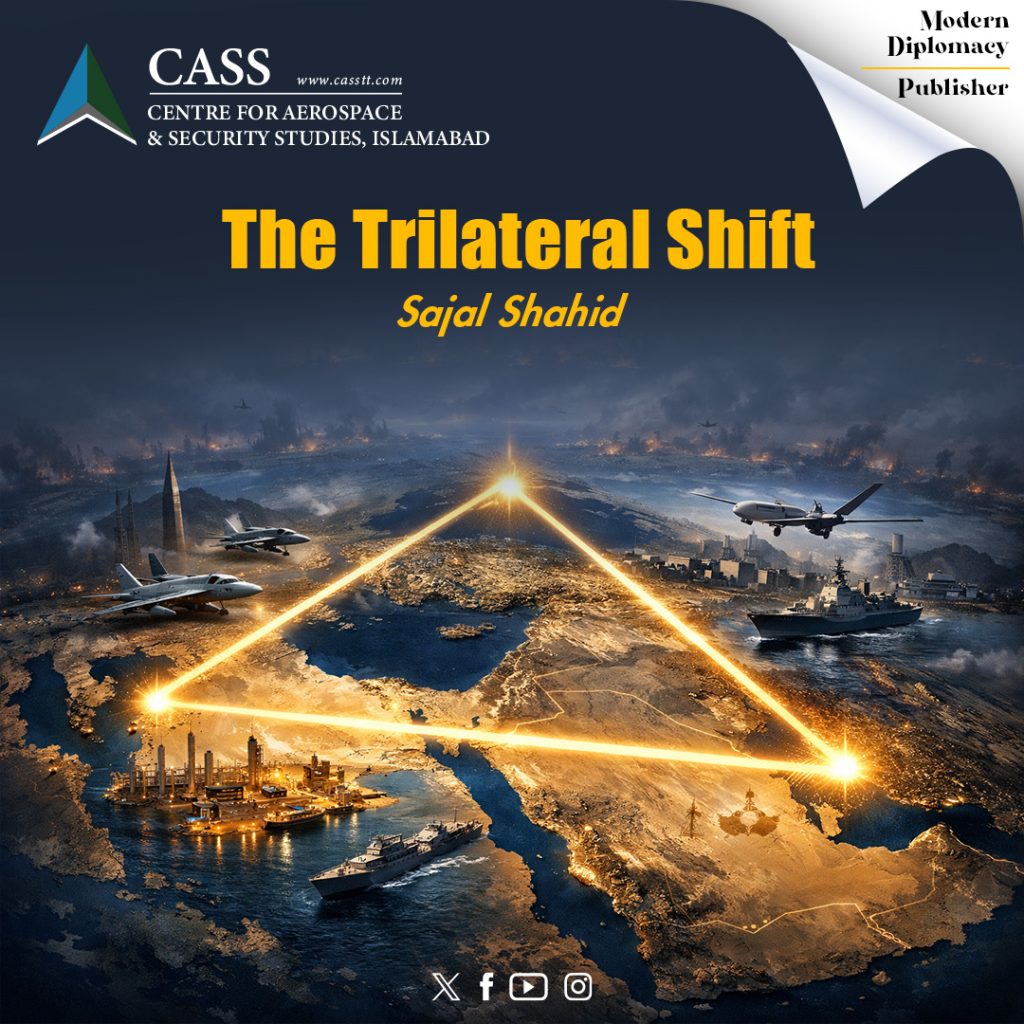
On 15 January 2026, the Pakistani defence production minister confirmed that an agreement for a new trilateral defence deal between Pakistan, Saudi Arabia, and Türkiye is in the pipeline, other than the Pakistan-Saudi bilateral deal announced last year.
