
Since the US military withdrawal from Afghanistan in August 2021 after its longest and costliest war with an estimated cost of 2 trillion dollars, the Afghan issue has apparently become more complex. Especially, against the backdrop of the Taliban coming into power, the international community has seemingly turned a blind eye to it. In the past few weeks, Afghanistan has been facing a huge economic and humanitarian crisis, and perhaps one of the reasons for this is the negligence of the international community. Pakistan, as the next-door neighbor of the ‘war torn’ nation, is an important and the most affected country since it has sacrificed and suffered more than anyone else over the past 20 years in particular. A peaceful and stable Afghanistan is in the interest of South and Central Asia, while an unstable Afghanistan would likely affect the whole region. Deeply concerned by this, Pakistan continues to play its positive and constructive role to address the looming humanitarian and economic crisis in Afghanistan.
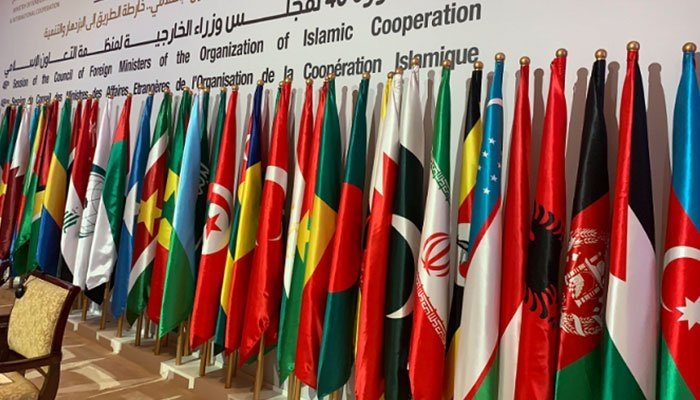
Very recently, Pakistan hosted the 17th session of the emergency meeting of the Organization of Islamic Conference’s (OIC) Council on Foreign Ministers (CFM) on 19th December in its quest to address the grave economic and humanitarian crisis in Afghanistan. During the session, Prime Minister Imran Khan warned that ‘Afghanistan could potentially become the biggest man-made crisis’ if the world continues to ignore it. He further maintained that Afghanistan’s economy was 75% dependent on foreign aid even before the Taliban takeover – aid which no longer exists. In such circumstances, any country would collapse. Furthermore, the CFM, in its resolution, urged the US to unfreeze Afghan assets of hundreds of millions of dollars . In addition, a very significant output of the meeting was setting up of the ‘Humanitarian Trust Fund and Food Security Program’ for which Saudi Arabia promised to provide USD 265 million, while Pakistan had already committed USD 30 million to help Afghanistan overcome its humanitarian crisis. Pakistan has also proposed a six-point framework for the international community to extend its support to Afghanistan. This shows Pakistan’s commitment and sincere efforts towards the Afghans in their hour of need.
The US has also endorsed Pakistan’s constructive role to discuss the situation in Afghanistan. The US Secretary of State Antony Blinken thanked Pakistan for hosting the extraordinary OIC summit and inviting the international community to support the Afghan people. He termed it as a vital meeting and maintained that the summit was a prime example of the collective determination of both countries to help the Afghan people. This was followed by the US special envoy on Afghanistan Thomas West’s meeting with the Chief of Army Staff and lauding Pakistan’s efforts on the same lines.
Before this, in November 2021, Pakistan has also hosted a meeting of the extended troika that comprises Pakistan, China, Russia, and the US to discuss the situation in Afghanistan. This implies that Pakistan, while acting responsibly is quite concerned and providing its good offices to bring peace, stability and prosperity to the country.
It is notably important here to discuss that given the tumultuous developments, which have taken place since the fall of Kabul, the emergent dynamics of the Afghan issue have become more significant for international peace and stability than ever before. However, no concrete and solid roadmap was provided by the international community in general, and the US in particular to address the prospective civil war, and social, political, and economic crisis in Afghanistan. Even during the UN General Assembly’s 76th Session that was held in September 2021, the international community was quite reluctant to deliberate upon the Afghan issue. Despite this, Pakistan’s Prime Minister shared his concerns with the UNGA about the emerging crisis in Afghanistan. He urged the international community to pay attention to the country and warned that it may turn into a terrorists’ haven. He maintained that ‘the international community needs to strengthen and stabilize the government in Afghanistan for the sake of Afghan people.’
The crisis in Afghanistan has emerged as one of the most significant issues of international peace and stability. Even though it might be coming a little bit late, Pakistan’s commitment towards addressing the humanitarian crisis in Afghanistan has been endorsed by the international community, including the US. The OIC’s CFM Summit in Islamabad, which resulted in concrete and productive outcomes, can serve as a concrete step towards addressing the plight of the Afghan people.
The writer is a researcher at the Centre for Aerospace & Security Studies (CASS), Islamabad, Pakistan. He can be reached at [email protected]
Image Source: Mariana Baabar 2021. ” Pakistan hosts OIC’s Council of Foreign Ministers meeting today” Geo News, 19 Dec 2021. https://www.geo.tv/latest/388360-pakistan-hosts-oics-council-of-foreign-ministers-meeting-today



