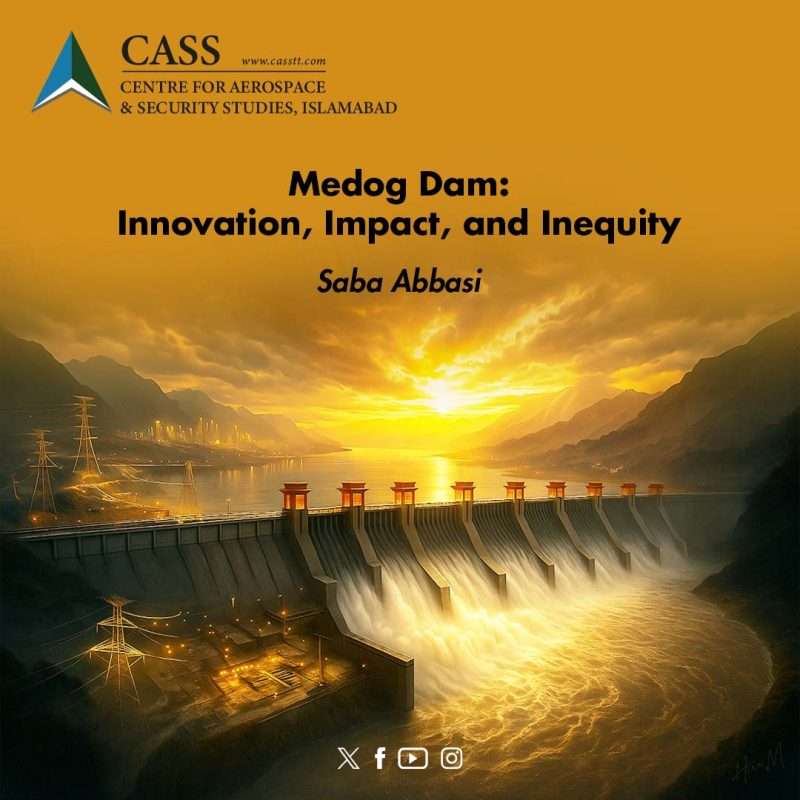
Medog Dam construction on the Yarlung Tsanpo River in Tibet, China, represents the harnessing of the potential of a geological marvel. The enormous hydraulic head, abundant water volume and immense river discharge make it an unprecedented engineering endeavour. With an estimated cost of $168 billion and an energy capacity of 300 kWh annually, three times that of China’s Three Gorges Dam, this project may redefine hydroelectric engineering as we know it.
There are two important but contrasting aspects to the Medog mega-dam: its technological innovation and the energy trilemma.
The project will employ an unconventional design, using advanced materials and real-time monitoring systems. Unlike a conventional surface-based dam, about 90% of the Medog Dam will be underground, utilising tunnel diversion systems. Self-healing and high-grade advanced materials will be used to withstand extreme pressure and potential rock bursts.
AI-powered real-time monitoring systems and Internet of Things (IoT) sensors will monitor structural safety, assess infrastructure condition, and carry out fault diagnosis. In addition, digital twin modelling systems will be deployed in the project for risk assessment and to support predictive maintenance.
Up until now, coal has been the main source of China’s electricity generation, amounting to 61 percent in 2023. However, due to the rising energy demands of the world’s greatest manufacturer, China needs to generate more energy. Moreover, China’s pledge to reach carbon neutrality also necessitates a massive transition to renewables. The Medog Hydropower Station will facilitate that major shift to renewable hydro energy, given that its closed-loop design will return water to its original river after power generation.
Furthermore, China’s 2025 energy priorities includes the “development and utilisation” of renewables. On January 1 2025, China’s first energy law came into force, aiming to ensure national energy security and promote the transition to green and low-carbon energy goals. The construction of Medog, or the Motou Power Station, is a significant stride towards achieving those goals.
However, a country’s energy system must strike a balance across the energy trilemma: energy security, environmental sustainability, and energy equity. The underground tunnel construction, intended to minimise surface impact and avoid significant changes to the natural landscape, indicates China’s consideration for ecological security. Nevertheless, the materialisation of this dam will not be without environmental and transboundary water challenges.
One of the threats to environmental sustainability is that the dam will potentially alter habitats and ecosystems in the Tibetan Plateau. Downstream agricultural lands will be adversely affected. The reduction in downstream sediment flow will diminish the fertility of floodplains. The floodplains cover 27% of the cultivated area, and any disruption from the dam may undermine livelihoods in a region where agriculture is the main source of food and economic security.
Moreover, the immense scale and geological location of the dam make it susceptible to high seismic activity. Although the design of the dam is planned to be resilient to a magnitude IX earthquake, but its location on a major fault zone, the sheer scale of the structure, and the immense hydraulic pressure can induce major seismic activity or trigger landslides.
On the other hand, the energy equity factor highlights the need for a proportionate distribution of centralised and local benefits. Mostly, the power generated by such energy systems feeds into national grids and industrial zones. The indigenous communities often face displacement, disruption of ecological systems, and restricted access to resources. Furthermore, the risk of limiting local economic benefits and the low likelihood of dam’s primary energy consumption serving resident populations requires attention to ensure project’s energy equity.
In sum, this dam is an energy-security infrastructure built on precision engineering. It will require the integration across numerous domains such as geotechnics, hydraulics, turbine manufacturing, power systems, materials science, construction technology, smart monitoring, environmental protection, and international relations. Its technical difficulty and risk far exceed those of any previous project, such as the Three Gorges Dam, representing humanity’s apex effort to build large energy infrastructure under nature’s most extreme conditions. This project may also enhance China’s hydropower tech exports and global consulting leverage. Therefore, every step forward demands rigorous scientific validation, extensive technological breakthroughs, and international cooperation and coordination.
Saba Abbasi is a Research Assistant at the Centre for Aerospace & Security Studies (CASS), Islamabad, Pakistan. She can be reached at [email protected]