
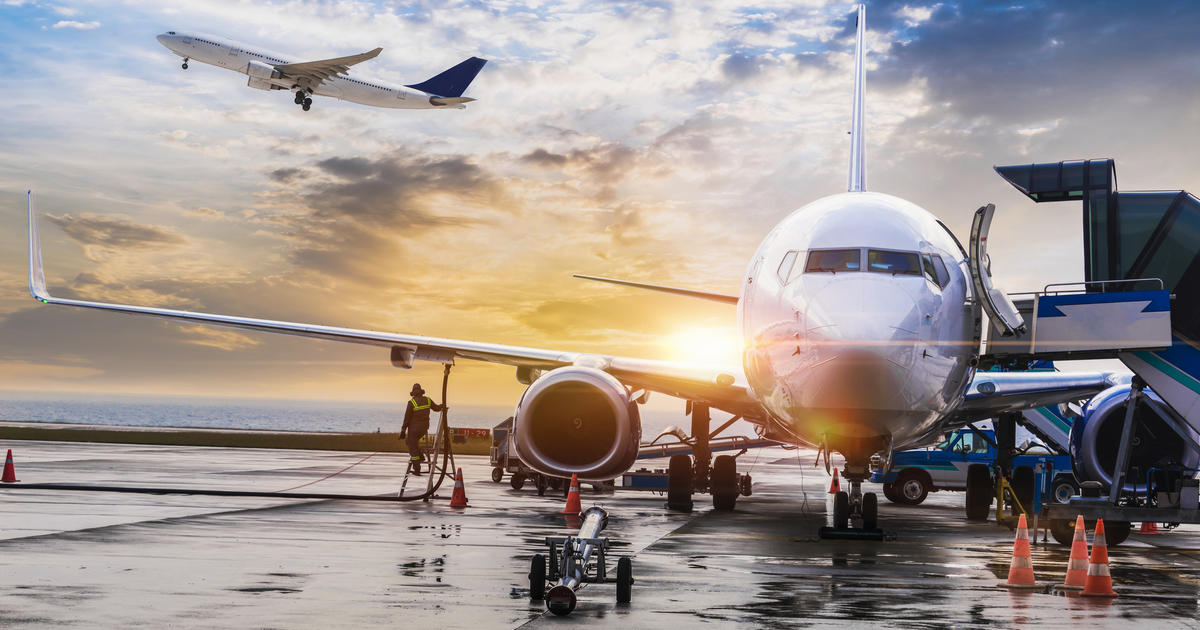
Passenger airplane getting ready for flight

An increasing amount of company data from the aviation industry is showing the extent to which global aerospace and aviation is bearing the brunt of the coronavirus pandemic. In a recently issued statement, Airbus has called the pandemic the “gravest crisis the aviation industry has ever experienced.”

Airbus’ worries are being reflected in its commercial aviation segment, where it has witnessed a near 40% drop in recent months. But what is truly frightening is the path to recovery that Airbus envisages. Its statement foresees a recovery of aviation traffic to pre-Covid19 levels only after 2023, and possibly after 2025.

Because of the long path to recovery, Airbus and other aviation giants must now consider structural changes that reflect the decline in air traffic for the foreseeable future. This has translated into announcements of job cuts at staggering levels.

Airbus has announced a cut of 11% of its workforce over the next twelve months, amounting to 15,000 jobs around the world. The cuts are disproportionately in Europe, with 5,000 positions in France, 5000 in Germany, nearly 1000 in Spain, 1,700 in Britain, and another 1,300 positions in the rest of the world. Airbus’ rival, Boeing, had announced a 10% reduction in its workforce through voluntary and involuntary cuts back in April.

Airlines themselves are responding to the pandemic with layoffs as well. Air France has announced 7,500 job cuts by the end of 2022, while Qantas (Australia) has announced 6,000, Delta has 10,000, British Airways 12,000, and Lufthansa has announced a massive 22,000 job cuts. But the largest slasher might be Emirates which, according a Bloomberg report, might slash 30,000 jobs over the next two years.

It should be noted that the aviation industry is an important sector in terms of its economic contribution, not least from an employment perspective, since many of its jobs require technical expertise and are often comparatively higher-wage positions.

Mindful of this, the French government had promised a stimulus of 15 billion Euros for the aviation industry (including Airbus), and 7 billion Euros for Air France itself. The French Economic Minister has urged Airbus to do everything it can to mitigate the announced job cuts. The Ministry has described Airbus’ layoff announcement as “excessive,” but it also acknowledges the recovery can only be gradual.

Yet the second-order effects of the coronavirus pandemic are beginning to mete a severe blow to the sector, especially in terms of the travel restrictions that many jurisdictions are placing. As an example, the EU has just issued a list of countries whose citizens are to be allowed entry in the near future, and the list bars countries such as the United States due to the ongoing contagion.

Given the hardships faced by the aviation industry, even large promised bailouts do not seem sufficient to curtail company decisions to let go of significant portions of their workforce. The question is now whether the downturn will be comparatively short, or prolonged either by a series of shocks and setbacks, or by a sustained and protracted depression. If Airbus is correct to assume that recovery will only occur in the period 2023-25, then one of the most economically-significant industries, global aviation, will add to the litany of cyclical sectors that will be marred by economic depression.

The writer is the Director for Economics and National Affairs at the Centre for Aerospace and Security Studies (CASS). He can be reached at [email protected].

Share this article

Facebook
Twitter
LinkedIn

Recent Publications

Browse through the list of recent publications.

The Cover-up: IAF Narrative of the May 2025 Air Battle

Even after one year since the India-Pakistan May war of 2025, the Indian discourse regarding Operation Sindoor remains uncertain under its pretence of restraint. The Pahalgam attack on 22 April, which killed 26 people, triggered an escalatory spiral. New Delhi quickly accused Pakistan-linked elements, while Islamabad refuted the allegation and demanded an independent investigation. On 7 May, India launched attacks deep inside Pakistan under what it later termed as Operation Sindoor. The political motive was intended to turn the crisis into coercive signalling by shifting the blame onto the enemy and projecting a sense of military superiority.
This episode, however, began to fray immediately as war seldom follows the intended script. Within minutes PAF shot down 7 IAF aircraft including 4 Rafales. On 8 May, Reuters reported that at least two Indian aircraft were shot down by a Pakistani J-10C, while the local government sources reported other aircraft crashes in Indian-occupied Jammu and Kashmir

Read More »

Why the IAF’s Post-Sindoor Spending Surge is a Sign of Panic

After Operation Sindoor, India is spending billions of dollars on new weapons. This is being taken by many people as an indication of military prowess. It is not. This rush to procure weapons is in fact an acknowledgement that the Air Force in India had failed to do what it was meant to do. The costly jets and missiles that India had purchased over the years failed to yield the promised results.

Sindoor was soon followed by India in sealing the gaps which the operation had exposed. It was reported that Indian Air Force (IAF) is looking to speed up its purchases of more than 7 billion USD. This will involve other Rafale fighter jets with India already ordering 26 more Rafales to the Navy in 2024 at an estimated cost of about 3.9 billion USD. India is also seeking long-range standoff missiles, Israeli loitering munitions and increased drone capabilities. Special financial powers of the Indian military were activated to issue emergency procurement orders. The magnitude and rate of these purchases speak volumes.

Indian media and defence analysts have over the years considered the Rafale as a game changer. When India purchased 36 Rafales aircrafts at an approximate cost of 8.7 billion USD, analysts vowed that the aircraft would provide India with air superiority over Pakistan. Operation Sindoor disproved all those allegations. Indian aircraft did not even fly in Pakistani airspace when the fighting started. India solely depended on standoff weapons that were launched at a safe distance. The air defence system of Pakistan, comprising of the HQ-9 surface-to-air missile system and its own fighters, stood its ground.

Read More »

May 2025: Mosaic Warfare and the Myth of Centralised Air Power

Visualise a modern-day Air Force commander sitting in the operations room, miles away from the combat zone, overseeing every friendly and enemy aircraft and all assets involved in the campaign. In a split second, he can task a fighter, reposition a drone, and authorise a strike. In today’s promising technological era, he does not even need an operations room; a laptop on his desktop will suffice. The situation looks promising as it offers efficiency, precision, and control. The term used for such operational control is ‘centralisation’, which has been made possible with advanced networking, integrating space, cyber, surveillance, artificial intelligence, and seamless communication, enabling a single commander to manage an entire campaign from a single node. Centralised command and control, championed by the Western air forces and then adopted by many others, has thus been seen as a pinnacle of modern military power.
The concept of centralisation, enabled by state-of-the-art networking, may seem promising, but it is nothing more than a myth.

Read More »


