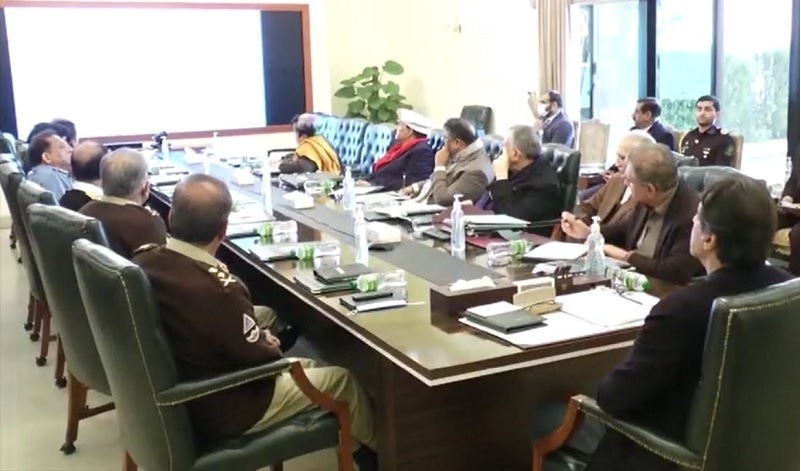
Pakistan’s first National Security Policy (NSP) was endorsed in the 36th National Security Committee (NSC) meeting chaired by Prime Minister Imran Khan on 27th December 2021. The NSC consists of the country’s key senior civilian and military leadership. After being endorsed by the NSC, the NSP was approved by the Cabinet on 28th December 2021. The policy covers the next five years (2022-26) and is tagged as being ‘citizen-centric’ with its ultimate objective being to ensure safety, security and dignity of the common citizen.
Formulation of this policy was applauded by Prime Minister Imran Khan who called it ‘a historic moment.’ He also stressed its implementation through synchronized efforts. Highlighting its importance, he commented that ‘the security of Pakistan rests in the security of its citizens.’
Indeed, the policy is a major breakthrough and deserves due appreciation. However, much more needs to be done. The national security of any country does not rest solely with the government. It is connected with each and every individual of that society. While the government may have access to resources and can devise effective strategies to address external threats, it also needs considerable support from within society to cater for internal challenges.
Since the actual document has yet to be made public, one can only point out that while the NSP might have a well-articulated, top-down approach with a purported equally effective implementation mechanism, it will not work efficiently until and unless it is reinforced by a bottom-up approach by the citizens of Pakistan. The level of their acceptability towards this policy will shape its future.
There is a never-ending list of what can be done but the least that the citizens can do is to start thinking about their national security and explore areas where they can contribute or play their part in individual capacities.
Over the years, growing intolerance has been reshaping the structure of Pakistani society which is becoming increasingly polarized. This shift has taken a dangerous shape and has emerged as a towering threat to our national security. Recent events in Pakistan, particularly the Sialkot incident, is an indictment of how severe the consequences of intolerance can be. Only, a tolerant society and people can ensure the safety and security of a country. As a nation, we need to be more flexible in tolerating differing viewpoints. We need to be tolerant both in our actions and our beliefs. We need to exercise restraint for the larger good of our country. This is something which can’t be imposed by the state, rather has to originate from within the people themselves. It demands rational decision-making at the individual level and prioritizing national interest over individual interest. The state must, however, ensure swift justice in case people violate the law.
An emerging threat to national as well as individual security is disruptive digital technologies. Citizens need to understand the far-reaching impact of digital platforms. Social media is a great medium for entertainment and information, but easier accessibility makes it an ideal tool for spreading disinformation and fake news. Individuals must not become part of any anti-state propaganda/narrative that harms national interests or defames the state by falling for false information and spreading it on social media platforms. By acting responsibly on digital platforms, citizens can contribute towards the national security of their country.
We can also make our environment more secure by contributing at the individual level. One area where there is a dire need of citizen participation is climate change. The world is now fairly aware that climate change is already showing its impacts and will be a worrisome challenge if not dealt on priority basis. Competition over scarce resources can lead to conflict which will inadvertently harm national security. While we see climate change strategies at national and international level, the root cause cannot be eliminated until citizens start adopting lifestyles which are environment- friendly. Steps such as water conservation, recycling used material, cutting energy consumption, protecting green spaces, and conducting tree plantation drives may appear trivial, but they have long-term advantages and can be done at the individual level.
Lastly, the NSP regards economy as a core element noting that a stronger economy would reinforce national security vis-à-vis military and human security. It needs to be emphasized that the national economy is synchronized with both individual and state actions. The reluctance of citizens to act responsibly places immense pressure on the state to also act responsibly and work for citizen welfare and uplift. Not having a mutually beneficial and trustworthy social contract between state and citizens is harmful for economic security which ultimately impairs national security. This is something which needs due attention from each and every leader and citizen.
As we enter 2022, we must ponder upon the lessons that the past years have taught us and we must be cognizant of our role in society. It is the duty of individuals to contribute effectively to the well-being of the state and vice versa so that we collectively move in one direction.
Shaza Arif is a Researcher at the Centre for Aerospace & Security Studies (CASS), Islamabad, Pakistan. She can be reached at [email protected]
Image Source : Khan, Sana Ullah. 2021. “NSC approves Pakistan’s first-ever National Security Policy”. Dawn.December 27. https://www.dawn.com/news/1666121