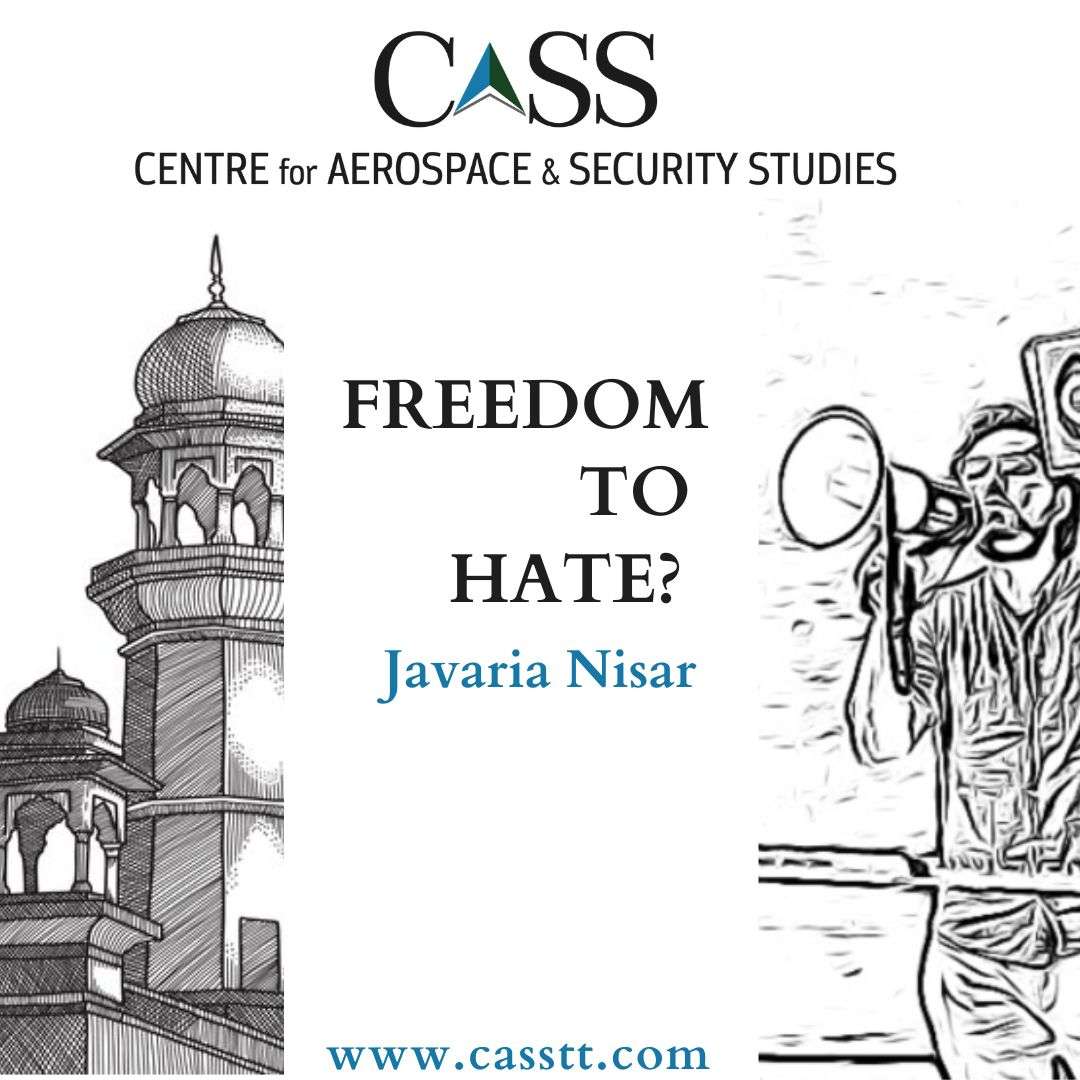
The United Nations Human Rights Council (UNHRC) recently adopted a resolution titled, ‘Countering religious hatred constituting incitement to discrimination, hostility or violence’. The motion, co-sponsored by Pakistan on behalf of the Organisation of Islamic Cooperation (OIC), called for states to review their existing laws and fill in gaps, especially the accountability gaps that ‘impede the prevention and prosecution of acts and advocacy of religious hatred’. Among 47 countries, 28 countries voted in favour of the resolution, 7 abstained and 12 countries voted against the motion. The European Union (EU) and the United States (US) voted against the resolution on the pretext that it challenged their ideological position on protecting human rights and freedom of expression.
The UNHRC resolution came in the wake of public instances of burning of the Holy Quran in Sweden. An Iraqi Christian immigrant Salwan Momika desecrated the Quran by tearing it up and setting it ablaze repeatedly outside a Stockholm mosque. The incident sparked widespread protests in the Islamic world, resulting in diplomatic backlash with Muslim nations demanding action against perpetrators of religious hatred. They have urged governments to put a stop to such disgraceful acts known to fuel violence and disrupt interfaith harmony.
The response of the EU and other Western countries regarding the resolution highlights the complexity of this issue. As per their viewpoint, the resolution seems more about safeguarding religious symbols rather than human rights. Their argument is founded upon the idea of freedom of expression and the right to free speech.
However, the vilification of Islam and other such incidents of hatred have a deeper history than the philosophy of freedom of expression. The boisterous slogans of free speech obscure the long-standing history of anti-Muslim sentiments and the changing conceptions of Christians. Their hostility towards Muslims and Islam dates back to the Crusades and European imperialistic ventures. According to Crusades historian Tomaz Mastnak, it was during the Mid-ninth Century when the Christians united under the banner of Christendom and started seeing Muslims as the normative and fundamental enemies of Christianity instead of viewing them as another group of pagans.
Nonetheless, Western ideology immensely transformed in the years after the religious wars in Europe. According to Joram van Klaveren, who is a board member of the Islam Experience Centre (an organisation working towards fostering a connection between Muslims and other communities), the rise of secularism has given a new perspective to how Muslims are viewed by the general public in the Western world. For an ordinary citizen in Europe, it is hard to comprehend Muslim outcry over the desecration of the Holy Quran or defamation of the Holy Prophet (P.B.U.H). Since religious doctrines have mostly taken a backseat in the West, the public in these countries expect similar indifference from Muslims to incidents such as the burning of their Holy Book. Unaware of Muslim sensitivities to such issues, they find Muslim reactions to such incidents unjustifiable. The far-right exploits such incidents for a more sinister purpose.
The far-right portrays Muslim reactions as a violent conspiracy by followers of Islam to (re) conquer Western homelands. They ring alarm bells over the rate at which Muslim populations are increasing in the West which would eventually lead to a major demographic shift. Owing to this narrative and a generally secular mindset, many ordinary Europeans are likely to see protesting Muslims as remnants of the past – a horrific reminder of religious persecution in Europe that had resulted from fissures within Christianity. The extremists use Quran burning incidents as an instrument to provoke Muslims into violent protests and then use these protests as a cautionary warning for the Europeans to stand up against so-called Muslim assault on Western values.
Unfortunately, it is a glaring reality that the world is facing an alarming rise in anti-Muslim incidents. According to a recent report on hate crimes in 2022 published by the Home Office of the United Kingdom, 42% of the total offences were against Muslims. However, those in positions of authority pull the freedom of expression card to justify their biased and prejudiced behaviours. Hence, it is pertinent to recognise that every freedom comes with its own responsibilities. While freedom of expression and speech is universal, it is not absolute. Safeguarding the right to express freely is imperative but the responsibility to shun divisive policies and prejudice against other people or religions is also equally important.
Moreover, addressing and combatting such hateful occurrences is essential. Doing so requires much more than a resolution at the UNHCR or mere proposals to ban Quran burnings such as being considered by Denmark, since we are yet to see whether these will even be effective or sufficient in addressing deeper, systemic causes of Islamophobia. Practical steps to build inter-faith harmony and prevent the normalisation of Islamophobia can only be undertaken if there is genuine political will and a sincere desire to do so. So far, both have been found in short supply among leaders in the Western world.
Javaria Nisar is a Research Assistant at the Centre for Aerospace & Security Studies (CASS), Islamabad, Pakistan. She can be reached at [email protected].
Design Credit: Mysha Dua Salman