
The year 2025 has dramatically reshaped global and regional geopolitics through a series of crises: the India–Pakistan war, the Israel–Iran confrontation, and renewed instability on the Pakistan–Afghanistan border. These events have exposed deep fractures in the international order, most notably the sharp deterioration in India–United States relations due to trade disputes, India’s ties with Russia, and differing assessments of the recent Indo-Pak conflict. This rift has created limited but significant diplomatic openings for Pakistan to re-engage Washington, while deepening partnerships with China and key regional players such as Saudi Arabia.
At the same time, the Israel–Iran war and persistent cross-border challenges with Afghanistan have complicated Pakistan’s security environment, forcing Islamabad to navigate intersecting great-power rivalries and regional fault lines with greater agility.
In this fluid landscape, emerging geopolitical alliances present both risks of entanglement and opportunities for strategic repositioning. The Catalyst Conversation, ‘Emerging Geopolitical Alliances and Implications for Pakistan,’ brought together practitioners to examine these shifting alignments, assess their impact on Pakistan’s security and foreign policy, and identify balanced, forward-looking strategies to safeguard national interests in an era of uncertainty and renewed possibilities.
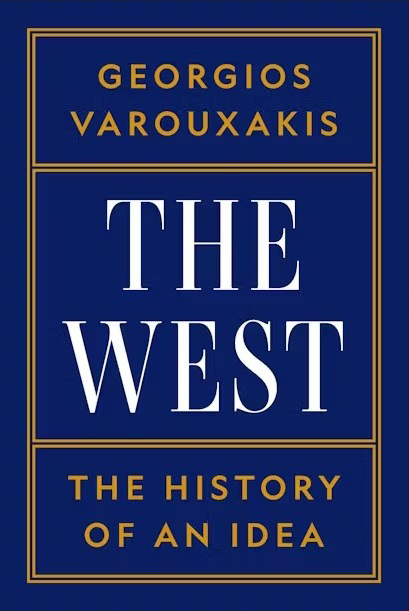
The West: The History of an Idea
The world is witnessing the collapse of the Western order, if not the emergence of an alternative one. The idea of ‘West’ as against the rest is still at the root of contemporary understanding of world politics. Georgios Varouxakis, a remarkable voice on Modernity and Nationalism, has provided the historical origins and modern connotations attached with the idea of ‘West’. In his book ‘The West: The History of an Idea’, Varouxakis has argued that the West is not an eternal entity, rather it is a modern socio-political construct that emerged in the political philosophy of the early 19th century and evolved with the passage of time. The book provides an in-depth historical analysis of the idea to determine the roots of its modern interpretation.
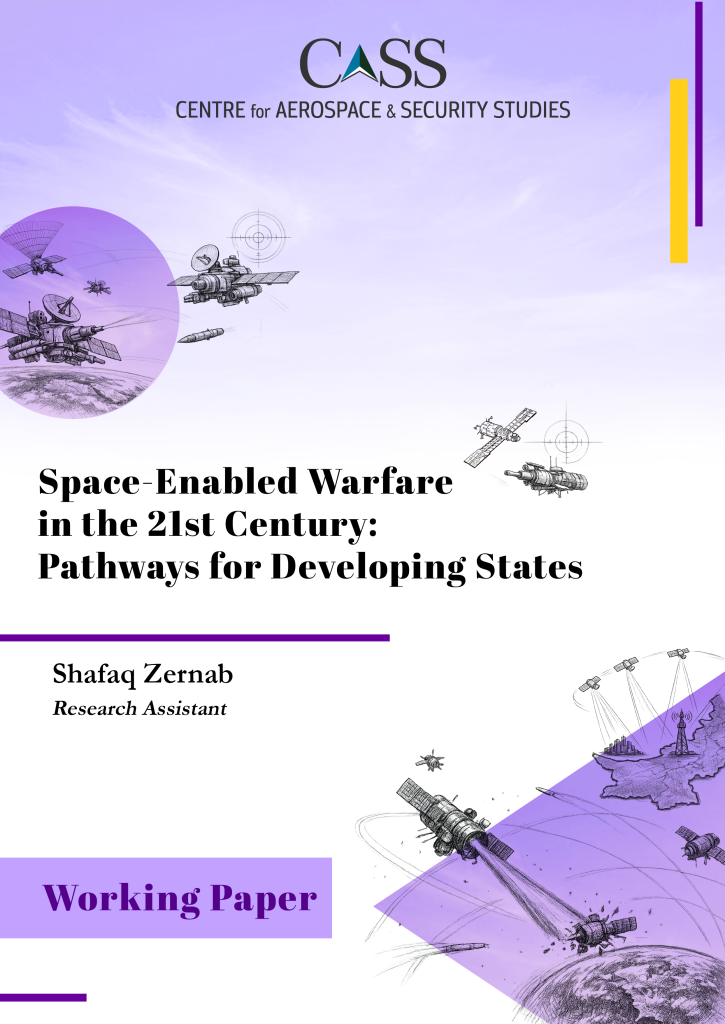
Space-Enabled Warfare in the 21st Century: Pathways for Developing States
Space has emerged as a distinct domain of warfare alongside land, sea, air, and cyber. Developed countries like the United States, Russia, and China possess offensive and support capabilities in space. In the shadowed expanse of Low Earth Orbit (LEO), where satellites operate like silent custodians, the 2022 Russian invasion of Ukraine transformed the nature of modern conflict. As Russian troops marched forward, the commercial satellites like Maxar and Planet, which are operated by Western firms, captured high-resolution imagery of Russian troops, providing real-time intelligence to Ukrainian commanders, unlike ever before.
