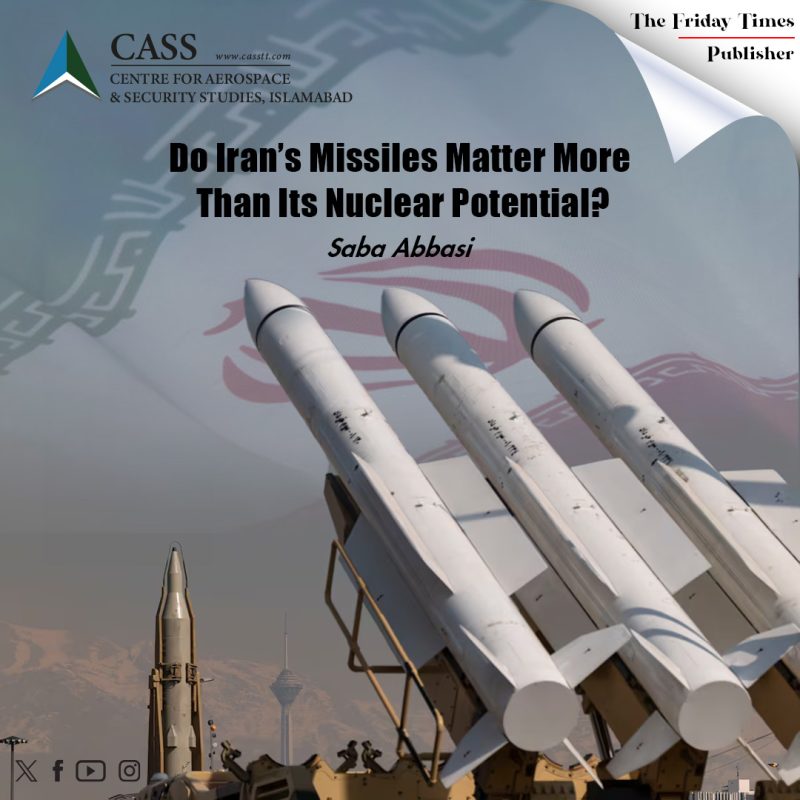
Iran’s missile arsenal is the newly identified threat to Israel and US forces in the region. In the days leading up to 29 December’s meeting between Netanyahu and President Trump, there was considerable speculation that Iran would be the primary item on the meeting’s agenda, and this ultimately proved to be the case. According to the reports, Prime Minister Netanyahu briefed President Trump about the necessity and urgency of attacking Iran again. However, this time the primary threat is not its nuclear programme, but rather Iran’s growing ballistic missile stockpiles.
The meeting put to rest earlier conjecture of a rift between the two leaders over Iran, driven by President Trump’s assertion that US has destroyed Iran’s nuclear program, leaving no room for Israel to worry. During the media briefing, POTUS stated that the United States could absolutely and immediately support another major strike on Iran, if it were to resume rebuilding its ballistic missiles or nuclear weapons program.
The meeting signaled Israel’s success in shifting the goal post ahead. It convinced US that Iran’s threat was never just about its nuclear capability, but also or even more so about its missile arsenal, or anything in the future that gives Iran – a sovereign state, the ability to defend itself from a country with genocidal proclivity. According to sources, Israel is also pressing the US to reclassify Iran’s missiles as weapons of mass destruction. Tel Aviv is using the June 2025 war’s experience to convince the United States that Iran’s missile capabilities are as existentially threatening as its nuclear program.
The question arises as to what is so dangerous about Iran’s missiles that it has surpassed the threat of its nuclear program for Israel? The first factor is the evidence of Iran’s missile capability. In part, Israel’s concerns are not entirely unfounded given what happened during the events of June 2025, when Iran’s ballistic missiles saturated Israel’s Iron Dome. Despite an intricate and layered air defence system (that also included reinforcement by Israeli allies) dozens of missiles struck at the heart of Israel. Perhaps that was the time when Israel came to realisation that all the decades-long outcry and laser focus on Iran’s nuclear program made them overlook the threat of missiles.
According to Israel, Iran is producing 3,000 missiles annually, however, Iranian sources allege that Israel is deliberately exaggerating Iran’s missile capability to seek a pretext for another war. Israel and the US’s alarm over Iran’s missiles is also an indirect, reluctant nod to the potency and efficacy of Iran’s military technology. The recent news of the American military reverse-engineering Iran’s Shahed-136 drones to make its own version, named Low-Cost Unmanned Combat Attack System (LUCAS), is a bitter pill of acknowledgement of Iran’s capability.
It can be inferred that the threat to Israel is not solely Iran’s nuclear program, as it was made out to be for decades, or even its ballistic missile. Fundamentally, the threat to Israel is Iran acquiring any meaningful capability to defend itself, and that is why Israel is shifting the US focus on missiles to keep the pressure on Iran. Although Israel cites that Iran’s missiles can enable proxy wars via Hezbollah and Houthis, However, historical evidence suggests otherwise. Iran’s missiles were developed long before it finally launched them in retaliation and for its defence against Israel’s attack in June 2025. Before that, for more than three decades, Iran does not have a precedent of using its missiles on Israel, neither on its own initiative, pre-emptively nor even indirectly through proxies.
The future implications look alarming in the face of Israel’s newfound threat. Given Trump’s support of Israel’s obstinacy, Iran’s non-negotiable stance on its missile program and Israel’s taste for blood, the situation is likely to develop in an adverse direction. By demanding that Iran give up its nuclear program, Israel basically wants a sitting duck that it can conveniently attack whenever the time calls for it. If Iran’s adamant denial to negotiate its missile development ends up in Israel attacking Iran to destroy its missile capability, then inarguably, Iran’s reaction will be stronger than it was in June 2025. Iran will strike back harder to dispel the view that it is a country that Israel can attack after every couple of months.
Nevertheless, in light of Israel’s coercive and expansionist tendency, there is no guarantee that even if, hypothetically, Iran completely disarms, Israel will not interfere with its autonomy. Israel’s killing of over 400 people after the ceasefire in Gaza goes on to exhibit its propensity for aggression and absolute lack of regard for any formal agreements. Critics also argue that regime change was and remains Israel’s goal in Iran. The discussion whether US could carry out a Venezuela-style government decapitation in Iran is also gaining momentum. However, running a ‘snatch and grab’ operation on Iran will be far difficult, given the Iran’s ability to retaliate.
It is apparent with the culmination of the Florida Summit that Netanyahu is pushing the United States to join Israel in another war with Iran, and this time with a focus on the missiles. The tone that Trump has struck with regard to Iran after the summit makes clear that the US is on board with Israel for launching an offensive on Iran, if Israel pushes a little harder to exacerbate an already fragile situation.
Israel’s desire for perpetual US involvement, for wars against Iran to break the Iranian state, reflects Israel’s aim for unchallenged dominance and hegemony. It also indicates Israel’s aspiration for a Middle East characterised by politically compliant governments that do not possess the capability to pose a credible military threat. On the other hand, the US is torn between its voters and people inside of US administration, where the former want America’s riddance from Israel’s wars and the latter demand the US administration’s complete solidarity with Israel. Trump’s National Security Strategy (NSS) stated that Washington’s ‘historic reason for focusing on the Middle East will recede’ as the region moves towards greater cooperation and less conflict; however, in reality, Washington’s role in the Middle East, or more specifically in Israel’s endeavours, seems to be far from receding.
Saba Abbasi is a Research Assistant at the Centre for Aerospace & Security Studies (CASS), Islamabad, Pakistan. The article was first published in The Friday Times. She can be reached at [email protected]