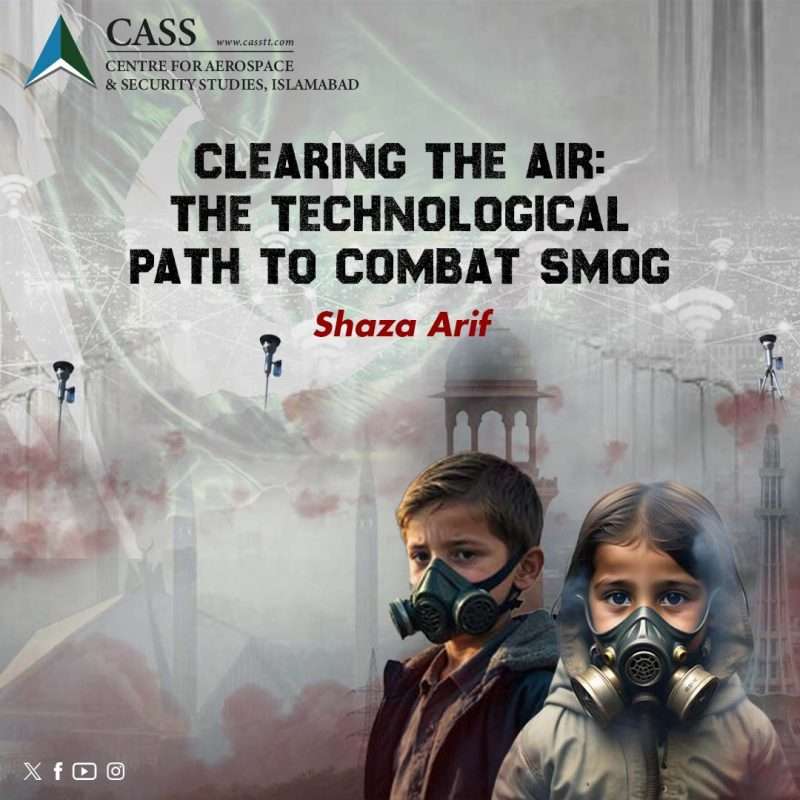
Smog continues to be a critical health problem in Pakistan. The Air Quality Index (AQI) has soared to hazardous levels, repeatedly hitting 1000 and even 2000 in major urban centres over the past weeks.. With Lahore as its epicentre, high smog levels continue to be a challenge for different areas of Punjab and also across parts of Khyber Pakhtunkhwa.
To combat smog, the Punjab government has allocated PKR 10 billion for smog mitigation and PKR 100 billion for environmental changes. It has also implemented measures such as temporary closure of educational institutes and work-from-home policies to limit traffic and pollution levels. However, these policies are short-term measures and have demonstrated limited effectiveness, as smog tends to resurface soon after the restrictions are lifted. Given the complexity of the issue, traditional approaches will likely be ineffective without modern solutions. In this regard, technologies such as Artificial Intelligence (AI) can be helpful.
The ability of AI systems to efficiently process data, analyse trends, and recognise patterns makes them a powerful tool for addressing issues related to smog. For instance, historical trends along with variables such as pollution indicators and industrial activity can be used to predict future trends and identify the potential location and timings of smog via predictive modelling. China has been using diverse predictive models to efficiently forecast pollution levels in different cities. AI-powered climate modelling are also being used across developing countries like Mexico to predict weather patterns.
AI-powered sensors, installed in densely populated cities such as Lahore, Islamabad, and Karachi, can be employed to monitor air quality. Subsequently, the data fed into AI systems can help provide early warning of deteriorating air quality. This early detection can also help identify pollution hotspots. Moreover, sources contributing to increased pollution such as vehicular and industrial emissions as well as crop and coal burning can be identified via feature analysis. South African scientists have created affordable AI-powered air quality monitors, costing just USD 100 each. These innovative devices are being rolled out across Johannesburg to pinpoint pollution hotspots. India faces smog challenges as severe as Pakistan’s and is also turning to technology for solutions. The country is rolling out Air View+, an AI-powered system for real-time, localised air quality monitoring designed for both public and government use.
Networked systems can also be used in Pakistan. The integration of AI-enabled sensors with IoT technology could be particularly effective in industrial hubs such as Faisalabad and Sialkot. By using networked devices, emission levels can be monitored with more precision. AI-powered traffic management systems can optimise traffic flow, particularly in crowded areas of major cities such as Karachi, Lahore, Islamabad, Peshawar and Rawalpindi. Reduced vehicle emissions during peak hours can lessen pollution rates, reducing smog. Baidu’s AI and Ali Baba Cloud’s ET City Brain are optimising traffic flow management to reduce congestion and pollution level across China. Likewise, based on data from AI-powered sensors, operational hours of factories can be regulated during high-risk periods.
Pilotless cloud seeding has shown considerable potential in United Arab Emirates to enhance rainfall via selection and use of seeding agents and techniques. The Punjab government too has experimented with artificial rain using traditional cloud seeding methods vis-a-vis aircraft technology. This was followed by precipitation a few hours later and relative reduction in smog. In the future, artificial rain could be created by drone technology as a flexible source for cloud seeding, significantly reducing operational costs associated with aircraft technology. Moreover, autonomous drones with sensors can also monitor changing weather conditions in real-time. Subsequently, they can optimally conduct operations vis-a-vis seeding agents, relevant locations and time. In addition to cloud seeding, air-purification drones can settle particulate matter, providing localised relief in affected areas.
While the technology holds promise, its effective implementation in Pakistan faces challenges, including economic constraints, unreliable datasets, limited AI infrastructure, and a lack of networked devices to support advanced systems. Despite these hurdles, investing in such technology is crucial given the high stakes. Local startups and experts can drive progress, but international collaboration is equally vital. Partnering with AI-focused research centres like MIT’s Senseable City Lab and facilitating technology transfers for low-emission solutions and advanced monitoring sensors can accelerate progress. Subsequently, public and private facilities, particularly industrial areas should be encouraged and incentivised to install monitoring sensors. Engaging with global forums such as the UN Environment Programme (UNEP), World Health Organization (WHO) Air Quality and Health Initiative, Climate and Clean Air Coalition (CCAC), and regional initiatives like the South Asia Cooperative Environment Programme (SACEP) can provide valuable support. These platforms facilitate knowledge sharing, access to funding, and collaboration on innovative solutions to combat air pollution effectively. In parallel, there is a need to educate people effectively regarding smog and stress on letting go of traditional practices that contribute to smog. By adopting AI and advanced tech solutions, Pakistan can take meaningful steps to tackle smog, protect public health, and work towards cleaner, healthier air for the future.
Shaza Arif is a Research Associate at the Centre for Aerospace & Security Studies (CASS), Islamabad. The article was first published in the Daily Times. She can be reached at [email protected].